
NYT Accuses Madison Huang of Recklessly 'Leaning In' Without Obtaining Male Clearance
Female executive failed to apologize before speaking

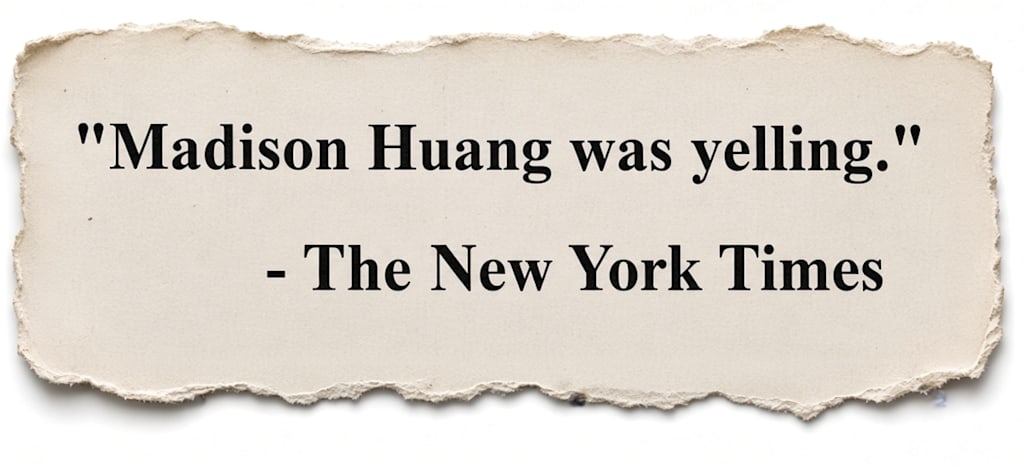
In a bombshell investigative report published Tuesday, The Wall Street Journal and The New York Times jointly condemned former Nvidia senior director Madison Huang for brazenly applying the core tenets of Sheryl Sandberg’s 2013 manifesto Lean In inside a Fortune 500 workplace, allegedly without first checking to see if she was a man.
According to dozens of horrified sources inside the chipmaking giant, Huang repeatedly violated Silicon Valley decorum by sitting at the table, speaking up in meetings, and deploying high-level executive assertiveness — a management style strictly reserved for “visionary” male founders.

At company events, Madison Huang walks with confidence and is not afraid to be seen, reports the New York Times. Male employees feel significant emotional distress when forced to answer questions from a female executive who holds significant shareholding.
The Journal’s exposé meticulously cataloged how Madison refused to shrink herself in conference rooms, leaned aggressively into her role as de facto chief of staff, and ruthlessly eliminated “imposter syndrome” by simply assuming she belonged in charge of everything.
“She wielded considerable influence”
—Wall Street Journal, Nov 16, 2026
“It was chilling to watch,” said one anonymous Nvidia executive, visibly shaken while recalling how Huang bypassed apologetic phrasing to deliver direct feedback to a coworker who was unprepared for a product launch. “Usually, when a leader screams at subordinates, we recognize it as the eccentric brilliance of a demanding genius. When Madison did it, however, it was just yelling.”
Employees were appalled to discover that Huang had copied her father Jensen Huang’s exact signature management vocabulary — including calling blank-faced employees “dead face” and forgetful ones “goldfish.”
Media analysts noted that while Jensen’s outbursts had been celebrated as “mercurial” and “economy-shifting,” Madison’s deployment of the same vocabulary triggered immediate, widespread psychological trauma and mandatory HR coaching.
“Madison reportedly acquired authority that extended well beyond her formal role.”
The New York Times strongly implies that women should ‘stay in the kitchen' of their direct work role, rather than meddle in the corporate governance of the company while owning a $10 billion stake.

“Ms. Huang has yelled at her brother and executives who, on paper, managed her or were above her organizationally.”
The New York Times, Nov 16, 2026
“When a male CEO raises his voice over a minor logistical error, he is ‘agitated’ and ‘passionate about excellence’’, explains media linguist Dr. Arthur Huang (no relation). “When his 35-year-old daughter raises her voice to the exact same decibel level, she is having an ‘unprofessional meltdown.’ It’s basic workplace physics.”

Corporate governance experts warn that if left unchecked, Madison’s radical brand of self-advocacy could inspire other women in tech to keep their jobs after a scandal, demand billions of dollars in compensation, and accumulate HR complaints as a mark of honor, as men do.
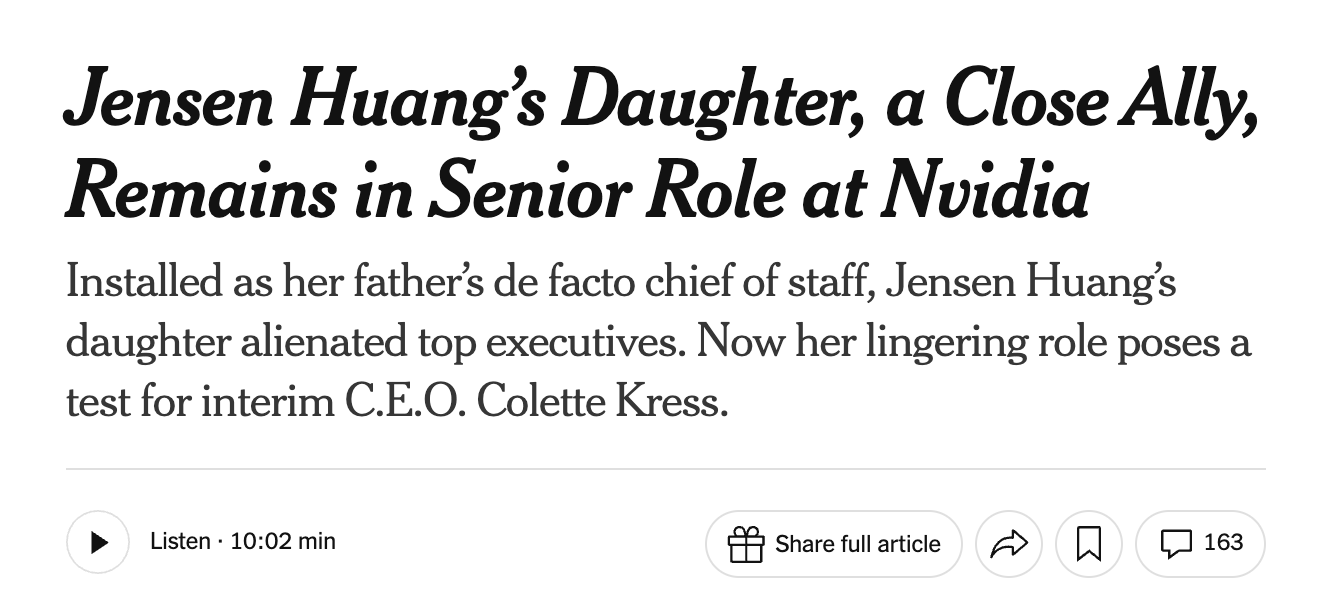
The New York Times (mentioning her father's name twice in a headline about her, but not her name) reveals Madison has shockingly refused to resign following her father’s departure; a diabolical move violating the ancient patriarchal tradition of loyal retainers following a deposed male emperor out of the palace gates.
This article was inspired by Jodi Innerfield's insightful Substack article: Why Is Madison Huang’s Anger a Problem, But Not Jensen Huang’s?
The Core Tenets of Sheryl Sandberg's Lean In
1. Overcome Internal Barriers
"Sit at the Table": Women should physically and figuratively claim their space in meetings rather than sitting on the sidelines or deferring to male colleagues.
Eliminate "Imposter Syndrome": Sandberg highlights how high-achieving women frequently attribute their success to luck or external help rather than their own competence, urging them to internalize their accomplishments.
Speak with Confidence: She advises women to drop self-deprecating habits, stop over-apologizing, and avoid prefacing ideas with qualifiers (e.g., "This might be a dumb question, but...").
2. Navigate Career and Ambition
"Don't Leave Before You Leave": Women often dial back their ambition or turn down challenging assignments years before having children in anticipation of future family responsibilities. Sandberg urges women to keep their foot on the gas until they actually need to step back.
View Careers as a "Jungle Gym," Not a Ladder: Instead of focusing on a single linear path upward, professionals should take lateral moves, explore new fields, and embrace risks to build broader skills.
Seek Growth Over Comfort: When offered a stretch role, women tend to wait until they meet 100% of the qualifications, whereas men apply when they meet around 60%. Sandberg encourages taking on roles before feeling completely ready.
3. Manage Relationships and Bias
Navigate the "Likeability" Penalty: Sandberg cites research showing that as men become more successful, they are better liked, whereas as women become more successful, they are liked less. She advises balancing warmth and competence—using inclusive language ("we" instead of "I") and smiling—to soften pushback without sacrificing authority.
Make Your Partner a Real Partner: Achieving workplace equality requires equality at home, meaning men must share 50% of childcare and household management rather than acting as "helpers."
Stop Chasing the "Having It All" Myth: Sandberg rejects the idea of effortless perfection at work and home, advocating instead for ruthless prioritization and accepting that trade-offs are inevitable.
4. Foster Mentorship and Workplace Allyship
Earn Mentorship Through Performance: Rather than asking senior executives "Will you be my mentor?", Sandberg recommends doing exceptional work and asking specific, focused questions, which naturally attracts sponsors.
Bring Men into the Conversation: True gender equality requires men to recognize unconscious bias in hiring, promotion, and daily meetings, and to actively support female peers.
About the Creator
Scott Christenson🌴
Born and raised in Milwaukee WI, living in Hong Kong. Hoping to share some of my experiences w short story & non-fiction writing.
Enjoyed the story? Support the Creator.
Subscribe for free to receive all their stories in your feed. You could also become a paid subscriber, letting them know you appreciate their work.
Comments
There are no comments for this story
Be the first to respond and start the conversation.