
Why the Neonatal Intensive Care Market Is Expanding as Healthcare Systems Focus on Saving More Newborn Lives
Rising Preterm Births, Advanced Medical Technologies, and Growing Investments in Specialized Infant Care Are Driving Global Market Growth

The first days of a newborn’s life are among the most critical. For babies born prematurely, with low birth weight, congenital disorders, or serious health complications, specialized medical intervention can mean the difference between life and death. This reality has made Neonatal Intensive Care Units (NICUs) one of the most important components of modern healthcare systems worldwide.
Over the past several decades, advances in neonatal medicine have dramatically improved survival rates among premature and critically ill newborns. Sophisticated monitoring systems, modern incubators, respiratory support devices, and highly trained neonatal specialists have transformed the way healthcare providers care for vulnerable infants.
As governments, hospitals, and healthcare organizations continue investing in maternal and child healthcare, demand for neonatal intensive care services is growing steadily across both developed and emerging economies.
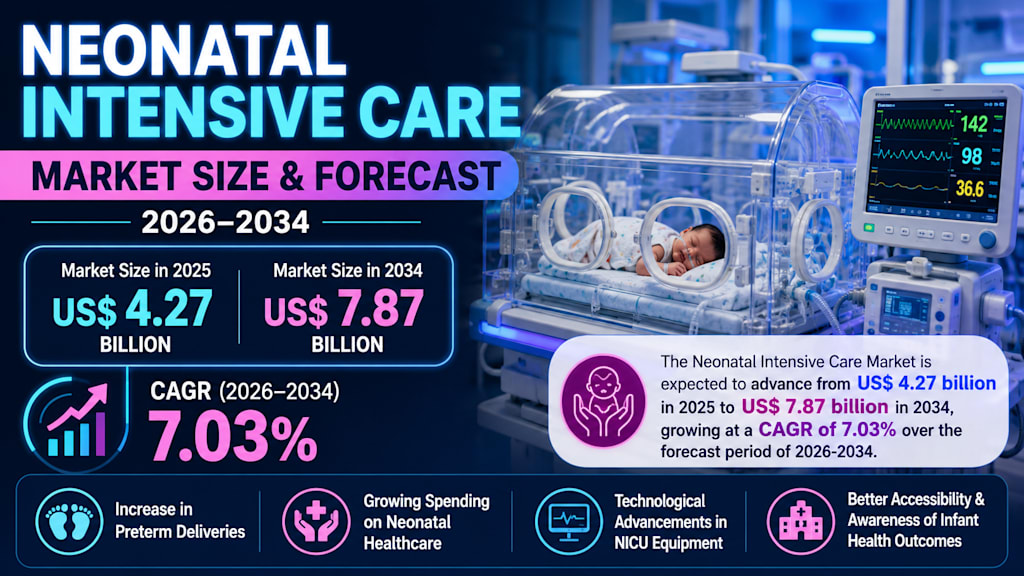
According to Renub Research, the global Neonatal Intensive Care Market is projected to grow from US$ 4.27 billion in 2025 to US$ 7.87 billion by 2034, expanding at a compound annual growth rate (CAGR) of 7.03% during the forecast period from 2026 to 2034. This growth reflects increasing awareness of infant health outcomes, technological innovation, and rising demand for specialized neonatal healthcare services.
Understanding the Role of Neonatal Intensive Care
Neonatal intensive care refers to the specialized medical treatment provided to newborn infants who require advanced support immediately after birth. These infants are often born prematurely, have low birth weight, suffer from congenital abnormalities, or experience severe infections and respiratory complications.
NICUs are equipped with highly specialized medical equipment designed to support fragile newborns during critical stages of development. These facilities commonly include incubators, infant warmers, respiratory support systems, cardiac monitors, infusion pumps, diagnostic technologies, and advanced patient monitoring devices.
In addition to sophisticated equipment, NICUs rely on teams of highly trained healthcare professionals, including neonatologists, neonatal nurses, respiratory therapists, and pediatric specialists who work together to provide around-the-clock care.
The combination of advanced technology and specialized medical expertise has significantly improved survival rates and long-term health outcomes for newborns facing serious medical challenges.
Rising Preterm Births Are Driving Demand
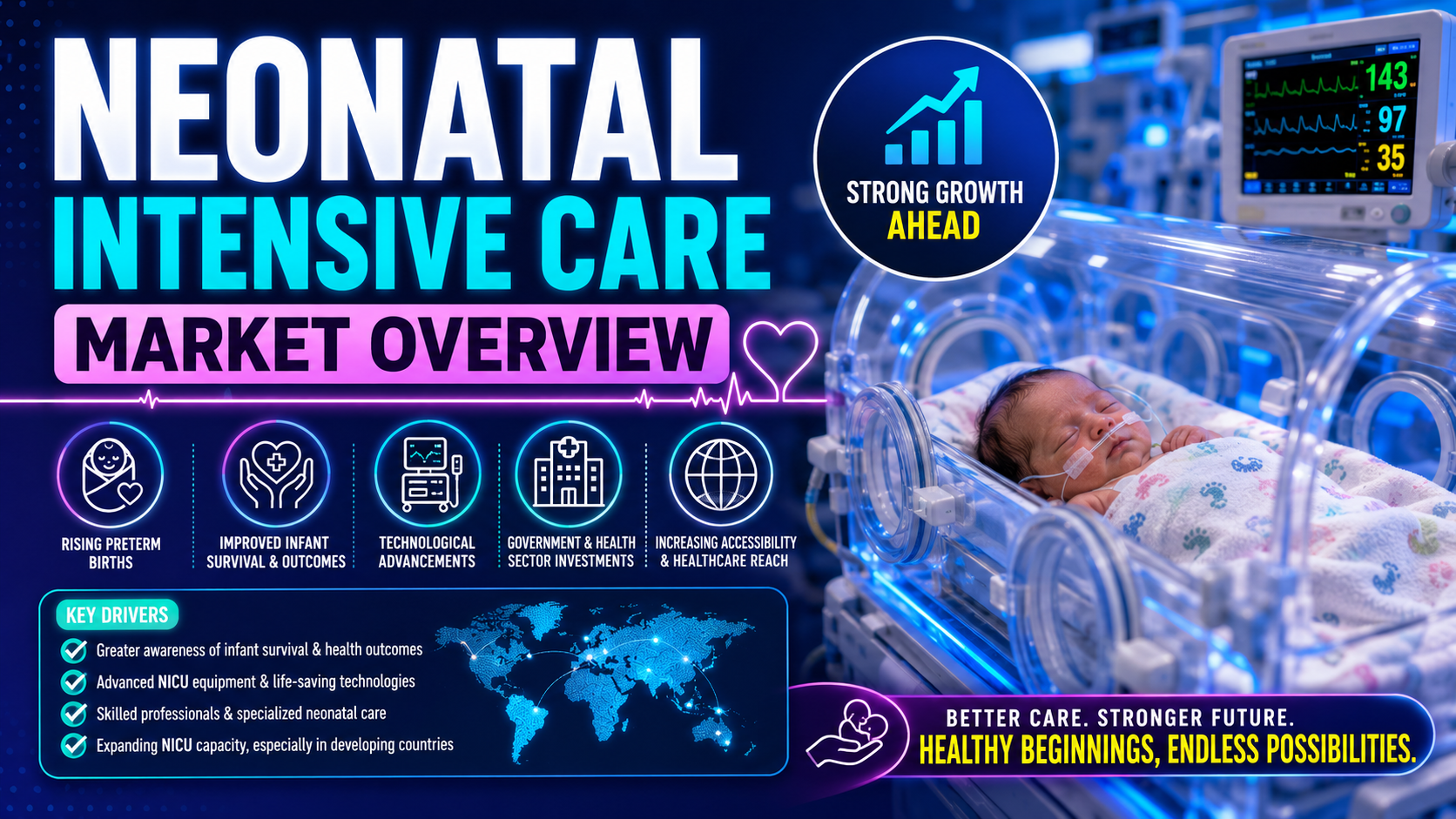
One of the most significant factors contributing to the expansion of the neonatal intensive care market is the increasing number of preterm births worldwide.
Medical experts attribute this trend to several factors, including higher maternal age, lifestyle-related health conditions, multiple pregnancies resulting from assisted reproductive technologies, and the growing prevalence of chronic diseases among expectant mothers.
Premature infants often require immediate and specialized medical intervention because their organs may not be fully developed at birth. Respiratory support, temperature regulation, nutritional assistance, and continuous monitoring become essential components of care.
The scale of the challenge is substantial. Each year, approximately 15 million babies are born prematurely worldwide. Complications arising from preterm birth remain one of the leading causes of death among children under the age of five, highlighting the critical role that neonatal intensive care plays in improving survival rates and health outcomes.
As awareness of neonatal health continues to increase, more families are seeking access to specialized healthcare facilities capable of providing advanced care during these critical early stages of life.
Technology Is Transforming Neonatal Care
Medical technology continues to revolutionize the way neonatal intensive care is delivered.
Modern NICUs utilize highly sophisticated equipment that allows healthcare providers to monitor and manage newborn health with unprecedented precision. Innovations in incubators, ventilators, infusion pumps, and monitoring systems have significantly enhanced patient care while reducing risks associated with critical neonatal conditions.
Advanced monitoring technologies enable clinicians to continuously observe heart rate, blood pressure, respiratory function, oxygen saturation, and body temperature in real time. Early detection of abnormalities allows healthcare teams to intervene quickly and improve patient outcomes.
Respiratory support technologies have also evolved considerably. Modern ventilators and breathing assistance systems provide more gentle and precise respiratory care, reducing the risk of lung damage while improving survival rates among premature infants.
Technological improvements are helping hospitals deliver higher-quality care while supporting better long-term developmental outcomes for newborns requiring intensive medical attention.
Healthcare Investments Are Expanding NICU Capacity
Governments and healthcare organizations around the world are increasingly prioritizing investments in maternal and neonatal healthcare infrastructure.
As healthcare systems recognize the importance of reducing infant mortality and improving newborn outcomes, substantial resources are being directed toward the expansion and modernization of NICU facilities.
Many hospitals are building new neonatal intensive care units while upgrading existing facilities with advanced technologies and enhanced patient care capabilities. These investments are particularly significant in developing countries, where expanding access to specialized neonatal services remains a major healthcare objective.
Insurance coverage improvements and government healthcare initiatives are also making neonatal intensive care services more accessible to families who previously faced financial barriers.
In November 2025, UC Davis Children's Hospital introduced a groundbreaking Point-of-Care Ultrasound service within its Neonatal Intensive Care Unit. The initiative further strengthens the hospital's leadership position in neonatal care innovation and demonstrates how healthcare providers continue investing in advanced diagnostic and treatment capabilities.
The Growing Importance of Neonatal Warmers
Temperature regulation is one of the most critical aspects of newborn care, particularly for premature and low-birth-weight infants.
Newborns often struggle to maintain stable body temperatures because their thermoregulatory systems are not fully developed. Hypothermia can significantly increase the risk of complications and mortality if not properly managed.
Neonatal warmers are designed to provide controlled heating that helps infants maintain optimal body temperature while receiving medical treatment. Modern warming systems incorporate advanced temperature monitoring technologies and infrared heating mechanisms to improve effectiveness and safety.
As hospitals continue focusing on infant survival and comfort, demand for advanced neonatal warmers is expected to remain strong. Ongoing technological improvements are making these devices more precise, reliable, and accessible to healthcare facilities worldwide.
Monitoring Devices Are Becoming More Sophisticated
Patient monitoring represents one of the most important functions within a NICU environment.
Continuous observation of vital signs allows healthcare providers to identify potential complications before they become life-threatening. Modern neonatal monitoring systems track critical health indicators such as heart rate, respiratory activity, blood pressure, oxygen levels, and temperature.
Advancements in sensor technology, wireless connectivity, and data analytics have significantly improved the accuracy and effectiveness of neonatal monitoring solutions. Many modern systems provide real-time graphical displays and integrate directly with electronic medical records, supporting more informed clinical decision-making.
As NICU admissions continue to rise globally, healthcare providers are increasingly investing in advanced monitoring technologies that enhance patient safety and improve care quality.
Respiratory Care Remains a Critical Priority
Respiratory complications are among the most common challenges faced by premature and critically ill newborns.
Underdeveloped lungs often require specialized respiratory support immediately after birth. To address this need, NICUs utilize a variety of respiratory care technologies, including neonatal ventilators, continuous positive airway pressure (CPAP) systems, and oxygen delivery devices.
Modern respiratory care solutions focus on providing gentle ventilation that minimizes the risk of lung injury while maintaining adequate oxygen levels. Improved monitoring capabilities also allow clinicians to adjust treatment strategies based on each infant's unique medical needs.
As preterm birth rates continue to rise globally, demand for advanced respiratory care technologies is expected to remain a major driver of growth within the neonatal intensive care market.
Challenges Facing the Market
Despite strong growth prospects, the neonatal intensive care market faces several important challenges.
One of the most significant barriers is the high cost associated with NICU services. Specialized equipment, advanced technologies, and highly trained healthcare professionals contribute to substantial treatment expenses. For families without adequate insurance coverage, prolonged NICU stays can create significant financial burdens.
Hospitals also face considerable costs when establishing and maintaining neonatal intensive care facilities. These financial challenges can limit expansion efforts, particularly in resource-constrained healthcare systems.
Another major challenge is the shortage of skilled neonatal healthcare professionals. NICU environments require specialized expertise that often takes years to develop. The global shortage of neonatologists, neonatal nurses, and respiratory therapists can restrict healthcare providers' ability to expand services and maintain optimal patient care standards.
Addressing workforce shortages through education, training programs, and professional development initiatives will be essential for supporting long-term market growth.
Regional Markets Continue to Invest in Neonatal Care
The United States remains one of the world's most advanced neonatal intensive care markets. Strong healthcare infrastructure, advanced technologies, favorable reimbursement systems, and continuous innovation have helped establish the country as a leader in neonatal healthcare delivery.
In January 2026, Children's Hospital of Richmond at VCU opened a new US$ 28 million, 20-bed NICU facility, increasing total NICU capacity to 60 beds and demonstrating ongoing investments in neonatal care infrastructure.
The United Kingdom also maintains a highly developed neonatal care system through the National Health Service (NHS). Standardized care practices, family-centered approaches, and continuous investments in neonatal services continue to support market growth. A £32 million neonatal intensive care facility at Queen's Medical Centre further highlights the country's commitment to improving newborn care services.
India represents one of the fastest-growing markets for neonatal intensive care due to its high birth rate, increasing awareness of newborn health, and expanding healthcare infrastructure. Government initiatives focused on reducing infant mortality and improving maternal healthcare are contributing significantly to market development.
In February 2025, Amrita Hospital launched India's first Mother and Neonatal Intensive Care Unit (MNICU), emphasizing a “Zero Separation from Birth” approach designed to improve outcomes for mothers and newborns.
Saudi Arabia is also expanding neonatal healthcare services through substantial government investments and modernization of healthcare facilities. Advanced respiratory care technologies, monitoring systems, and genomic screening programs are supporting improved neonatal outcomes throughout the country.
Looking Ahead
The future of the neonatal intensive care market appears highly promising. Advances in medical technology, growing awareness of infant health outcomes, increasing healthcare investments, and expanded access to specialized care services are creating favorable conditions for long-term growth.
Manufacturers continue developing innovative solutions that improve monitoring accuracy, enhance respiratory support, optimize temperature management, and streamline patient care workflows. Healthcare providers are simultaneously expanding NICU capacity and investing in workforce development to meet rising demand.
As global healthcare systems continue prioritizing maternal and infant health, neonatal intensive care will remain a critical area of focus.
Final Thoughts
Every newborn deserves the best possible chance at a healthy start in life. Neonatal intensive care plays a vital role in making that goal achievable for millions of infants facing medical challenges during their earliest days.
The market's projected growth reflects not only increasing demand for specialized neonatal services but also broader efforts to improve infant survival rates and long-term health outcomes worldwide. Through continued investment, technological innovation, and expanded access to care, neonatal intensive care will continue transforming the future of newborn healthcare.
As healthcare systems evolve and technologies become more advanced, NICUs will remain at the forefront of life-saving medical innovation, helping countless families navigate some of the most challenging moments of their lives while providing hope for healthier futures.
About the Creator
Enjoyed the story? Support the Creator.
Subscribe for free to receive all their stories in your feed.
Comments
There are no comments for this story
Be the first to respond and start the conversation.