
Why Respiratory Care Devices Are Becoming Essential in Modern Healthcare
Rising Respiratory Diseases, Home Healthcare Adoption, and Medical Innovation Are Driving Strong Growth in the Global Respiratory Care Devices Market

Breathing is one of the most fundamental functions of human life, yet millions of people worldwide struggle daily with respiratory conditions that affect their ability to breathe normally. From chronic illnesses such as asthma and chronic obstructive pulmonary disease (COPD) to sleep apnea, pneumonia, and respiratory distress disorders, respiratory diseases continue to place a significant burden on healthcare systems around the globe.
As respiratory conditions become increasingly common, healthcare providers, governments, and medical technology companies are investing heavily in advanced respiratory care solutions. Modern respiratory care devices are helping patients manage chronic conditions more effectively, improve quality of life, reduce hospitalizations, and support long-term treatment both in healthcare facilities and at home.
The importance of respiratory care technologies became especially apparent during the COVID-19 pandemic, when ventilators, oxygen delivery systems, and respiratory monitoring devices played a critical role in patient care worldwide. Since then, awareness of respiratory health has increased significantly, fueling demand for innovative medical devices designed to support breathing and improve patient outcomes.
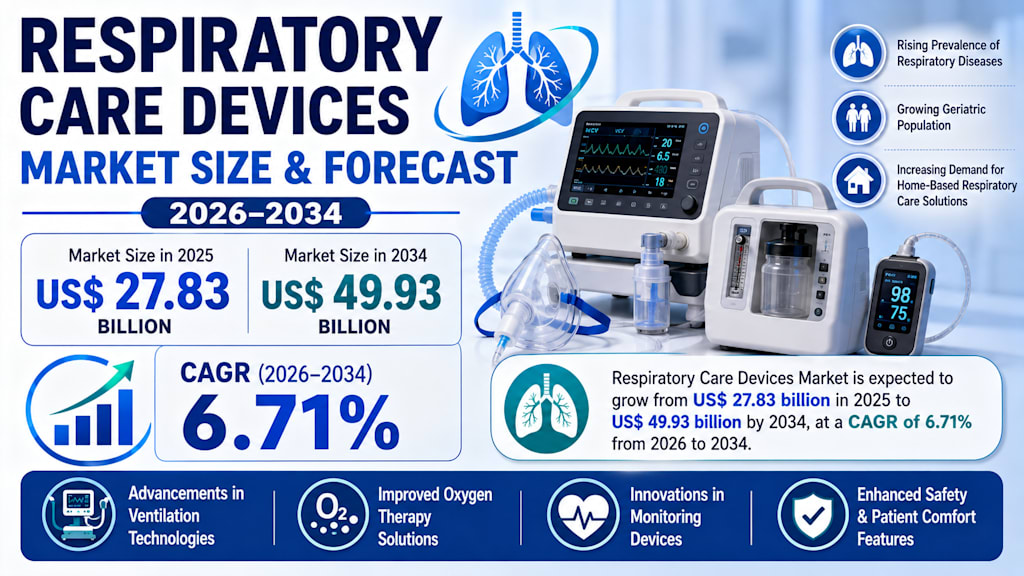
According to Renub Research, the global Respiratory Care Devices Market is expected to grow from US$ 27.83 billion in 2025 to US$ 49.93 billion by 2034, expanding at a compound annual growth rate (CAGR) of 6.71% between 2026 and 2034. This growth is being driven by increasing respiratory disease prevalence, expanding home healthcare services, technological advancements, and growing awareness regarding respiratory health management.
Understanding Respiratory Care Devices
Respiratory care devices are medical technologies designed to assist, monitor, diagnose, and treat patients suffering from respiratory disorders. These devices help improve breathing efficiency, deliver oxygen, manage airflow, and support respiratory function for individuals experiencing acute or chronic breathing difficulties.
The market encompasses a wide variety of products, including ventilators, oxygen concentrators, nebulizers, inhalers, CPAP and BiPAP systems, respiratory monitoring equipment, pulse oximeters, spirometers, and airway clearance devices.
These technologies are used in hospitals, clinics, ambulatory care centers, and increasingly in home healthcare environments. Patients suffering from conditions such as COPD, asthma, sleep apnea, cystic fibrosis, pneumonia, and respiratory distress syndrome often depend on these devices to maintain their health and quality of life.
Advancements in device design, portability, connectivity, and ease of use have significantly expanded the accessibility of respiratory care technologies, making them more practical for both healthcare professionals and patients.
Chronic Respiratory Diseases Continue to Rise
One of the most significant drivers of growth within the respiratory care devices market is the increasing prevalence of chronic respiratory diseases worldwide.
Factors such as aging populations, smoking habits, environmental pollution, occupational exposure, and lifestyle-related health issues have contributed to rising rates of respiratory disorders across many regions.
Conditions such as COPD, asthma, pulmonary fibrosis, and sleep apnea require long-term management and ongoing respiratory support. Patients often depend on inhalers, nebulizers, oxygen therapy systems, and non-invasive ventilation devices to manage symptoms and improve daily functioning.
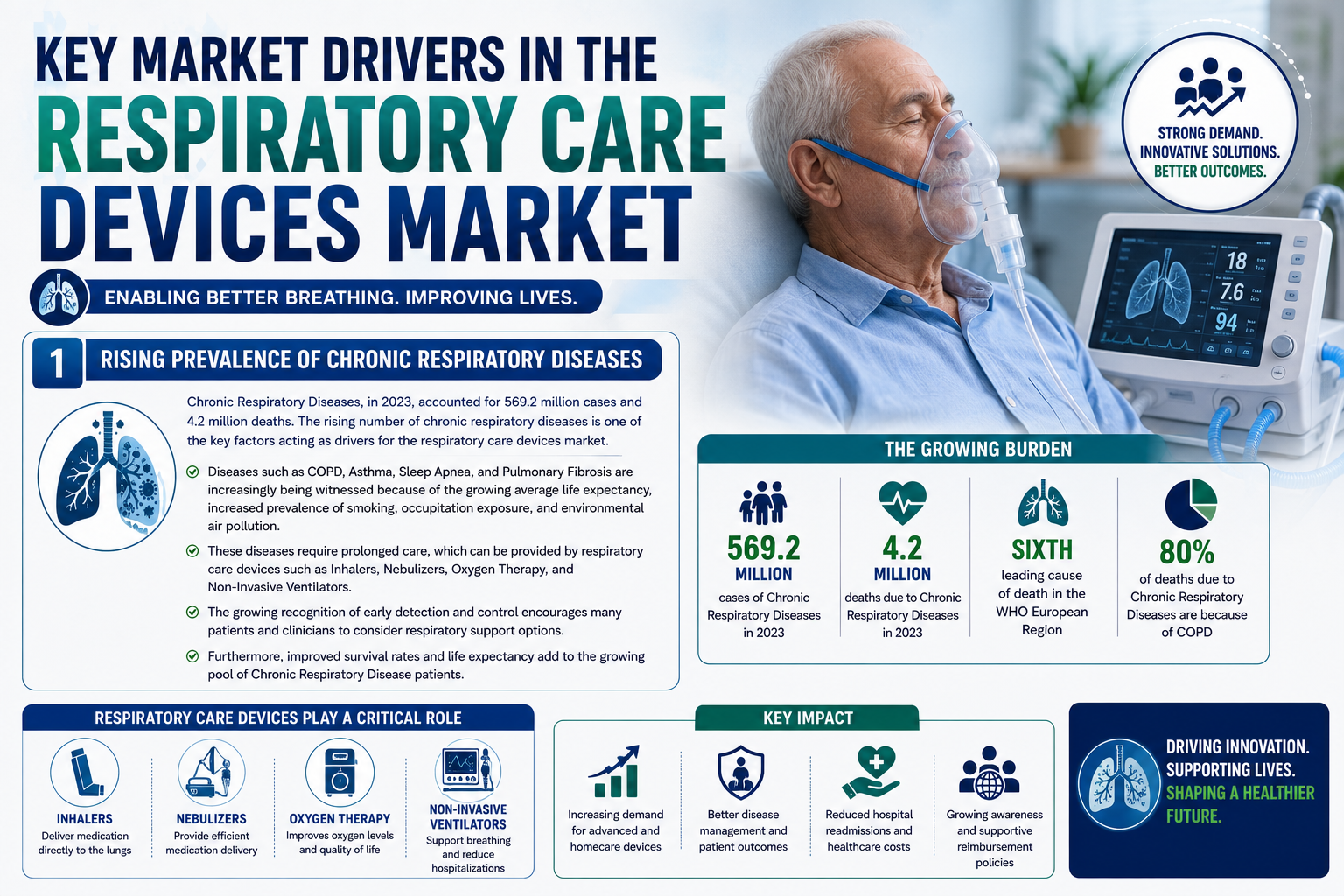
The global burden of respiratory disease is substantial. According to the report, chronic respiratory diseases accounted for approximately 569.2 million cases and 4.2 million deaths in 2023. Within the World Health Organization's European Region alone, chronic respiratory diseases are responsible for nearly 400,000 deaths annually, with COPD accounting for approximately 80 percent of those fatalities.
As diagnosis rates improve and patient survival increases, healthcare systems are expected to see continued demand for respiratory support technologies.
Home Healthcare Is Transforming Patient Care
One of the most important trends shaping the respiratory care industry is the rapid shift toward home-based healthcare.
Patients increasingly prefer receiving treatment at home whenever possible, and healthcare providers recognize the benefits of reducing hospital admissions and lowering treatment costs. Advances in medical technology have made home respiratory care more practical, reliable, and effective than ever before.
Portable oxygen concentrators, home ventilators, CPAP systems, BiPAP devices, and compact monitoring technologies allow patients to manage chronic respiratory conditions without requiring prolonged hospital stays.
For elderly patients and individuals with long-term respiratory illnesses, home healthcare offers greater comfort, independence, and convenience. At the same time, healthcare systems benefit from reduced strain on hospital resources and lower overall costs.
In May 2025, ABM Respiratory Care launched a multicenter home-care study with Delve Health to evaluate the effectiveness of its BiWaze® Clear System in patients living with bronchiectasis. The initiative reflects growing interest in expanding respiratory treatment options beyond traditional clinical settings.
Technology Is Driving Innovation Across the Industry
Continuous technological advancement remains one of the strongest growth drivers within the respiratory care devices market.
Manufacturers are introducing increasingly sophisticated devices that improve treatment effectiveness while enhancing patient comfort and convenience. Smart ventilators, connected inhalers, wearable monitoring systems, digital oxygen delivery technologies, and remote patient monitoring platforms are transforming respiratory care.
Modern devices are becoming quieter, more portable, energy efficient, and easier to operate. Integration with mobile applications and cloud-based monitoring systems allows healthcare providers to track patient data remotely and intervene when necessary.
Artificial intelligence and predictive analytics are also beginning to play a role in respiratory healthcare, helping clinicians identify potential complications earlier and personalize treatment strategies.
In April 2024, Getinge introduced the Servo-c mechanical ventilator, a next-generation solution designed to address respiratory care needs across both pediatric and adult patient populations. Such innovations demonstrate how technology continues to expand treatment capabilities and improve patient outcomes.
Respiratory Monitoring Devices Are Becoming Increasingly Important
Monitoring respiratory function is critical for managing both acute and chronic respiratory conditions.
Respiratory monitoring devices provide continuous assessment of breathing performance, allowing healthcare providers to detect complications and respond quickly to changes in patient status. Common monitoring technologies include pulse oximeters, capnography monitors, respiratory rate monitors, and spirometers.
These devices are widely used in intensive care units, emergency departments, outpatient clinics, and home care settings. Technological improvements have increased accuracy while enabling remote monitoring capabilities through wireless connectivity and wearable technologies.
As healthcare systems emphasize preventive care and early intervention, respiratory monitoring devices are expected to play an increasingly important role in patient management.
Diagnostic Technologies Support Earlier Detection
Early diagnosis remains essential for effective respiratory disease management.
Respiratory diagnostic devices help clinicians identify conditions such as asthma, COPD, and sleep apnea before symptoms become severe. Technologies including spirometry systems, peak flow meters, polysomnography devices, and advanced imaging tools are widely used to assess respiratory function and guide treatment decisions.
Growing awareness regarding preventive healthcare is encouraging both patients and healthcare providers to prioritize early diagnosis. Improvements in portability, usability, and data-sharing capabilities have also expanded access to diagnostic technologies across various healthcare environments.
As respiratory disease prevalence continues to rise, demand for accurate and efficient diagnostic solutions is expected to increase correspondingly.
Nebulizers Continue to Play a Vital Role
Nebulizers remain among the most widely used respiratory care devices worldwide.
These systems convert liquid medications into fine aerosols that can be inhaled directly into the lungs, making them particularly effective for treating asthma, COPD, cystic fibrosis, and other respiratory conditions.
Nebulizers are especially valuable for children and elderly patients who may have difficulty using traditional inhalers. Recent advancements in mesh and ultrasonic nebulizer technologies have improved treatment efficiency, reduced administration time, and enhanced portability.
The continued growth of home healthcare services is further supporting demand for nebulizers, making them an important segment within the broader respiratory care market.
Sleep Apnea Treatment Is Expanding Rapidly
Obstructive Sleep Apnea (OSA) represents another major area of growth within the respiratory care industry.
Sleep apnea affects millions of individuals worldwide and is increasingly linked to serious health conditions, including cardiovascular disease, hypertension, diabetes, and metabolic disorders. As awareness grows, more patients are seeking diagnosis and treatment.
Continuous Positive Airway Pressure (CPAP) and BiPAP devices remain the most commonly prescribed solutions for sleep apnea management. Technological improvements have made these devices more comfortable, quieter, and easier to use, encouraging greater treatment adherence.
The rising prevalence of obesity and aging populations further contribute to increasing demand for sleep apnea therapies worldwide.
Challenges Continue to Impact Market Growth
Despite strong growth prospects, the respiratory care devices market faces several important challenges.
One of the primary obstacles is the high cost of advanced respiratory technologies. Ventilators, monitoring systems, oxygen concentrators, and other specialized equipment often require significant financial investment, limiting accessibility in low- and middle-income regions.
Maintenance expenses, replacement components, and consumables further increase overall ownership costs. In some healthcare systems, limited reimbursement coverage can also restrict adoption of advanced respiratory technologies.
Regulatory requirements present another challenge. Respiratory devices must meet stringent safety, quality, and performance standards, which can increase development costs and extend product approval timelines.
Additionally, effective use of many respiratory technologies requires specialized training. Shortages of respiratory therapists, technicians, and trained healthcare professionals can limit device utilization and slow market expansion in certain regions.
Regional Markets Continue to Expand
The United States remains one of the largest respiratory care device markets globally, supported by strong healthcare infrastructure, advanced reimbursement systems, and a high prevalence of respiratory disorders. The growing popularity of telemedicine and home healthcare has accelerated demand for portable oxygen concentrators, CPAP systems, and home ventilators. In October 2025, Synchrony Medical introduced the LibAirty™ Airway Clearance System, reflecting continued innovation within the American market.
Germany continues to benefit from its advanced healthcare system, strong reimbursement framework, and emphasis on early diagnosis and disease management. The country's commitment to innovation has helped support widespread adoption of respiratory monitoring and therapeutic technologies.
India is experiencing rapid market growth due to rising pollution levels, increasing smoking rates, and greater awareness of respiratory health. Government healthcare initiatives and expanding private healthcare investments are helping improve access to respiratory care solutions across the country.
Saudi Arabia is also investing heavily in healthcare infrastructure, driving demand for advanced respiratory monitoring and therapeutic devices. The country's focus on improving critical care services continues to support market expansion.
Looking Ahead
The future of the respiratory care devices market appears highly promising. Rising respiratory disease prevalence, growing healthcare awareness, increasing adoption of home-based treatment, and ongoing technological innovation are creating strong foundations for sustained growth.
Manufacturers continue to develop smarter, more connected, and more patient-friendly devices that improve treatment outcomes while enhancing quality of life. As healthcare systems increasingly emphasize preventive care and chronic disease management, respiratory care technologies will become even more important.
Leading companies including Medtronic, Philips, General Electric, Masimo, ResMed, Becton Dickinson, Chart Industries, Getinge, and Inogen continue investing heavily in research and product development, reflecting confidence in the market's long-term potential.
Final Thoughts
Respiratory health has become a major global healthcare priority, and respiratory care devices are playing an increasingly important role in addressing this challenge. From managing chronic diseases and supporting sleep apnea treatment to enabling home healthcare and improving patient monitoring, these technologies are transforming the way respiratory conditions are diagnosed and treated.
With the market expected to approach US$ 50 billion by 2034, respiratory care devices will remain essential tools for healthcare providers and patients worldwide. Continued innovation, greater accessibility, and expanding awareness of respiratory health will help ensure that these life-enhancing technologies continue making a meaningful impact on millions of lives in the years ahead.
About the Creator
Enjoyed the story? Support the Creator.
Subscribe for free to receive all their stories in your feed.
Comments
There are no comments for this story
Be the first to respond and start the conversation.