
Why Renovating an Older Home Is Often More Emotional Than People Expect
Renovating an older home is rarely just about timber, plaster, and floor plans. More often, it becomes a conversation between memory, practicality, and the kind of life you want the home to hold next.
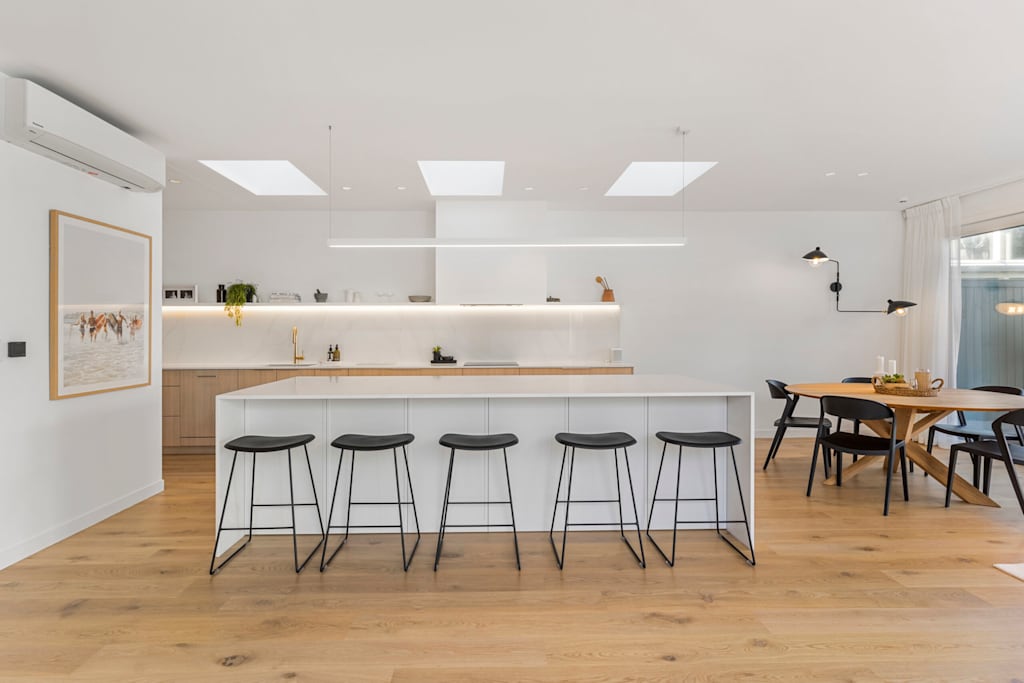
There is something different about walking into an older home.
It might be the height of the ceilings, the softness of worn timber underfoot, or the way the light moves through rooms that were built in a completely different era. Older homes have a presence that many newer houses simply do not. They carry age visibly. They creak, settle, and show their history in small details that feel oddly personal.
That is often what draws people to them in the first place.
At the beginning, renovation usually feels like a practical decision. The house needs more space. The layout no longer works. The kitchen is dated. The bathroom has seen better days. The family has grown, routines have changed, and the home needs to catch up.
But somewhere between the first plans and the first hammer swing, the project often becomes something more emotional than expected.
Because renovating an older home is not just about changing a building. It is about deciding what stays, what goes, and how much of the past should still be visible in the future.
Older Homes Tend to Mean More
Part of the emotion comes from the fact that older homes rarely feel neutral.
They often hold a sense of identity long before the current owner moves in. A villa, bungalow, or character home usually has features that people specifically fell in love with. The original fireplace. The timber joinery. The weatherboards. The hallway arch. The front rooms that still feel connected to another time.
These are not just design features. They are often the reason the house was chosen over something newer and easier.
That creates tension early in the renovation process. People want better flow, more light, better insulation, and a home that works for modern life. At the same time, they do not want to strip away the charm that made the place feel special in the first place.
That balance is where renovation becomes personal.
It Can Feel Like You Are Editing a Story
New builds begin with a blank page. Older homes do not.
With an older home, every decision feels like an edit to an existing story. Some changes feel obvious and necessary. Others can feel surprisingly difficult.
A wall might need to come out to create better connection between spaces. On paper, that makes perfect sense. In reality, it can feel like removing part of the house’s personality. Replacing original windows may improve warmth and performance, but it can also feel like letting go of something irreplaceable. Even changing a front door, lifting a floor, or repainting original timber can carry more weight than expected.
People are often surprised by this. They assume the difficult decisions will be financial or structural. Sometimes they are. But just as often, the hardest part is deciding how much change feels right.
Not because the homeowner is indecisive, but because the home already means something.
Renovation Has a Way of Surfacing Memory
Older homes have a strange ability to hold emotion, even when the memory does not belong to you.
Some people are reminded of their grandparents’ home. Others are drawn to the feeling of permanence older houses seem to carry. Even when a home has been altered many times over the years, it can still give the impression that it has lived many lives before this one.
Once renovation begins, that emotional layer often becomes more obvious.
Rooms are emptied. Surfaces are removed. Hidden details appear. Old wallpaper, previous paint lines, patched framing, forgotten fireplaces, marks from another layout. These things can make a house feel less like a property and more like a record of people, choices, and time.
That is when the project can shift in tone. What started as a plan to modernise can start to feel like stewardship.
Practical Upgrades Can Still Feel Like Loss
Of course, older homes also come with real problems. They are often cold, inefficient, and poorly laid out for modern living. Wiring may be outdated. Foundations may need attention. Insulation is often lacking. Bathrooms and kitchens can be well past their useful life.
Those things need to be addressed properly. Sentiment alone does not make a home more comfortable, safer, or more functional.
But even necessary upgrades can bring a sense of loss.
That is the part people do not always talk about. Improvement and grief can sit side by side. You can be excited about a better layout and still feel unsettled watching parts of the original home disappear. You can know the work is right and still feel emotional when details you lived with for years are removed.
That response is not irrational. It is what happens when a place you know intimately begins to change shape in front of you.
The Best Renovations Usually Respect Both Sides
The strongest older home renovations tend to understand this from the beginning.
They do not treat the house as a museum piece that cannot change. They also do not treat it as a shell that should be stripped of everything that came before. They respect the practical needs of modern living while recognising that character has value beyond appearance.
That might mean preserving the front rooms and original detailing while opening the rear of the house for better family living. It might mean keeping proportions, materials, or architectural cues that anchor the home in its history, even while the plan evolves around them.
When that balance is achieved, the result tends to feel right rather than merely new.
And that matters. Because with older homes, people are not usually chasing perfection. They are trying to create continuity. They want the home to function better, but still feel like itself.
Homeowners Often Feel More Attached by the End
One of the more interesting parts of renovating an older home is that people often feel more connected to it afterwards, not less.
The process can be exhausting. It tests patience, budget, and decision-making. But it also forces a level of engagement most people never have with their homes otherwise. They learn how the house is built, where it has been altered, what has held up, and what has not. They become aware of its strengths, weaknesses, and quirks in a much deeper way.
By the end, the relationship to the house is usually more grounded.
Not because the renovation was easy, but because it required real thought about what the home should become and what it should continue to hold onto.
It Is Never Just a Building Project
That is probably the clearest way to put it.
Renovating an older home is not just a building project. It is a personal project that happens to involve construction. It asks practical questions, but it also asks emotional ones. What matters here? What are you preserving? What are you willing to change? What kind of life do you want the house to support now?
Those questions are not always obvious at the start. But they tend to show up along the way.
And that is why older home renovations often feel more emotional than people expect. Not because people are unprepared for the mess or the cost, but because they discover they are not simply updating a house.
They are reshaping something that already had a story.
About the Creator
Enjoyed the story? Support the Creator.
Subscribe for free to receive all their stories in your feed.
Comments
There are no comments for this story
Be the first to respond and start the conversation.