
Why People Miss Places That No Longer Exist
Sometimes people miss places more than they miss people.
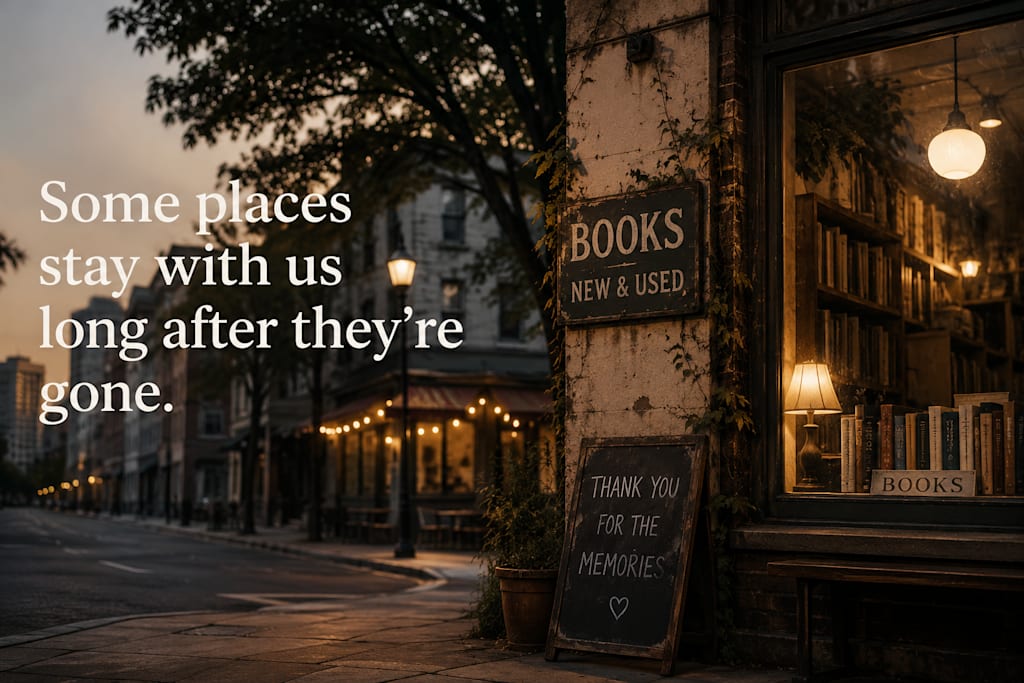
An old bookstore that closed years ago. A small café that stayed open late into the night. A movie theater that slowly turned into another apartment building. Certain places disappear quietly, almost without announcement, yet people continue thinking about them years later for reasons that are difficult to explain.
What makes this strange is that many of these places never seemed important at the time.
Nobody took photographs of the corner table near the window. Nobody imagined the handwritten menu taped beside the register would someday become part of a memory. Daily routines rarely feel meaningful while they are still happening. Most people only realize the emotional weight of ordinary places after those places disappear.
A few weeks ago, I walked past a diner that used to stay open twenty-four hours a day. The sign was still hanging outside, faded from sunlight and weather, but the windows were dark and the tables inside were gone. Years ago, the place was always crowded after midnight. Students sat there drinking coffee while pretending to study. Night-shift workers stopped in before driving home. Sometimes tired conversations drifted across the room for hours.
The diner always smelled like coffee and fried onions late at night.
Now the building is empty.
It also looked much smaller than I remembered. Maybe every place from the past feels smaller eventually.
That feeling happens often in modern cities. Places disappear, businesses close, neighborhoods change, and entire parts of daily life vanish almost overnight. Cities are always moving forward, but people quietly carry memories connected to locations that no longer exist in the same way.
Part of this attachment probably comes from repetition.
Human beings become emotionally connected to places through routine. Walking into the same grocery store every week, hearing the same sounds from a train station every morning, or sitting on the same park bench after work slowly creates familiarity. Over time, those ordinary locations become tied to personal identity without people fully noticing it.
Then one day something changes.
A local bookstore closes unexpectedly. A neighborhood café becomes a luxury clothing store. A music venue disappears and turns into expensive apartments. Sometimes the physical location still exists, but the atmosphere feels completely different. The emotional connection disappears even though the address remains the same.
Modern life moves quickly enough that many cities no longer feel stable for very long.
Coffee shops redesign themselves every few years. Familiar restaurants suddenly become “content-friendly” spaces designed mostly for social media photographs. Independent businesses disappear while identical chain stores spread everywhere. Entire streets can transform within a decade.
Of course, cities have always changed. That part is normal.
Still, many people feel modern urban life has become increasingly temporary. Even familiar places now feel replaceable.
Ironically, people often remember small details more vividly than major events. The sound of dishes in a late-night restaurant. The flickering sign outside a convenience store during winter. The uneven wooden floors inside an old bookstore. Tiny details remain attached to memory in ways that are difficult to explain logically.
Maybe everyone has a place like that somewhere in their memory.
A place that would look completely ordinary to strangers but somehow still feels important years later.
Part of the reason is that places silently witness different periods of people’s lives. First dates happen inside cafés. Difficult conversations happen in parked cars outside apartment buildings. Friendships form in libraries, bars, restaurants, classrooms, and tiny diners that eventually disappear.
Long after specific conversations are forgotten, people still remember the feeling of being there.
Some locations almost become emotional time capsules.
Returning to an old neighborhood can feel surprisingly disorienting. A person expects familiarity but instead encounters something entirely different. A grocery store is gone. A quiet street is crowded with luxury apartments. A local cinema has become a gym. Even when changes improve an area economically, they can still create a strange sense of emotional loss for people connected to what existed before.
And sometimes the strangest part is realizing nobody else remembers those places the same way you do.
Someone else might walk past an old building without thinking twice about it. Meanwhile another person remembers sitting there during an important period of their life ten or fifteen years earlier. Cities contain thousands of invisible personal histories layered on top of each other.
Perhaps that feeling has become more common because modern culture moves so quickly.
New apps replace old ones. Trends disappear within weeks. Restaurants redesign themselves constantly to remain visually “current.” Entire businesses now seem built around temporary attention instead of permanence. In that kind of environment, stability starts to feel unusually valuable.
Maybe people are not simply missing physical places after all.
Maybe they are missing versions of themselves connected to those places.
A person remembers who they were when they used to visit that bookstore every weekend. They remember old routines, old friendships, older ambitions, and older ways of living. Nostalgia is rarely about architecture alone. It is deeply connected to memory and identity.
That may explain why even small places can leave lasting emotional impressions.
Not every meaningful location is famous. Most are completely ordinary. A neighborhood convenience store. A diner with cracked leather seats. A secondhand bookstore with narrow aisles and dusty shelves. Places that would seem unremarkable to almost anyone else can still become deeply important to the people who spent time there.
The strange thing is that people almost never realize they are creating those memories while they are happening.
At the time, it simply feels like another normal day.
Only years later does it become a place they wish they could visit one more time.
About the Creator
Enjoyed the story? Support the Creator.
Subscribe for free to receive all their stories in your feed.
Comments
There are no comments for this story
Be the first to respond and start the conversation.