
Why Musicians Are Angry About AI Music Tools
Why AI Music Is Facing Backlash From Independent Musicians

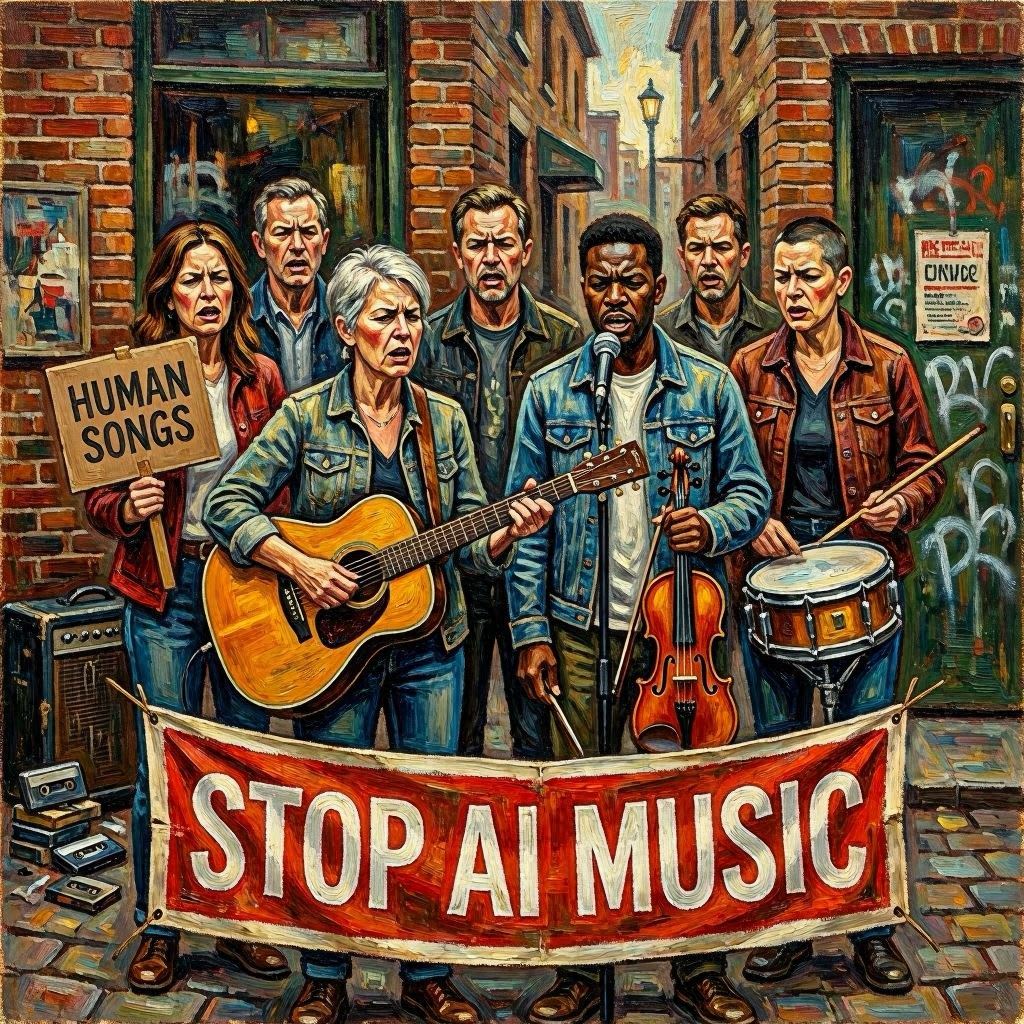
As AI becomes more widely used in music creation, production, and distribution, a noticeable divide has formed within the independent music community. Some musicians see AI generated music as a direct threat to their livelihood and artistic identity, while others view it as a natural extension of evolving creative tools. The growing intensity of criticism, sometimes turning into hostility, reflects deeper concerns than technology alone.
At the center of this reaction is a familiar human pattern: when a system changes quickly, people do not respond only with logic, but also with emotion tied to survival, identity, and status. For many independent musicians, the music industry is already unstable, with limited income streams and intense competition. AI tools that can produce polished tracks in seconds compress not only production time but also perceived value of years spent developing craft. Even if unintentionally, this creates psychological pressure: if something similar can be generated instantly, what happens to the worth of human effort?
This kind of reaction has appeared repeatedly throughout history when new ideas or systems disrupted established authority or identity structures. In the Salem Witch Trials, fear and social tension helped transform uncertainty into accusations that spiraled far beyond rational control. While the context is completely different, the underlying dynamic; communities reacting strongly when stability feels threatened, offers a useful parallel for understanding how emotional responses can escalate during periods of perceived disruption.
A different form of tension can be seen in the Trial of Socrates. Socrates’ influence came from questioning assumptions and encouraging others to do the same, which made him both influential and controversial. His trial reflected not only disagreement with his ideas but also discomfort with the broader influence of his method of thinking. When influence challenges established norms, it can be reframed as a social or cultural threat.
The Galileo Affair illustrates a similar structural conflict between new knowledge and established authority. Galileo’s findings challenged the accepted model of the universe, and resistance to them was shaped not only by scientific debate but also by institutional concerns about authority, tradition, and control over truth. In such cases, opposition is rarely about a single idea; it is about what accepting that idea would change.
In the present debate over AI in music, two main sources of criticism often emerge. One comes from musicians who feel unable to compete with tools that reduce production time and cost. The other comes from those who see their potential income shrinking as automation expands into creative labor. These concerns are not abstract; they are tied to real economic pressure in an already precarious industry. However, the emotional weight of these concerns often extends beyond economics into questions of identity and legitimacy; what counts as “real” music and who gets to be called a musician.
Music history shows that this type of tension is not new. Electric guitars were once dismissed as distorting the purity of traditional instruments. Synthesizers were criticized for replacing human performance with artificial sound. Drum machines were accused of removing rhythm’s human feel. MIDI systems, Auto Tune, and other production technologies were also initially met with resistance before becoming foundational elements of modern music. Over time, these tools did not eliminate musicianship; instead, they expanded what musicianship could include.
Seen in this context, the reaction to AI music fits into a broader historical pattern where new tools first trigger resistance, then gradual adaptation. The early phase of that cycle is often defined by uncertainty and defensiveness because the long term boundaries of change are not yet clear. What feels like a threat to identity in the present may later become part of standard practice.
History suggests that technology does not erase creativity; it reshapes it. New tools consistently shift how music is made, not whether it is made. The real challenge is how artists respond during that transition period, when uncertainty is at its highest and the outcome is not yet clear.
Instead of hating something and attacking it, maybe the time would be better spent on improving your skill set, adapting to new tools, or simply focusing on creating music that reflects your own voice.
About the Creator
Thorne Empire
I write the lyrics and let the AI carry the tune. Sometimes it’s magic, sometimes it misses the mark; but every word is a piece of me. Whether it hits or not, the fact that you listened, and felt anything at all; that means everything.
Enjoyed the story? Support the Creator.
Subscribe for free to receive all their stories in your feed.
Comments