
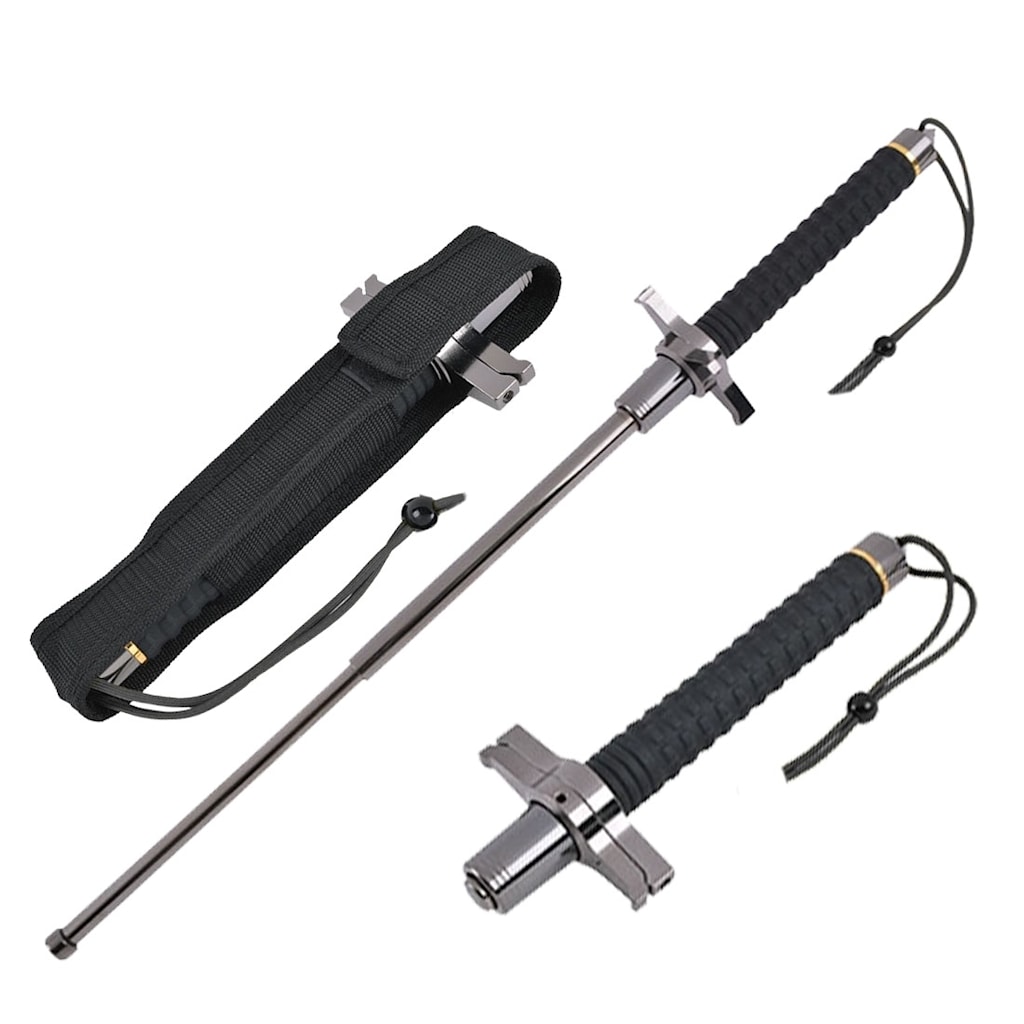
A telescopic baton is a compact, extendable stick designed to expand from a short handle into a longer rod with a quick motion. It is commonly associated with law enforcement and security personnel, though its presence in civilian contexts varies widely depending on local laws and regulations. Its defining feature is its collapsible design, which allows it to be easily carried and stored when not in use.
Design and Structure
The Telescopic Baton is typically made from metal or reinforced materials that provide both durability and strength. It consists of multiple sections that slide into one another, forming a compact unit when closed. With a flick of the wrist, these sections extend and lock into place, creating a rigid structure.
The handle is often designed for grip and control, sometimes featuring textured surfaces to reduce slipping. This combination of portability and quick deployment is what sets it apart from traditional fixed batons.
Historical Context
While the modern telescopic baton is a relatively recent development, the concept of handheld sticks for defense or control has existed for centuries. Various cultures have used similar tools for maintaining order or personal protection. Over time, advancements in materials and design led to the creation of the extendable version we see today.
Its adoption by professional sectors reflects a broader trend toward tools that are both efficient and easy to carry. The telescopic design offered a practical solution for situations where space and accessibility were important considerations.
Practical Applications
In professional settings, the telescopic baton is often used as part of a broader set of tools for maintaining safety and control. It is valued for its compact form and the ability to be deployed quickly when needed. However, its use typically comes with strict guidelines and training requirements.
Outside of professional use, its role becomes more complex. Laws differ significantly between regions, and in some areas, possession may be restricted or prohibited. This makes awareness of local regulations essential for anyone considering it.
Safety and Responsibility
Handling any object designed for defensive or control purposes requires caution. Proper training is essential to ensure that it is used safely and appropriately. Misuse can lead to unintended consequences, both physically and legally.
For this reason, many experts emphasize prevention and awareness as the first line of personal safety. Understanding surroundings, avoiding risky situations, and prioritizing de-escalation are often more effective than relying on physical tools alone.
Public Perception
The telescopic baton often carries a strong visual association with authority and enforcement. This perception can influence how it is viewed in different contexts. For some, it represents security and order; for others, it may raise concerns about safety and misuse.
These differing perspectives highlight the importance of context. The same object can be seen in very different ways depending on how and where it is used.
Alternatives and Modern Perspectives
In recent years, there has been a growing emphasis on non-physical approaches to safety and conflict resolution. Training in communication, situational awareness, and de-escalation techniques is increasingly valued.
Technology has also introduced new options, such as safety apps and alert systems, which provide additional layers of security without relying on physical force. These alternatives reflect a shift toward more holistic approaches to personal and public safety.
Why Understanding Matters
Even if someone has no intention of using or carrying a telescopic baton, understanding what it is and how it is perceived can be valuable. Knowledge helps individuals make informed decisions and engage in more meaningful discussions about safety, law, and responsibility.
It also encourages a broader perspective—recognizing that tools are only one part of a much larger conversation about security and well-being.
Awareness Over Assumption
The Telescopic Baton often draws attention because of its design and associations, but understanding it requires looking beyond surface impressions. It is a tool shaped by purpose, regulation, and context, factors that determine how it is perceived and used.
In today’s world, where conversations around safety continue to evolve, it serves as a reminder that responsibility matters just as much as capability. Whether viewed from a practical, legal, or social perspective, the key takeaway is clear: informed awareness is always more valuable than assumption.
A Tool Shaped by Context
The telescopic baton is more than just a piece of equipment; it is a reflection of how societies approach safety, authority, and responsibility. Its design speaks to practicality, while its regulation highlights the importance of control and accountability.
Ultimately, its significance lies not in the object itself, but in the context in which it exists. Understanding that context allows for a more balanced and informed view—one that goes beyond assumptions and focuses on awareness, responsibility, and thoughtful decision-making.
About the Creator
Enjoyed the story? Support the Creator.
Subscribe for free to receive all their stories in your feed.
Comments
There are no comments for this story
Be the first to respond and start the conversation.