
Top 5 Lean Objectives: Reducing Downtime, Waste, and Inefficiency
What are Lean Objectives in Lean Manufacturing?


Want to stay ahead of the competitors? Efficiency is the known secret! Companies are under constant pressure to fulfill the operational efficiency criteria by producing high-quality products while keeping costs, time, and resources in check.
But how can businesses achieve this balance? That’s where Lean Manufacturing comes in. Initially developed by Toyota, Lean is a proven approach that optimizes productivity with a set goal of delivering value to the customers by:

Lean is about continuous improvement centered around lean objectives. This whole ideology isn't an ordinary set of practices but a shift in how a company operates. Everyone – from top executives to floor workers – plays a role in improving things.
So, basically, these are the lean objectives that drive excellence. In this article, we’ll break down the Top 5 Lean Objectives that can help businesses reduce downtime, cut waste, and improve efficiency. Let’s start!
5 Key Lean Objectives
1. Continuous Improvement: A Never-Ending Cycle of Refinement
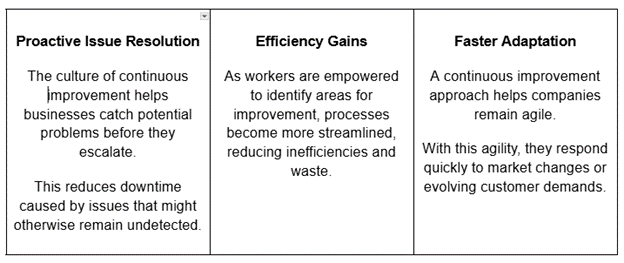
Lean manufacturing hinges on the principle of Kaizen — Continuous improvement! This approach is built on the idea that businesses should never be content with their current state.
So, what next? Here’s the answer! Instead of relying on the current state, they should constantly be investing time, effort, and resources in ways to enhance every process and product.
Unlike one-time fixes or temporary changes, continuous improvement is more focused on ongoing evolution and adjustment.
Result? A never-ending improvement cycle where teams are encouraged to suggest small, incremental changes. All these efforts lead to significant wins gradually.
How Continuous Improvement Reduces Downtime and Waste?
Customer Benefits
- Customers get better deliveries and high-quality products due to the ongoing process refinement.
- Customers feel valued and confident. The sense of their money going to the right, the deserving place for quality products and services is a win-win.
2. Cost Reduction: Maximizing Value While Minimizing Resources
Let’s talk about everyone's favorite, money! Cost reduction or saving money is one of the most significant lean objectives.
Lean helps you save costs by slashing budgets or reducing workforce size and eliminating waste across the production process.
So, how does lean manufacturing fulfill this objective? Lean recognizes every step in the value stream. It focuses on adding value to the end product throughout the process. Anything that doesn’t contribute to value is WASTE.
By eliminating these inefficiencies, companies can produce more for less – improving their margins while saving costs.
How Lean Achieves Cost Reduction?
1. Minimized Waste in All Forms
- Lean targets the seven wastes (Defects, Overproduction, Waiting, Non-Value-Added Motion, Excess Processing, Inventory, and Unused Talent), systematically reducing them.
- This prevents unnecessary spending on resources that don't contribute directly to customer value.
2. Optimized Resource Allocation
- Companies can reduce resource consumption by streamlining processes.
- Streamlining processes may include reducing the time spent on non-productive tasks or utilizing fewer materials without compromising quality.
3. Better Use of Labor
- Lean practices ensure that employees are deployed where their skills are most needed.
- It focuses on avoiding underutilization or excess staffing.
Customer Benefits
- Lower operational costs translate into more competitive pricing for products or services.
- Customers can rely on companies to offer high-quality goods at reasonable prices without cutting corners in production quality.
3. Production Agility: Flexibility to Meet Customer Demand
Responding to shifting customer demands without overextending resources is CRUCIAL, particularly now when the business landscape is more dynamic than ever.
Thanks to Lean Manufacturing for providing that production agility Framework.
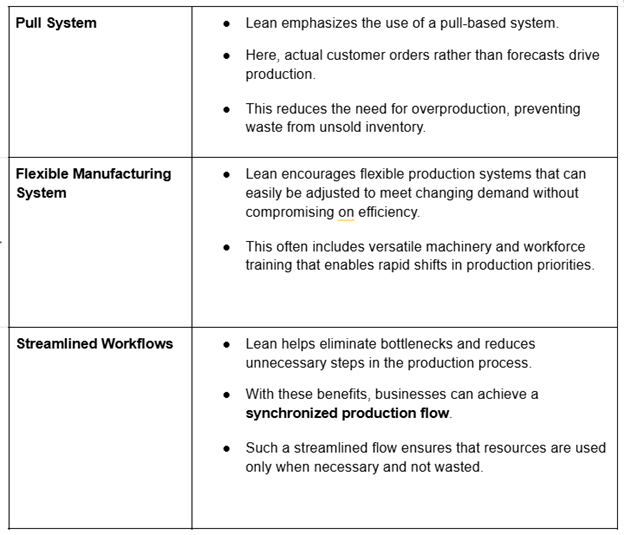
This ensures production is aligned with actual customer demand instead of relying on forecasts or historical trends.
Lean manufacturing promotes the concept of level production and demand-driven manufacturing. The idea is to produce only what is needed and when it is needed.
How Lean Enhances Production Agility?
Customer Benefits
- Customers receive timely deliveries that match their exact needs.
- Timely deliveries avoid the risks associated with excess inventory or stockouts.
- Demand responsiveness means customers get products that are always fresh, resulting in customer satisfaction.
4. Improving the Work Environment: A Culture of Safety and Efficiency
Lean is a wholesome and holistic approach! A true Lean transformation extends beyond processes. It also includes creating a positive, safe, and productive work environment for employees.
Lean also ensures that the employees have a conducive environment in which they can perform their best. The reasons are apparent – A healthy, safe, and engaging work culture directly impacts productivity.
How Lean Improves the Work Environment?
1. Lean practices promote workers’ safety with the design of workstations that:
- minimize physical strain
- reduce the risk of accidents
- make the workflow more comfortable
2. Lean empowers employees! When the employees feel valued and involved, job satisfaction is achieved, resulting in a lower turnover rate and better retention.
3. Lean tools like 5S (Sort, Set in order, Shine, Standardize, Sustain) help organize workspaces that reduce time wasted searching for tools or materials and minimize unnecessary movement.
Customer Benefits
- A productive, safer environment results in an efficient workforce that commits fewer mistakes and produces higher-quality products.
- Motivated and engaged employees directly enhance customer satisfaction.
5. Eliminating Waste: The Core of Lean Manufacturing
Waste elimination is the heart of Lean. In Lean, waste refers to any activity that consumes resources but does not add value to the product or service from the customer's perspective.
Lean focuses on identifying and eliminating waste through streamlined workflows and optimized processes.
Also, lean identifies the following eight types of waste.
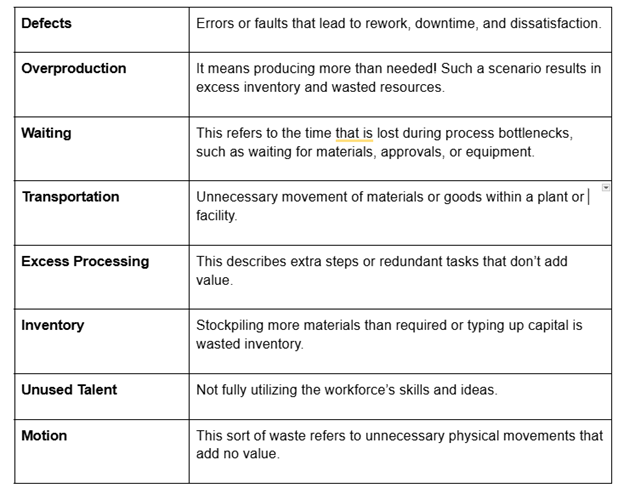
Practicing lean helps companies eliminate these wastes and reduce costs, improve production speed, and increase overall efficiency.

Concluding Words
Lean is a hardcore approach with lean objectives forming the base. These practices involve everyone in an organization – from top to bottom and create a culture of continuous improvement. Lean is customer-centric! It ensures delivering higher-value products or services by aligning with the customer's needs perfectly.
For any business that aims to gain a competitive edge, lean happens to be the right strategy. Besides being customer-centered, Lean ensures the company achieves the following:
- Streamlined operations
- No waste
- Reduced downtime
- Overall efficiency.
About the Creator
Lean Manufacturing
Welcome to LeanManufacture.net, your go-to online resource for all things lean manufacturing. Dive into comprehensive insights, tools, and guidance tailored for professionals and businesses in this field. Explore methodologies
Enjoyed the story? Support the Creator.
Subscribe for free to receive all their stories in your feed.
Comments
There are no comments for this story
Be the first to respond and start the conversation.