
The Unspoken Rules of Small Talk That Decide First Impressions
The Hidden Etiquette of Group Chats No One Teaches You

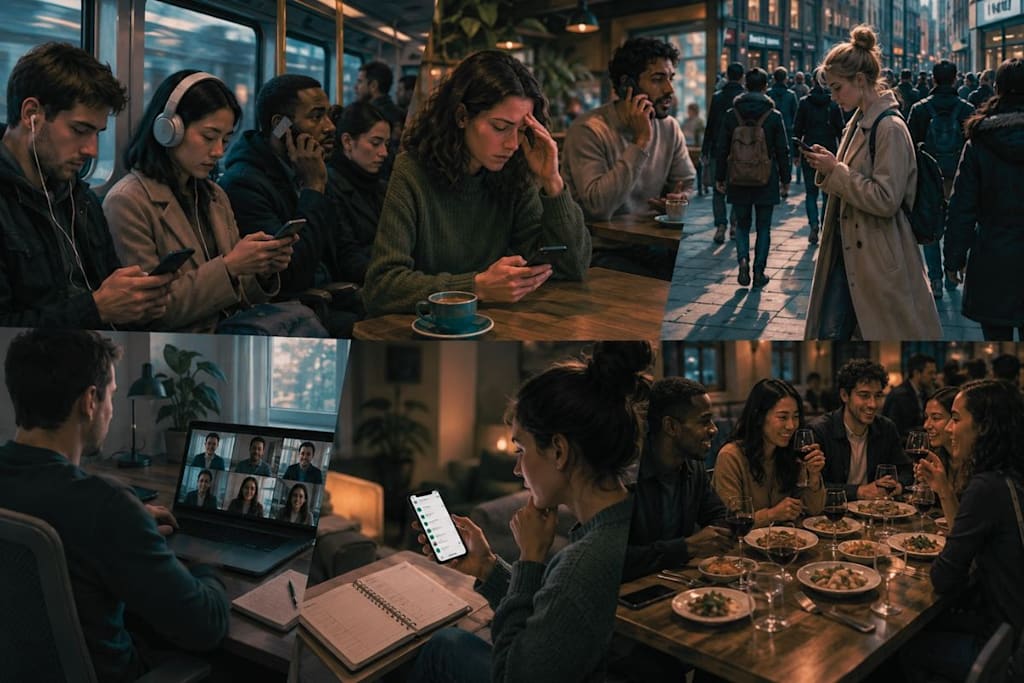
Every generation has its own set of social codes, but navigating society today feels faster and more complicated than ever before. We aren’t just juggling face-to-face etiquette anymore; we are constantly balancing digital communication, hybrid workplaces, and rapidly shifting social boundaries. While nobody hands you a handbook when you reach adulthood, there is a collective understanding of how we are supposed to behave. Welcome to the definitive breakdown of The “Unspoken Rules” of Modern Life—the unwritten contract we all sign just by existing in the 21st century.
The Digital Etiquette Paradigm
Most of our daily interactions now happen through a glass screen. Because we cannot see facial expressions or hear tone of voice, a whole new subset of manners has quietly emerged to stop us from constantly offending each other.
The Voice Note Dilemma
Voice notes are brilliant for the sender, but they can be a massive burden for the receiver.
- Keep it brief: If a voice note passes the two-minute mark, it is no longer a message. It is a podcast.
- The context check: Sending a completely unprompted four-minute audio file forces the recipient to find a quiet space, hunt for headphones, or sit in silence while you ramble.
- The rule: Always ask first, or keep them short and punchy.
The Unannounced Phone Call
In the modern era, ringing someone’s phone without warning is increasingly viewed as an aggressive act. Unless it is an absolute emergency, or you are calling a parent who still prefers the landline, the standard protocol is to send a quick text first. A simple "Free for a quick buzz?" gives the other person a chance to prepare or politely decline if they are busy.
The "Read Receipt" Anxiety
If you choose to keep your read receipts turned on, you enter a psychological contract. Leaving someone on "read" for days is the digital equivalent of walking away mid-sentence while someone is speaking to you. If you don't have time to reply, don't open the message yet.
Public Spaces and Shared Airwaves
As the world grows more crowded, our public spaces require a bit more collective discipline. Unfortunately, technology has made it easier than ever to accidentally infringe on other people’s peace.
The Speakerphone Epidemic
Perhaps the most universally agreed-upon frustration of modern life is the person who watches videos, plays music, or takes video calls on speakerphone in public transport or cafes.
- The Golden Rule: If you are in a public space, headphones are not optional. Nobody else wants to hear your FaceTime catch-up, your video feed, or your choice of music.
Spatial Awareness in the City
Walking down a busy high street requires a degree of rhythm. The ultimate modern sin here is the "text-and-stroll"—walking at a snail’s pace while staring intently at a screen, completely oblivious to the human traffic jam forming behind you. If you need to map your route or reply to an email, simply step to the side near a shop window.
The Evolving Workplace
The shift towards remote and hybrid working has completely rewritten the professional playbook. We are no longer just worrying about who stole the office milk; we are managing new boundaries of time and presence.
The Camera-On Etiquette
When you are working from home, video meetings can feel relentless. While it is perfectly acceptable to turn your camera off during a massive company-wide webinar, smaller team catch-ups generally require your face to be visible. Sitting in a small meeting with a black box and your initials suggests you are folding laundry or scrolling through your phone rather than engaging with your colleagues.
Respecting the "Out of Office"
The boundary between work life and personal life has become dangerously blurred. Because we can access work emails on our personal phones at 11:00 PM, it is tempting to send a quick message when an idea pops into your head.
However, modern professionalism dictates that we respect the boundaries of others.
- Use scheduled sending: If you are working late, schedule your email to land in your colleague's inbox at 9:00 AM the next morning.
- Protect the weekend: Do not expect a response outside of contracted hours unless the building is literally on fire.
Friendships and Social Dynamics
Maintaining friendships in adulthood is notoriously difficult. Busy schedules mean we have to be far more intentional with our time, which has birthed a few critical rules around social planning.
The "Soft Cancel"
We have all done it. You agree to plans on a Tuesday when you feel energetic, but by Friday night, you are exhausted and want nothing more than a takeaway and the telly.
Cancelling plans occasionally is fine. However, the "soft cancel"—waiting until twenty minutes before you are supposed to meet to send a vague text about "feeling a bit tired"—is incredibly disrespectful of the other person's time. They could have made other plans, cooked a meal, or avoided travelling into town. If you need to bail, give as much notice as humanly possible.
Splitting the Bill
When the bill arrives at a group dinner, things can get awkward fast. The modern consensus generally splits down two lines:
- The Even Split: If everyone drank roughly the same amount and ordered standard mains, just split the bill evenly. It saves time, avoids tedious maths, and keeps the night ending on a high note.
- The Adjust: If one person only had a side salad and tap water while everyone else drank champagne and ordered steaks, the group should automatically offer to let that person pay only for what they had. Do not make them ask for it.
Navigating the Unwritten Future
At their core, these guidelines are not about creating a rigid, paranoid society where everyone is terrified of making a misstep. They are simply about empathy and self-awareness.
The world changes fast, and the technology we use will continue to evolve. But as long as you consider how your actions impact the time, space, and mental peace of the people around you, you will naturally stay on the right side of these modern boundaries.
Which of these unwritten rules do you find the most challenging to navigate in your day-to-day routine?
About the Creator
Juniper Kane
Juniper Kane is a storyteller who believes every idea has the power to spark imagination. From compelling narratives to reflective essays, Juniper writes to connect with readers and explore the human experience through words.
Enjoyed the story? Support the Creator.
Subscribe for free to receive all their stories in your feed.
Comments
There are no comments for this story
Be the first to respond and start the conversation.