
The Silent Architect: Why Highly Intelligent People Embrace Solitude
Beyond the label of introversion lies a strategic choice—how the most analytical minds use silence as a blueprint for greatness.

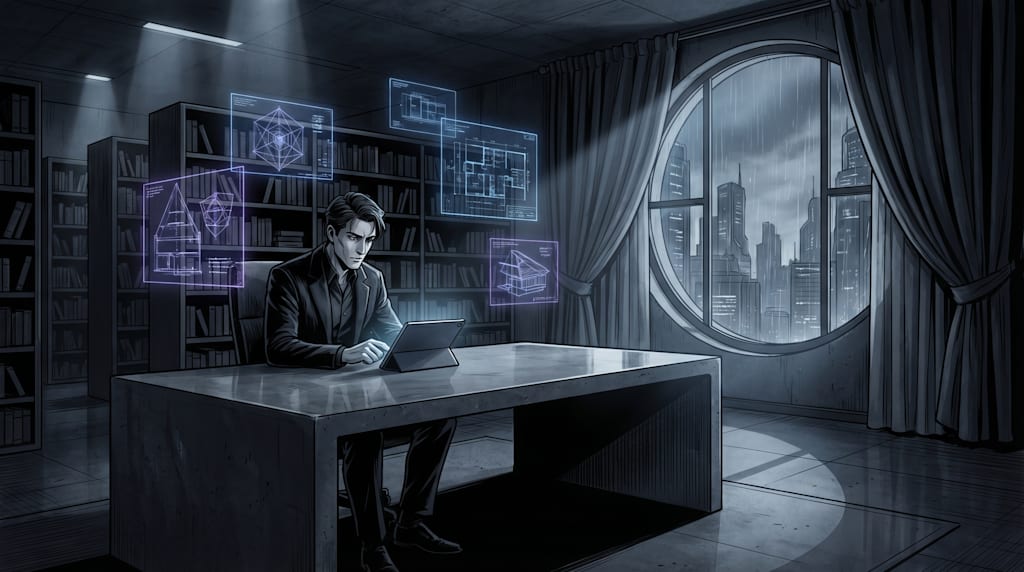
In a world that cannot stop talking, there is a rare breed of individuals who find their greatest strength in the sound of silence. You see them at the edge of the room during parties, or perhaps you notice their empty seat at unnecessary social gatherings. Often, society labels them as "loners," "antisocial," or even "awkward." But if you look through the lens of high-level psychology, you will discover a fascinating truth: their solitude is not a prison; it is their laboratory. For the highly intelligent, being alone is not about escaping the world, but about finding the clarity needed to understand it. The first and most critical reason for this preference is what experts call "Cognitive Load Management." For the average person, a social interaction is a simple exchange of words. But for someone with a highly analytical and intelligent brain, every conversation is a high-speed data transfer. When a genius enters a room, they aren't just hearing voices. They are reading micro-expressions, analyzing tone, detecting inconsistencies in logic, and processing the emotional atmosphere. This is exhausting. While others are "recharging" by talking, the highly intelligent person is losing energy because their "filter" is too sensitive. They choose solitude not because they hate people, but because they value their cognitive energy. They would rather spend that energy building a complex idea or solving a profound problem than navigating the draining waters of small talk about the weather or celebrity gossip. Furthermore, the neuroscience of intellectual seclusion reveals that solitude is a physiological necessity for high achievers. Research suggests that people with higher cognitive abilities have more efficient brain connectivity, meaning they process information faster and more intensely. In a crowded environment, this efficiency becomes a burden. The brain is bombarded with sensory input—the hum of the air conditioner, the subtext of a coworker’s joke, the flickering of a light bulb. For a standard brain, these are easily ignored. For an analytical mind, these are data points that require energy to filter out. This is why solitude is a period of "neural cooling," where the brain can reset and focus on its primary objectives without the interference of environmental noise. Without this time alone, the highly intelligent mind becomes cluttered and less effective. History’s greatest architects of thought—from Nikola Tesla to Albert Einstein—shared a common sanctuary in isolation. Tesla once famously said, "Mind is sharper and keener in seclusion and uninterrupted solitude. Originality thrives in seclusion free of outside influences." This is what psychologists call "Deep Work" or "Flow State." When you are alone, the brain’s "Default Mode Network" (DMN) takes over. This is the part of the mind responsible for imagination, self-reflection, and making connections between seemingly unrelated ideas. In the noise of a crowd, this network is suppressed by the external demands of social interaction. In the stillness of a room, it becomes a superpower. The silent architect uses this void to design worlds, inventions, and theories that others cannot yet see. Beyond productivity, there is a deep philosophy in the "Inner Citadel," a concept popularized by Stoic philosophers like Marcus Aurelius. It is the idea of building a mental fortress that no external event can shake. Highly intelligent people spend their time alone constructing this citadel. They read, they contemplate, and they argue with themselves until their logic is bulletproof. This intellectual independence is what allows them to lead when others are panicked. They are not following the herd because they have spent years mapping their own territory. Their solitude is the price they pay for a mind that is truly their own, free from the echoes of societal expectations and collective delusions. They understand that the crowd often demands conformity at the expense of truth, and they are unwilling to make that trade. We must also address the "High Standards of Connection." There is a psychological phenomenon where, as intelligence increases, the circle of friends often decreases. This isn't necessarily elitism; it is a search for resonance. Highly intelligent people often possess a "complex internal landscape." They seek conversations that challenge their perspectives, expand their horizons, and touch on the profound mysteries of existence. When they cannot find that depth, they prefer their own company over the hollow echoes of superficiality. To them, being alone is far less lonely than being in a room full of people where you cannot speak your heart. They prioritize quality over quantity, understanding that one meaningful connection is worth a thousand superficial handshakes. Finally, solitude offers something that a busy life never can: a mirror to the soul. People who embrace silence are often the most self-aware. They use their time alone to audit their thoughts, confront their fears, and refine their character. While the world is busy looking for external validation—likes, shares, and applause—the silent architect is looking inward for mastery. This internal focus allows them to stay grounded when chaos erupts. They don't need the crowd to tell them who they are; they have already done the hard work of discovering themselves in the dark. Silence is not a weakness, nor is it a sign of depression. It is the hallmark of a mind that is busy at work, building the foundations of the future. If you feel the need to retreat into your own world, do not apologize for it. You are not broken. You are simply creating a masterpiece in the shadows, and when the time is right, your work will speak louder than any crowd ever could. Start writing...
About the Creator
Noman Afridi
I’m Noman Afridi — welcome, all friends! I write horror & thought-provoking stories: mysteries of the unseen, real reflections, and emotional truths. With sincerity in every word. InshaAllah.
Enjoyed the story? Support the Creator.
Subscribe for free to receive all their stories in your feed.
Comments
There are no comments for this story
Be the first to respond and start the conversation.