
THE LATEST ADVANCES IN CANCER TREATMENT AND REASEARCH
Prepared by Mubarek Jemal
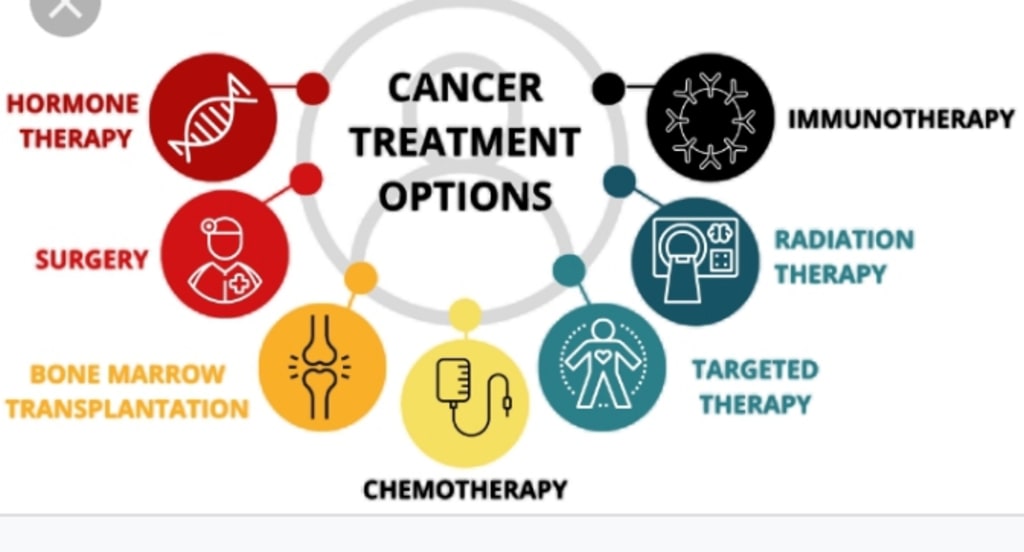
The Latest Advances in Cancer Treatment and Research
Introduction
Cancer remains one of the most challenging diseases to treat, but significant progress has been made in recent years in the field of cancer treatment and research. Advances in technology, understanding of the underlying mechanisms of cancer, and novel therapeutic approaches have revolutionized cancer care, offering new hope to patients worldwide. In this article, we will explore some of the latest breakthroughs in cancer treatment and research that are changing the landscape of oncology.
1. Precision Medicine and Targeted Therapies
Precision medicine has emerged as a game-changer in cancer treatment. This approach involves tailoring treatments to an individual's genetic makeup, enabling more precise and effective interventions. Genetic testing and next-generation sequencing techniques have provided valuable insights into the molecular profile of tumors, allowing oncologists to identify specific genetic mutations or alterations driving cancer growth. Targeted therapies, such as tyrosine kinase inhibitors and immune checkpoint inhibitors, have shown remarkable success in specific cancer types, resulting in improved survival rates and quality of life for patients.
2. Immunotherapy Breakthroughs
Immunotherapy has revolutionized cancer treatment by harnessing the body's immune system to target and destroy cancer cells. Checkpoint inhibitors, such as pembrolizumab and nivolumab, have shown impressive results in several malignancies, including melanoma, lung cancer, and bladder cancer. Moreover, CAR-T cell therapy, a form of adoptive cell transfer, has exhibited remarkable efficacy in hematologic malignancies like leukemia and lymphoma. The field of immunotherapy is expanding rapidly, with ongoing research focusing on improving response rates, overcoming resistance, and extending the benefits to a wider range of cancer types.
3. Liquid Biopsies for Early Detection
Early detection is crucial for successful cancer treatment. Liquid biopsies, a non-invasive alternative to traditional tissue biopsies, are gaining momentum as a powerful tool for early cancer detection and monitoring. Liquid biopsies analyze circulating tumor cells (CTCs), cell-free DNA, or microRNA in blood samples, providing insights into the genetic makeup and progression of tumors. This approach enables oncologists to detect cancers at early stages, predict treatment responses, monitor treatment efficacy, and identify potential drug resistance. Liquid biopsies hold great promise for improving patient outcomes by facilitating timely interventions and personalized treatment plans.
4. Advances in Radiology and Imaging
Advancements in radiology and imaging technologies have significantly contributed to cancer diagnosis, treatment planning, and monitoring. High-resolution imaging techniques, such as positron emission tomography (PET), magnetic resonance imaging (MRI), and multiparametric imaging, allow for better visualization and characterization of tumors. Additionally, functional imaging techniques, including diffusion-weighted imaging (DWI) and dynamic contrast-enhanced MRI, provide valuable information about tumor metabolism, blood flow, and treatment response. These advancements aid in accurate tumor staging, treatment selection, and evaluation of therapeutic outcomes.
5. Gene Editing and CRISPR Technology
Gene editing technologies, particularly CRISPR-Cas9, have transformed the field of cancer research. CRISPR allows scientists to modify specific genes, enabling them to better understand the genetic alterations that drive cancer development and progression. This technology has facilitated the creation of genetically modified animal models that closely mimic human cancers, enabling researchers to study tumor biology and test potential therapies more accurately. CRISPR-based approaches also hold promise for developing novel targeted therapies and improving the efficacy of existing treatments.
6. Artificial Intelligence and Big Data Analytics
The integration of artificial intelligence (AI) and big data analytics has opened up new avenues in cancer research and treatment. AI algorithms can analyze large datasets, including patient records, medical images, genomic data, and scientific literature, to identify patterns and make predictions. This technology helps in early cancer detection, personalized treatment recommendations, and identification of novel drug targets. AI-powered tools also aid in radiation therapy planning, tumor segmentation, and predicting treatment outcomes. By leveraging the power of AI, researchers and clinicians can accelerate discoveries, optimize treatment strategies, and ultimately improve patient outcomes.
Conclusion
The latest advances in cancer treatment and research are transforming the landscape of oncology. Precision medicine, immunotherapy, liquid biopsies, radiology advancements, gene editing, and AI-driven approaches are offering new hope for patients and enhancing the effectiveness of cancer treatments. With ongoing research and collaborations, it is expected that these innovations will continue to evolve, leading to further breakthroughs and improvements in cancer care. As we move forward, the goal is to translate these advancements into practical applications that can benefit patients worldwide, ultimately moving closer to a future where cancer is no longer a formidable foe.
About the Creator
Mubarek Jemal
Best article writer in health and journal content
Enjoyed the story? Support the Creator.
Subscribe for free to receive all their stories in your feed.
Comments
There are no comments for this story
Be the first to respond and start the conversation.