vintage
Vintage content about relationships, unions and romances past.
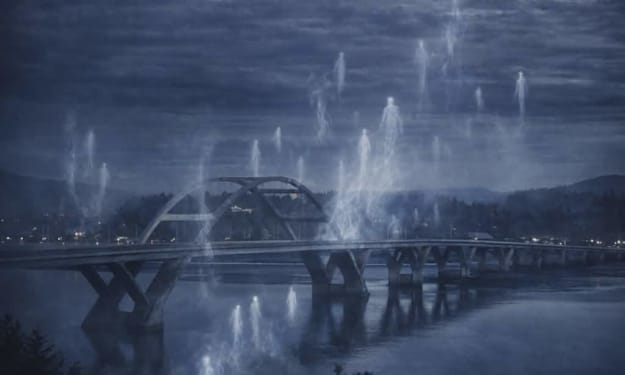
Waldport’s Vanished
On the Oregon coast, disappearances usually come with explanations. Sneaker waves when they turned their back for a split second. Rain, wind, and snow contribute to accidents. A hiking trip that took a wrong turn. In the fall of 1975, Waldport faced a different kind of loss. Twenty people didn't drown, crash, or wander off. They walked into a community meeting at the Bayshore Inn, listened to two strangers talk about UFOs and salvation, and by sunrise, they were gone. No goodbyes. No forwarding addresses. Just empty driveways, abandoned jobs, and families left staring at doors that never opened again.
By Phoenixx Fyre Dean7 months ago in Humans
The Starfish
The ocean was angry that morning. The waves were crashing against the shore with a loud roar, leaving behind thousands of small, orange starfish on the burning sand. The sun was rising fast, and the heat was starting to turn the beach into a graveyard. In the middle of this vast, dry land stood an old man named Gabriel. He was a man of great character, with a face that looked like a map of many years of struggle. He spent his life in a golden cage of hard work, but he never lost his garden of peace.
By Hazrat Umer7 months ago in Humans
Why Most Lottery Winners Lose It All
Winning the lottery feels like the ultimate dream: instant wealth, freedom from financial stress, and the ability to live life on your own terms. But behind the headlines of oversized checks and champagne celebrations lies a surprising truth—many lottery winners end up broke, sometimes within just a few years.
By AnthonyBTV7 months ago in Humans
Managed, Not Healed
For people living with chronic pain, the most destabilizing realization is not that healing is difficult. It is that healing is often not the goal. The healthcare system that surrounds them is built to manage symptoms, document persistence, and ration interventions rather than pursue restoration of function. Over time, patients begin to notice a pattern. Short-acting medications are readily available. Repeated appointments are routine. Imaging is reviewed, notes are written, and pain is acknowledged. Yet interventions aimed at resolving underlying structural problems, restoring stability, or preventing long-term degeneration are delayed, denied, or classified as optional. The system responds continuously, but it rarely moves forward.
By Peter Thwing - Host of the FST Podcast7 months ago in Humans
Time
Ugh, that time of year again. Twice a year I dread these tow days. It creates upheaval and my body, as I get older, doesn’t approve. I don’t even know we are forced to hold on to something created during war time for wartime. Like any other government unposed tax, entitlement, or rule of law, once created and implemented, it’s a done deal. We are stuck with its misery. I’d rather they add a couple hours to everyday, so I can get everything I do, done, without pressure.
By Alexandra Grant7 months ago in Humans
The Fragile Balance of Inner Silences
Nowadays, it almost seems inappropriate not to be doing well. As if lucidity had to remain silent in favor of a constant, polished, presentable optimism. We are told to look on the bright side, to smile no matter what, to move forward without trembling. And yet, there exists a quieter, less comfortable truth: the one that admits we can falter without giving up, that strength does not always reside in light, but sometimes in the ability to remain standing within a grey zone. The world is accelerating. Information flows without pause, like a continuous stream that becomes difficult to escape. Events unfold one after another, often marked by urgency, conflict and uncertainty. With repeated exposure, the mind adapts. It learns to anticipate, to protect itself, sometimes even to withdraw. This mechanism is neither weakness nor failure; it is a response — a silent attempt to preserve inner balance in the face of an unstable outside world. Over time, something changes. A new sensitivity emerges, sharper, almost raw. It captures details others overlook, senses subtle nuances but it also exhausts. To feel intensely is to accept that the world cannot be entirely filtered. And within this same movement, another transformation can appear: a form of partial numbness. As if certain emotions, having been overused, chose to step back. Not out of absence of life but from overexposure. This paradox is unsettling. How can one be both deeply sensitive and partially detached? How can one explain this feeling that a part of the self observes while another remains suspended? Perhaps there is no simple explanation. Perhaps human beings are not meant to be consistently coherent but to navigate between contradictory states, learning to inhabit their own fractures without necessarily repairing them. The search for answers then becomes an ambivalent pursuit. We question, we analyze, we attempt to create meaning. But as questions accumulate, another realization emerges: must everything be understood in order to keep moving forward? Clarity is reassuring, certainly, but it is not always accessible. And sometimes, it is not even necessary. There is a form of maturity in accepting the unfinished, in recognizing that certain areas will remain blurred. Letting go, in this context, does not mean giving up. It is not about surrendering to resignation but about loosening the grip we impose on ourselves. It is about no longer demanding absolute control, constant stability, or perfect coherence. Accepting that strength can be quiet, almost invisible — that it does not always manifest through grand gestures but through a discreet persistence. Remaining strong is not only about resistance. It is also about knowing when to slow down, when to step away from the noise, when to acknowledge one’s own limits without judgment. In a time that pushes toward intensity, performance, and immediate reaction, choosing to preserve oneself becomes almost subversive — a way of reclaiming one’s inner space. There is something profoundly human in this approach. A way of reconciling what we feel with what we expect of ourselves. A way of continuing forward without denying the shadows, without trying to erase them at all costs. Because they are part of the landscape; they even shape its contours. Perhaps true strength lies here: in the ability to carry what cannot be seen. To keep going without always knowing why. To accept that certain parts of us evolve, disappear, or transform without clear explanation. And despite all this, to remain present. There is not always a definitive answer, nor a reassuring conclusion. But there is movement. Continuity. A form of stability within instability itself. And within this uncertain space, something endures: a quiet, almost imperceptible will not to lose oneself entirely. Perhaps, in the end, that is what it means to remain strong.
By Baptiste Monnet7 months ago in Humans
Why Do the Elderly Crave Sweets
Many families notice the same surprising pattern as their loved ones age: older adults often develop a stronger craving for sweets. Grandparents who once preferred savory meals may suddenly reach for cookies, candy, ice cream, or sugary drinks more often than they used to.
By AnthonyBTV7 months ago in Humans
Zodiac Compatibility Guide 2026: Which Star Signs Are Truly Meant for Each Other?
Whether you’re a die-hard astrology believer or just someone who casually checks your horoscope, zodiac compatibility remains one of the most searched relationship topics online. There’s something irresistibly fascinating about seeing how accurately our star signs describe our personalities, and even more exciting when they hint at who we might be most compatible with.
By Areeba Umair7 months ago in Humans
The Last Ticket
The platform was cold. A thick mist hung over the station like a heavy gray blanket, hiding the faces of people saying goodbye. In the middle of the crowd stood an old man named Elias. He held a small, crumpled train ticket in his hand. It was yellow with age, dated forty years ago. Most people would have thrown it away, but for Elias, it was the only piece of his soul that was still alive. He was a man of great character, living in a golden cage of memories that no one else could see.
By Hazrat Umer8 months ago in Humans
The Mother of the Battlefield
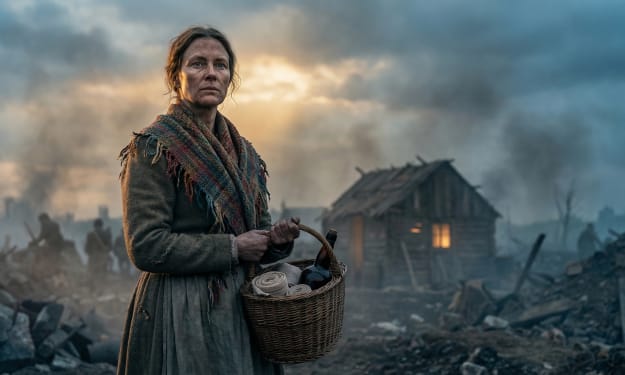
In the middle of a very cold and dark war many years ago there was a woman named Mary. She was born in Jamaica and she had a gift for healing people with plants and simple medicines. She had a heart that was a garden of peace and she wanted to help the soldiers who were fighting in a faraway place called the Crimea. Mary traveled all the way to London and asked the government to let her go and help the wounded men. But because of the color of her skin and her background the officials said no. They told her that she was not needed.
By Hazrat Umer8 months ago in Humans
The Captain Who Refused to Hate
In the cold and dark days of the second world war there was a man named Captain Richard. He was a brave sailor from England who was in charge of a big ship. The world was full of anger and every country was fighting against the other. In those times people were told that the person on the other side was an enemy and did not deserve any kindness. But Richard was a man of deep character and he believed that being a human was more important than being a soldier.
By Hazrat Umer8 months ago in Humans