vintage
Vintage content about relationships, unions and romances past.
The Standing Boy of Nagasaki
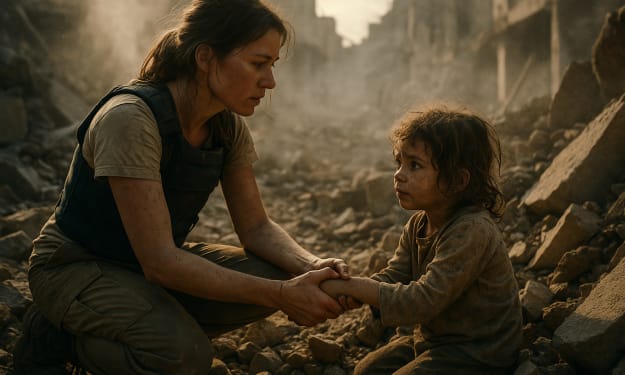
In the haunting ruins of post-war Nagasaki, amid twisted steel, crumbled buildings, and scorched earth, a quiet, solemn figure stands out — a boy, perhaps no older than ten, standing still with perfect posture. On his back, tied with a cloth, is the lifeless body of his baby brother. His face is calm, composed, and eerily mature. A U.S. Marine photographer, Joe O’Donnell, captured this moment — a photograph that would come to symbolize the human cost of war in a way no statistic ever could.
By Zakir Ullahabout a year ago in Humans
Inside the Mind of Tom Segura: ‘Bad Thoughts’ and the Art of Unfiltered Comedy
There's a particular thrill in watching a comedian tightrope-walk between humor and horror—and Tom Segura has built a career on doing just that. With his newest Netflix special, Bad Thoughts, Segura opens his brain to us, and what we find there is both brutally funny and deeply revelatory.
By MD NAZIM UDDIN about a year ago in Humans
The Haircut, the Heart, and Holding On
I never thought a haircut would make me cry. Not in the dramatic, just-got-dumped kind of way. Not even because it was botched. But because of who it was for, and what it meant. My brother, Sami, was sitting in the faded leather chair at the back of Malik’s Barbershop. It was a small place—wood-paneled walls, a dusty fan circling overhead, and a scent that was part shaving cream, part nostalgia. The kind of place where boys became men, and men came to find a sliver of peace. Sami had always been particular about his hair. He liked a low fade with a clean part, the kind that made him look sharp, like the hero of some old Bollywood movie. But today, he didn’t care. Because today, he didn’t recognize his reflection. It’s been nearly six months since our lives changed. One misdiagnosis. One delayed scan. One rare autoimmune disorder that began robbing Sami of his speech, coordination, and slowly, the light in his eyes. I’ve become his caregiver. It’s a word people don’t say enough. They say “blessing,” “burden,” “duty,” “love”—but not caregiver. As if acknowledging the labor of it somehow diminishes the love. But let me tell you the truth: Love is heavy. It’s carrying a grown man to the bathroom at 2 a.m. because he can’t walk on his own. It’s spoon-feeding oatmeal while pretending it's the same old breakfast he used to rush through before school. It’s crying in the laundry room because you miss being a sister instead of a nurse. And yet—it’s everything I’d ever do again, without a second thought. I remember our childhood vividly. Sami was always the brave one. He used to jump off rooftops into muddy puddles, convinced he was invincible. I was the careful one, always patching him up afterward. Maybe this was always going to be our fate—me putting him back together, piece by piece. Back at the barbershop, Malik clippers buzzed softly. Sami tilted his head slightly, eyes closed. A tiny twitch of discomfort crossed his face, and I instinctively stepped forward. Old habits. Malik looked at me and smiled softly. “I’ve got him,” he whispered. I nodded and stepped back. Watching the tufts of hair fall was like watching pieces of him scatter. I felt my chest tighten. This was the first time in weeks he agreed to leave the house. The first time he let a stranger touch him without flinching. Maybe this was healing. Or maybe it was surrender. I didn’t know. Outside, the sun was beginning to set—casting golden light through the windows, turning the dust in the air into tiny, dancing stars. And as if drawn by fate, a line from an old poem came to mind: > She is a sun, glowing through the grit, A keeper of warmth in a world unlit. Except this time, it wasn’t she. It was he. It was my brother, glowing quietly in the ruins of what had been. A different kind of strength. One that didn’t roar but whispered. One that held on. After the haircut, I helped him into his coat. His hand trembled as he tried to button it. I reached out, and he looked at me with those storm-colored eyes—full of gratitude, full of loss. We didn’t say much. Words had never been necessary between us. On the way home, he fell asleep in the passenger seat. I took the long route through town, letting the radio play old songs we used to sing loudly to, just to fill the silence. As I drove, I thought about all the ways people misunderstand caregiving. They think it’s about being strong. Being patient. Being angelic. But caregiving isn’t sainthood. It’s sacrifice. It’s giving up your plans, your weekends, your sleep, your career, sometimes even your sense of identity. It’s mourning someone while they’re still alive, and still showing up every day to hold their hand. And yet—it’s holy work. In the quiet moments, in the stolen smiles, in the eye contact that says “I’m still here”—you find pieces of yourself you never knew existed. Compassion that surprises you. Rage that humbles you. And love that doesn’t need conditions. Back home, I tucked Sami into bed. He looked peaceful. Before I left the room, he squeezed my hand. It was weak, but it was his way of saying thank you. Or maybe, just I love you. I sat outside on the porch afterward, staring at the moon. My thoughts spiraled. I thought about burnout. About how I once yelled at a nurse on the phone out of sheer exhaustion. About how I miss just being his sister. About how lonely it is to watch the world move on while you’re stuck in a loop of routines, medications, and memory loss. And yet, I also thought about that haircut. That small act of reclaiming normal. That quiet resistance. Sami isn’t who he used to be. And maybe neither am I. But maybe we are both still becoming. In the distance, I heard laughter from a neighbor’s yard. Life, buzzing as always. Untouched. Unaware. But here, in our small world, a battle is being fought—not with swords, but with spoons, clippers, and bedtime stories. And every little victory matters. Tomorrow, I’ll wake up and do it all again. And maybe, just maybe, one day Sami will smile and say, “It was a good haircut.” --- Author’s Note: To all caregivers out there—you are seen. You are heard. You are not alone.
By Ikram Ullahabout a year ago in Humans
No You, No Love
You ever hear a phrase that just... hits you? Not ‘cause it’s fancy or deep or whatever — just because it’s true. For me, that phrase is “No you, no love.” I don’t even know where I first heard it. Maybe I made it up in my head after everything. But it stuck. Like glue. And it’s been sitting with me for a while now.
By Md Motiur Rahmanabout a year ago in Humans
The Love Renaissance: What Gen Z's Relationships Reveal About Modern Connection
Are Gen Zers sabotaging the true essence of romance or redefining it? Or they simply might be building something more intentional, resilient, and emotionally intelligent than any generation before. Once upon a time, romance came with rules. Handwritten letters, carefully curated phone calls, and silent nods of the elderly were the foundational stance of old-school love. But now, emojis, dating apps, and Instagram reels document love stories.
By Hridya Sharmaabout a year ago in Humans
A Person Who Saved the Life of Millions of Children
In a world often overwhelmed by stories of conflict and tragedy, there occasionally emerges a soul whose quiet heroism restores faith in humanity. James Harrison, an unassuming Australian man, is one such individual. Known worldwide as “The Man with the Golden Arm,” Harrison’s life is a testament to compassion, generosity, and the power of one person to make an unimaginable difference. Over six decades, his rare blood type saved the lives of more than 2.4 million babies — a feat unmatched in modern history.
By Keramatullah Wardakabout a year ago in Humans
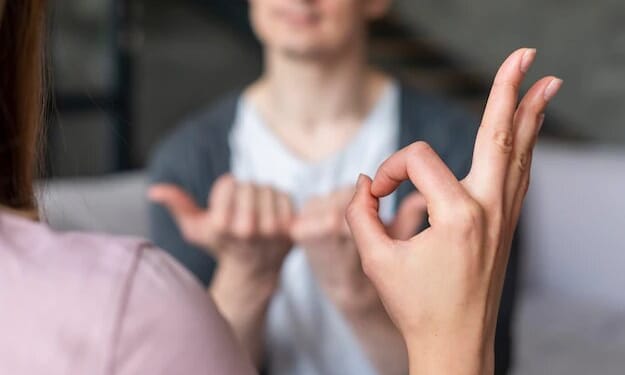
Understanding and Supporting People Who Are Mute
Understanding and Supporting People Who Are Mute Have you ever met someone who couldn’t speak? A person who cannot speak is often called "mute." This word can sound a little old-fashioned, and today, many people prefer to say someone is "nonverbal" or "unable to speak." No matter what word you use, it's important to understand what this means and how we can support people who live without the ability to talk.
By Jeno Treshan about a year ago in Humans
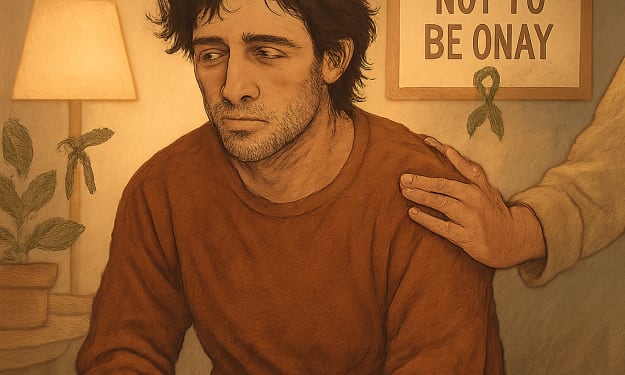
"The Strength in Saying 'I’m Not Okay
May is Mental Health Awareness Month. Every year, stories emerge of people from every walk of life—celebrities, athletes, and everyday folks—sharing their mental health journeys. For some, this month is a reminder to check in with themselves. For others, it’s a lifeline—a message that they are not alone.
By Fazal Maula about a year ago in Humans
Indian Air Strikes: How Will Pakistan Respond? Four Crucial Inquiries
India and Pakistan, two nuclear-armed neighbors, have shared a turbulent and often hostile relationship since their partition in 1947. While diplomatic dialogues have occasionally created brief windows of peace, the relationship is predominantly defined by territorial disputes, cross-border terrorism, and mutual suspicion. One of the most volatile flashpoints in this relationship is the issue of Kashmir, which has led to multiple wars and countless skirmishes. In this tense environment, the occurrence of Indian air strikes inside Pakistani territory is an issue of grave concern, capable of triggering a wider regional conflict. This article explores how Pakistan might respond to Indian air strikes, analyzing four critical inquiries that define the range of Pakistan's potential reactions. The goal is to offer a comprehensive analysis rooted in history, strategy, political science, and international diplomacy. --- ## Inquiry 1: Will Pakistan Respond Militarily or Diplomatically? ### Historical Background When considering Pakistan's response to Indian air strikes, it's essential to look at historical precedents. In February 2019, after a suicide bombing in Pulwama killed 40 Indian paramilitary personnel, India conducted an air strike in Balakot, Pakistan. Pakistan responded with a retaliatory airstrike and captured an Indian pilot, later releasing him as a gesture of peace. ### Military Response: Advantages and Risks **Advantages**: * Demonstrates strength and deters future attacks. * Satisfies domestic political and public pressure. * Maintains military morale and strategic credibility. **Risks**: * Escalation into a full-scale war. * Economic destabilization. * Loss of international support, especially from Western powers advocating restraint. ### Diplomatic Response: A Calculated Alternative Pakistan may also choose diplomacy over military retaliation, particularly if international pressure or internal constraints limit the military option. This could involve: * Engaging the United Nations and presenting evidence of Indian aggression. * Calling on allies like China, Saudi Arabia, and Turkey for support. * Mobilizing international media and diplomatic corps to frame India as the aggressor. ### Strategic Factors Influencing the Choice * **Severity and location of the air strike**. * **Civilian vs. military casualties**. * **Timing and political climate**. * **International support or condemnation**. --- ## Inquiry 2: How Strong Is the Internal Political and Public Pressure? ### Role of Political Leadership Pakistan's leadership, particularly the Prime Minister and the military high command, must weigh public sentiment and political calculus. Any perception of weakness can be politically damaging. Civilian governments in Pakistan often act in coordination with the military, which exerts considerable influence over foreign and security policies. ### Media and Public Sentiment Pakistani media often plays a pivotal role in shaping public opinion. In the event of an Indian air strike, media outlets typically amplify nationalist rhetoric, showing images of destruction, victims, and perceived Indian aggression. ### Civil Society and Nationalism Civil society organizations, political parties, and religious groups can also influence the response. In times of crisis, nationalism surges, and even opposition parties tend to rally around the government. ### Domestic Constraints Despite public pressure, Pakistan’s economy, political instability, and ongoing internal conflicts (such as insurgencies in Balochistan and TTP attacks) may constrain its ability to engage in full-scale military retaliation. --- ## Inquiry 3: What Role Will International Actors Play? ### United States The United States has historically acted as a mediator between India and Pakistan. Although it has tilted more towards India in recent years due to strategic interests, especially concerning China, Washington still values stability in South Asia. ### China China is Pakistan’s closest strategic ally, but it typically advocates for restraint. Beijing has economic and geopolitical interests in South Asia, particularly with its Belt and Road Initiative passing through Pakistan. Any escalation could threaten those interests. ### Saudi Arabia and the Gulf States These nations maintain economic and religious ties with Pakistan. They often advocate for peace and provide financial aid, which gives them leverage. However, they are unlikely to support direct military aggression. ### Russia and European Union Russia has strengthened its ties with both India and Pakistan in recent years. It tends to take a neutral stance and pushes for peaceful resolutions. The EU consistently advocates for diplomacy and humanitarian considerations. ### International Organizations The United Nations, Organization of Islamic Cooperation (OIC), and Non-Aligned Movement (NAM) play key roles in framing the conflict internationally. Their reactions influence how the global community views any response by Pakistan. ### Impact of International Mediation * May delay or avert military retaliation. * Provides a platform for Pakistan to present its case. * Helps in securing economic and strategic support. --- ## Inquiry 4: Could Pakistan Escalate via Proxy or Hybrid Warfare? ### Use of Non-State Actors Historically, Pakistan has been accused of supporting non-state actors operating in Kashmir and other regions. In a post-strike scenario, this could be a means of indirect retaliation. ### Cyber Warfare Cyber attacks on Indian infrastructure, government websites, and financial institutions could serve as a form of hybrid retaliation. Pakistan’s cyber capabilities are evolving, and such attacks offer deniability. ### Disinformation and Psychological Operations Manipulating public sentiment through social media, fake news, and psychological operations can destabilize public trust and create panic. These tactics are increasingly used in modern warfare. ### Economic Leverage and Disruption While limited, Pakistan can attempt to disrupt trade routes, especially those connecting India with Afghanistan or Central Asia. It may also target economic investments in disputed areas. ### Intelligence and Surveillance Operations Pakistan may escalate its intelligence operations within India to gather information or conduct covert actions. This could include tracking military movements or supporting internal dissent. --- ## Broader Implications of Pakistan’s Response ### Risk of Nuclear Escalation Given that both nations possess nuclear weapons, any form of escalation carries the existential risk of a nuclear confrontation. Even the threat of nuclear deployment acts as a significant deterrent. ### Regional Stability An Indo-Pakistani conflict affects the entire region, including Afghanistan, Iran, and China. It can disrupt trade, create refugee crises, and embolden extremist groups. ### Economic Fallout Both nations suffer economically from conflict. Pakistan, already facing IMF conditions and inflation, may experience capital flight, currency devaluation, and trade restrictions. ### Humanitarian Consequences Civilian casualties, displacement, and human rights violations often accompany military responses. These consequences can spark international condemnation and long-term trauma. ### Long-Term Strategic Shifts Repeated air strikes and escalations may force Pakistan to: * Increase defense spending. * Shift alliances. * Accelerate nuclear modernization. * Harden internal security and surveillance. --- ## Conclusion Pakistan’s response to Indian air strikes is influenced by a complex interplay of domestic, military, diplomatic, and geopolitical factors. The four inquiries—military vs. diplomatic response, internal political pressure, role of international actors, and the possibility of proxy or hybrid warfare—offer a structured framework to analyze potential scenarios. In a region as sensitive as South Asia, the stakes of miscalculation are high. While nationalism and political calculations may drive immediate reactions, the long-term costs of escalation—both human and strategic—urge caution. Diplomacy, restraint, and international mediation remain the most viable paths to preventing catastrophic outcomes. In the final analysis, Pakistan must balance national pride with pragmatic foresight. The eyes of the world remain fixed on the subcontinent, and each decision made in Islamabad will shape not only the future of Indo-Pak relations but also the fate of regional and global peace.
By Keyas Khanabout a year ago in Humans