vintage
Vintage content about relationships, unions and romances past.
Strong Enough to Break
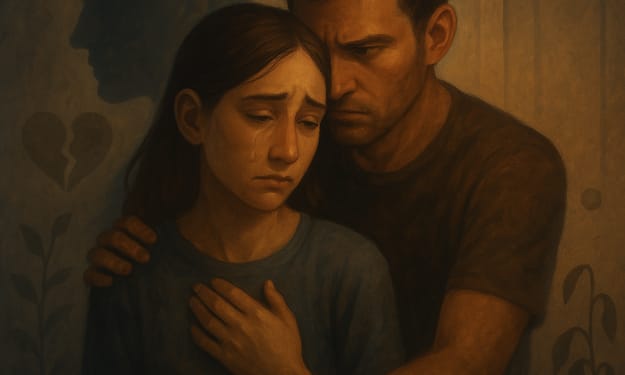
They called me strong. Not in the heroic, cape-wearing kind of way, but in the silent, dependable way—the person who always answered the late-night calls, who always listened without judgment, who always had the right words when someone else’s world was falling apart.
By Nadeem Shah about a year ago in Humans
Why Every Generation Thinks Their Summers Were Better
Ask anyone over the age of twenty-five about summer, and you’ll get a kind of dreamy look. Then the stories start. There was the year they built a treehouse with scrap wood and pure ambition. The road trip in the back of a hot car, windows down, cassette deck on repeat. Late nights chasing fireflies. Lemonade stands that made $1.37. No sunscreen. No cell phones. Just time—and the strange, beautiful way it used to stretch forever.
By Kamran Zebabout a year ago in Humans
Digging into the Past: What Ancient Proteins Say About Real Medieval Meals
When we think of medieval meals, it is easy to imagine giant turkey legs, overflowing goblets of wine, and tables covered in bread and cheese. Popular culture often paints a dramatic picture of what people in the Middle Ages ate. But what did medieval people really eat? Thanks to modern science, particularly the study of ancient proteins, researchers are uncovering the truth about the diets of people who lived centuries ago — and the results might surprise you. For a long time, archaeologists relied mostly on written records, art, and cooking tools to guess what people ate in the past. But those sources often reflected the diets of the rich and powerful — kings, nobles, and monks. The diets of ordinary people were harder to trace. That changed when scientists began examining ancient proteins preserved in human teeth and bones. Proteins are more durable than DNA and can survive for hundreds or even thousands of years. When people eat, tiny bits of food proteins get trapped in their dental plaque. Over time, these harden into tartar and stick to teeth. Today, researchers can remove that tartar, analyze it, and identify specific proteins from meat, grains, vegetables, and dairy that the person once ate. This method, called paleoproteomics, is giving historians a clearer picture of what real medieval meals looked like — not just at royal feasts but at regular dinner tables. For example, in northern Europe, researchers found milk proteins in the teeth of people who lived more than 800 years ago. This discovery suggests that dairy products such as cheese, butter, and possibly yogurt were more common in medieval diets than previously thought. While some records had suggested milk was mainly for children or the sick, the protein evidence shows it was regularly consumed by adults too. In other cases, the analysis revealed surprising ingredients. At one medieval monastery site in the UK, scientists discovered evidence of cod and herring proteins in people who lived far inland. This suggests that salted or dried fish was transported over long distances and that the medieval trade networks for food were much more active than once assumed. In parts of Central Europe, protein evidence has revealed that peas, beans, lentils, and grains like barley and wheat made up a large part of daily meals. These plant-based proteins support the idea that many medieval people followed mostly vegetarian diets, not by choice, but due to cost and availability. Meat was expensive and often saved for special occasions or religious holidays. Interestingly, the study of ancient proteins also helps correct myths. In some medieval records, it was believed that certain foods were avoided due to religious or cultural taboos. But protein analysis tells another story. In some regions where pork was thought to be rarely eaten, scientists found clear evidence of pig proteins in human remains. This shows that actual diets could differ from official rules or recorded customs. Beyond uncovering what people ate, these studies help us understand medieval health. The presence of certain food proteins can show whether diets were rich in nutrients or lacking in key vitamins. Combined with dental and bone health studies, this can tell us which social classes had better diets, how food shortages affected populations, and even how diseases linked to nutrition spread. The process is not easy. Extracting proteins from old remains requires advanced tools and careful handling to avoid contamination. But as technology improves, more and more discoveries are being made, even from tiny samples. Scientists now hope to build global maps of ancient diets and compare how food habits changed over time and across cultures. What makes paleoproteomics especially exciting is that it gives a voice to the ordinary people of the past. Most historical records were written by the elite, but protein analysis does not lie. It reflects what people actually ate — rich or poor, healthy or sick, ruler or farmer. So next time you watch a medieval drama or read a historical novel, you might wonder if that banquet scene is truly accurate. Thanks to the power of ancient proteins, we are now closer than ever to knowing what was really on the menu hundreds of years ago.
By DigitalAddiabout a year ago in Humans
Three Half-Witted Sons and the Miserable Father
Once upon a time, there lived a man named Harold Finnigan in a quiet English village tucked between green hills and sleepy rivers. He was a widower, a cobbler by trade, with fingers worn smooth from decades of stitching soles and mending the weary feet of men. Harold was a man of soft-spoken dignity and patience, a soul both battered and brightened by life’s troubles. His misfortune, however, did not lie in his aching knees nor in his shrinking clientele, but rather in the curious folly of his three sons.
By Muhammad Abdullahabout a year ago in Humans
Notes to My Future Self
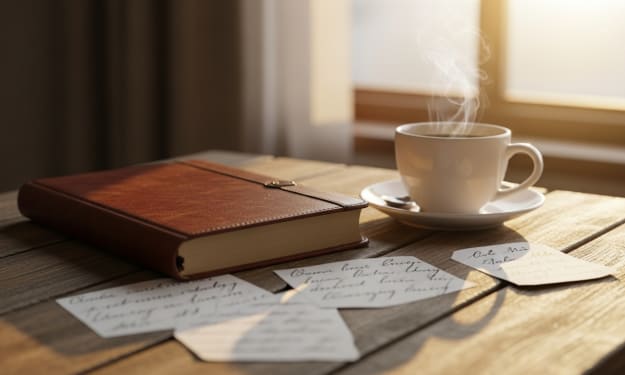
The first note was dated five years ago. It wasn’t written with elegant handwriting or on scented paper. Just a crumpled sticky note tucked between the pages of an old journal I hadn’t opened in years. The ink had bled slightly, probably from tears I didn’t remember crying. "You’re not broken. You’re still building." I stared at it for a long time, heart pounding. I hadn’t remembered writing it, but it was my handwriting. The kind I had in college—hurried, slightly crooked, always in blue ink. I flipped the journal open, and more notes fluttered out like autumn leaves caught in a draft. Some were dated, others not. Some were just single lines: "Call Mom. Even when you’re mad." "Success isn’t peace. Choose peace." "Don’t marry the person who makes you feel small." I read each one like they were sacred texts, letters from the version of me that had felt everything harder, hoped more recklessly, and somehow had the foresight to leave breadcrumbs back to myself. I was thirty-five now. A marketing director in a tech firm. I had a two-bedroom apartment that looked like a Pinterest board come to life. People said I was successful. Confident. Sharp. But I hadn’t felt whole in a long time. It was like I’d built my life on a tightrope—always one wrong step away from falling, but somehow still smiling at the crowd watching from below. Until the day the tightrope snapped. It was a Tuesday. Of course it was. Nothing ever breaks on a dramatic Friday. Just a regular morning—email, coffee, an impromptu meeting—and suddenly, I was standing in the office kitchen, gripping the edge of the counter, unable to breathe. Anxiety attack, the doctor called it. Said it was probably long overdue. Burnout. Stress. Unprocessed grief. Grief? I didn’t know what I was grieving until I opened that journal again later that night. "Future Me, I hope you still dance barefoot in the kitchen. I hope you forgive people, but not so much that you forget what you deserve. I hope you didn’t give up writing." I hadn’t written in years. Once, writing was everything. My sanctuary, my rebellion, my way of making sense of a world that didn’t always make room for sensitivity. But over time, deadlines replaced dreams. KPIs replaced poems. I traded my journals for spreadsheets. And now, here I was—reading a note from a girl who still believed in magic. Who trusted herself enough to leave behind words for a woman she hoped she’d become. I wasn’t sure I’d lived up to her expectations. Over the following weeks, I read every note. I cried through some. Laughed out loud at others. There was one that simply said: "Just because it’s familiar doesn’t mean it’s love." That one hit harder than I expected. It reminded me of Adam. Adam, with his charming smile and emotionally unavailable heart. We were together for two years. I called it love. But looking back, it was more like habit wrapped in fear of loneliness. I’d stayed long after the warmth had faded, convincing myself that comfort was enough. My younger self had seen it coming. Had written a warning. I just hadn’t read it in time. Inspired, I began writing back. “Dear Past Me,” I scrawled late one night, wine glass half-empty beside me. “You were right. About more than I ever gave you credit for.” I wrote about the days I’d felt like quitting. The friendships I let fade because I was too “busy.” The moments I had stood in front of the mirror and hated my reflection—not for how I looked, but for how far I’d strayed from who I wanted to be. But I also wrote about healing. About finally understanding that success isn’t climbing a ladder—it’s learning when to step off. I told her that I had started dancing again in the kitchen, barefoot and unbothered. That I had called Mom. That I had started writing again. --- One evening, I invited a few close friends over. We poured wine and passed around blank notecards. “Write a note to your future self,” I told them. “Something you’ll want to remember five years from now.” They looked skeptical at first, but eventually, the room grew quiet as pens moved across paper. We sealed the notes in envelopes, wrote the date on the outside, and agreed to meet again in five years to open them. A small ritual of hope. Now, the journal is thicker than ever. Filled with letters to and from my past selves. A map of mistakes, lessons, and little victories. And every now and then, when I feel lost again, I turn the pages. I don’t always find answers. But I find myself. If you’re reading this, maybe write a note today. Not for who you are now—but for who you hope to be. She’ll thank you for it. I know I did.
By Shah Nawazabout a year ago in Humans
World’s largest Legoland opens to tourists in Shanghai
**World’s Largest Legoland Opens to Tourists in Shanghai** Shanghai has officially become home to the world’s largest Legoland resort. The much-anticipated Legoland Shanghai Resort opened its gates to the public on July 5, 2025, marking a major milestone in China’s family entertainment industry. Located in Fengjing, Jinshan District, the park spans an impressive 318,000 square meters, making it the largest Legoland in the world.
By GLOBAL NEWSabout a year ago in Humans
The Rain Taught Me to Breathe
For the longest time, I didn’t know how to breathe. Not the kind of breathing that keeps your heart beating, but the kind that keeps your spirit alive. The kind that fills your lungs not just with air, but with hope. That kind of breathing.
By Abuzar khanabout a year ago in Humans