tv review
Reviews of TV series depicting onscreen affairs of the human heart.
Average Doomsday Taylor
S Glimpse Avenjer doomsday Taylor the vast realm of speculative fiction and theoretical futurism, few concepts strike a chord like the idea of “doomsday.” It conjures images of desolate wastelands, crumbling civilizations, and humanity on the brink. But what if doomsday wasn't a singular catastrophic event, but rather a slow, creeping erosion of normal life? This is where the idea of “Average Doomsday Taylor” finds its place—a conceptual character representing a future where doomsday is not a moment, but a condition; not an explosion, but a slow fade. The term has emerged in niche internet culture, philosophy circles, and speculative media discussions, blending elements of science fiction, sociology, and existential thought.
By Nur Alam Zihadabout a year ago in Humans
Alison Brie and Dave Franco Face Copyright Lawsuit Over Sundance Hit ‘Together’
Actors Alison Brie and Dave Franco, who share creative chemistry on and off screen, have suddenly found themselves the subject of a very hot legal fire. Their latest film, Together, which premiered to fanfare at last year's 2025 Sundance Film Festival as a supernatural body horror film, is the subject of an explosive copyright lawsuit. The plaintiffs argue the movie is a blatant copy of an earlier indie attempt, and controversy ensues regarding originality, impact, and Hollywood's generally obscurantist intellectual property universe.
By MD NAZIM UDDIN about a year ago in Humans
Inside the Mind of Tom Segura: ‘Bad Thoughts’ and the Art of Unfiltered Comedy
There's a particular thrill in watching a comedian tightrope-walk between humor and horror—and Tom Segura has built a career on doing just that. With his newest Netflix special, Bad Thoughts, Segura opens his brain to us, and what we find there is both brutally funny and deeply revelatory.
By MD NAZIM UDDIN about a year ago in Humans
The Haircut, the Heart, and Holding On
I never thought a haircut would make me cry. Not in the dramatic, just-got-dumped kind of way. Not even because it was botched. But because of who it was for, and what it meant. My brother, Sami, was sitting in the faded leather chair at the back of Malik’s Barbershop. It was a small place—wood-paneled walls, a dusty fan circling overhead, and a scent that was part shaving cream, part nostalgia. The kind of place where boys became men, and men came to find a sliver of peace. Sami had always been particular about his hair. He liked a low fade with a clean part, the kind that made him look sharp, like the hero of some old Bollywood movie. But today, he didn’t care. Because today, he didn’t recognize his reflection. It’s been nearly six months since our lives changed. One misdiagnosis. One delayed scan. One rare autoimmune disorder that began robbing Sami of his speech, coordination, and slowly, the light in his eyes. I’ve become his caregiver. It’s a word people don’t say enough. They say “blessing,” “burden,” “duty,” “love”—but not caregiver. As if acknowledging the labor of it somehow diminishes the love. But let me tell you the truth: Love is heavy. It’s carrying a grown man to the bathroom at 2 a.m. because he can’t walk on his own. It’s spoon-feeding oatmeal while pretending it's the same old breakfast he used to rush through before school. It’s crying in the laundry room because you miss being a sister instead of a nurse. And yet—it’s everything I’d ever do again, without a second thought. I remember our childhood vividly. Sami was always the brave one. He used to jump off rooftops into muddy puddles, convinced he was invincible. I was the careful one, always patching him up afterward. Maybe this was always going to be our fate—me putting him back together, piece by piece. Back at the barbershop, Malik clippers buzzed softly. Sami tilted his head slightly, eyes closed. A tiny twitch of discomfort crossed his face, and I instinctively stepped forward. Old habits. Malik looked at me and smiled softly. “I’ve got him,” he whispered. I nodded and stepped back. Watching the tufts of hair fall was like watching pieces of him scatter. I felt my chest tighten. This was the first time in weeks he agreed to leave the house. The first time he let a stranger touch him without flinching. Maybe this was healing. Or maybe it was surrender. I didn’t know. Outside, the sun was beginning to set—casting golden light through the windows, turning the dust in the air into tiny, dancing stars. And as if drawn by fate, a line from an old poem came to mind: > She is a sun, glowing through the grit, A keeper of warmth in a world unlit. Except this time, it wasn’t she. It was he. It was my brother, glowing quietly in the ruins of what had been. A different kind of strength. One that didn’t roar but whispered. One that held on. After the haircut, I helped him into his coat. His hand trembled as he tried to button it. I reached out, and he looked at me with those storm-colored eyes—full of gratitude, full of loss. We didn’t say much. Words had never been necessary between us. On the way home, he fell asleep in the passenger seat. I took the long route through town, letting the radio play old songs we used to sing loudly to, just to fill the silence. As I drove, I thought about all the ways people misunderstand caregiving. They think it’s about being strong. Being patient. Being angelic. But caregiving isn’t sainthood. It’s sacrifice. It’s giving up your plans, your weekends, your sleep, your career, sometimes even your sense of identity. It’s mourning someone while they’re still alive, and still showing up every day to hold their hand. And yet—it’s holy work. In the quiet moments, in the stolen smiles, in the eye contact that says “I’m still here”—you find pieces of yourself you never knew existed. Compassion that surprises you. Rage that humbles you. And love that doesn’t need conditions. Back home, I tucked Sami into bed. He looked peaceful. Before I left the room, he squeezed my hand. It was weak, but it was his way of saying thank you. Or maybe, just I love you. I sat outside on the porch afterward, staring at the moon. My thoughts spiraled. I thought about burnout. About how I once yelled at a nurse on the phone out of sheer exhaustion. About how I miss just being his sister. About how lonely it is to watch the world move on while you’re stuck in a loop of routines, medications, and memory loss. And yet, I also thought about that haircut. That small act of reclaiming normal. That quiet resistance. Sami isn’t who he used to be. And maybe neither am I. But maybe we are both still becoming. In the distance, I heard laughter from a neighbor’s yard. Life, buzzing as always. Untouched. Unaware. But here, in our small world, a battle is being fought—not with swords, but with spoons, clippers, and bedtime stories. And every little victory matters. Tomorrow, I’ll wake up and do it all again. And maybe, just maybe, one day Sami will smile and say, “It was a good haircut.” --- Author’s Note: To all caregivers out there—you are seen. You are heard. You are not alone.
By Ikram Ullahabout a year ago in Humans
India-Pak Conflict: A Win-Win for Everyone?
In a world where war often results in devastating losses, the recent escalation between India and Pakistan might seem like a different kind of conflict — one where multiple global and regional players walked away with strategic, political, and even financial “wins.”
By ziyad khanabout a year ago in Humans
The Love Renaissance: What Gen Z's Relationships Reveal About Modern Connection
Are Gen Zers sabotaging the true essence of romance or redefining it? Or they simply might be building something more intentional, resilient, and emotionally intelligent than any generation before. Once upon a time, romance came with rules. Handwritten letters, carefully curated phone calls, and silent nods of the elderly were the foundational stance of old-school love. But now, emojis, dating apps, and Instagram reels document love stories.
By Hridya Sharmaabout a year ago in Humans
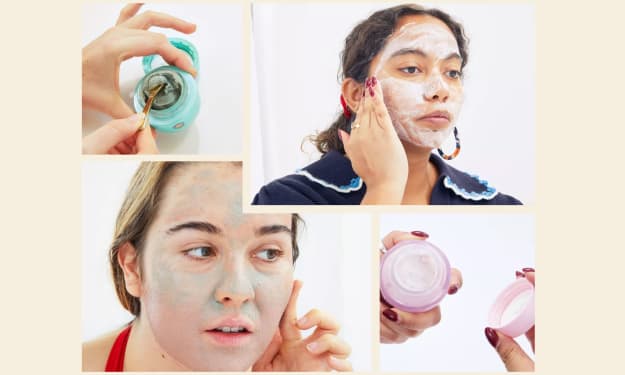
Clay Masks vs. Cream Masks: Which One is Right for Your Skin Type?
In the ever-evolving world of skincare, face masks remain a staple for anyone looking to pamper their skin while targeting specific concerns. Two of the most popular types of masks—clay masks and cream masks—often sit on opposite ends of the skincare spectrum. Each offers distinct benefits and caters to different skin types and needs. But how do you decide which one is right for your skin?
By abdulshariqabout a year ago in Humans