travel
The ultimate test of a compatible relationship is whether you can stand to travel together.
Latest Update of India and Pakistan War
Fighting on Kashmir Frontier Spreads to Jammu: Tensions Escalate Along the LoC May 13, 2023 | Srinagar/Jammu The Kashmir conflict has taken a new turn, as cross border firing and shelling shifts focus towards the Jammu region. This indicates an unsettling shift in the battle along the Line of Control (LoC) India and Pakistan share.
By Arman Sharifabout a year ago in Humans
Hajj Allocation Systems in Muslim Countries: Transparency, Challenges, and Expansion Efforts
Hajj Quota System: How Do Pakistan and Other Muslim Countries Decide Who Will Perform Hajj and Who Will Have to Wait? Every year during the Hajj season, a similar situation arises: thousands of people apply, but only a few are accepted, while many are left waiting. Despite the desire and ability to perform Hajj, not everyone gets the opportunity to fulfill this Islamic duty, as Hajj is conducted under a strict international system known as the 'Quota System.' The Saudi government determines a fixed number of pilgrims for each country, and this is done in collaboration with the Organization of Islamic Cooperation (OIC) based on the principle of 'one pilgrim for every thousand Muslims' in the population of each country. In many countries, lotteries or draws are held to select eligible applicants. The lottery may be based on factors such as age or how long it has been since someone last performed Hajj. Different countries use various methods for this process. The Situation Before the Quota System: The quota system was officially adopted in 1987. This was not just an administrative decision, but a necessary measure in response to the growing Muslim population worldwide and the increasing number of people wishing to perform Hajj. The aim was clear: to prevent overcrowding and reduce the risk of stampedes and other incidents. Additionally, it allowed for the management of Hajj within the infrastructure available during the pilgrimage period. But how was Hajj organized before the quota system, and what events led to the need for determining the number of pilgrims? Ahmad Al-Halabi, an expert in Hajj and Umrah affairs, explained in an interview with BBC Arabic that in the past, anyone who could afford to perform Hajj could do so. He said, "There was no fixed number for pilgrims coming to Makkah every year, but due to the increasing numbers and the limited capacity to carry out the sacred rituals, it became necessary to organize the number of pilgrims." He further mentioned, "If we look at the years before the decision to limit the number of pilgrims, we find that there was a need to restrict the number to 1 million because the area of Mina is less than eight square kilometers, and only 61% of that area, or just under five square kilometers, is usable. The remaining areas of Mina are difficult to access, and pilgrims are advised to stay away from those areas." As the pressure on the holy sites increased in the 1970s, the government began efforts to control the crowds, but these were not enough to prevent the disasters that followed. On July 2, 1990, one of the most horrific disasters in modern Hajj history occurred. A stampede broke out in the 550-meter-long pedestrian tunnel connecting Makkah to Mina, known as Al-Mu'aisim. As pilgrims were heading to perform the "Jamarat" ritual of stoning the devil, a safety barrier above a bridge collapsed, causing many people to fall. The exit was blocked, and thousands were trapped inside. With rising temperatures, the ventilation system failed, turning the tunnel into a deadly trap. As a result, 1,426 pilgrims died, most of whom were from Malaysia, Indonesia, and Pakistan. Al-Halabi believes that this incident exposed flaws in crowd management. He says, "Accidents often happen in the Jamarat area, and this is due to the lack of awareness by Hajj offices in these countries." He added that after this event, the practice of dividing pilgrims into groups to perform the Jamarat ritual was introduced. The Role of Politics in Hajj Management: Since then, the quota system has become an essential part of Hajj management and ensuring the safety of millions of people. While the quota system is theoretically based on a simple principle of equality, the reality is much more complex, as politics and emergency situations often influence Hajj management. In 2015, following a stampede near Jamarat, there was significant diplomatic tension between Tehran and Riyadh, leading to the complete absence of Iranian pilgrims in 2016. In 2017, the Hajj season began amidst the Gulf crisis and the severing of relations between Saudi Arabia and Qatar. Although Riyadh declared that Qatar's quota was secure, the absence of Qatar's official mission and travel restrictions made it difficult for Qatari pilgrims, resulting in a significant decrease in their numbers. Similarly, in 2020 and 2021, the COVID-19 pandemic caused an exceptional situation, and for the first time in centuries, foreign pilgrims were not allowed to perform Hajj, with only a limited number of domestic pilgrims permitted. Internal political crises in various countries also affect Hajj arrangements. For example, in Syria in 2012, after relations between Riyadh and Damascus were severed, the Hajj institution was entrusted to the Syrian National Coalition, creating a political and religious dispute regarding the agency responsible for facilitating Hajj for Syrians. Likewise, in Libya, the division between two rival governments led to confusion regarding the consolidation of pilgrim lists and the division of quotas between the country's east and west. Every Country Has Complete Freedom to Arrange Their Pilgrims: Once Saudi Arabia determines the quota for pilgrims from each country, the responsibility for implementing it lies with the governments and local authorities of those countries. These countries and authorities are free to adopt their methods for selecting pilgrims. Ahmad Al-Halabi explains that every country has the complete freedom to organize their list of pilgrims, as long as they follow Saudi Arabia's guidelines. He says, "Each country has its own system, and they are free to decide which pilgrims are eligible for this year's Hajj. The selection is made only from those who meet the eligibility criteria." "No one can obtain a Hajj visa unless they meet all the required conditions. The most important of these conditions include affiliation with regulatory bodies like Hajj offices and having accommodation arranged in specific locations in Makkah and Madinah." However, once the list is drawn, it becomes crucial to decide who will be given the opportunity to perform Hajj. Since the number of applicants exceeds the quota set by the Saudi government, most countries rely on the lottery system to select pilgrims. The method used to implement this system varies in each country, but the goal remains the same: to ensure fairness in providing the opportunity to pilgrims. Some examples provided by Al-Halabi include Turkey, where pilgrims register on the Religious Affairs Presidency's website, and if their name is selected in the lottery, they proceed with the paperwork. Those whose names are not drawn are included in the next year's lottery. A similar system has been in place in Egypt for some time. According to him, the approval to perform Hajj is no longer just a financial or logistical matter, but in more populous countries, people have to wait for years due to the high demand.
By Ikram Ullahabout a year ago in Humans
Train to busan
June 16, 2026 – 9:07 AM Location: Daejeon Station, South Korea The morning train from Daejeon to Busan was late. Hana paced the platform with her younger brother, Min-jun, nervously checking the time. She was 27, sharp-eyed and alert; Min-jun, barely 10, clutched her hand tightly. Their parents had gone missing two days ago when the outbreak began in Seoul. Now, all they had left was a backpack, a fading phone signal, and each other.
By Haris Khanabout a year ago in Humans
The Love Renaissance: What Gen Z's Relationships Reveal About Modern Connection
Are Gen Zers sabotaging the true essence of romance or redefining it? Or they simply might be building something more intentional, resilient, and emotionally intelligent than any generation before. Once upon a time, romance came with rules. Handwritten letters, carefully curated phone calls, and silent nods of the elderly were the foundational stance of old-school love. But now, emojis, dating apps, and Instagram reels document love stories.
By Hridya Sharmaabout a year ago in Humans
City vs. Highway MPG: Which One is Actually Cheaper for Your Wallet?
If you’ve ever glanced at your car’s fuel economy ratings and wondered why city MPG (miles per gallon) is always lower than highway MPG, you’re not alone. This difference isn’t just a technical detail—it can have a real impact on your monthly fuel expenses.
By Jonathan Calosabout a year ago in Humans
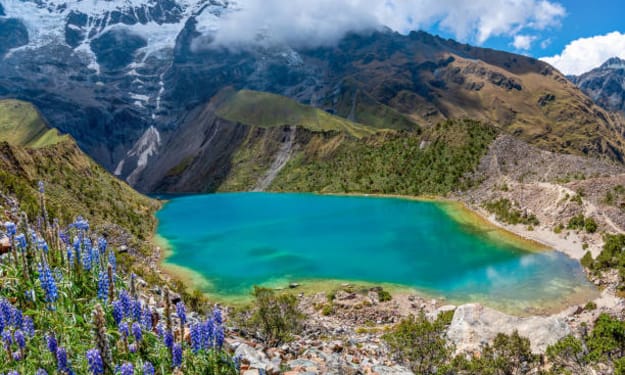
Why Humantay Lake Is the Best Day Trip for Nature Lovers Visiting Cusco
Nestled high in the Peruvian Andes, Humantiy Lake is a breathtaking natural wonder that has become a must-visit destination for travelers exploring Cusco. Known for its stunning turquoise waters, dramatic mountain backdrop, and tranquil atmosphere, Humantay Lake offers an unforgettable experience for nature lovers. Whether you're a seasoned trekker, a photography enthusiast, or simply someone who loves being surrounded by pristine landscapes, this day trip from Cusco has everything you need.
By Machu Picchu 360 Experiencesabout a year ago in Humans
Why Celebrities Prefer Premium Desert Safari Experiences in Dubai?
Premium desert safaris are a great way to enjoy a Dubai holiday tour with loved ones! Many celebrities and VIPs come to Dubai to experience the amazing desert safari tour. There are several reasons for VIPs to enjoy the premium desert safari tours in Dubai. Celebrities need privacy along with some luxury resources. Celebrities and VIP guests also get all the top facilities and amenities.
By Sakshi Singhabout a year ago in Humans