Stream of Consciousness
Some Wounds Don’t Scar — They Stay Open Quietly
I used to believe that time healed everything. That with enough months between you and the pain, it eventually faded into something softer — something manageable. But I’ve come to realize that some wounds don’t scar. They don’t close. They stay open quietly, hidden under layers of laughter, busyness, and pretending. My name is Liana, and this is the story of the wound I carry — the one no one sees, the one I don’t talk about anymore. But just because I don’t speak of it doesn’t mean it stopped hurting. It started seven years ago, on an otherwise ordinary April afternoon. I got a call no one ever wants: “There’s been an accident. You need to come quickly.” The next few hours moved in a blur. I remember screaming before my body even understood the words. My brother, Sam — the one who always knew how to make me laugh when the world felt like it was falling apart — had been hit by a drunk driver while walking home from work. He was twenty-four. I was twenty-one. They told me he died instantly. That it was painless. But I wasn’t thinking about his pain. I was thinking about mine. About the gaping hole suddenly ripped into the middle of my life. What I didn’t know then was that the moment he died, part of me did too. And it wasn’t the dramatic kind of death — not the kind people notice. It was the silent kind. The kind that walks around, goes to work, smiles in family photos, but never really feels whole again. For months after his death, I barely slept. I saw him in dreams, heard him in songs, looked for him in crowds. My phone still had his texts. I couldn’t delete them. I didn’t want to. People were kind, at first. They brought casseroles, sent flowers, left voice mails that said, “If you need anything, I’m here.” But grief is inconvenient, and eventually people drifted. Life went on for them. It didn’t for me. I became good at pretending. At work, I smiled and nodded through meetings. With friends, I laughed at the right times, responded to texts with emojis, and said, “I’m fine” even when I felt like I was drowning. No one knew that I cried in the shower so no one would hear. That sometimes I screamed into pillows until my throat went raw. Grief has no timeline, but society gives you one. You get three months of sympathy, maybe six if you're lucky. After that, it’s “aren’t you over it by now?” But I wasn't. The thing about losing someone like Sam is that the pain doesn't fade — it just changes shape. At first, it’s sharp and suffocating. Later, it’s quieter, duller — but always there, humming under the surface. It’s there when I see brothers laughing in coffee shops. It’s there when someone says, “I’m so close to my sibling — I don’t know what I’d do without them.” It’s there on his birthday, when I buy a cupcake and light a candle anyway. People say I’ve handled it well. That I’m strong. But strength, I’ve learned, isn’t about being okay. It’s about carrying the ache and still showing up. There’s something lonely about grieving someone who the world forgets. About still crying years later, but doing it in silence because the world has moved on. I never got to say goodbye. I never got to tell Sam that he was the best part of my childhood. That he protected me in ways I didn’t even realize until after he was gone. That his goofy jokes, terrible dance moves, and ridiculous love of pineapple pizza were things I would one day miss so deeply, it would feel like physical pain. You don't get closure with sudden death. You get a question mark. And for a long time, I hated myself for not "healing" properly. For not letting go. But here's what I’ve learned: healing doesn’t always mean the wound closes. Sometimes healing is just learning how to live around it. Some wounds don’t scar. They stay open quietly — unseen, unspoken, but felt in every part of who you are. And maybe that’s okay. Because in that quiet ache, I remember. I remember the sound of Sam's laugh. The way he called me “kiddo” even though we were barely three years apart. The way he looked out for me when no one else did. Grief, I’ve come to understand, is just love with nowhere to go. So I carry him in the silence. In the way I try to be kind. In the way I notice people who seem a little too quiet. In the way I never, ever let someone feel invisible in their pain. This wound might never scar — but it has made me more human. And maybe that’s the most honest healing of all. Thank you for reading ❤️.
By Azmat Roman ✨about a year ago in Humans
I Don’t Want to Be Brave Anymore. I just want to be okay.
I Don’t Want to Be Brave Anymore They call me strong. They say I’m resilient. They admire how I “always bounce back.” But here’s the thing they don’t see: I’m exhausted. And I don’t want to be brave anymore. I just want to be okay. I want a life where I’m not constantly in survival mode, where I’m not praised for enduring what I never should’ve had to endure in the first place. I want softness. Peace. A quiet kind of okay. For as long as I can remember, being “the strong one” wasn’t something I chose. It was assigned to me. Maybe it started the day I smiled at my mother’s funeral when I was nine, so my little brother wouldn’t cry. Or maybe it was when I got straight A’s while my world was silently falling apart at home. I don’t know. I just know that somewhere along the line, I learned that my pain had to come second. That it wasn’t safe to fall apart. People love a fighter, don’t they? They love the comeback story. They love the tearful confessions turned into triumph. They love when you say, “It made me stronger.” They don’t know what to do with you when you say, “Actually, it just broke me.” They celebrate my courage like it’s a medal. But courage, for me, has often felt like a cage. Like something I couldn’t escape even when I desperately wanted to. There’s a kind of loneliness that comes with being seen as strong. People assume you’re okay. They check in on others, not you. They think you’ve “got this,” when really, you’re just getting through the day. They confuse your ability to function with actual wellness. But here’s my truth: I’ve cried myself to sleep more times than I’ll ever admit. I’ve smiled through panic attacks. I’ve said “I’m fine” with trembling hands and a cracked voice. And I’ve felt more like a ghost of myself than a living, breathing human being. And still—they say I’m brave. Maybe I am. But I’m also tired. So tired. I’ve carried the weight of everyone’s expectations for so long. The expectations to be composed, kind, reliable, wise. To be the one who listens, who comforts, who gives grace even when I’m running on empty. And every time I try to say I’m not okay, someone reminds me of how strong I am—like it’s supposed to be a compliment. But I don’t want to be a compliment. I want to be a person. What if I told you I wanted to fall apart sometimes? That I wanted to scream into a pillow and not feel guilty afterward? That I wanted someone else to hold the world for a while so I could just be? I don’t want to inspire anyone right now. I don’t want to be the one who “keeps going no matter what.” I just want a moment to stop. To breathe. To rest in the ordinary safety of being okay. Not extraordinary. Not brave. Just okay. Maybe we don’t talk enough about what happens after the fight. About how hard it is to live in a body that’s been constantly in defense mode. About how trauma lingers like smoke, even when the fire is gone. About how being “brave” can sometimes just mean you didn’t have the privilege to fall apart. I’ve started to learn that it’s okay to let go of the armor. That vulnerability isn’t weakness—it’s freedom. That I’m allowed to want ease. Simplicity. A soft life. So no, I don’t want to be brave anymore. I want to be real. I want to be held. I want to be able to cry without feeling like I’ve failed some invisible test. I want to live in a world where being “just okay” is more than enough. If you’ve ever felt like this, I want you to know: you’re not alone. There are more of us than you think—tired warriors who want to put the sword down. Who want to stop performing strength and start healing. Who want to be human again. And maybe, just maybe, that’s the bravest thing of all. Thank you for reading ♥️
By Azmat Roman ✨about a year ago in Humans
Billion-Dollar Ethics
Mars is the world's largest chocolate manufacturer. The company's headquarters is located in Mount Olive, New Jersey, with 150,000 employees and an annual revenue of $50 billion. It produces 30 types of chocolates sold worldwide, with Europe being its biggest market due to its European-inspired taste. Founded in 1932 in the UK, the company initially crafted chocolates tailored to European palates before relocating to the U.S., though it retained its flavor traditions. Mars has factories across the globe, including one in the Netherlands that supplies Europe. The business was thriving—owners and workers were content, profits were steady, salaries and benefits increased, and taxes were paid promptly. But in 2016, a minor incident shook this 91-year-old company to its core.**
By Mian Abbas Khanabout a year ago in Humans
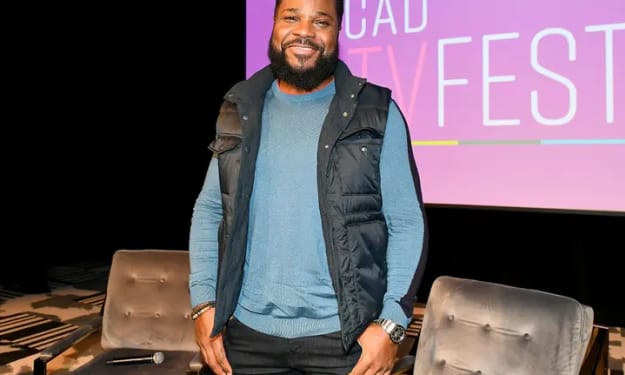
Gone Too Soon: What Really Happened to Malcolm‑Jamal Warner in Costa Rica?
Malcolm‑Jamal Warner, beloved for his role as Theo Huxtable on The Cosby Show, passed away on July 20, 2025, while on a family vacation in Costa Rica. At just 54 years old, his life was cut short when he drowned at Playa Grande in Cahuita, Limón province. Surfers and beachgoers say he was caught in a powerful rip current, one of the coast's well-known dangers. Despite swift efforts from bystanders and the Costa Rican Red Cross, he couldn’t be revived.
By Bevy Osuosabout a year ago in Humans