Stream of Consciousness
How I Reclaimed 10 Hours a Week by Letting AI Run My Routine
The first thing I noticed wasn’t the silence. It was the absence of panic. For years, my mornings began with noise — the kind that doesn’t come from outside, but from inside your head. Emails, Slack pings, endless checklists. The kind of chaos that makes you feel productive but leaves you drained before you even start.
By Erick Galaviz11 months ago in Humans
Body Mapping 3 Major Life Events to Spiritual Awakening
My entry in this challenge details 3 major life events, incorporating body mapping and decoded repeating numbers, linked to personal spiritual awakening. Divine guidance and self-interpreted occurrences highlight my soul plan and life purpose as a lightworker. To understand is to read with an open mind.
By Marilyn Glover11 months ago in Humans
My Winter Ritual of Lights
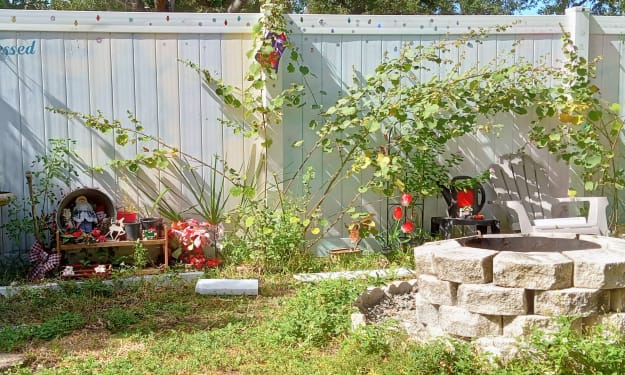
See my garden. The garden is my ritual de la habitual all year long. I've been tending this garden since 2021. I absolutely love this garden and I love everything about gardening. Winter is no different to me than the other seasons. All four seasons are equal to me. In my garden, I pay homage to each season with different sections of my garden. I designed it that way from day one. Winter has its very own section, which I have shown you in the photograph above.
By Shanon Angermeyer Norman11 months ago in Humans
The Hidden Truth About a Man’s Glow
Nobody tells you this. They’ll tell you to chase success, to build muscle, to stack paper until you finally feel enough. But no one warns you that a man can have it all — the money, the body, the cars — and still walk around dim.
By Randolphe Tanoguem11 months ago in Humans
The Half-Finished Race
People often say that women mature faster than men. In one sense they do, but that advantage is temporary. If maturity were a marathon, women would sprint the first half and cross the midpoint far ahead. They would celebrate as if the race were over. Men would lag behind, slower at first, but they would keep running. They would finish the second half while many of the early sprinters stood still. That second half of the race, the one built on endurance, sacrifice, and humility, is where real adulthood begins.
By Peter Thwing - Host of the FST Podcast11 months ago in Humans
The Hunt
It starts quietly. Not with the wild cry of hunger or the thunder of hooves, but with a whisper. A pulse under the ribs. A shimmer just out of reach. You catch it out of the corner of your eye — a flicker of what could be. A dream, a face, a calling. It glows like a promise in fog. And you think, there — that’s mine. You don’t know why, or how, only that you have to move toward it. You have to chase it. So you gather your tools: hope sharpened into focus, ambition coiled tight in the gut, faith folded into a compass that trembles and hums in the direction of desire. --- You call it purpose, this wild pursuit. And maybe it is. You chase through seasons and versions of yourself. You track footprints made of memory, follow shadows that could be signs or illusions. You run until breath becomes prayer, until yearning is indistinguishable from devotion. And sometimes — sometimes — the world opens its golden hands and says, “Here. You’ve earned it.” You capture the thing you were hunting. You hold it, trembling. A lover’s hand. A long-awaited opportunity. The feeling of finally. It’s yours. The air hums with victory. But in the quiet that follows, you notice something strange: the satisfaction doesn’t last. The joy flickers, then fades. Because the chase was never just about the thing. It was about the aliveness of reaching. The moment you catch it, the energy changes. Desire becomes possession. And possession, sooner or later, turns to dust. --- Other times, you miss. You fall short. You lose the trail in the fog of your own becoming. The thing you wanted slips through your fingers, or maybe it was never there at all. And that hurts in a way that burns. The kind of pain that makes you question if you were foolish for hoping in the first place. You tell yourself stories — that maybe you weren’t worthy, that maybe the universe doesn’t listen, that maybe you should’ve stayed still. But here’s what you learn when you’ve failed enough times to stop pretending: the misses are the making. Because every time you lose what you wanted, you find what you needed. Every time the trail goes cold, you discover warmth somewhere else — in rest, in reflection, in redefinition. --- There’s a kind of sacred humility that comes when you stop demanding outcomes and start meeting the mystery halfway. That’s when you understand: the hunt isn’t about capturing anything. It’s about transformation. The person who began the chase is not the same one who stops to rest in the clearing. You become softer. Wiser. Less desperate to own something and more grateful to experience it. You start to see that not every treasure is meant to be kept — some are meant to be witnessed. That’s when the heart learns peace. Because sometimes the thing you were chasing was never meant to be caught — it was meant to call you closer to the parts of yourself that had forgotten how to feel. --- Maybe the truth is this: we are all hunters. Not of prey, but of meaning. Not of trophies, but of moments that make us remember why it feels so good to be alive. Every hunt teaches you a new kind of love. A love that isn’t about possession, but participation. A love that lets you lose beautifully. And when you finally grow tired of chasing, you’ll sit down beneath the open sky, feel the wind on your face, and realise — you were never behind. Every missed mark was an initiation. Every wrong turn was a compass correction. Because you weren’t meant to win the hunt. You were meant to wake up in it. You were meant to discover that what you were seeking has been quietly following you the whole time. --- Because the real hunt — the one that matters — isn’t about finding something new. It’s about remembering what’s been inside you since the beginning. And when you finally stop running, when the dust settles and the silence feels kind, you’ll realise something almost unbearable in its beauty: You were never chasing the thing. You were chasing the moment you’d be ready to receive it. --- ✨ About the Author I’m Natalie Walker, a writer exploring the quiet spaces between spirituality, self-discovery, and healing. The Gentle Revolution is my ongoing series about growing softly, loving deeply, and learning to live without the noise.
By Natalie Walker11 months ago in Humans
The Goat Life A Journey of Survival, Faith, and the Human Spirit
I recently watched the movie “The Goat Life”, and I felt deeply moved by its story, emotions, and message. This is not just a film — it is a reflection of real human suffering, faith, and the strength of survival. After watching it, I decided to write this story in my own words, from my heart.
By Izhar Ullah11 months ago in Humans
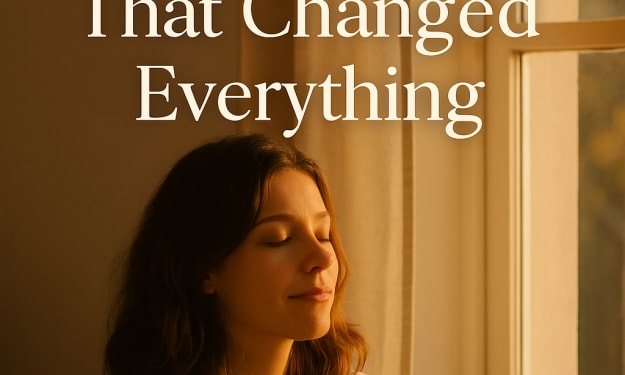
The Morning I Finally Stopped Running From Peace An honest letter about how stillness stopped feeling scary.
People imagine “life-changing moments” as something cinematic—music swelling, tears falling, the camera zooming out while you stand there transformed. But the moment that changed everything for me was nothing like that. It was small. Almost embarrassingly ordinary. No one else would have noticed it at all. --- The Day Everything Stopped Moving It happened on a Tuesday. I remember because it was bin day—the sound of wheels rolling on pavement, the clatter of lids, the faint smell of coffee drifting from the kitchen. I was sitting at the table, scrolling through messages I didn’t have the energy to answer. Every conversation felt like a demand I couldn’t meet. Every notification was another tiny tug pulling me away from myself. I wasn’t sad exactly—just absent. For months, I’d been living like an automatic door: always open, always reactive, waiting for someone else to trigger movement. That morning, my body finally said no. I set my phone down, wrapped my hands around a lukewarm mug of tea, and stared at nothing. And in that stillness, something inside me broke—quietly, mercifully, the way a fever breaks after a long night. It was the first time I’d truly stopped. No podcasts, no affirmations, no plans to fix it. Just silence. And in that silence, I realised how loud my life had been. --- The Slow Realisation There’s a specific ache that comes from doing everything “right” and still feeling empty. I had followed every rule for happiness: be kind, work hard, stay grateful, help others, keep going. But kindness without boundaries had turned to depletion. Productivity without rest had turned to resentment. Gratitude without presence had turned to guilt. That day, sitting in the quiet, I finally saw what I’d been missing. I’d been building a life that looked peaceful from the outside but didn’t feel peaceful on the inside. That was the moment everything changed—not because life suddenly got better, but because I decided it had to. --- The Rebuild Change didn’t arrive with fireworks. It came through the smallest possible choices. I started saying no—carefully, awkwardly, then unapologetically. I started walking without headphones, letting my thoughts catch up to my body. I started sitting outside in the mornings, watching the light shift on the same patch of wall, reminding myself that time moves forward whether or not I do. I stopped trying to be impressive and started trying to be honest. At first, that honesty hurt. It meant admitting that I was tired. That some friendships only worked when I was the caretaker. That I’d been chasing stability by controlling everything instead of trusting anything. But honesty is a kind of purification. It burns, but it clears the air. --- Learning to Be Still When I talk about that day now, people sometimes say, “So you had a breakdown?” And maybe I did. But it felt more like a breakthrough—like I finally broke through the noise to reach something sacred and simple: I am allowed to stop. That truth became the foundation of every new decision. I learned that peace isn’t found in perfection; it’s found in permission. The permission to rest. The permission to not answer immediately. The permission to let people down gently instead of letting yourself down completely. It’s strange how the smallest permission can redirect an entire life. --- The New Rhythm Now, I live slower. Not because I became lazy or lost ambition, but because I realised I don’t want a life that moves faster than I can feel it. I’ve built rituals that anchor me: Making tea before opening my phone. Writing one line of gratitude at night, not five. Lighting a candle when I start work to remind myself that energy is sacred, not infinite. These aren’t dramatic changes, but they’re the kind that last. They remind me daily that the version of me who once lived on autopilot deserves tenderness, not shame. --- The Real Change The moment that changed everything didn’t fix my life. It just handed me back the steering wheel. It reminded me that “healing” isn’t a finish line—it’s a direction. That every time I slow down enough to listen, I hear a quieter truth whispering beneath the chaos:
By Natalie Walker11 months ago in Humans
When Kindness Starts to Hurt: How I Learned to Care Without Burning Out
I’ve always been the “kind one.” The one who remembers birthdays, checks in when someone disappears, notices the subtle shift in tone that others miss. It’s a beautiful trait—until it isn’t. Because no one tells you that kindness can become heavy. That empathy, when left unchecked, can start to feel like carrying everyone else’s weather in your own chest. And when you do that long enough, your own sky turns grey too. --- The Hidden Weight of Compassion For years, I wore my empathy like a badge of honour. I prided myself on being dependable, the emotional anchor, the friend who could always be counted on. But I didn’t realise that every “I’m fine” I ignored, every late-night reassurance I gave, every time I put someone else’s comfort above my own— I was quietly teaching my nervous system that my needs didn’t matter. At first, it felt like love. But love that demands self-erasure eventually turns into exhaustion. There’s a word for this in psychology: compassion fatigue—a condition usually associated with nurses, therapists, or caregivers. But I think it happens to anyone whose heart is a little too open for too long. --- When Kindness Becomes Self-Abandonment The breaking point wasn’t dramatic. It was a Tuesday morning, sitting at the kitchen table, staring at my phone as messages poured in. Each one a tiny thread of someone else’s need—favour, vent, question, request. I felt my chest tighten. Not because I didn’t care, but because I cared too much. I’d spent so long tending to everyone else’s fires that I didn’t notice I was burning out quietly. So, for the first time in years, I didn’t reply right away. I put my phone down. I made tea. And in that small act of rebellion, I realised something important: Kindness isn’t meant to be a performance—it’s meant to be a practice. A sustainable one. --- Learning the Language of Boundaries When I started saying “no,” it felt like betrayal. I worried people would think I was cold, selfish, or unreliable. But the truth is, boundaries don’t distance love—they preserve it. A therapist once told me, “Boundaries are how love breathes.” That line changed everything. Because love without limits turns to resentment. And resentment poisons connection far more than honesty ever could. Now, I ask myself one simple question before saying yes to anything: “Am I giving this from overflow, or from depletion?” If it’s from depletion, the answer is no. Not because I don’t care—but because I care enough to want my care to be real, not performative. --- The Nervous System of a Kind Soul When you’re wired for empathy, your body more often mirrors the emotions around you. It’s called emotional contagion—your heart literally syncs with others’ pain. That’s why stillness feels uncomfortable for empaths; we’re used to scanning the room for distress signals. But learning to pause, breathe, and ground isn’t indifference—it’s energetic hygiene. I started practising short grounding rituals: Placing my hand on my chest before answering messages. Taking three deep breaths before giving advice. Reminding myself, “Their emotion is theirs. I can witness without absorbing.” It sounds simple, but it’s sacred work. --- Redefining Kindness These days, my kindness looks different. It’s slower. Softer. More honest. It’s the kind that doesn’t always say yes, but always shows up authentically. It’s the kind that includes me too. Because true compassion doesn’t demand martyrdom—it invites balance. And sometimes, the kindest thing you can do for others is to stay rested, grounded, and real. --- Final Reflection If you’re a gentle soul who’s tired, this is your permission slip: You can still be kind and keep your energy sacred. You can still love deeply without losing yourself in the process. Kindness was never meant to hurt. It was meant to heal—starting with you.
By Natalie Walker11 months ago in Humans