Stream of Consciousness
Why Self-Care Is Crucial for the Modern Human: A Guide to Taking Care of Yourself
The Modern Human Dilemma, Chapter 1 Digital overload, hustle culture's pressures, and the rise of burnout are just some of the unique challenges that modern humans face. In this chapter, we'll look at each of these issues. It will look at how, despite advances in technology, people are more stressed, anxious, and disconnected than ever before.
By Afia Sikderabout a year ago in Humans
Understanding Thoughts, Feelings, and Actions: A Journey Into the Human Mind
Understanding Thoughts, Feelings, and Actions: A Journey Into the Human Mind Introduction: The Inside Mysteries There are times in life when everything seems to be falling apart inside rather than outside. Despite being in a crowded room, your thoughts are racing. A single memory can set off a storm of thoughts that spiral into feelings that make you feel tight in your chest and affect your every move. In those moments, have you ever wondered: Why did I feel that way? Why did I react like that? What is my mind doing to me?
By Afia Sikderabout a year ago in Humans
The Last Hope
Cities once brimming with life now lay in ruins, choked by vines and dust. The sky, once vibrant with shades of blue and gold, was now permanently dimmed—an eternal twilight settled after the Great Collapse. No birds sang. No engines roared. The age of man had withered into a whisper.
By LegacyWordsabout a year ago in Humans
"The Leap of Quantum"
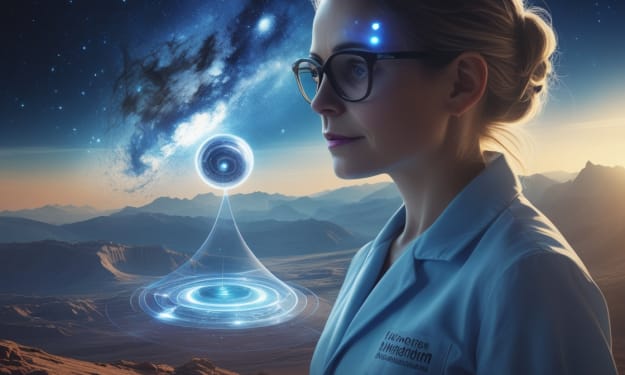
"The Leap of Quantum" Dr. Sophie Williams adjusted her glasses and looked through the microscope in a little, silent lab hidden in a corner of the most famous university in the world. She had been engaged in a pioneering project, an endeavor to investigate the peculiar realm of quantum physics. Sophie was no typical scientist; she had devoted her life to the study of quantum entanglement, the phenomenon that explains how particles, regardless of their distance from one another, can become inexplicably linked.
By Rajoan Islamabout a year ago in Humans
SHADOWS IN THE HALLWAY
Jasmine tightened her grip on her mother's old scarf while staring at the court doors. The truck driver who had killed her mother had been let go, having found insufficient evidence against him. Her father, Dr. Stephen Carter, placed a hand on her shoulder. "We will get through this, Jazz," he said, steady surgeon's hands, but thick with sadness.
By Michael Anthonyabout a year ago in Humans
5 Signs You’ve Lived Before: Is This Really Your First Time on Earth?
Have you ever met someone for the first time but felt like you already knew them? Or stepped into a city you’ve never visited, yet somehow, every street and corner feels strangely familiar? Maybe you've always felt older than your years, like you’re carrying wisdom that you never actually learned in this lifetime. If any of this resonates with you, you might be experiencing echoes of a past life.
By Pseudo-Sophosabout a year ago in Humans
God is eternal
A Vision of Hope: A Divine Revelation Three years ago, I was given a series of vivid dreams, each one carrying a message of hope, justice, and divine purpose. I never quite understood the full significance of these dreams until now, when I realize they are not just reflections of personal desires but revelations of God’s will for humanity.
By The Modern Aristocratabout a year ago in Humans
The Myth of "Pretty Privilege" and Why Beautiful Women Often Stay Single
Let’s cut to the chase: society loves to assume that beautiful women have it all figured out when it comes to love. They’re showered with attention, admired from afar, and treated like walking trophies in a world obsessed with aesthetics. Social media amplifies this illusion—every post is met with likes, comments, and virtual admiration. But here’s the twist: being beautiful doesn’t guarantee happiness or meaningful relationships. In fact, for many stunning women, the dating game feels less like a fairytale romance and more like navigating a maze of shallow interactions, unmet expectations, and emotional exhaustion. So why do some of the most gorgeous women remain single? The answer lies not just in societal pressures but also in how they—and those around them—navigate the complexities of attraction, objectification, and genuine connection.
By sondos azhariabout a year ago in Humans
Beyond Stereotypes: Embracing a New Era of Masculinity and Femininity
In a world increasingly defined by progress, the rigid boundaries of traditional gender roles are dissolving. The binary constructs of masculinity and femininity—once confined to narrow stereotypes—are being reimagined, fostering a culture where individuality and authenticity thrive. This shift isn’t just about personal freedom; it’s a societal revolution toward equality, mental well-being, and inclusivity.
By sondos azhariabout a year ago in Humans
The Role of Humor in Human Interaction: Why Laughing is Good for You
The Brain Research Behind Laughter Humor has deep biological roots and is not just a social construct or an abstract concept. In fact, the outward expression of humor, laughter, is a direct result of the intricate mechanisms in our brains. When we engage in humorous stimuli, neuroscientists have been able to identify specific brain regions that are activated. The biological and psychological mechanisms underlying humor and laughter, as well as their effects on our overall well-being, will be examined in this section. Understanding the Humor Centers of the Brain Despite the fact that humor may appear to be a straightforward response, it actually requires coordinated activity from multiple brain regions. The brain is an extremely complex organ. According to research, laughter and humor stimulate brain regions involved in emotion, cognition, and reward processing. The Cortex Prefrontal Higher-order cognitive processes like decision-making, problem-solving, and social behavior are all controlled by the prefrontal cortex. This part of the brain helps us understand the incongruity, surprise, or absurdity that makes a situation funny when we see it. When we decide whether something is funny enough to make us laugh, we are also engaged. The System of Limbs The limbic system, also known as the emotional brain, is essential to our ability to process emotions. The limbic system is responsible for directing these feelings of joy or amusement, which are frequently sparked by humor. The emotional response to humor is especially influenced by the amygdala, which is a part of the limbic system. It helps us determine whether humor is safe, lighthearted, or even socially acceptable. Dopamine and the Accumbens Nucleus The brain releases dopamine in response to humor, like other rewarding stimuli like food or sex. This dopamine release is processed by the pleasure center of the brain, the nucleus accumbens. Dopamine is a neurotransmitter that is associated with pleasure, motivation, and reward. It is also the chemical that is responsible for the "feel-good" feelings that occur when someone laughs. Because of this dopamine release, laughter frequently evokes an inborn sense of satisfaction, which is why humor can be so uplifting and satisfying. Laughter's Biological Effects Laughing is more than just an emotional response; it also has a significant physiological impact on the body. The reasons why laughter is so beneficial to our health can be better understood by comprehending the biological process behind it. Reducing Stress and Laughter Laughter's ability to ease stress is one of its most important benefits. The parasympathetic nervous system, which fights the "fight or flight" response caused by stress, is triggered by laughter. Our heart rate and blood pressure go down when we laugh, which makes us feel more at ease. Additionally, laughter lowers cortisol levels, the body's primary stress hormone. Humor has the potential to improve physical and mental health by reducing stress levels. Laughter and Relief from Pain Interestingly, laughter also naturally alleviates pain. Endorphins, the body's natural painkillers, are released when people laugh, according to studies. Endorphins are neurotransmitters that help people feel happy and relieve pain. Laughter can therefore sometimes provide a sense of relief in difficult or painful circumstances. Boost the Immune System Additionally, laughter and humor boost immunity. Laughter boosts the activity of T-cells and the production of antibodies, both of which are necessary for fighting infections. Additionally, regular laughter has been linked to enhanced immune function, which aids the body in disease resistance and faster recovery from illness. Cardiovascular Health and Laughter Additionally, laughter aids in heart health. Laughter has been shown to increase blood flow, which can help improve circulation and lower the risk of heart disease, according to studies. People who laugh frequently have a lower risk of heart disease, according to a study that was published in the American Journal of Cardiology. This is because laughter helps to relax the blood vessels and improve endothelial function, which is how the inner lining of blood vessels works. The Importance of Humor in Social Networking Humor is important in social interactions in addition to its effects on the body. Humor helps people connect with one another because humans are social creatures. It helps us make connections with other people, get through difficult social situations, and work together. From a psychological point of view, humor can assist in reducing tension, breaking down social barriers, and even strengthening relationships. As a Social Tool, Humor A common social lubricant is humor. A sense of connection and camaraderie is established when people laugh together. People feel more at ease and accepted in a social group when they laugh with each other. For instance, when people are in a group setting, such as a work meeting, a casual get-together, or a family dinner, humor can help break up awkwardness or tension and make interactions go more smoothly. Conflict Resolution Through Humor In conflict resolution, humor is an important tool. In situations where disagreements or fights could otherwise break out, it helps to calm things down. A humorous observation or well-timed joke can disarm negative feelings and reframe a difficult situation in a more lighthearted way. For instance, individuals may be able to express their frustration in heated discussions without being overly confrontational by using humor. Understanding can be enhanced and dialogues can become more productive as a result. Relationship humour Humor enhances intimacy and closeness in intimate relationships. When couples laugh together, they tend to be happier and more able to stick together. The bond between partners is strengthened and common ground is established through shared humor. This is especially true in romantic relationships, where humor can be used as a coping strategy during trying times and to maintain unity throughout life's ups and downs. Humor in Leadership and the Culture of the Workplace Humor is not just for personal interactions; it is also a crucial part of leadership and the dynamics of the workplace. A more upbeat and productive work environment is frequently created by leaders who are able to incorporate humor into their management style. In high-pressure situations, humor can alleviate tension, inspire employees, and foster a positive work environment. Workplaces with a healthy dose of humor typically have higher employee satisfaction, lower stress levels, and improved collaboration, according to studies. A Closer Look at the Health Benefits of Humor Not only is humor beneficial to mental health, but it also has measurable effects on physical health. Laughing on a regular basis can boost your immune system, improve your heart health, and lessen the effects of stress on your overall health. Let's take a look at some of the many ways humor can help our minds and bodies. The benefits of humor for mental health The natural remedy for stress and anxiety is humor. Neurotransmitters like dopamine and serotonin, which are known to improve mood and alleviate feelings of sadness or anxiety, are released by laughter in our brains. Laughter is an effective tool for managing mental health conditions like depression and generalized anxiety disorder (GAD) because it helps to relax the mind and promotes relaxation. Humor has been shown to boost emotional resilience in addition to improving mood. People who are able to laugh even when things are hard tend to do better when they are under pressure and in trouble. Laughter provides a healthy outlet for emotional expression and contributes to the development of a positive outlook on life, so they are better prepared to face challenges in life. The Use of Humor to Reduce Stress The ability of humor to alleviate stress is one of the benefits that has received the most research. As previously stated, humor reduces the body's stress response by activating the parasympathetic nervous system. Humor helps the body return to a state of balance and relaxation by reducing the physical effects of stress, such as an increased heart rate and high blood pressure. Laughter on a regular basis has been shown to significantly lower levels of chronic stress, which have been linked to a wide range of health problems, including heart disease, digestive issues, and weakened immunity. You can lower your risk of developing these stress-related health conditions by participating in activities that make you laugh, like watching a comedy show or hanging out with friends. The Benefits of Laugh Therapy An emerging field in the wellness industry that uses laughter as a healing tool is laughter therapy. It is based on the idea that laughter has therapeutic effects on the body and mind. For instance, laughter yoga is a practice that combines yoga breathing exercises with exercises in laughter. The idea is that people can achieve a sense of emotional well-being and stimulate the body's natural stress-relieving processes with even forced laughter. Laughter therapy has been shown to reduce stress, improve mood, and even alleviate symptoms of chronic conditions like depression and anxiety, according to studies. It serves as a powerful reminder that laughter is sometimes the best medicine for the body and mind.
By Afia Sikderabout a year ago in Humans