Stream of Consciousness
You Are Not Behind — You're Just on Your Own Timeline
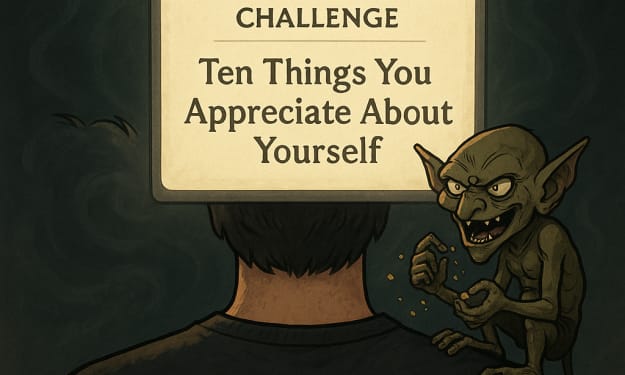
Open Instagram. Scroll through TikTok. Everyone seems to be ahead of you. One friend just got married. Another bought a house. Someone you went to school with is on vacation in Europe — again. And you? You’re just… here. Wondering if you missed the memo on how to “make it” in life. Let me stop you right there: **You are not behind. You are on your own timeline.** And it’s more powerful than you think. --- ### 1. Social Media Is a Highlight Reel — Not Real Life We know this logically, but emotionally? It’s easy to forget. You’re comparing your behind-the-scenes to someone else’s best angle. Their wins. Their filtered joy. Their perfectly timed photos. What you *don’t* see: - The debt behind that trip - The arguments behind that relationship - The anxiety behind that success - The nights they cried when no one was watching Everyone is fighting a battle you can’t see. Everyone edits their story before sharing it with the world. So don’t measure your self-worth against someone’s most curated version of their life. **You’re not seeing their truth. You’re only seeing their presentation.** --- ### 2. Life Is Not a Race — It’s a Journey There’s no set finish line. No medal for doing everything first. No rulebook that says you must achieve certain things by a certain age. Some people find love at 20. Others find it at 40. Some build empires after college. Others discover their passion after three career changes. Let that sink in: **You’re not late. You’re just walking a different path.** Your journey might have more curves, detours, or slow moments — and that’s okay. It’s still *your* journey. Own it. --- ### 3. Success Isn’t Just Milestones — It’s Growth We live in a world that celebrates results. Got a promotion? Applause. Got married? Applause. Bought a car? Applause. But what about the quiet wins? - Getting out of bed on a day filled with dread - Forgiving someone who never apologized - Starting over after a breakdown - Taking a risk when you were terrified Those aren’t posted on Instagram. But they matter — maybe more than anything else. You’re growing, evolving, and strengthening in ways the world doesn’t always notice. That invisible work? That’s the real success. --- ### 4. Your Timeline Is Sacred — Protect It Sometimes, the pressure to “catch up” doesn’t come from strangers online. It comes from family, tradition, and cultural expectations. - “When will you settle down?” - “That’s not a real job.” - “You’re still figuring things out?” It’s okay to disappoint people if it means staying true to yourself. You were not born to follow someone else’s checklist. **You are the author of your story.** Write it your way — even if no one understands the plot yet. --- ### 5. You’re Not Behind — You’re Becoming Let’s reframe the so-called delays. Every time something didn’t go your way, it taught you something. Every rejection, every closed door, every slow season? It shaped you. - The heartbreak built your empathy. - The failure taught you resilience. - The waiting taught you patience. - The silence helped you hear your own voice again. You didn’t fall behind — you *leveled up.* And when your moment arrives, you’ll be *ready.* --- ### 6. Your Story Isn’t Late — It’s Right on Time The stories we idolize — the “overnight” successes — often took years in the making. What we don’t see: - The lonely nights - The doubts they buried - The failed attempts - The years of preparation before the world noticed You are still in your building season. And there is **power** in that season. When the time is right, your story will shine. But until then — honor the work, honor the wait, and honor who you’re becoming. --- ### Final Thoughts: You’re Not Late — You’re Becoming Here’s what I want you to remember: - Your path is not a mistake. - Your timeline is not broken. - Your soul knows where it’s going. You are allowed to move slowly. You are allowed to pivot. You are allowed to not have all the answers. Take a deep breath. You’re not behind. You’re becoming. **And that? That’s powerful beyond words.**
By SHADOW-WRITESabout a year ago in Humans
Karma has no menu. You get served what you deserve.. AI-Generated.
Karma Has No Menu: You Get Served What You Deserve Introduction Imagine walking into a restaurant where nothing is ordered—you just get whatever is served. That’s how karma works. It’s a universal law that ensures everyone faces the outcomes of their actions. No menus, no promises—just what’s earned. Have you ever noticed that sometimes, good things happen after good deeds? Or that bad luck follows poor choices? That’s karma in action, reminding us that justice isn’t always immediate but always fair. It operates behind the scenes, balancing the scales of life without bias or favoritism.
By Story silver book about a year ago in Humans
One Vision, Many Hearts: A Journey from Friendship to Fortune
In the heart of a quiet town called Maplewood, five friends—Ethan, Sarah, Marcus, Priya, and Daniel—shared more than memories of childhood. They shared dreams. From late-night talks under the stars to college dorm debates, one idea kept surfacing: **“One day, we’ll build something of our own. Together.”** Not a job. Not just a business. But a company that reflected their values—creativity, loyalty, fairness, and freedom. After college, life took them in different directions. Ethan became a software developer in a corporate firm, Sarah pursued graphic design, Marcus worked in customer service, Priya dived into finance, and Daniel started in logistics. But none of them were fulfilled. Each felt like a cog in someone else’s machine. Then, in 2016, it happened. Ethan was laid off unexpectedly. The news hit hard, but it sparked something deeper—an awakening. That evening, he messaged the group chat they still used: *“What if we finally did it? What if we start something? Together?”* One by one, the replies came in. **Sarah**: “I’m in.” **Marcus**: “Let’s roll. I’ve waited for this.” **Priya**: “If we’re serious, I’ll handle the numbers.” **Daniel**: “Whatever it takes. Count me in.” They all took a leap of faith. They met in Sarah’s garage—no money, no office, just a whiteboard, five laptops, and hearts full of hope. After weeks of brainstorming, they agreed to launch a digital branding and logistics platform named *“Nexora”*—a company that would help small businesses grow online by combining design, software, marketing, and shipping solutions into one smart ecosystem. They were inspired by the struggles they had seen around them: talented local entrepreneurs failing due to lack of access to digital tools. Nexora would be their way of empowering the overlooked. Each friend took ownership of a department based on their strengths: * **Ethan** led software development. * **Sarah** handled design and branding. * **Marcus** oversaw client relations and outreach. * **Priya** managed finance and legal operations. * **Daniel** coordinated logistics and supply systems. Their first year was brutal. They had no clients, little income, and plenty of doubts. Many nights they slept on floors, skipped meals, or worked odd side jobs to keep the lights on. Friends and family questioned their decisions. But they had one another—and that changed everything. When Sarah fell ill from burnout, Daniel took on her duties while Marcus personally delivered her meals. When Priya discovered a major accounting error that nearly bankrupted them, no one blamed her—they solved it together. When a client betrayed their trust and ghosted them without payment, they regrouped and learned. They stayed united, never allowing ego to interfere with friendship. Their breakthrough came in 2018. A local café owner—impressed by Nexora’s service—recommended them to a national restaurant chain. That one deal changed everything. Word spread. More small businesses turned to Nexora. Revenues multiplied. They hired their first employees—each of whom they treated like family. By 2023, Nexora had expanded into three countries, offering services to thousands of clients. The company was now valued in the tens of millions. But despite success, the five friends never changed. They still held equal shares. They still met weekly for dinner, just like in the old days. They created a company culture of transparency, kindness, and shared ownership—even offering employees partial equity to foster the same values. They often said, *“This isn’t just a company. It’s a story of what’s possible when friends refuse to give up—on each other or on their dream.”* Their journey inspired thousands. From school talks to entrepreneur panels, they reminded others that while starting something alone is brave, building something **together** is powerful. **In the end, Nexora wasn't just a business. It was a symbol—of unbroken friendship, fearless dreaming, and the beauty of building not just wealth, but a legacy.** --- Motivational Message : The story of Nexora reminds us of one simple truth: **Success doesn’t have to be a solo journey.** In a world that often glorifies the “lone genius” or the “self-made millionaire,” we forget the power of community, collaboration, and shared vision. Ethan, Sarah, Marcus, Priya, and Daniel didn’t build Nexora because they had funding or privilege. They built it because they had **faith—in each other**. They believed that when people bring their strengths together and lay aside ego, magic can happen. What made their journey extraordinary wasn’t just the company they created. It was the **principles** they held onto: 1. **Equality in Ownership**: They trusted one another enough to share everything equally. That sense of fairness built a deep-rooted commitment. No one was “above” or “beneath” anyone. They rose together. 2. **Resilience Over Perfection**: They failed—many times. But they treated every failure as a lesson, not a defeat. They didn’t let pride stop them from asking for help or making hard decisions. That humility became their strength. 3. **Friendship First**: They prioritized their relationship over their roles. Disagreements happened, of course—but they always listened, communicated, and remembered why they started. 4. **Purpose-Driven Work**: Nexora wasn’t just about making money. It was about helping others grow. That larger mission gave them energy on the hardest days and joy on the best ones. So, what can we learn from them? If you’re dreaming of starting something—**don’t wait until you have it all figured out.** Find people you trust. People who challenge and uplift you. People who will be honest when things go wrong and cheer you on when they go right. Then, start small. Start messy. But start together. And if you already have a circle of friends with shared values—ask yourselves, *“What can we build?”* It doesn’t have to be a tech company. It could be a community initiative, a local business, or a creative project. What matters is the **spirit behind it**. Great companies are built on strong foundations. And sometimes, the strongest foundation is **friendship.** The world needs more stories like Nexora’s. Stories where collaboration replaces competition. Where loyalty defeats greed. Where five hearts beating in unity can move mountains. So dare to dream. But more importantly—**dare to dream together.**
By Ariyan Khanabout a year ago in Humans
Alison Brie and Dave Franco Face Copyright Lawsuit Over Sundance Hit ‘Together’
Actors Alison Brie and Dave Franco, who share creative chemistry on and off screen, have suddenly found themselves the subject of a very hot legal fire. Their latest film, Together, which premiered to fanfare at last year's 2025 Sundance Film Festival as a supernatural body horror film, is the subject of an explosive copyright lawsuit. The plaintiffs argue the movie is a blatant copy of an earlier indie attempt, and controversy ensues regarding originality, impact, and Hollywood's generally obscurantist intellectual property universe.
By MD NAZIM UDDIN about a year ago in Humans
The Haircut, the Heart, and Holding On
I never thought a haircut would make me cry. Not in the dramatic, just-got-dumped kind of way. Not even because it was botched. But because of who it was for, and what it meant. My brother, Sami, was sitting in the faded leather chair at the back of Malik’s Barbershop. It was a small place—wood-paneled walls, a dusty fan circling overhead, and a scent that was part shaving cream, part nostalgia. The kind of place where boys became men, and men came to find a sliver of peace. Sami had always been particular about his hair. He liked a low fade with a clean part, the kind that made him look sharp, like the hero of some old Bollywood movie. But today, he didn’t care. Because today, he didn’t recognize his reflection. It’s been nearly six months since our lives changed. One misdiagnosis. One delayed scan. One rare autoimmune disorder that began robbing Sami of his speech, coordination, and slowly, the light in his eyes. I’ve become his caregiver. It’s a word people don’t say enough. They say “blessing,” “burden,” “duty,” “love”—but not caregiver. As if acknowledging the labor of it somehow diminishes the love. But let me tell you the truth: Love is heavy. It’s carrying a grown man to the bathroom at 2 a.m. because he can’t walk on his own. It’s spoon-feeding oatmeal while pretending it's the same old breakfast he used to rush through before school. It’s crying in the laundry room because you miss being a sister instead of a nurse. And yet—it’s everything I’d ever do again, without a second thought. I remember our childhood vividly. Sami was always the brave one. He used to jump off rooftops into muddy puddles, convinced he was invincible. I was the careful one, always patching him up afterward. Maybe this was always going to be our fate—me putting him back together, piece by piece. Back at the barbershop, Malik clippers buzzed softly. Sami tilted his head slightly, eyes closed. A tiny twitch of discomfort crossed his face, and I instinctively stepped forward. Old habits. Malik looked at me and smiled softly. “I’ve got him,” he whispered. I nodded and stepped back. Watching the tufts of hair fall was like watching pieces of him scatter. I felt my chest tighten. This was the first time in weeks he agreed to leave the house. The first time he let a stranger touch him without flinching. Maybe this was healing. Or maybe it was surrender. I didn’t know. Outside, the sun was beginning to set—casting golden light through the windows, turning the dust in the air into tiny, dancing stars. And as if drawn by fate, a line from an old poem came to mind: > She is a sun, glowing through the grit, A keeper of warmth in a world unlit. Except this time, it wasn’t she. It was he. It was my brother, glowing quietly in the ruins of what had been. A different kind of strength. One that didn’t roar but whispered. One that held on. After the haircut, I helped him into his coat. His hand trembled as he tried to button it. I reached out, and he looked at me with those storm-colored eyes—full of gratitude, full of loss. We didn’t say much. Words had never been necessary between us. On the way home, he fell asleep in the passenger seat. I took the long route through town, letting the radio play old songs we used to sing loudly to, just to fill the silence. As I drove, I thought about all the ways people misunderstand caregiving. They think it’s about being strong. Being patient. Being angelic. But caregiving isn’t sainthood. It’s sacrifice. It’s giving up your plans, your weekends, your sleep, your career, sometimes even your sense of identity. It’s mourning someone while they’re still alive, and still showing up every day to hold their hand. And yet—it’s holy work. In the quiet moments, in the stolen smiles, in the eye contact that says “I’m still here”—you find pieces of yourself you never knew existed. Compassion that surprises you. Rage that humbles you. And love that doesn’t need conditions. Back home, I tucked Sami into bed. He looked peaceful. Before I left the room, he squeezed my hand. It was weak, but it was his way of saying thank you. Or maybe, just I love you. I sat outside on the porch afterward, staring at the moon. My thoughts spiraled. I thought about burnout. About how I once yelled at a nurse on the phone out of sheer exhaustion. About how I miss just being his sister. About how lonely it is to watch the world move on while you’re stuck in a loop of routines, medications, and memory loss. And yet, I also thought about that haircut. That small act of reclaiming normal. That quiet resistance. Sami isn’t who he used to be. And maybe neither am I. But maybe we are both still becoming. In the distance, I heard laughter from a neighbor’s yard. Life, buzzing as always. Untouched. Unaware. But here, in our small world, a battle is being fought—not with swords, but with spoons, clippers, and bedtime stories. And every little victory matters. Tomorrow, I’ll wake up and do it all again. And maybe, just maybe, one day Sami will smile and say, “It was a good haircut.” --- Author’s Note: To all caregivers out there—you are seen. You are heard. You are not alone.
By Ikram Ullahabout a year ago in Humans
Know thyself
I oftentimes hear that people do not know what they want, and it usually sounds like a judgment of some kind, whether aimed at others or at oneself. What I came to understand as a result of therapy, is that a lot of the time this happens due to unmet needs; very basic psychological developmental needs that we are often not even consciously aware of having once we ‘grow up’.
By Eva Smitteabout a year ago in Humans
"I Scheduled My Joy: How a Self-Care Planner Helped Me Reclaim My Sanity"
The Breakdown Before the Breakthrough I didn't wake up one morning and decide to become a self-care guru. In fact, I hit rock bottom in the middle of a Tuesday Zoom call, crying silently as my screen froze—yet again—mid-sentence. My to-do list was growing. My energy? Non-existent. My mind was a browser with 52 tabs open and not one of them working.
By Vishwaksenabout a year ago in Humans
India-Pak Conflict: A Win-Win for Everyone?
In a world where war often results in devastating losses, the recent escalation between India and Pakistan might seem like a different kind of conflict — one where multiple global and regional players walked away with strategic, political, and even financial “wins.”
By ziyad khanabout a year ago in Humans