social media
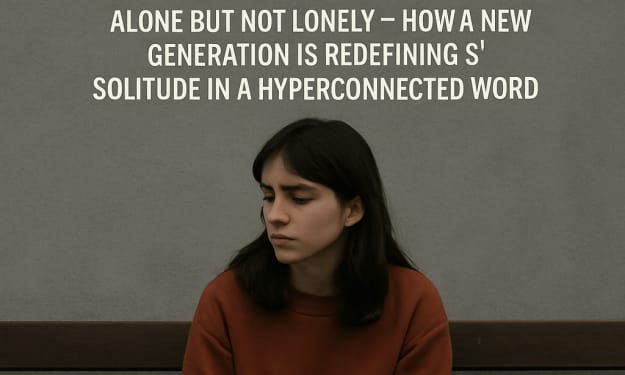
Social Media for modern lovers in the digital age.
Notes to My Future Self
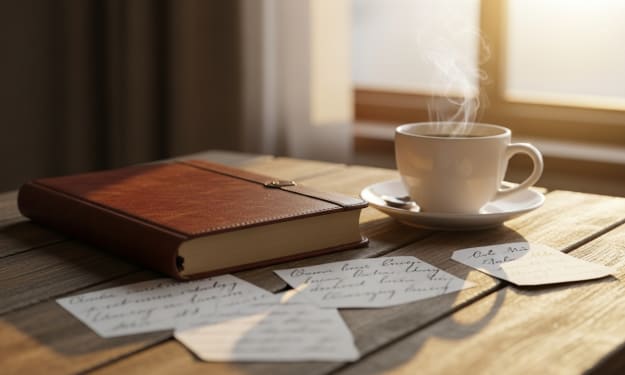
The first note was dated five years ago. It wasn’t written with elegant handwriting or on scented paper. Just a crumpled sticky note tucked between the pages of an old journal I hadn’t opened in years. The ink had bled slightly, probably from tears I didn’t remember crying. "You’re not broken. You’re still building." I stared at it for a long time, heart pounding. I hadn’t remembered writing it, but it was my handwriting. The kind I had in college—hurried, slightly crooked, always in blue ink. I flipped the journal open, and more notes fluttered out like autumn leaves caught in a draft. Some were dated, others not. Some were just single lines: "Call Mom. Even when you’re mad." "Success isn’t peace. Choose peace." "Don’t marry the person who makes you feel small." I read each one like they were sacred texts, letters from the version of me that had felt everything harder, hoped more recklessly, and somehow had the foresight to leave breadcrumbs back to myself. I was thirty-five now. A marketing director in a tech firm. I had a two-bedroom apartment that looked like a Pinterest board come to life. People said I was successful. Confident. Sharp. But I hadn’t felt whole in a long time. It was like I’d built my life on a tightrope—always one wrong step away from falling, but somehow still smiling at the crowd watching from below. Until the day the tightrope snapped. It was a Tuesday. Of course it was. Nothing ever breaks on a dramatic Friday. Just a regular morning—email, coffee, an impromptu meeting—and suddenly, I was standing in the office kitchen, gripping the edge of the counter, unable to breathe. Anxiety attack, the doctor called it. Said it was probably long overdue. Burnout. Stress. Unprocessed grief. Grief? I didn’t know what I was grieving until I opened that journal again later that night. "Future Me, I hope you still dance barefoot in the kitchen. I hope you forgive people, but not so much that you forget what you deserve. I hope you didn’t give up writing." I hadn’t written in years. Once, writing was everything. My sanctuary, my rebellion, my way of making sense of a world that didn’t always make room for sensitivity. But over time, deadlines replaced dreams. KPIs replaced poems. I traded my journals for spreadsheets. And now, here I was—reading a note from a girl who still believed in magic. Who trusted herself enough to leave behind words for a woman she hoped she’d become. I wasn’t sure I’d lived up to her expectations. Over the following weeks, I read every note. I cried through some. Laughed out loud at others. There was one that simply said: "Just because it’s familiar doesn’t mean it’s love." That one hit harder than I expected. It reminded me of Adam. Adam, with his charming smile and emotionally unavailable heart. We were together for two years. I called it love. But looking back, it was more like habit wrapped in fear of loneliness. I’d stayed long after the warmth had faded, convincing myself that comfort was enough. My younger self had seen it coming. Had written a warning. I just hadn’t read it in time. Inspired, I began writing back. “Dear Past Me,” I scrawled late one night, wine glass half-empty beside me. “You were right. About more than I ever gave you credit for.” I wrote about the days I’d felt like quitting. The friendships I let fade because I was too “busy.” The moments I had stood in front of the mirror and hated my reflection—not for how I looked, but for how far I’d strayed from who I wanted to be. But I also wrote about healing. About finally understanding that success isn’t climbing a ladder—it’s learning when to step off. I told her that I had started dancing again in the kitchen, barefoot and unbothered. That I had called Mom. That I had started writing again. --- One evening, I invited a few close friends over. We poured wine and passed around blank notecards. “Write a note to your future self,” I told them. “Something you’ll want to remember five years from now.” They looked skeptical at first, but eventually, the room grew quiet as pens moved across paper. We sealed the notes in envelopes, wrote the date on the outside, and agreed to meet again in five years to open them. A small ritual of hope. Now, the journal is thicker than ever. Filled with letters to and from my past selves. A map of mistakes, lessons, and little victories. And every now and then, when I feel lost again, I turn the pages. I don’t always find answers. But I find myself. If you’re reading this, maybe write a note today. Not for who you are now—but for who you hope to be. She’ll thank you for it. I know I did.
By Shah Nawazabout a year ago in Humans
Inequality in Society: A Personal and Global Reflection. AI-Generated.
Inequality, in its many forms—economic, social, racial, or gender-based—casts a long shadow over our world. It’s not just numbers on a spreadsheet; it's lives affected, opportunities muffled, and dreams deferred. In this article, I’ll share not only facts and stories but also a personal anecdote—yes, even vegetables get to star—because understanding inequality becomes clearer when we ground it in everyday experiences. 1. What Inequality Looks Like Today 0-1Globally, the richest 1% now own more wealth than the rest of the world combined . 697-0In the G7 alone, the U.S. leads with the highest income inequality (Gini coefficient of 0.434), while France is far more equal with 0.326 . These gaps aren’t abstract—they reflect disparities in education, healthcare access, political influence, and even life expectancy. 856-1Gender inequality also remains pervasive. Girls around the world still receive less education and more unpaid labor, with legal equality for women projected to take centuries more without real effort . 2. Why It Hurts Us All 1221-0Harvard philosopher T. M. Scanlon outlines four foundational reasons society should tackle inequality : Compassionate justice: Even small sacrifices from the wealthy can create massive improvements in poorer lives. In extreme cases, this can translate into life and death. Social stability: Persistent gaps breed resentment, eroding trust, and increasing political extremism—something already visible in modern democracies. 1378-2Economic inefficiency: When opportunity is hoarded, innovation suffers. As economist Jason Furman highlighted, middle-class stagnation hinders overall productivity . Undermining democracy: Wealthy individuals and corporations wield grossly disproportionate power, steering policy away from the collective good. 3. A Vegetable Tale A few years ago, I volunteered at a community urban garden in my city. The amazing thing wasn’t the tomatoes or the kale—it was who tended them. Each morning, neighbors of very different backgrounds converged. Some arrived on bicycles straight from office jobs, others on foot after a long shift at a local factory. All working, all hopeful. I once overheard someone joke, “This zucchini is like inequality—some of us get more seeds to plant than others.” But that zucchini became a lesson: even when resources are shared at eye level—sunlight, soil, seeds—external factors (time, knowledge, access) lead to uneven harvests. It reminded me that structural inequality often trumps good intentions. Even when systems aim for fairness, lived realities still separate those who flourish from those who merely survive. 4. The Deep Roots of Inequality 1903-4Inequality isn’t incidental: it is systemic. Race and wealth gaps have historic roots in colonialism, discriminatory laws, and persistent segregation. According to Investopedia, White families in the U.S. hold many times the assets of Black and Hispanic families—and that gap has worsened since the Civil Rights era . 3280-0On top of that, pandemic-era impacts were not equally shared. Studies show that COVID hit low-income and minority communities far harder, both health- and wealth-wise . 5. Solutions That Work Addressing inequality requires multi-layered action: 1. 3482-1Tax and fiscal reform: Progressive taxes on capital gains, wealth, and inheritance can redistribute resources to public goods. The UK’s report suggests aligning capital gains with income tax to help close the gap . 2. Universal education access: Early childhood programs, affordable quality schooling, and lifelong learning help level the playing field. 3. 3810-1Labor-rights and living wages: A living wage, secure contracts, and union protections not only support individual families but invigorate broader economic growth . 4. Targeted social policies: Benefits like universal child allowances and affordable housing can lift vulnerable populations strongly and quickly. 4156-1Countries like India, with a relatively low Gini coefficient (around 0.255), show that more equal income distribution is achievable—but perceptions, fueled by regional and societal contrasts, remain critical . 6. Why We Should Care 4536-0Inequality corrodes social trust and cohesion. Julian Richer warns that unchecked disparities could push voters toward extremist politics . The pandemic underscored this: when public health risk is uneven, none of us is safe. Moreover, inequality erases potential. A child growing up in poverty, without nutrition, education, or support, is likely to remain trapped—not from lack of will, but due to circumstances. 7. A Garden of Hope Returning to my garden: by the end of the season, I witnessed thriving produce and community bonds. Yet, I also saw some beds outperforming others, due to experience, tools, or simply time. We countered by sharing knowledge, seeds, and compost. That simple act—neighbors helping neighbors—mirrors the bigger picture. Policies can only go so far. True change happens when we care for each other, planting seeds of fairness wherever we can. 8. Final Thoughts Inequality is not a statistic—it’s a lived experience that touches families, neighborhoods, and nations. But within this challenge lies an opportunity: to build communities that put shared well-being front and center. By reforming policies and nurturing empathy—whether through urban gardens or social investments—we grow a future where everyone has a chance to thrive, not just survive.
By Sherooz khanabout a year ago in Humans
Why People Still Love Blogs: Real Connection in a Fast Digital World
It’s 2025, and everything online moves at lightning speed. Content is designed to go viral in under 10 seconds. AI writes captions faster than we can think. Algorithms decide what we see before we even know what we’re looking for.
By Melody Dalisayabout a year ago in Humans
A DREAM WITH IN A DREAM. Content Warning. AI-Generated.
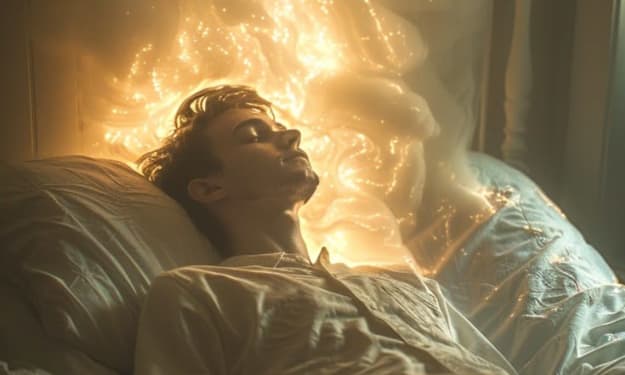
# A Dream Within a Dream The room was silent, save for the rhythmic ticking of the antique clock on the shelf. Its hands pointed to 3:17 a.m. when I woke up—suddenly, breathlessly—as if I had fallen from a great height. My sheets were tangled around my legs, sweat dampening the pillow beneath my head. I sat up and blinked, trying to steady my breath and reorient my mind.
By Amias yoursabout a year ago in Humans
The Gamer Scapegoat. Content Warning.
Introduction There's a pattern we don't talk about nearly enough. Whenever something goes wrong with kids, teenagers, or even young adults — be it violence, gambling, social withdrawal, poor academic performance, or rising mental health concerns — there's a familiar name that gets dragged into the headlines: video games.
By TechHermitabout a year ago in Humans
Bobby Jenks Cause of Death: What Happened to the White Sox World Series Hero?
Bobby Jenks, the hard-throwing closer who helped clinch the 2005 World Series title for the Chicago White Sox, tragically passed away on July 4, 2025, at the age of 44. He died in Sintra, Portugal, after a brave fight against stage 4 adenocarcinoma, a form of stomach cancer. His death comes as a shock to many, even though he had been open about his health struggles earlier this year.
By Bevy Osuosabout a year ago in Humans
How One Stranger Changed My Life Forever. AI-Generated.
I wasn’t looking for help that day. I wasn’t even looking for kindness. In fact, I had spent most of that cold November morning trying to stay invisible. My coat was too thin for the weather, my heart too heavy for the world, and my bank account far too empty to pretend I was okay.
By Anees Kaleemabout a year ago in Humans
“Why Do Relationships Get Boring After a Year? The Truth Nobody Wants to Admit”
💔 Why Do Relationships Get Boring After a Year? The Truth Nobody Wants to Admit In the beginning, love feels like magic. Late-night texts, long calls, daydreaming, a racing heartbeat every time their name lights up your phone. You laugh at silly jokes. You plan futures together. You feel like you’ve finally found “the one.” But then… something changes. One day you wake up and realize: the spark is gone. Conversations become repetitive. Dates feel more like routines. Kisses turn into habits. That electricity? It’s just... gone. You start to ask yourself: “Did we fall out of love?” Or worse: “Was it even real?” But the truth is far deeper—and far more common—than most couples dare to admit. --- 🧠 The Science Behind the “Boring Phase” Let’s get brutally honest: what you feel isn’t “crazy.” It’s biological. That intense excitement in the early stages of love is fueled by dopamine, the same brain chemical released during gambling or drug highs. You feel addicted to their presence. You crave their attention. You overlook flaws because your brain is literally high on love. But this phase—called the honeymoon period—is temporary. After about 12 to 18 months, your brain slows the production of dopamine and shifts into a calmer state, favoring oxytocin (the bonding hormone). That’s when the passion fades… and real-life kicks in. Now it’s less “Can’t live without you” and more “Did you do the dishes?” --- 🕳️ Why Boredom Creeps In Boredom isn’t caused by lack of love—it’s caused by lack of novelty. Think about it: You’ve heard all their stories You’ve visited your favorite spots together You know their habits, moods, and flaws There are no more surprises Human beings are wired to seek stimulation, variety, and discovery. And when your relationship becomes predictable—it feels emotionally flat. You’re not ungrateful. You’re just human. --- 🧩 The Silent Killers of Romance Here are some of the most common, subtle reasons relationships begin to decay after 1–2 years: 1. Lack of Emotional Curiosity You stop asking deep questions. You assume you know everything about them. But people evolve—and when you stop exploring each other, emotional distance grows. 2. Comfort Over Effort In the beginning, you dressed up, planned surprises, stayed up late to talk. Now? You sit on the couch scrolling TikTok in silence. Effort dies. So does romance. 3. Unspoken Resentment Little things pile up—forgotten dates, ignored feelings, unresolved arguments. Over time, this creates emotional fog. And love cannot survive in fog. 4. Life Gets in the Way Jobs. Family. Stress. Bills. Routine. You stop “being lovers” and start functioning like teammates in survival mode. And slowly… you drift. --- 💡 Can the Spark Be Saved? Yes. But not by waiting for it to magically return. You have to build the spark again—intentionally. 🔥 1. Recreate the Unknown Try new things together. A trip. A challenge. A hobby. Anything that creates new experiences. Novelty reignites the brain's reward system. 🧠 2. Ask Dangerous Questions Not “How was your day?” but: “What are you afraid to tell me?” “What do you miss about our early days?” “When did you last feel truly connected to me?” These conversations pierce emotional numbness. ❤️ 3. Bring Back the Small Gestures Random texts. Unexpected hugs. Shared playlists. Compliments. It’s the small things that create the big magic. 🧍♂️ 4. Be Two People, Not One Many couples lose themselves in each other. No personal space, no individual growth. Love dies where individuality dies. Stay whole. Stay interesting. --- 🧠 Final Truth: Love Doesn’t Die… It Fades If You Let It It’s not that you “weren’t meant to be.” It’s that you stopped choosing to be. Love isn’t something that happens to us. It’s something we nurture, feed, and evolve with. When you expect passion to stay without effort, it doesn’t fade—it starves. So if your relationship feels boring right now, know this: > It’s not the end. It’s the pause before a new chapter. If you want it badly enough… you can fall in love all over again—with the same person. And that? Is the most romantic thing of all. Thank you so much for taking the time to read this! 🥰 If you enjoyed my writing, I’d truly appreciate it if you could leave a comment, tap the heart, and subscribe — it’s completely free! 💬❤️🔔 You might also enjoy reading this next piece I've written:
By James World about a year ago in Humans