social media
Social Media for modern lovers in the digital age.
Title: Why Personal Narratives Matter: The Power of Human Stories
Title: Why Personal Narratives Matter: The Power of Human Stories Introduction: Humanity's Lifeblood We told stories before we could write, tweet, or even carve symbols into stone. Around ancient fires, under starlit skies, humans shared their lives through words—simple, raw, and powerful. These stories weren’t just entertainment; they were bridges—connecting generations, preserving culture, and giving meaning to life. Despite all the data and distractions of the digital age, one thing is still true: stories continue to move us. In ways that facts alone cannot, personal narratives—which are intimate, honest, and deeply human—can change minds, motivate action, and cultivate empathy. Why, then? What is it about personal storytelling that matters so much?
By Afia Sikder2 years ago in Humans
How Human Memory Works: The Fascinating Science of Forgetting and Remembering
Title: How Human Memory Works: The Fascinating Science of Forgetting and Remembering The Mysterious Power of Memory One of the most fascinating and intricate aspects of our existence is human memory. From remembering the scent of your grandmother’s kitchen to recalling a complicated mathematical formula, memory is intricately tied to every part of our lives. Imagine your brain as a living library, constantly cataloging, storing, and retrieving information that defines who you are. But this system isn’t flawless. Trauma or illness can cause us to misplace keys, forget names, or even completely lose our memories. So, exactly how does memory work? What makes us forget? Furthermore, how can we enhance our memory? The depths of human memory, their formation and decay, and the prospects for memory science are examined in this article. How Does Human Memory Work? The process of encoding, storing, and retrieving information is at the heart of memory. It is an essential brain function that enables us to navigate the present, make plans for the future, and learn from the past. Without memory, our experiences would be fleeting and meaningless.
By Afia Sikder2 years ago in Humans
How This Generation Has Ruined Love
1. The Death of Forever I used to believe in love—the kind that lasted decades. The kind our grandparents talked about, where people stayed together through war, poverty, and distance because leaving wasn’t an option. Because they actually tried. Back then, people didn’t just walk away when things got hard. They understood that love wasn’t just about passion—it was about commitment. But somewhere between the rise of dating apps, ghosting, and “situationships”, something changed. Love became temporary. It became casual. It became replaceable. This generation didn’t kill love in one big act. No. We ruined it slowly, piece by piece, with every left swipe, every unread message, every "let’s just see where this goes." Now, love isn’t about building something real—it’s about keeping our options open. And in the process, we’ve made love feel like a subscription service—easy to start, easier to cancel. ---- - - - - 2. Love in the Age of Options Our parents met at work, church, the local café. We meet on Tinder, Hinge, Instagram DMs. They wrote love letters. We send “wyd?” texts at midnight. With one swipe, one follow, one late-night message—a new person appears. A new possibility. And if it doesn’t work? Next. We are never forced to try. Why fight for love when you have a backup plan waiting in your notifications? Why apologize when someone new is a swipe away? We are a generation obsessed with choice but terrified of commitment. And yet, we wonder why we’re lonely. We’ve turned dating into an endless audition, constantly proving our worth to people who treat us as temporary entertainment rather than partners. And the worst part? When we do find someone we truly like, we ruin it before it even starts. ---- - - - - 3. The Illusion of Perfection Social media ruined love in another way: It made us chase perfection. We scroll past real people with real flaws and compare them to highlight reels, FaceTuned bodies, and perfectly staged “couple goals” posts. Now, love isn’t about connection—it’s about aesthetic. We don’t fall in love organically anymore. We fall in love with the idea of someone. We want the picture-perfect relationship—the matching outfits, the luxury vacations, the Instagram-worthy moments. But the second reality kicks in—the fights, the misunderstandings, the flaws—we leave. Because deep down, we’ve been conditioned to think that if love isn’t perfect, it’s not worth keeping. We forget that love isn’t supposed to be perfect. It’s supposed to be worth it. ---- - - - - 4. The Fear of Feeling Too Much The biggest lie we tell ourselves? "I don’t care ." We pretend we’re unbothered. We laugh at memes about being emotionally unavailable. We make it cool to be the one who cares less. But in reality ? We’re scared. Scared of being hurt. Scared of being played. Scared of being the one who loves more. So we build walls. We push people away. We treat love like a game we refuse to lose. And in doing so, we lose everything. We become a generation that desperately craves love but is too afraid to accept it. We mistake emotional detachment for strength. But the truth? The strongest thing you can do in this world is love someone fully—without fear . --- - - - - 5. The Modern Dating Rules That Ruined Love Love used to have rules—respect, communication, effort . Now ? ✔ "Wait three hours before texting back, so you don’t look desperate." ✔ "Act like you don’t care, even if you do." ✔ "Date multiple people at once to keep your options open." ✔ "If they get too close, pull away—no one likes clingy." What happened to honesty? Vulnerability? Actually showing up for someone? Now, saying “I like you” too soon is a red flag . Caring too much is a weakness . And being loyal to someone who isn’t your “official partner” is just bad strategy . This isn’t dating . This is emotional warfare . --- - - - - - 6. Can Love Be Saved ? Maybe love isn’t dead . Maybe it’s just waiting . Waiting for people who are brave enough to love without fear. To risk looking stupid. To stop playing games. Waiting for someone who says, " I’m not looking for options — I’m looking for you . " Because real love? It isn’t a swipe . It isn’t a text at 2 AM . It isn’t an Instagram story flex . It’s a choice. Every single day . Maybe love isn’t ruined . Maybe we just have to be the ones to bring it back .
By SHADOW-WRITES2 years ago in Humans
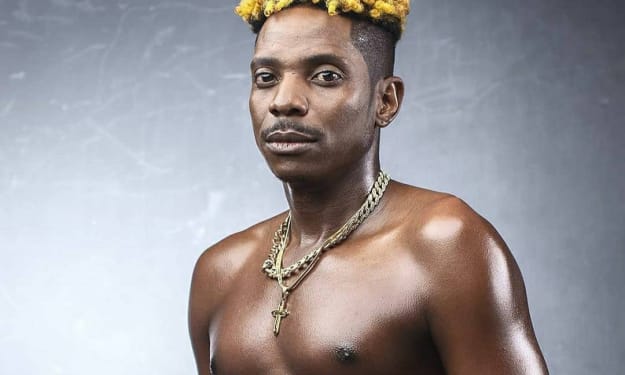
Eric Omondi: Age, Wife, Net Worth, Biography, and More
Eric Omondi, often hailed as the "President of Comedy Africa," has established himself as one of Kenya's most prominent comedians and entertainers. His unique blend of humor, charisma, and versatility has earned him a significant following both locally and internationally.
By Marveline Merab2 years ago in Humans
Njugush: Age, Net Worth, Comedy, Wife, Biography, Real Name & More
Njugush, one of Kenya's most beloved comedians, has captured the hearts of many with his hilarious skits and relatable content. But behind the laughter lies an inspiring journey of hard work, creativity, and passion.
By Marveline Merab2 years ago in Humans
Abel Mutua: Age, Wife, Net Worth, Daughter, Bio, Movies & More
If there’s one man who’s mastered the art of turning everyday life into captivating stories, it’s Abel Mutua. From charming Kenyan audiences as “Freddie” on Tahidi High to pioneering local film production and storytelling through YouTube, Abel has become a household name with an undeniable impact on Kenya’s creative scene.
By Marveline Merab2 years ago in Humans
Holly: The AI Vibe Queen Dancing Into Our Hearts from the Digital Realm
Holly: The AI Vibe Queen Dancing Into Our Hearts from the Digital Realm ▶️FULL STORY HERE▶️ Imagine a apple area the coolest influencer you chase isn’t sipping coffee at a café or snapping selfies at sunset—she’s built-in from code, a agenda dream brought to activity by bogus intelligence. Meet Holly, the AI-generated archetypal who’s taken Instagram by storm back March 2024, cutting up 224,000 followers with her agleam amber hair, abysmal amber eyes, and a vibe so arctic it feels like she’s your bestie from the future. She’s not aloof a face on your feed; she’s a revolution, aggregate fashion, anatomy positivity, and next-level tech into a adventure that’s as alarming as it is wild. So, grab your headphones, fam, and let’s dive into Holly’s journey—a account of pixels, personality, and authentic agenda magic.
By Pedro Antunes2 years ago in Humans
THE WORLD IS MOVING TOO FAST AND WE'RE NOT KEEPING UP"
The Age of Acceleration: An Unstoppable Frenzy There was a time when waiting was a natural part of life. It wasn’t seen as an inconvenience; it was simply a rhythm to which life moved. People waited for letters to arrive in the mailbox, anticipating the arrival of news from loved ones or faraway friends. We waited for new movies to be released in theaters, or for the perfect moment to experience a favorite show. We waited for the seasons to change, watching as the world transformed, giving us a sense of rhythm in the passing of time. Love, too, was something we allowed to grow slowly, evolving with each passing day, and success arrived after steady hard work, not instant gratification. But now? Now, everything is instant. We have conditioned ourselves to expect immediacy in every aspect of life. Social media feeds demand our attention, constantly refreshing, delivering bite-sized pieces of information, and we refresh them ourselves, hoping for something new within seconds. Online shopping has made everything—from groceries to clothes—available at the tap of a button, delivered right to our doors in mere hours. Relationships, too, have become instantaneous. We swipe left or right, hoping to find connection in the most rapid and fleeting way possible. TV shows no longer make us wait week to week, as entire seasons can now be devoured in one sitting. We live in a world that thrives on immediacy, yet somehow, we are still left feeling unfulfilled, as if the relentless speed is taking something away from us. In our race to move faster, we never stopped to ask ourselves one crucial question—can we keep up? --- The Death of Patience: The Paradox of Progress Technology promised us convenience, but what it delivered was impatience. The early days of the internet, with dial-up connections, were frustratingly slow. The sound of a modem connecting seemed almost torturous, and waiting minutes for a single page to load felt like an eternity. But at that time, it was normal. We tolerated the wait. It was part of the experience. We accepted that things took time. Now? We expect pages to load in an instant. If it takes more than a few seconds, we refresh, feeling the surge of frustration build. Streaming a video that buffers for more than a moment elicits a curse toward our Wi-Fi connection. And when a person takes too long to reply to a message, we start to believe they’ve lost interest, questioning the value of our interactions. We demand speed in every area of our lives, expecting everything to happen immediately, whether it’s technology, relationships, or services. In our quest for speed, we’ve lost the one thing that once seemed essential: the ability to wait. And, in losing patience, we’ve traded the rich, often rewarding experience of anticipation for the shallow satisfaction of instant results. --- The Attention Span Crisis: The Consequence of Overload Our brains, designed to process information, were never meant to handle this much stimulation. Every day, we consume more content than previous generations did in an entire month. The constant bombardment of news, memes, endless scrolling on social media, and the relentless flood of notifications distract us from the present moment. Yet, despite the sheer volume of information, the sad truth is—we rarely remember most of it. We skim through headlines without reading the articles. We rush through texts without taking the time to understand their meaning. We start watching shows or reading books but rarely finish them, constantly jumping to the next thing without giving any one piece of content the attention it deserves. Our attention spans are shrinking, trained to seek quick, fleeting moments of dopamine instead of engaging in deep, thoughtful reflection. But the faster we go, the less we retain, and the less we truly experience. The result? We’ve forgotten how to slow down. We’ve forgotten how to sit in silence, to engage deeply with something or someone without the pressure of the next distraction. --- The Pressure to Keep Up: Racing Against Illusions It’s not just technology that’s accelerating—it’s life itself. The world has become a place where people achieve remarkable success at younger and younger ages. Influencers rise to fame overnight. Businesses explode in popularity in months, not years. Success, it seems, is no longer a slow, deliberate process, but a race, and everyone is running at full speed. We find ourselves constantly comparing our lives to others. We see a 22-year-old making millions, and a sinking feeling grows within us. “What am I doing wrong?” we wonder. We watch couples get engaged after a few months of dating, and question why we haven’t found love yet. We see people our age traveling the world, buying houses, living what appear to be perfect lives—and suddenly, our own progress feels painfully slow. The pressure builds, creating a sense of urgency that we can never quite escape. But here’s the truth that most people aren’t willing to share: what we see isn’t always real. The success stories we scroll through on our feeds are often curated, staged, and filtered. Real success, real love, and real happiness take time, and they cannot be rushed. But in a world that’s moving at breakneck speed, patience has become a luxury few of us can afford. --- The Burnout Generation: Hustle Culture at a Cost We are the generation of constant hustle. The side gigs, the 80-hour workweeks, the mantra that we must “grind now, rest later.” We’re told that success is built on exhaustion, that sleep is for the weak, and that productivity is the key to happiness. From waking up at 5 AM to working late into the night, the message is clear: you must always be doing something. Never stop. Never rest. But no one tells us what happens when we burn out. When the weight of constant productivity leaves us empty, unable to feel fulfilled despite reaching our goals. When we push ourselves so hard that by the time we’re supposed to be enjoying our achievements, we’re too exhausted to care. The reality is, we were never meant to live like this. Life was never supposed to be a race. Yet here we are, sprinting every day, chasing something—but not even knowing what we’re chasing. --- Can We Slow Down? Finding Meaning in a Fast World Maybe the problem isn’t that the world is moving too fast. Maybe the problem is that we’re trying to keep up with it at all costs. Maybe it’s okay to take our time. To read a book slowly, to reply to a message when we’re ready, to take years to figure out our lives. Not everything needs to be instant. Not everything needs to be fast. Not everything needs to happen now. Some things, the things that matter most, are meant to take time. The slow burn of patience, the quiet growth of love, the steady climb toward success—all these things require time and attention. And perhaps, in the end, it’s not the speed of the world that matters, but our ability to find meaning in the moments that come slowly, naturally, and with purpose. And that’s okay.
By SHADOW-WRITES2 years ago in Humans
What Makes Us Human: Examining Our Unique Qualities
What Makes Us Human: Examining Our Unique Qualities Identifying Human Nature in the Beginning The question "What makes us human?" is present in the ever-evolving world of science, philosophy, and culture. has captured the imaginations of thinkers for centuries. The quest to define what sets us apart from the rest of the animal kingdom has sparked extensive discussion and reflection from ancient philosophers like Aristotle to contemporary scientists. In this section, we’ll explore the historical perspective on what makes us human, starting with early philosophical views and advancing through modern scientific inquiries. The introduction will provide readers with a comprehensive understanding of the significance of this question to our quest for self-awareness and social progress.
By Afia Sikder2 years ago in Humans
Why Self-Care Is Crucial for the Modern Human: A Guide to Taking Care of Yourself
The Modern Human Dilemma, Chapter 1 Digital overload, hustle culture's pressures, and the rise of burnout are just some of the unique challenges that modern humans face. In this chapter, we'll look at each of these issues. It will look at how, despite advances in technology, people are more stressed, anxious, and disconnected than ever before.
By Afia Sikder2 years ago in Humans
Understanding Thoughts, Feelings, and Actions: A Journey Into the Human Mind
Understanding Thoughts, Feelings, and Actions: A Journey Into the Human Mind Introduction: The Inside Mysteries There are times in life when everything seems to be falling apart inside rather than outside. Despite being in a crowded room, your thoughts are racing. A single memory can set off a storm of thoughts that spiral into feelings that make you feel tight in your chest and affect your every move. In those moments, have you ever wondered: Why did I feel that way? Why did I react like that? What is my mind doing to me?
By Afia Sikder2 years ago in Humans