science
The Science Behind Relationships; Humans Media explores the basis of our attraction, contempt, why we do what we do and to whom we do it.
Women at Higher Risk of Mortality Following a Heart Attack, Study Finds
Introduction: A recent study comparing outcomes among men and women following a heart attack has revealed that women are more likely to die after experiencing a heart attack compared to men. The findings emphasize the need for improved monitoring and care for women in the aftermath of a heart attack, calling for greater attention to be given to their specific needs. Cardiovascular disease remains the leading cause of death globally, with heart attacks and strokes accounting for the majority of related fatalities. Study Highlights Disparity in Outcomes: While men are more prone to cardiovascular conditions, research indicates that women tend to experience worse outcomes during hospital stays following a heart attack. Factors such as advanced age, increased prevalence of other health conditions, and lower usage of stents to address blocked arteries contribute to this discrepancy. Stents are small mesh tubes that help restore blood flow in narrowed or weakened arteries. Study Methodology and Findings: The study examined data from 884 patients, with women comprising slightly over a quarter of the participants. Women in the study were, on average, older than men and exhibited a higher prevalence of high blood pressure, diabetes, and prior stroke. However, men were more likely to smoke and have coronary artery disease. The researchers found that women faced a significantly higher risk of adverse outcomes, including death, both in the short and long term, compared to men who received the same treatment. Expert Insights: Dr. Steven Gundry, a cardiothoracic surgeon and renowned expert, expressed concern over the historical disregard of women's heart complaints and stressed that pre-menopausal women are equally vulnerable to heart disease. Dr. Gundry refuted the long-held belief that estrogen protects women against heart disease, emphasizing the urgent need to address the issue. Potential Factors Influencing Higher Mortality Rates: Although the study did not delve into the specific reasons for the gender-based differences in outcomes, experts suggest several factors. Women often exhibit atypical symptoms during a heart attack, such as indigestion or shoulder pain, which can delay prompt diagnosis and treatment. Additionally, women's smaller arterial diameter makes stent placement more challenging, further contributing to poorer outcomes. Gender bias and a lack of awareness among healthcare providers may also lead to women's complaints being dismissed, even in emergency settings. Importance of Timely Diagnosis and Treatment: Undiagnosed heart failure is another critical issue highlighted by recent research. Many patients treated with loop diuretics, drugs used to alleviate congestion caused by heart failure, may not have received an accurate heart failure diagnosis. This is particularly true for women, who constitute a significant proportion of those with undiagnosed heart failure. The combination of undiagnosed heart failure and inappropriate loop diuretic usage can have detrimental consequences. Implications and Takeaways: The study's findings underscore the necessity of earlier detection and treatment of heart conditions in women. Medical professionals should maintain a high index of suspicion for heart failure in patients requiring loop diuretics. Preventive measures such as lifestyle modifications, including diet and exercise, assume added significance in reducing the risk of heart failure, particularly for women. Addressing gender disparities in heart disease care remains a critical challenge that demands attention and intervention. Conclusion: The study's findings reveal a concerning disparity in outcomes between men and women following a heart attack. Greater awareness, improved diagnostic methods, and tailored treatment approaches are essential to address the specific needs and risks faced by women in cardiovascular care. The medical community must prioritize a gender-sensitive approach to ensure better outcomes and reduced mortality rates for women affected by heart disease.
By Health Aestheticss3 years ago in Humans
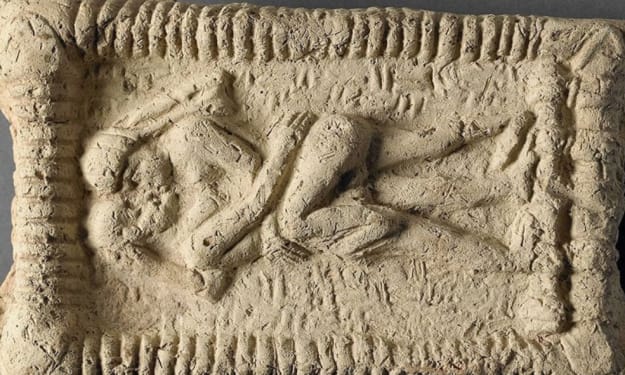
Humanity’s First Recorded Kiss Was Earlier Than We Thought
“My upper lip becomes moist, while my lower lip trembles! I shall embrace him, I shall kiss him.” —1900-1595 B.C.E. tablet from Sippar, Mesopotamia; translation by Nathan Wasserman, Akkadian Love Literature of the Third and Second Millennium B.C.E.
By Mark Xavier3 years ago in Humans
Yes, Your Water Can Go Bad
We all know that food and drinks can go bad. Your refrigerator likely has items right now that were once wholesome food and is now...not wholesome, and no longer food. But one basic component of our lives that might seem immune to that spoilage is water. It’s a pretty fundamental compound, after all, and doesn’t contain anything other than a bunch of hydrogen and oxygen, so there doesn’t seem to be anything in there that other organisms could defile. When your leftover mint chutney goes bad, it makes sense, but water seems so impervious that noticing an expiration date on a bottle of water seems kind of ludicrous. But it’s not completely wrong. Water doesn’t rot or spoil like many foods, but there’s definitely a shelf life.
By Mark Xavier3 years ago in Humans
Why America Is Struggling to Stop the Fentanyl Epidemic
the United States is suffering the deadliest drug epidemic in its history. Overdoses claimed the lives of more than 100,000 Americans between August 2021 and August 2022 alone. Over the span of just a few years, drug deaths have doubled. Most of these overdoses involve fentanyl, which now kills around 200 Americans every day.
By Mark Xavier3 years ago in Humans
Are we gods, or monkeys?
About 50,000 years ago, Homo sapiens was just another species. We lived alongside all the other animals on the African savannah. We hunted food, gathered berries, raised children, and did our best to avoid saber-toothed tigers, just like all the other ape species.
By There is Something...3 years ago in Humans
Moses: The Legendary Leader and Prophet
Introduction: In the annals of human history, few names resonate with as much power and significance as Moses. As a highly revered figure in Judaism, Christianity, and Islam, Moses occupies a central position in the religious narratives of these faiths. His remarkable story, filled with divine interventions and extraordinary feats, has captivated the hearts and minds of millions across the globe. Join us on a journey through time as we delve into the life and legacy of Moses, a man who defied all odds and became an emblem of leadership and spiritual guidance.
By Lily Collins3 years ago in Humans
The Health Risks of Pork Consumption: Understanding the Potential Dangers
The consumption of pork meat in various forms, such as freshly cooked, cured, preserved, or processed, is quite common. Cured pork products have been used traditionally to extend the shelf life of the meat, and they have gained popularity due to the unique flavors and tastes achieved through the curing process. Examples of preserved pork include sausages, ham, salami, and bacon.
By Dreamson Shylla3 years ago in Humans