science
The Science Behind Relationships; Humans Media explores the basis of our attraction, contempt, why we do what we do and to whom we do it.
Unveiling the Most Dangerous Science Experiment: A Journey into the Unknown
Unveiling the Most Dangerous Science Experiment: A Journey into the Unknown Introduction In the pursuit of knowledge and discovery, scientists have embarked on numerous daring and groundbreaking experiments throughout history. While scientific exploration often leads to incredible advancements, there are certain experiments that stand out for their inherent risks and potential dangers. In this article, we delve into the realm of the most dangerous science experiment ever conducted. We will explore the motivations behind such experiments, the inherent risks involved, and the valuable insights gained from pushing the boundaries of scientific exploration. 1. The Manhattan Project and the Atomic Bomb One of the most notorious and perilous scientific endeavors in history was the Manhattan Project. Initiated during World War II, the project's aim was to develop the atomic bomb. Led by a team of brilliant scientists, including J. Robert Oppenheimer, this experiment involved the splitting of atoms and harnessing the power of nuclear fission. The risks associated with this experiment were enormous, both in terms of potential catastrophic consequences and the ethical implications of unleashing such destructive power. 2. Large Hadron Collider and Particle Physics The Large Hadron Collider (LHC) is a colossal scientific instrument designed to accelerate particles to nearly the speed of light and collide them together. Located underground near Geneva, Switzerland, the LHC aims to unlock the mysteries of the universe and explore the fundamental building blocks of matter. However, the LHC also posed significant risks, such as the creation of miniature black holes or the formation of exotic, highly unstable particles. Scientists undertook extensive safety precautions to mitigate these risks and ensure the safety of the experiment. 3. Biological Warfare Research The realm of biological warfare research has witnessed some of the most dangerous and morally contentious experiments in history. During the mid-20th century, various countries engaged in covert operations to develop lethal biological agents for warfare purposes. Projects such as the Soviet Union's Biopreparat and Japan's Unit 731 involved human experimentation, the creation of deadly pathogens, and the manipulation of biological agents. These experiments not only posed significant dangers to the researchers involved but also raised serious ethical concerns about the limits of scientific inquiry. 4. Radiation Experiments on Humans Throughout the 20th century, numerous experiments involving radiation were conducted on humans, often without their informed consent. The infamous Tuskegee syphilis experiment in the United States and the plutonium injection experiments conducted on unsuspecting patients are just a few examples. These experiments exposed individuals to high doses of radiation, leading to severe health consequences and, in some cases, death. The risks associated with radiation experiments highlight the ethical imperative of informed consent and the responsibility of scientists to prioritize the well-being of human subjects. Conclusion The pursuit of scientific knowledge is an inherently risky endeavor. While these experiments push the boundaries of human understanding and lead to remarkable discoveries, they also demonstrate the need for caution, ethical considerations, and responsible conduct in scientific research. The examples discussed in this article represent some of the most dangerous science experiments in history, where lives were at stake, ethical boundaries were crossed, and society was forever changed. As we reflect on these experiments, we must learn from past mistakes and ensure that the pursuit of knowledge is guided by a strong ethical framework. Striking a balance between scientific curiosity and responsible conduct is crucial to prevent the repetition of dangerous experiments and to uphold the integrity of scientific research. By recognizing the risks associated with such experiments, we can navigate the frontiers of science more conscientiously, ensuring that our quest for knowledge remains both enlightening and safe. Thank you for reading this article and please give feedback for i can improve my article. -Mahipal Singh Bhati
By mahipal singh bhati3 years ago in Humans
What Earth Will Be Like in 10 Years
What Earth Will Be Like in 10 Years: Predicting the Future of Our Planet The state of our planet is a topic of great concern and urgency. As we grapple with the challenges of climate change, resource depletion, and environmental degradation, it's natural to wonder what Earth will be like in the next 10 years. While we cannot predict the future with certainty, we can analyze current trends and developments to envision the potential trajectory of our planet. In this article, we will explore some possibilities and considerations for what Earth might be like in 10 years' time.
By Motivational Bucks3 years ago in Humans
How Your Feet Could Be Warning You About Liver Issues
In this article, we're going to explore how certain foot indicators can provide insights into potential liver issues. However, I want to make it clear from the start that these indicators should not be used as a definitive diagnosis for liver disease. It is crucial to consult a doctor and undergo proper medical tests for an accurate evaluation. Nevertheless, observing these clues can offer valuable hints regarding the well-being of your liver. So, let's delve into these indicators, keeping in mind that they are just small pieces of the puzzle.
By Conor McKernan3 years ago in Humans
Ulcers and treatments
Start writing... Ulcers are a common medical condition that can affect various parts of the body, including the digestive tract, mouth, and skin. These painful sores can develop for different reasons, such as infection, injury, or inflammation. Therefore, the treatment for ulcers depends on the underlying cause. For instance, if the ulcer is caused by a bacterial infection, doctors may prescribe antibiotics. On the other hand, if the ulcer is the result of acid reflux or other digestive issues, patients may need to take acid-reducing medications or make dietary changes to avoid triggering symptoms. In some cases, topical ointments, surgery, or other medical interventions may be necessary to heal the ulcer and prevent complications. Ultimately, seeking timely medical attention and following a personalized treatment plan is crucial for managing ulcers effectively.
By Poopalapillai Namasivayam 3 years ago in Humans
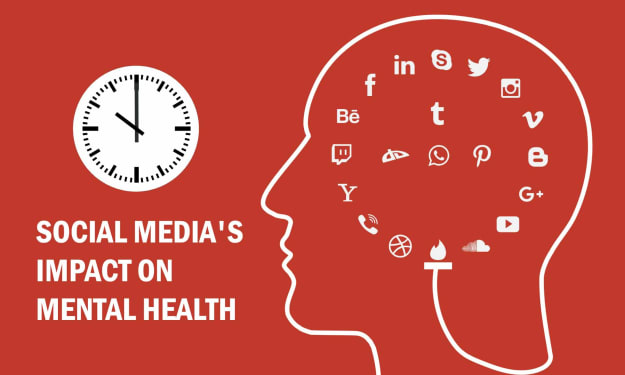
The Impact of Social Media on Mental Health
In the age of digital connectivity, social media has become an integral part of our lives. It has revolutionized the way we communicate, share information, and stay connected with others. However, the rise of social media has brought about concerns regarding its impact on mental health. This article explores the connection between social media and mental well-being, shedding light on the potential risks and benefits. By understanding the complex relationship between social media and mental health, we can make informed decisions about our online habits and promote a healthier digital environment.
By Abdul Haseeb Rizvi Attari3 years ago in Humans