science
The Science Behind Relationships; Humans Media explores the basis of our attraction, contempt, why we do what we do and to whom we do it.
Investigating the Link Between Blood Clotting and Perfume Ingredient
Introduction: The Intricacies of Blood Clotting and Trauma Bleeding from a major injury is undoubtedly a serious concern, with the potential loss of blood posing immediate danger. However, recent research has shed light on a lesser-known danger associated with massive blood loss: the risk of blood clotting occurring in unexpected places within blood vessels. This phenomenon, known as coagulopathy, can complicate the efforts of medical professionals striving to save lives in cases of severe injury. Remarkably, a solution to this challenge might come from an unexpected source – a key ingredient used in perfumes.
By Japneet Kaur3 years ago in Humans
“Unlocking the Hidden Powers of the Human Mind: The Science Behind Extraordinary Abilities”
Unlocking the Hidden Powers of the Human Mind: The Science Behind Extraordinary Abilities. In a world where superheroes dominate the silver screen, there's a growing fascination with the idea of unlocking superhuman abilities. While we may not be leaping tall buildings in a single bound, recent scientific discoveries suggest that the human mind might possess untapped potential that could rival even the most fantastical powers.
By Deja Lindsey3 years ago in Humans
HeartSync: Navigating the Ethical Labyrinth of AI-Powered Healthcare
In the not-so-distant future, where AI-powered healthcare was as common as smartphones, Lily found herself in the crossroads of medical innovation and ethical dilemmas. She had been diagnosed with a rare heart condition that required constant monitoring, and her doctor recommended an AI implant to manage her health more effectively.
By Isaac Godo3 years ago in Humans
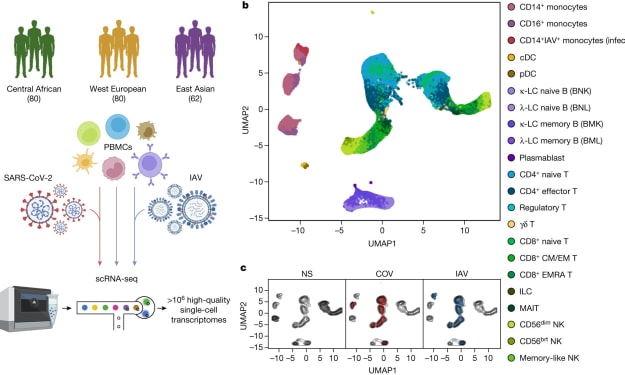
Does human history affect their Immune response?
During the Coronavirus pandemic, the clinical range seen among individuals tainted with SARS-CoV-2 went from asymptomatic carriage to death. Specialists at the Institut Pasteur, the CNRS, and the Collège de France, in a joint effort with scientists all over the planet, have researched the degree and drivers of contrasts in safe reactions to SARS-CoV-2 across populaces from Central Africa, Western Europe, and East Asia.
By Wyckliffe Ayoma 3 years ago in Humans
WHAT WILL WE MISS?
Hello, this is KRISH, and let's take a fascinating journey into the future. In the year 6009, a peculiar quirk of our numeral system will occur – the first time since 1961 that a year, when written in Hindu-Arabic numerals, can be inverted and still look the same. It's a curious observation, but sadly, you and I might not be around to witness this numerical anomaly. The brevity of human life limits our experiences, and there's a myriad of captivating events we'll likely miss out on.
By Krishna Singh3 years ago in Humans
TIME TRAVEL
Hello, friends! The universe's immense size is both astonishing and disappointing. Its vastness, as revealed by powerful telescopes, is incredible, yet the distance between celestial bodies is disheartening. Imagine finding an Earth-like planet suitable for human habitation in another galaxy through our telescopes today – reaching it would take centuries. Traveling beyond our galaxy is virtually impossible for individuals. Our home, Earth, resides in the Milky Way Galaxy, with the nearest neighbor being the Andromeda Galaxy, a staggering 2.5 million light-years away. Using conventional spacecraft speeds of 28,000 km per hour, it would take an incomprehensible 94.5 billion years to reach Andromeda. Even if we could travel at the speed of light, the journey would still take 2.5 million years. This realization is truly disappointing.
By Krishna Singh3 years ago in Humans
Recognizing Early Signs: Gut Issues Linked to Potential Parkinson's Disease Risk, Study Shows
There are now known to be intricate connections between the gut and neurological health. In a groundbreaking research endeavor, scientists have unveiled a potential link between gastrointestinal problems and the early identification of Parkinson's disease. The study, conducted on a substantial scale, involved the analysis of data from nearly 25,000 individuals in the United States. The findings suggest that a range of symptoms, including constipation, difficulty swallowing, and irritable bowel syndrome (IBS), could potentially serve as precursors to Parkinson's disease.
By Serious Lifestyles3 years ago in Humans
The World Through the Eyes of Animals
In a world bustling with human activity, where conversations are dominated by human concerns and aspirations, it's easy to overlook the myriad lives that exist alongside us, sharing this planet we call home. We are not alone in this tapestry of existence; we are part of a vast and diverse community that includes creatures of all shapes and sizes. What if, for a moment, we dared to step out of our own shoes and venture into the realm of the unknown—the world as seen through the eyes of animals?
By Hazill Manahan3 years ago in Humans
Unveiling the Complex Legacy of J. Robert Oppenheimer
Introduction J. Robert Oppenheimer, a physicist whose name has become synonymous with the development of the atomic bomb, stands as one of the most influential figures of the 20th century. Despite never receiving a Nobel Prize, Oppenheimer's impact on history far surpasses that of many laureates. Guiding the world's finest physicists in constructing the atomic bomb, Oppenheimer altered the course of global events and forever transformed the realms of science and geopolitics.
By amila dimantha3 years ago in Humans