science
The Science Behind Relationships; Humans Media explores the basis of our attraction, contempt, why we do what we do and to whom we do it.
Political Dissent: "Whispers of Change"
Part 1: The City of Shadows In the heart of a sprawling metropolis known as Unity City, the shadows held secrets that only a few dared to uncover. It was a city of towering skyscrapers, neon lights, and the cacophony of daily life. Yet, beneath the glittering façade lay a darkness that gnawed at the souls of its citizens.
By Deborah Tonwe3 years ago in Humans
Telomere
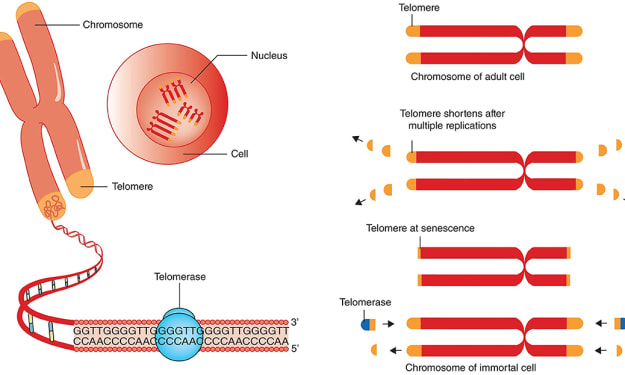
"You might be curious why I'm discussing telomeres?'' Telomeres play a pivotal role in our overall well-being. Telomeres are like genetic bodyguards found at the ends of our chromosomes. They shield chromosomes from damage and ensure orderly cell division. However, each time a cell divides, these guards get a bit shorter. Over time, this shortening is linked to aging and age-related illnesses. Think of telomeres as the protective tips on shoelaces that keep your genetic information intact.
By Moussa Abass3 years ago in Humans
What makes it challenging to overcome an undesirable habit?
Countless individuals grapple with nail-biting tendencies at some point in their lives. Many resort to extreme measures in an attempt to quit, such as applying chili pepper on their nail-beds, wearing gloves incessantly, immersing their hands in salt, and visualizing bacteria crawling on their fingertips. While not everyone is a nail-biter, most of us harbor a habit we wish to overcome. So, what is the most effective method for breaking one? Scientists define habits as behaviors that are regularly performed and unconsciously triggered by specific circumstances, whether it's a location, time of day, or even an emotional state. These actions can encompass simple responses like twirling hair when stressed, but can also involve more intricate routines embedded in our daily lives, such as staying up late or preparing coffee in the morning. If you find yourself engaging in something frequently, often without much conscious thought, it's likely a habit. These habits form because, at some point, your brain recognizes the behavior as advantageous. For instance, if you habitually bite your nails after opening a stressful email, this action becomes rewarding as it diverts your attention, alleviating email-induced anxiety. Within your brain, pleasurable experiences can trigger the release of dopamine, a neurotransmitter responsible for feelings of pleasure. Dopamine also plays a pivotal role in neuroplasticity, which means it can alter the connections and firing patterns of your neurons. Your brain establishes associations that link the reward with the behavior, compelling you to repeat it. Over time, your brain starts linking the behavior with other cues, like your surroundings. Eventually, simply being at your desk can subconsciously trigger the habit of nail-biting, without the need for a stressful email or a sense of relief. Once these cue-behavior-reward loops are established, they operate swiftly, often outpacing your decision-making process. You may find yourself succumbing to a habit before you even realize it. However, this can be advantageous because not all habits are detrimental. They represent stored memories of what has proven effective in the past, allowing you to take swift action in the present. Research suggests that, on average, people spend over 40% of their day engaging in habitual behaviors while their minds are occupied with other thoughts. For example, an automated morning routine can save both time and mental energy. Nevertheless, many individuals possess habits that no longer serve them. Research indicates that mere intentions frequently fall short in bringing about long-term behavior change. This isn't to say that breaking a habit is impossible. Rather, by comprehending the foundation of habits, you can develop more effective strategies for altering them. For instance, we understand that habits are often triggered by specific environments and routines. Lying in bed may lead to endless smartphone scrolling, while watching TV on the couch might prompt you to reach for sugary snacks. One of the most effective ways to manage behavior is to pinpoint these locations or times of day and then endeavor to modify them by altering your routine or introducing obstacles that make it challenging to engage in the habit within that setting. Relocating, changing jobs, or adopting a new schedule can be particularly opportune moments to break a habit or establish a new one. In cases where habits like nail-biting or hair-pulling persist, a method known as habit reversal training can prove beneficial. Developed by psychologists in the 1970s, the goal is to replace a detrimental habit with a less harmful one. This training necessitates a comprehensive analysis and understanding of your habit triggers so that you can effectively intervene at the right moments. For example, if you tend to bite your nails at work, you can proactively keep a fidget toy on your desk. Then, when faced with a stressful email, you can use the toy when the urge to bite your nails arises. Breaking a habit requires time and effort, but it is indeed achievable.
By Amir Khachi3 years ago in Humans
Are Cell Phones Mutating The Shape Of Our Bones?
What if cellphones were so powerful that they could mutate the shape of our bones. This is a surprising new topic that's recently been popping up all over the media. It stems from a scientific report that suggests using phones and tablets can cause serious and long-lasting changes to our bodies and not in a way that you might think. In the past few years a study has been carried out by David Shahar and Mark Sayers who specialized in Biomechanics at Australia's University of the Sunshine Coast. Biomechanics looks at how mechanical laws apply to living organisms from how humans run to how insects beat their wings. Shahar and Sayers' study also involves Osteobiography, this is used to work out what someone's life was like from their bones.
By Luis Flores3 years ago in Humans
Exploring the Fascinating Dimensions of Human Intelligence: 9 Intriguing Facts
The subject of intelligence has been a topic of enduring debate and fascination. Undoubtedly, intelligence holds a pivotal role in shaping human behavior, both in personal and professional spheres. In this article, we embark on an exploration of intelligence, unraveling nine captivating facts that shed light on this multifaceted concept. Whether you are surprised, intrigued, or even alarmed by some of these revelations, our aim is to deepen your understanding of intelligence and its intricate dimensions.
By Frank John3 years ago in Humans
The Impact of Modern Technology on Our Skeletons: A Closer Look
In recent times, a surprising and thought-provoking topic has been making headlines in the media. It revolves around the notion that our cellphones, now more powerful than ever, could potentially induce changes in the shape of our bones. This fascinating subject has emerged from a scientific report suggesting that the extensive use of smartphones and tablets may lead to significant and enduring alterations in our bodies. In this article, we delve into this intriguing topic and explore the findings of a study conducted by experts in biomechanics at the University of the Sunshine Coast in Australia.
By Frank John3 years ago in Humans
Wonders of the Human Body
Introduction: The human body is a marvel of nature, a complex and intricate system that amazes scientists and researchers. From the unique features of our organs to the fascinating facts about our senses and abilities, the human body is a subject of perpetual wonder. In this essay, we will delve into the remarkable aspects of our bodies, shedding light on the incredible capabilities and peculiarities that make us who we are.
By Sarah Bartholomew3 years ago in Humans
Climate Change
Climate change, a topic of global significance, is a complex and multifaceted issue that touches every aspect of our lives and the health of our planet. This essay delves into the various dimensions of climate change, exploring its causes, consequences, and the actions required to mitigate its impact.
By Abraham Narh3 years ago in Humans