science
The Science Behind Relationships; Humans Media explores the basis of our attraction, contempt, why we do what we do and to whom we do it.
Are Cell Phones Mutating the Shape of Our Bones?
Title: Are Cell Phones Mutating the Shape of Our Bones? Introduction: In today's digital age, cell phones have become an integral part of our lives. We rely on them for communication, entertainment, and information. However, the increasing use of cell phones has sparked concerns about their potential impact on our health. One such concern is whether cell phones are mutating the shape of our bones. In this article, we will explore the science behind this claim and separate fact from fiction.
By Pravin choudhary 3 years ago in Humans
"Banana Fiber: Transforming Waste into Sustainable Treasures"
In the heart of Uganda, where bananas are a dietary staple, lies a pioneering solution to the environmental challenges posed by banana cultivation. By repurposing discarded banana stems into versatile fibers, a Ugandan company is crafting a sustainable future. From rugs and placemats to hair extensions, the question arises: Can bananas become a green alternative to traditional fabrics such as cotton and silk? Join us on an illuminating journey to Texfad, located on the outskirts of Kampala, as we delve into the extraordinary potential concealed within banana waste.
By Anu Preethi Danila D3 years ago in Humans
"From Avocado Scraps to Eco-Friendly Plastics: How Biofasse is Transforming Waste"
In a world where avocado consumption is on the rise, so is the issue of avocado waste. Last year, Americans alone consumed more than 6 billion avocados, generating a substantial amount of inedible waste. However, there's a company that has found a creative solution to this problem. They've developed a groundbreaking process to transform avocado pits into eco-friendly bioplastics. These bioplastics have the potential to significantly reduce pollution, as they break down faster and rely less on fossil fuels. But the key to their success lies in how they are manufactured and disposed of.
By Anu Preethi Danila D3 years ago in Humans
A Simple Understanding of the Basics of Ankylosing Spondylitis
This rheumatic condition is best treated by a rheumatologist. Diagnosis of this condition can be very challenging and requires “ruling out” many other conditions. The HLA-B27 genetic marker shows that you have a higher chance of a handful of rheumatic conditions but is by no means a test for ankylosing spondylitis. No such test exists.
By Audra Spangler3 years ago in Humans
Sway: Harnessing Seaweed to Revolutionize Sustainable Packaging
In a world grappling with the environmental consequences of plastic pollution, innovative solutions are emerging to combat the crisis. Among these, Sway, a forward-thinking startup founded in 2020, is pioneering the development of compostable alternatives for single-use plastics. Their primary focus? Thin films, a significant contributor to plastic waste in the world's oceans.
By Anu Preethi Danila D3 years ago in Humans
Why Do We Dream While Sleeping?
In ancient times, civilizations believed that dreams were divine messages or predictions of the future. During the third millennium BCE, rulers of Mesopotamia documented and analyzed their dreams using wax tablets. After a millennium, the Ancient Egyptians compiled a book dedicated to interpreting dreams, featuring an extensive list of common dreams and their significance. And in the years following, we have not stopped trying to figure out why we dream.
By Maktuma Alam3 years ago in Humans
Robots Among Us: The Future of Human-Robot Coexistence
Title: Robots Among Us: The Future of Human-Robot Coexistence Introduction The rapid advancement of robotics and artificial intelligence has brought us closer to a future where robots could be integrated into our daily lives on a much broader scale. The idea of robots living among us has long been a staple of science fiction, but it is increasingly becoming a reality. In this article, we explore the possibilities, challenges, and implications of a world where robots coexist with humans as everyday companions, coworkers, and even family members.
By Pravin choudhary 3 years ago in Humans
"The World's Hottest Pepper: Inside the Fiery World of Capsaicin Obsession"
Introduction Ed Currie, an unassuming yet passionate man, has dedicated his life to peppers that pack a punch. His creation, the Carolina Reaper, holds the Guinness World Record for being the spiciest pepper on Earth. This is the story of a man whose life revolves around capsaicin, the compound responsible for the fiery sensation in hot peppers.
By Anu Preethi Danila D3 years ago in Humans
Guardians of the Rainforest: The Brazil Nut Harvesters of the Amazon
In the heart of the Amazon rainforest, a remarkable tradition unfolds – the collection of Brazil nuts. These prized nuts are not only a source of livelihood for indigenous communities but also vital for the health of the rainforest. This is the story of how these guardians of the rainforest saved their industry in the past and the new threat they now face.
By Anu Preethi Danila D3 years ago in Humans
Preserving Tradition: The Story of "A Synthip Walk" Salt in the Philippines
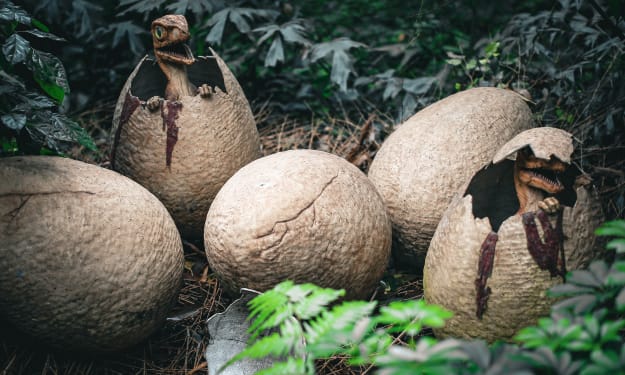
In a world where modernization and convenience often overshadow age-old traditions, the Philippines stands as a testament to the resilience of cultural heritage. Here, a remarkable story unfolds - that of "a synthip walk," a salt variety known as the "dinosaur egg." This rare artisanal salt has not only managed to defy the odds but also carve a niche for itself in a rapidly changing world.
By Anu Preethi Danila D3 years ago in Humans
THE MAXIMUM SPEED HUMANS CAN SURVIVE
The fastest individual on Earth effortlessly makes rapid movement appear effortless. The current speed record for humans is just over 27 miles per hour, achieved briefly by Sprinter Hussein Bolt during the halfway point of his world record 100-meter dash. Humans have the potential to reach even higher speeds, limited only by the quickness of our muscle movements. In theory, our muscles could reach speeds up to 40 miles per hour. However, the reason we cannot achieve this is due to the amount of time we spend in the air, which restricts the force our limbs can exert upon impact with the ground. This is why someone on skates can outpace a runner, as gliding allows for increased traction and therefore greater speed. If humans had longer legs, wider hips, or additional limbs like insects, we could potentially achieve even faster speeds, especially if we were able to run on all fours. In 2016, speed records were not only broken on the running track, but also on the ski slopes in France. The world record for downhill skiing belongs to an Italian ski instructor and mountain guide who, assisted solely by gravity, achieved a speed of approximately 158 miles per hour while skiing across the Zone near the bottom of a course in just over two seconds. Personally, I struggle to maintain balance on skis, let alone move at half that speed. To put it into perspective, the fastest a tiger beetle can sprint is up to five miles per hour, which may not initially seem impressive. However, when considering that it covers 120 of its body lengths in a single second, it becomes quite remarkable. In comparison, Bolt covers about six body lengths per second. To match the speed of the beetle, Bolt would have to run at approximately 480 miles per hour, which is twice as fast as a peregrine falcon. Tiger beetles have incredibly sharp eyesight for insects, but while running, their surroundings become a blurry smudge. This means that the beetle must periodically stop to assess its path and determine where it is going. Despite this, they remain remarkably fast. The speed of a mite is equivalent to a human running at approximately 1300 miles per hour at its fastest. This tiny mite, comparable in size to a sesame seed, can cover 322 body lengths per second. Have you ever contemplated how quickly a light bulb illuminates? Well, you couldn't possibly catch it in time—it appears instantaneous. Consider, for a moment, attempting to click a stopwatch at the exact moment a finger snap occurs. It happens within the blink of an eye. Oops, I misspoke—can you provide the sound of a finger snap? Light travels at an astonishing speed. For example, during a storm, you will see lightning before hearing the crack of thunder. The light from the bolt races towards your eyes and swiftly reaches your brain for you to process, all while the sound wave from the thunder is still making its way to your ears. It will eventually arrive, but it requires time. By the way, thunder is not the result of storm clouds colliding; it stems from the same lightning bolt as it hurtles towards the ground, creating a rip in its path. The Earth's rotation is increasing. Scientists are unsure why. If the Earth sped up by one mile per hour, the day would only shorten by about a minute and a half. We wouldn't really notice the change. the human bodies are adjusted to a 24-hour timing hence a struggle to adapt to the faster spin. The Earth's rotation keeps the weather consistent.
By sandra kamila3 years ago in Humans