science
The Science Behind Relationships; Humans Media explores the basis of our attraction, contempt, why we do what we do and to whom we do it.
Are Cell Phones Mutating the Shape of Our Bones?
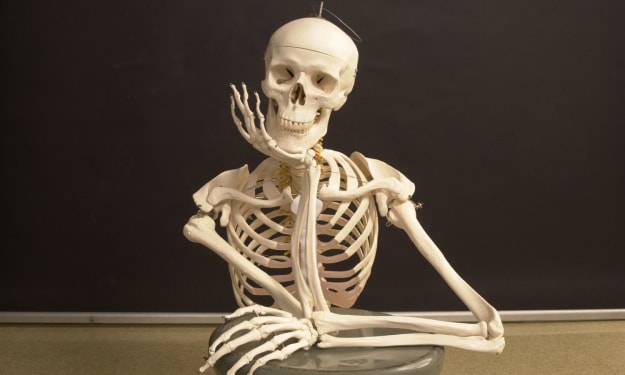
imagine a scenario in which cellphones were strong to the point that they could transform the state of our bones this is an astounding new subject that is as of late been springing up all around the media it comes from a logical report that proposes utilizing telephones and tablets can cause serious and dependable changes to our bodies and not as it were that you could think in the beyond few years a review has been completed by David Shahar and mark sayers who had practical experience in biomechanics at Australia's College of the Daylight Coast biomechanics checks how out mechanical regulations apply to living organic entities from how people rush to how bugs beat their wings Shahar and sayers concentrate likewise includes osteo life story this is utilized to work out what somebody's life was like from their bones it's been known for quite a while that skeletons adjust to an individual's way of life each arrangement of bones recounts a story for model a few curiously enormous skeletons were tracked down on the Pacific island of Tinian in 1924 stone designs in the area of the skeletons made sense of the significant nature of the islands bones by working with weighty stones they had normally created greater arms legs and collarbones and over in Australia Shaw heart and sayers trust that advanced tech is forming youngsters' skeletons so how can it do this it's everything to do with something many refer to as an EOP or outside occipital bulge a few specialists and pundits have been more vivid and portrayed it as froth ball or a demon like horn as a general rule the EOP is a development of bone tracked down toward the rear of the skull it's associated with the nuchal tendon The fact that plays makes this a significant tendon a job in associating Scratch muscles to the skull the EOP makes an impact a great deal like an anchor at the highest point of the nuchal tendon presently we should return to what the scientists were really doing with the concentrate on in any case by checking out alignment specialists x-beams of individuals matured between 18 to 86 they needed to get an cutting-edge knowledge into how skeletons change in light of the fact that a great deal of these x-beams were researching things like neck torments there's additionally a components of what results these progressions might have on our wellbeing Shahar has sayers seen that in youthful individuals the EOP gave off an impression of being more inescapable from this they conjectured that youngsters' stance while continually taking a look at their telephones and tablets was a main consideration during screen time the neck instinctually wrenches forward the hypothesis is that by extending forward extra pressure is placed on the area where shape me smuzzle to repay the EOP gets steadily longer developing to around a few milliliters the impact has too alluded to as text neck the fundings additionally uncovered that it was for the most part found in men in 2016 Shah Solidify sayers revealed a greater Yi Opie and 67% of men contrasted with 20% of ladies in light of a test gathering of 218 individuals by 2018 they had checked out at 1200 individuals with guys seeming, by all accounts, to be multiple times bound to get these huge texts necks however what is the possible effect on mankind we hear a great deal about the radiation from telephones possibly connected to disease however can utilizing a cell phone really make critical medical conditions in the body this new report has opened up the banters on this point since it's the first situation where specialists are unequivocally bringing up how tech is influencing our bodies Shahar and sayers depicted the extended yo PS as a degenerative process suggesting things are just going to deteriorate for youngsters on the off chance that they continue to utilize their gadgets there is moreover something many refer to as text thumb or thumb joint inflammation where thumb can create difficult issues like the feared carpal passage condition anyway the review of EOPS and alluding to them as horns where spikes has been scrutinized by others in the press specialists call attention to that the report isn't decisive and like any logical paper it makes suppositions archeologists will tell you that more extended skull bones are the same old thing also, that there are particularly normal in guys the general view as per the concentrates on pundits is that there basically isn't sufficient hard proof to back up the case that you are really turning into Hellboy by utilizing your phones so are Shahar and sayers on to something or on the other hand have they just brought laid out realities and fitted them into their own clarification one way or the other there's no denying the emotional effect that innovation has on our lives the possibility that impending ages are changing because of consistent collaboration with their gadgets is actually a serious issue that should be tended to eventually it will be the archeologists representing things to come that settle on that decision perhaps don't for a moment even have enormous spikes standing out of the rear of their necks from now on who knows no doubt perhaps somewhat more stroll in the park and somewhat less Irate Birds you
By chahd souf3 years ago in Humans
"10 Mind-Blowing Facts About Your Body You Won't Believe Are True!"
Have you ever found yourself in awe of the remarkable complexity that resides within the human body? From the astonishing length of our DNA to the fascinating quirks of our senses, the human physiology is a captivating landscape waiting to be explored. Let's embark on an enthralling journey through the intricate corridors of human physiology, where each revelation unveils a new layer of wonder and amazement. Consider this: if someone were to meticulously uncoil all the DNA strands in the human body, they would stretch out to an astonishing 10 billion miles. To put this into perspective, it's twice the distance from Earth to Pluto! This mind-boggling length serves as a testament to the intricate genetic blueprint that governs every aspect of our being, from our appearance to our predispositions to certain diseases. But DNA is just the tip of the iceberg. Within us, trillions of nerve connections tirelessly power our memory and cognitive functions. The human brain, with its 86 billion neurons, is the most complex organ in the known universe. Its intricacies are so profound that scientists are still striving to unlock its full potential. Recent research suggests that the brain's capacity for learning and adaptation is far greater than previously imagined, opening up exciting possibilities for enhancing cognitive function and treating neurological disorders. In addition to our cognitive abilities, our bodies also emit faint traces of light, known as bioluminescence, as a byproduct of the biochemical reactions occurring within us. Although imperceptible to the naked eye, this ethereal glow serves as a testament to the intricate dance of life unfolding within our cells. Scientists believe that this phenomenon may play a role in regulating our circadian rhythms and maintaining overall health. Delving deeper, we encounter the vast microbial ecosystem that resides within us. Contrary to popular belief, not all bacteria are harmful. In fact, many bacteria play crucial roles in maintaining our health, from aiding in digestion to supporting our immune system. The gut microbiome, in particular, has garnered significant attention in recent years for its impact on overall health and well-being. Emerging research suggests that an imbalance in gut bacteria may contribute to a range of conditions, including obesity, diabetes, and even mental health disorders. Among the numerous microbial communities inhabiting our bodies, the gut microbiome stands out as particularly influential. Comprising trillions of bacteria, fungi, and other microorganisms, the gut microbiome exerts a profound impact on our overall health. Recent scientific investigations have shed light on the pivotal role of the gut microbiome in modulating physiological functions and influencing susceptibility to various diseases. Our senses also hold their share of marvels. Did you know that the human nose can distinguish between over a trillion different scents? This remarkable ability allows us to experience the world in ways that are both nuanced and profound. Similarly, our sense of touch is incredibly sensitive, with some studies suggesting that we can detect vibrations as small as a nanometer. These sensory capabilities enable us to navigate our environment with precision and grace, enriching our experience of the world around us. The human body is a masterpiece of evolution, finely tuned to thrive in its environment. From the intricate muscles of our jawline to the regenerative abilities of our skin, each aspect of our physiology tells a story of adaptation and survival. As we continue to unravel its mysteries, we gain a deeper appreciation for the remarkable capabilities of the human body and the intricate interplay of its various systems. In conclusion, the human body is a treasure trove of wonders, waiting to be explored and understood. From the microscopic realm of DNA to the intricate networks of the brain, our physiology is a testament to the extraordinary complexity of life itself. As we journey through the astonishing marvels within us, we are reminded of the beauty and resilience of the human spirit, and the boundless potential that lies within each and every one of us.
By Joey Randy 3 years ago in Humans
Artificial intelligence
In the annals of technological progress, the ascent of Artificial Intelligence (AI) looms as one of humanity's most significant achievements and existential quandaries. As we stand on the cusp of a future where AI threatens to surpass human intelligence, profound questions arise about the nature of consciousness, ethics, and the very essence of what it means to be human.
By Ashish ranjan3 years ago in Humans
The Symphony of Progress: Are We Composers or Instruments?
The pursuit of progress is adorned with individualistic ambition which time maps out. The future, with its unexplored frontier, a trajectory brought about by constant chase for innovation prompts everyone to think: are we gradually losing our human traits? This grand theater of existence takes the form of a progression paradox between development and thought.
By Kageno Hoshino3 years ago in Humans
The effects of mobile phones on skeletal structure
Envision a scenario in which cellphones possessed the astonishing capacity to influence the actual construction of our bones. This captivating and recently emerged topic has been causing ripples across various media platforms, originating from a scientific report suggesting that the use of phones and tablets can lead to substantial and enduring changes in our bodies. As opposed to customary assumptions, a review led by biomechanics experts David Shahar and Imprint Sayers at Australia's College of the Daylight Coast uncovers an expected connection between present day innovation and modifications in the skeletal construction of youthful people.
By Kaoutar Lazar3 years ago in Humans
Decode Life: A Fast-Track Guide to DNA Structure & Replication - Crash Course Biology
DNA serves as the ultimate blueprint for creating and maintaining the human body. It holds all the necessary information for the functioning of every living organism. Within each organism are trillions of cells, each requiring its own copy of this extensive manual. Printing out the 3 billion letters of genetic code within DNA would result in hundreds of thousands of pages. The recent completion of sequencing the human genome in 2022 marks a significant milestone in scientific history. This breakthrough could lead to a better understanding of various aspects, such as human similarities and differences with other species, individual responses to medications, and more effective treatments for diseases like cancer. Let's delve into the composition of DNA, made up of nucleotides containing a sugar molecule, a phosphate group, and one of four nitrogen-containing bases. These nucleotides combine to form the iconic double helix structure of DNA, resembling a twisted ladder. The sugar-phosphate backbones and nucleotide bases play crucial roles in DNA's structure and function. The pairing of adenine with thymine and guanine with cytosine, connected by hydrogen bonds, is essential in maintaining a healthy DNA strand. These four bases, A, T, C, and G, make up the genetic code's alphabet, determining individual characteristics and traits. The specific sequence of these bases in DNA distinguishes one organism from another. The genetic information stored in DNA is organized into chromosomes, coiled around proteins within the cell nucleus. Virtually every cell in the human body contains a complete set of chromosomes with the genetic blueprint encoded in DNA.
By Jullian Lee3 years ago in Humans
Momentous Nanopipette Innovation Offers Uncommon Experiences into Disease Exploration
a state of the art gadget using nanoscopic needles has arisen as a unique advantage, empowering researchers to concentrate on malignant growth cells previously, during, and after treatment without obliterating them. Named the "nanopipette," this progressive innovation is ready to open new roads for focusing on different kinds of tumors.
By Unique writing3 years ago in Humans