science
The Science Behind Relationships; Humans Media explores the basis of our attraction, contempt, why we do what we do and to whom we do it.
Migraine (headache), menstrual migraine remedies, causes, homeopathic treatment, remedies, causes - Dr. Rajneesh Jain
Remedies Drink water: If you have a problem of dehydration, then headache can occur. So increase your water intake. Rest: Headache can also occur due to excessive stress and workload. So take some rest.
By RAJNEESH JAIN2 years ago in Humans
Embracing the Now
I always thought I had all the time in the world. I was young, ambitious, and full of dreams. My mind was constantly fixated on the future, on what I wanted to achieve and where I wanted to be. I was always chasing after something, never taking a moment to just be in the present.
By AKANJI ABDULAFEEZ2 years ago in Humans
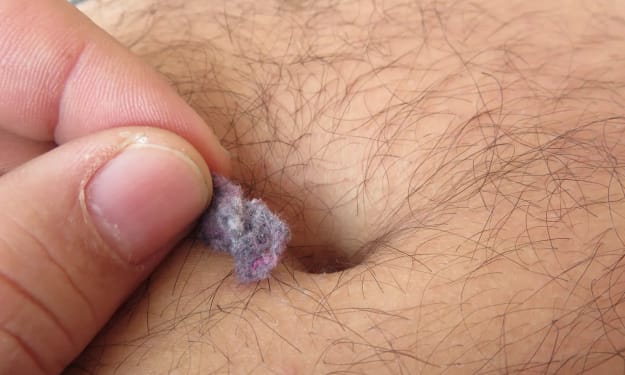
What’s That Stuff in Your Bellybutton?. AI-Generated.
It might seem trivial, but there has been a surprising amount of scientific inquiry devoted to the stuff that accumulates in our bellybuttons. From navel lint to bacteria, researchers have uncovered fascinating details about what lurks in our bellybuttons and why.
By prasun prakhar2 years ago in Humans
What Are The Different Steps To Treat Female Infertility?
Dealing with infertility can be emotionally painful, and seeking treatment options that work is natural. Fortunately, you can get the best treatment recommendation from any infertility specialist in Delhi with years of experience.
By Dr. Rhythm Gupta2 years ago in Humans
The Logic Behind Gaming . AI-Generated.
Introduction Video games often get dismissed as mere entertainment, but beneath the surface, they offer a fertile ground for developing logical thinking and problem-solving skills. For casual gamers, understanding how games can enhance these cognitive abilities offers a new and enriching perspective. This essay delves into the ways video games foster critical thinking, exploring how various genres require players to strategize, manage resources, and make calculated decisions. By examining these aspects, we can appreciate the intellectual benefits of gaming and how they translate to real-life skills.
By Orang Punya2 years ago in Humans
Flora and Fauna of Sahul
Flora and Fauna of Sahul: A Unique Ecosystem Scientists have discovered something reminiscent of Atlantis near Australia. There was once an entire continent now submerged underwater. Around 70,000 years ago, during the last Ice Age, a massive landmass called Sahul existed in the southwestern Pacific Ocean. This ancient supercontinent connected what we now know as Australia, New Guinea, Tasmania, and the Aru Islands into one vast piece of land.
By Tea Quinix2 years ago in Humans
What is Follicle Monitoring?
Embarking on the path to parenthood can be both exhilarating and challenging, especially when faced with fertility struggles. However, thanks to advancements in medical science, couples are now equipped with powerful tools like IVF follicle monitoring, which bring them closer to their dreams of having a child.
By Dr. Rhythm Gupta2 years ago in Humans
Diet & Weight Loss
Nutrition and Loss of Weight The obesity epidemic in America is no secret. Nearly three-quarters of us are overweight or obese, according to the CDC. Nonetheless, over 160 million Americans are on a diet at any given moment, and we spend over $70 billion annually on over-the-counter weight-loss programs, vitamins, and other methods of losing weight. That implies that although reducing weight is difficult, it is totally doable with the appropriate approach. In terms of losing weight, there are two essential components to success. The first step is to identify a strategy that is personally effective for you—one that uplifts your spirits and sustains your motivation. The second is to take your time—slowly but surely is how sustainable weight loss occurs.
By Sathish kumar S2 years ago in Humans
The impact of social media on mental health
Social media has become an integral part of our daily lives, with billions of people around the world using platforms such as Facebook, Instagram, Twitter, and Snapchat to connect with friends, family, and strangers. While social media has many benefits, such as allowing us to stay in touch with loved ones and access information quickly, there is growing concern about its impact on mental health.
By AKANJI ABDULAFEEZ2 years ago in Humans
What actually happens to the brain when we die?
Study Reveals Insights into Brain provide answers to the age-old question of what happens to our brains when we die. The research suggests that near the time of death, rhythmic brain patterns may generate memory recall of important life moments. These findings challenge the current understanding of when exactly life ends. The study was conducted by a team led by a neurosurgeon and assistant professor at the University of Louisville. The data was obtained accidentally when a patient with a subdural hematoma developed seizures and went into cardiac arrest during an operation. This led to the first-ever recording of a dying human brain. The researchers noted that the brain activity recorded was similar to that of healthy humans experiencing near-death phenomena such as out-of-body experiences, hallucinations, and memory flashbacks. Remarkably, these brain waves were measured up to 30 seconds before and after the heart stopped beating. This discovery suggests that the brain may continue to function briefly after cardiac arrest, raising questions about the traditional notion of the exact moment of death. The implications of this finding could extend to the timing of organ donations, as it opens up discussions about comparing heart activity (EKG) with brain activity (EEG) to better determine the time of death. Although this finding was based on a single case, the research team hopes that their study will encourage other scientists to share similar cases, allowing for further analysis and validation. The ultimate goal is to better understand the physiological processes at the end of life, which could provide comfort to families by suggesting that their loved ones may experience positive memories in their final moments.You’re going to die someday. Sorry we had to break it to you. We’ve all had those nights where we’ve been lying awake, unable to sleep, and our thoughts drift towards that oh-so-macabre question that has baffled human beings throughout all of recorded history: what is death actually like? How does it feel when it happens? What are the final sensations that we physically experience when we reach our inevitable dying moments? It’s not uncommon to hear stories about those who have had their own near-death experiences and that, in moments of their own perceived, seemingly impending death, some people can find themselves encountering a range of vivid sensations and experiences when they genuinely believe their lives are about to end. Often, survivors of near-death experiences will describe a hallucinatory state that can cause them to see loved ones, recall specific moments from their pasts, or feel as if they are floating through the air, outside of their own bodies. While there might be some questionable validity to these claims, the firsthand accounts of those who have had near-death experiences are some of the only descriptions of what could happen, subjectively, in our dying moments. That then begs the question: what about after? How much capacity for sensation remains after we die? Does brain death actually mean that our brain function has fully stopped? And just what is up with that bright light at the end of the tunnel? Seriously, can someone hand us some shades? But before we answer any of that, we need to answer another, far more intimidating question: What exactly is death? Death itself as a concept might seem pretty simple to define, but it’s a strange crossroads where biology and medicine intersect with philosophy and religion. In hospitals, a patient’s time of death was once typically recorded as the moment their heart stopped since cells and organs can’t function without a blood supply. This is known as Clinical Death. However, thanks to the advent of modern life-saving techniques in resuscitation, such as CPR and defibrillation, medical experts are now able to potentially revive patients by prompting their breathing or heartbeat to restart after stopping. Additionally, someone without functioning lungs or a heart can be kept alive through the use of life support devices or could potentially receive an organ transplant or pacemaker. That’s why you may have heard stories of patients being miraculously brought back from the dead. Those hyperbolic stories are always talking about clinical death, not some miraculous or horrifying act of necromancy. Clearly, if this is a definition of death a person can come back from, a more permanent definition is needed. So, doctors and coroners have another definition that they commonly apply to determine a moment of death, and it’s a term they refer to as brain death. Unlike the attempts to measure the exact instance of someone’s death using their breath or heartbeat, brain death, sometimes referred to as biological death, is the state a deceased person enters when their brain is no longer showing any signs of electrical activity. Why is this meaningful? The human brain distributes electrical impulses to various parts of the body through the nervous system, including organs that perform internal functions and muscles required for movement. But brain death as a definition of death assumes that the lack of electrical activity in the brain means that a person’s consciousness is no longer present. Elvis has well and truly left the building, you might say. However, while there are proponents in favor of brain death being the most reasonable way of distinguishing the difference between life and death, it isn’t as air-tight as you might think. Much like when it comes to defining death as just a lack of heartbeat or respiration, there exist some residual electrical impulses in the brain following their supposed biological death. In some cases, patients who have been pronounced brain dead can still display signs that their bodies are continuing to perform their biological functions, including sometimes having their circulatory and respiratory systems still operational, their immune system still working to heal wounds or fight off infections and their bodies still being able to regulate their temperature normally, all post-brain death. Part of the main reasoning behind such a broad acceptance of brain death being the most applicable definition of death is the fact that the brain plays a key role in determining our identity as individual human beings. So, let’s assume for the sake of argument that brain death is the total, permanent, and irreversible shutdown of all our cognitive functions, and after it occurs, there can be either limited or no other function throughout the human body. Any hopes of a person’s thoughts or personality ever being recovered are gone for good, at least with the medical technologies of this current day and age. But that then begs the very important question: just what the heck happens from the perspective of the person experiencing brain death? If the human brain, which is responsible for how we think, how our bodies function, and how we perceive the world around us, what would we possibly feel or even see once we die? The short answer is that we know next to nothing since nobody can recount any firsthand experience of what dying is actually like. The only information we have to go off are near-death survivors. But if we’re talking about deaths that are the full, irreversible process that takes a person from living to dead, then by definition, nobody can come back and tell us what death actually feels like from a subjective perspective. But then there’s the longer answer: while it might be impossible for us to know what death is like from the brain’s perspective, there are a few places that we can look to that might give us some interesting ideas of what death could be like. And from that, maybe we can figure out what happens to our brains when we die! Meet the man who might give us our first insight. He’s an 87-year-old who developed epilepsy as the result of a head injury following a nasty fall. Sadly, this would lead to a series of epileptic seizures. When these seizures occurred, the doctors treated him and attempted continuous electroencephalography, or EEG, in order to detect them. It was during this treatment, however, that the man suffered a heart attack and unfortunately passed away. But what’s interesting is that this unexpected event allowed the doctors monitoring him, for the first time ever, to record the electrical activity of a human brain as it died. Of the 15 minutes of brain activity they were able to record at the time of the man’s death, doctors focused in on the thirty seconds that preceded his heartbeat stopping and the thirty seconds afterwards. What they discovered was that just before the man’s heart stopped and right after, there were changes in various bands of neural oscillations, specifically gamma, delta, theta, alpha, and beta. Now, if that all sounds like a line of techno-babble you’d hear thrown around in a bad episode of a sci-fi show like Doctor Who, then don’t worry. Allow us to explain. Neural oscillations are the scientific term given to what we colloquially call brain waves. They’re the patterns of rhythmic activity that are present in a brain that is functioning normally. In other words, a living brain. Gamma oscillations, in particular, are involved in higher cognitive functions such as dreaming, retrieving memories, processing information, concentration, and conscious perception. And these were present both in the seconds leading up to and directly after this man died. So, what does this mean about what the brain goes through as we die? Well, given that this man’s brain was recorded generating the oscillations connected with memory retrieval, or what a storyteller might know as flashbacks, it led to the speculation that, in its final moments, the brain might recall and replay certain important moments from a person’s life. You’ve no doubt heard the old cliché of someone’s life ‘flashing before their eyes’ before their passing, and might even have been encouraged to make sure your own is exciting and worth watching when the time comes. It seems, if we’re being optimistic here, that there could be a modicum of truth to that notion. Essentially, the key finding of this particular study was that the brain seems to organize a biological response to the process of death. It’s This process has also been observed happening in rats; when observed in controlled environments, they display the same changes in their gamma brain waves in the moments before and after death. Yes, this research was made possible by scientists killing a whole buttload of rats. We told you this would be a morbid one. It would also seem that these findings line up with the firsthand accounts of a lot of near-death survivors, as an overwhelming amount of them report remarkably similar experiences of recalling significant memories. If it is to bewe believedbelieve that our brains present us with a rerun of some of our nicest memories, then it certainly adds a degree of hope and reassurance in the face of something as final and foreboding in its inevitability as death. But, and not to be a downer here, there’s nothing to say definitively that this is exactly what happens to our brains when we die. While it can be nice to imagine that death comes with a pre-made highlight reel of all your best moments, the brain wave measurements that this assumption is based on come from a pretty isolated case. We have to remind ourselves of the quite brutal reality that this man was eighty-seven87, and as well as being pretty old, he’d suffered a severe head injury too, that ledthat resulted in him experie to seizures and swelling of the brain, all of which could have affected his neural activity and can complicate how we interpret the recordings of his last moments. Add to that the practical and ethical issues with trying to conduct similar experiments on other patients in the final stages of life, and it once again becomes hard to know for certain just what’s going on in our brains at the moment we die. That being said, there have been similar experiments conducted, just not extensively enough to give a definitive answer. However, when reading the brain activity of four patients who passed away while being monitored by EEG machines, the results doctors found were indeed similar. Each displayed electrical activity within the TPJ region of their brains at the moments of death, the TPJ being the junction between the temporal, parietal, and occipital lobes at the back of the brain. This area has been associated with dreams, hallucinations, and similar altered states of consciousness. While it’s impossible to know what these patients experienced during these final surges of neural activity, the fact it seemingly took place at the part of the brain linked with dreaming and hallucinating is interesting. In fact, that could offer up a potential alternate explanation of what happens in our brains during death. Whether or not our brains recall memories when we die might be up for debate, but it’s entirely possible that, if the accounts by some near-death survivors are to be believed, then things like feeling oneself floating out of their own body, seeing or hearing loved ones or other vivid visions may well be hallucinations created by the brain as it slows down, possibly due to reduced oxygen from blood flow when the heart stops beating. This goes a long way towards explaining the ‘light at the end of the tunnel’ too, as some who have lived through or been resuscitated after a near-death experience have reported similar instances of seeing a heavenly light. This could well be a hallucination that comes as the product of a person’s chosen religious beliefs, and that perhaps explains why that particular imagery has permeated throughout history for so long. It is also important to remember that what our brains may or may not experience when we die might not be universal to everyone. Of course, not everyone dies at the same speed, and not all deaths are the result of the same cause. A person suffering a sudden cardiac arrest can die in minutes, while someone with a chronic illness or slowly succumbing to natural causes will have a much slower timeline. In the latter case, there are a few notable differences in how the body physically functions, which can, in turn, lead to different experiences for our brains as we die. For example, while a number of the common causes of death – like heart and lung disease or cancer – are treatable, these treatments can prolong the dying process. When it comes to the brain, some people who are slowly dying can experience depression and feelings of detachment from their loved ones if they are aware of their impending death. As essential bodily functions begin to slow down or fail, the way a person’s brain perceives things can also be affected. Sensory stimuli, things they smell, hear, or see, can be processed differently, making things that were once normal seem unfamiliar and frightening. This can be due to a surge of chemicals released by the brain that can occur when approaching death. And then, of course, there’s the main event itself. Depending on the cause, death can be a painful process for the person undergoing it. This is not always the case, of course. Pain is the result of reactions from the nerves triggering electrical impulses in the brain. So, if a person’s death was caused by a sudden and painful injury or medical condition, then it’s likely one of the last things their conscious brain would experience was that painful sensation. But when the brain shuts down, those electrical impulses from the nervous system can no longer travel to it. As for what our brains experience after we die, well, that’s anyone’s guess. Fortunately, since human bodies start to decompose after death, the lack of any brain and bodily function stops us from experiencing the pain of our bodies breaking down cell by cell. Whether or not there is such thing as a ‘soul’ is a debate for another day, but typically comes down to a question of one’s own philosophical or religious beliefs. What we may or may not experience in our final moments is still being widely researched by scientists, although there are multiple instances of electrical activity in the brain continuing beyond death, albeit briefly. This could be the reliving of past memories, hallucinations our brains provide almost as a defensive comfort from death, or even simply a freak occurrence of nature. Whatever the case, we’re all going to find out eventually. We hope that helps you sleep just a little easier at night, folks.
By Samuel maina2 years ago in Humans
How to Add Healthy Years to Your Life - Siim Land Biohacker Summit Amsterdam 2023
Longevity is a captivating topic, one that fascinates me deeply. However, as I'll explain in this speech, our perspective on longevity (L) of 18 isn't without its flaws. Let's begin by acknowledging one of modern medicine's greatest achievements: the steady rise in average human life expectancy over centuries. In the 18th century, life expectancy was around 40 years; today, it exceeds 70. While early mortality rates from infections and other diseases skewed this figure in the past, recent decades have seen a consistent increase in life expectancy worldwide, albeit with regional differences.
By Iyokho Osaretin2 years ago in Humans