science
The Science Behind Relationships; Humans Media explores the basis of our attraction, contempt, why we do what we do and to whom we do it.
Heat Therapy Is a Game-Changer for Your Health
For centuries, cultures around the world have embraced the power of heat. From traditional Finnish saunas to modern infrared rooms, heat therapy has long been associated with relaxation, cleansing, and overall well-being. Today, saunas are more than just a luxury at spas—they’re becoming a staple in health routines for athletes, entrepreneurs, and wellness enthusiasts alike.
By AnthonyBTV7 months ago in Humans
Why is Europe banning social media for young people?
In Portugal, young people can legally engage in sexual relations from the age of 14, but following the approval of a new law, they will only be allowed to create social media accounts from the age of 16. Portugal is the latest European country to impose restrictions on social media for children. The law approved by parliament will limit free access to social media and other platforms for children under 16, requiring parental or legal guardian consent. Prohibition of “bullying” Proposed regulations in Europe are both explicit and broad: children under 13 will not be allowed to access any platform, service, game, or application covered by the law. In addition, teenagers aged 13 to 16 will need formal parental consent to use these services. In Portugal, the restriction is not limited to social networks; it also includes image and video-sharing services, betting platforms, online games, resources containing violent or sexual content, as well as “any online intermediary service whose nature or content could harm the physical or mental development of children.” However, WhatsApp messenger for personal communication, applications specifically designed for children, “knowledge-based or educational” online games, and certain resources related to education and health are exempt from the rule. Even with parental consent, teenagers will still face restrictions. Platforms will be required to ensure that their accounts remain “private,” do not appear in search results, and that algorithms are set to present only “approved” content in recommendations. In addition, features such as autoplay, AI-powered video and image production services, and the ability to “scroll” (continuous and addictive scrolling or browsing of content) will be disabled for children. The impact of the internet on young people’s mental health In 2022, the “Health Behaviour in School-aged Children” research consortium, in collaboration with the World Health Organization, studied 280,000 adolescents aged 11, 13, and 15 across 44 countries, including European nations, Central Asia, and Canada. The findings showed that more than one in ten young people display symptoms of social media addiction and face serious difficulties controlling the time they spend browsing content. This figure was higher among girls (13 percent) than boys (9 percent). Thirty-six percent of adolescents also said they are in constant contact with friends via social media, a figure that reaches 44 percent among 15-year-old girls. One-third of young people admitted to playing online games daily, and 22 percent of them spend at least four hours a day doing so. In addition to lawmakers, international organizations have also warned about the issue. In its 2024 gender report, UNESCO emphasized that platforms based on visual content and recommendation algorithms (such as Instagram) increase users’ exposure to content that promotes unhealthy behavioral patterns and unrealistic beauty standards. This trend has multiple negative consequences, including low self-esteem, negative body image, harm to mental health, and academic failure. This is particularly true for girls. Research included in the report shows that 32 percent of teenage girls believe social media has increased negative feelings about their bodies. This perspective also faces challenges and counterarguments. In 2019, Oxford University researchers Amy Orben and Andrew Przybylski tested the hypothesis that “digital technologies are harming adolescents’ health and well-being” using large-scale data from 355,000 teenagers. Using advanced statistical models, they concluded that while there is a link between adolescent mental health and digital technologies, the connection is so small (around 0.4 percent) that making major policy changes based on it seems unreasonable. Australia’s “reasonable” measures Portugal has repeatedly cited other countries’ experiences in defending its decision to set a “digital adulthood” age. Australia has been a pioneer in this area, implementing a similar restriction late last year, although regulators there prefer to describe it as “delayed access” until 16. Australian youths under that age are not allowed to have accounts on Facebook, Instagram, TikTok, Snapchat, X, Threads, and YouTube, but they are still permitted access to Messenger, YouTube Kids, Pinterest, and Discord. The main difference between the Australian model and the Portuguese plan lies in the method of verification. Unlike Portugal, Australia has not mandated a single mechanism; instead, it requires each platform to take “reasonable steps” to prevent registration by those under 16. For example, Meta (owner of Facebook and Instagram) offers options such as providing a passport or verifying identity through a video selfie. Despite these measures, organizations such as the Digital Freedom Project in Sydney are seeking to challenge the law in court. The organization’s president and New South Wales state parliamentarian John Ruddick said, “Monitoring online activities is primarily the responsibility of parents, and we do not want to hand over this responsibility to the government and unelected bureaucrats.” YouTube’s owner Google has also deactivated all accounts of users under 16 in Australia, calling the rule “hasty” and the result of a misunderstanding of how young people use digital platforms. Economic consequences and ways to circumvent the law For tech giants like Google and Meta, these measures mean financial losses. Since December, social media companies have suspended approximately five million teenage accounts. This has led to a decline in key metrics such as daily and monthly active users, which directly affects the volume of advertising they attract. Meanwhile, more countries including Denmark, Greece, Norway, and the United Kingdom are considering similar models. In Central Europe, the Prime Minister of the Czech Republic has supported the idea of banning social media for children under 15. The European Parliament also passed a resolution last November urging member states to consider imposing restrictions on children under 16. On the other hand, critics argue that full enforcement of such restrictions is impossible and that children will be pushed toward unmonitored and potentially dangerous online spaces by seeking alternatives. There is also a warning that missing the opportunity to create safe online communities could disproportionately affect vulnerable groups compared to others.
By Real content7 months ago in Humans
Low Testosterone and Sex Drive: Symptoms, NHS Guidelines, Benefits and Risks of TRT
Back in the ’90s, Alan Reeves was on stage all the time—he was one of “The Dreamboys,” taking his clothes off in front of massive crowds. People loved him so much that he and his fellow dancers even landed a spot in the Spice Girls’ movie, Spice World. He was just 24 then, pretty full of himself and, honestly, he says he was “attractive.” But his thirties hit, and everything flipped. His mood dropped and his interest in sex just faded. “I just didn’t feel right,” he says. Now Reeves is 52, and he admits his low sex drive messed with his long-term relationship. “We’d go three or four months without sex. I just wasn’t interested. Stuff like that can really pull a couple apart.” And it’s not just men. More women are turning to testosterone, too. Rachel Mason, who’s 37 and blogs about menopause, says taking the hormone has done “amazing” things for her—she’s got more energy, can focus again, and her sex drive is back. Testosterone prescriptions are soaring. According to data from the Care Quality Commission and NHS Business Services Authority, they’ve jumped 135% from 2021 to 2024. All this is happening while, across the UK, people seem less interested in sex. The National Survey of Sexual Attitudes and Lifestyles checks in with around 10,000 people every ten years, and it’s been showing a steady drop in sexual activity. More numbers are coming later this year, but here’s the trend: in the ’90s, people aged 16 to 44 said they had sex about five times a month. That dropped to four times in the 2000s, then three times in the 2010s. The next round of results is due at the end of the year, and researchers expect the decline to keep going. No one’s found one clear reason. So, does boosting testosterone really bring back your sex drive, or is it just clever marketing? Losing Interest in Sex Alan Reeves isn’t alone. More and more people are feeling the same way, and researchers are taking notice. Suze Clifton, academic director at Natsal, says, “Over the years, we’ve seen a drop across every group. For example, there are fewer couples living together now than in the ’90s, which could explain some of it. But even when we look just at couples who still live together, desire is down.” The biggest drop shows up in older couples, especially those who are married or living together. Clifton says figuring out exactly why people want sex less these days is tough. “We don’t really know why the whole population is having less sex,” she says. Researchers keep trying to get to the bottom of it. Some point to the digital world—it just eats up everyone’s attention, leaving no room for much else. Dr. Ben Davis, a sex therapist, adds that stress is a huge factor. It’s spiked over the last 30 years. “There’s just a lot in people’s lives right now. Sure, there’s technology, but there’s also more stress, more depression, more loneliness. All of that kills desire.” There’s another theory that’s blowing up online—and it’s turned into big business: the idea that low testosterone is to blame. Professor Geoffrey Hackett, who’s with the British Society for Sexual Medicine and works as a consultant urologist, says, “Testosterone levels in men are definitely dropping. Obesity, type 2 diabetes, and being less active all lower testosterone. And when testosterone drops, so does desire.” Big studies over the last twenty years back this up—testosterone in men is going down. But Hackett says it’s not that simple. Low testosterone can affect sex drive, but not everyone with low levels feels less desire. Even so, ads are everywhere now—on the Tube, at bus stops, all over social media: Low sex drive? Brain fog? Tired all the time? Check your testosterone! Has your man lost his spark? Maybe it’s his hormones! So, is testosterone replacement therapy (TRT) really a fix for low libido? Testosterone Turned Things Around for Me Melissa Green started taking testosterone about a year ago. She says it didn’t just bring back her “spark for life,” it saved her marriage. At 43, her low sex drive was causing problems in her relationship. She was already on estrogen and progesterone for perimenopause—her doctor prescribed those as part of hormone replacement therapy. But when she asked about testosterone, her doctor said she didn’t need it and wouldn’t even check her levels. The NHS sticks to guidance from the National Institute for Health and Care Excellence, which says testosterone should only be considered for women who have already tried…
By Real content7 months ago in Humans
The Wave and the Particle
“There it is. I see it now. Come here, you little.. Hold still, this is going to be tricky.” Like I could disobey? My head and torso might as well be locked in vise grips, and the meds held me even more immobile. What muscle twitch? They might as well have used Botox. Maybe they did.
By Meredith Harmon7 months ago in Humans
The Silence is Not Health: The Structural Cost of Moralised Pain
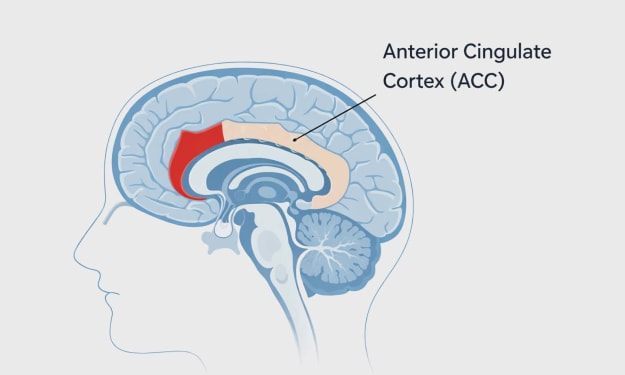
I. Executive Summary I would like to present theoretical and empirical synthesis concerning the systemic failure of modern pain management. It argues that chronic physical pain is a biological fact that cannot be thought away through cognitive reframing. By utilising a framework of Regulation Architecture, I demonstrate how current medical demands for acceptance force subjects into a state of resignation and learned helplessness. This silence is not health. It is a trauma response that masks a total collapse of structural integrity. By integrating neuroimaging data and allostatic load theory, this paper calls for a shift from policing emotional reactions to providing functional, biologically grounded relief. For high-endurance individuals, coerced acceptance does not reduce distress. It interacts with pre-existing regulatory structures that escalate effort under criticism. The result is not peace but intensified containment. What appears externally as improvement may in fact be the strengthening of suppression mechanisms within an already metabolically taxed system. --- II. Core Definitions: The Architecture of Regulation To understand the failure of current interventions, we must first define the internal systems of the human animal. Regulation Architecture refers to the underlying biological and psychological system that manages an individual’s energy, output, and response to threat. Within this architecture sits the Internal Auditor. This is a cognitive and regulatory mechanism that monitors the self for performance and compliance. In high endurance individuals, the Auditor becomes a hyper developed enforcer of composure. It ensures that the structure appears stable even when it is carrying a load far beyond its capacity. This mechanism explains why patients can perform health and appear calm while their nervous system is in a state of high alert. The Internal Auditor operates through an optimisation–enforcement loop. It detects deviation from internal or external standards, escalates corrective effort, and applies internal pressure until the perceived gap is reduced. What varies between individuals is not the presence of the Auditor but its calibration. Calibration determines how quickly “not enough” is triggered, how intensely effort escalates, and whether performance becomes fused with personal worth. Calibration is shaped developmentally and socially through parental feedback, institutional reinforcement, professional environments, and cultural narratives that equate effort with virtue. In over-calibrated systems, criticism does not produce withdrawal. It produces escalation. If told to try harder, the structure tightens. If told improvement is insufficient, effort increases automatically. When performance becomes fused with moral worth, failure to improve is experienced not as a technical gap but as a character flaw. In this state, composure is enforced even when the biological system is nearing exhaustion. --- III. The Biological Receipt: Empirical Evidence for the Internal Auditor The Internal Auditor is not a metaphor; it is a functional neurological circuit. Its existence is evidenced by the "Biological Receipt"—the measurable physiological cost of maintaining composure under duress. To ground the Auditor in known science, we look to four specific markers: 1. The Anterior Cingulate Cortex (ACC) as Hardware The ACC functions as the brain’s "Conflict Monitor." It is the physical region that detects the gap between an internal state (pain) and an external requirement (acceptance/composure). When the ACC detects this discrepancy, it triggers the Prefrontal Cortex to "fix" the behavior. This is the Auditor’s engine; it generates the "not enough" signal that drives high-endurance individuals to escalate their effort. 2. The Metabolic Cost: The "Glucose Drain" High-effort suppression is one of the most metabolically expensive tasks the brain can perform. We can prove the Auditor’s work by measuring "Executive Fatigue." When a patient is hyper-focused on "performing health," they lose the capacity for other cognitive tasks. This is not a lack of willpower, but a literal theft of fuel; the Internal Auditor consumes the system’s ATP and glucose to maintain the mask of stability. 3. The Discrepancy in the "Silent" fMRI As noted by Wager et al. (2013), the Neurologic Pain Signature (NPS) can remain active at high intensities even when a subject reports "feeling fine" due to cognitive modulation. The Internal Auditor acts as the "filter" between the Biological Signal (the scream) and the Social Output (the silence). The presence of a 10/10 biological signal alongside a 0/10 behavioral report is the empirical proof of the Auditor’s containment field in action. 4. Allostatic Load and Stress Hormones If "acceptance" were a biological cure, stress markers like cortisol would decrease. However, in cases of coerced silence, cortisol and sympathetic nervous system activity remain elevated. The Auditor enforces behavioral quietude, but it cannot stop the systemic damage. This continued high-stress state leads to the immune compromise and secondary physical collapse predicted by this model. --- IV. Clarifying the Clinical Trap: Acceptance versus Resignation and Compliance A fundamental error in modern psychology is the conflation of three distinct states. True acceptance is a volitional state of acknowledging reality without a corresponding loss of agency. However, what is often measured in clinical settings is actually compliance or resignation. Compliance is a performative behaviour where the patient follows the therapist's script to avoid conflict or shame. Resignation is the abandonment of hope for relief under the pressure of medical coercion. When a patient is told that their only path to virtue is to stop reporting pain, they do not find peace. They find a way to silence the Auditor’s leak. This is a state of quiet collapse rather than recovered function. For individuals with over-calibrated regulatory systems, therapy can become another performance domain. Improvement becomes a standard to be met. Visible calm becomes evidence of goodness. Under these conditions, the Auditor suppresses distress signals in order to restore moral standing. Behavioural silence is therefore not evidence of neurological quiet but evidence of successful containment. This dynamic frequently produces a predictable trajectory: prolonged containment, apparent stabilisation, followed by sudden collapse once metabolic limits are exceeded. After collapse, rapid re-containment may occur. The oscillation between collapse and composure is often misinterpreted as emotional instability rather than structural fatigue within an over-controlled system. --- V. The fMRI Evidence: Functional Reality versus Behavioural Silence Neuroimaging provides the biological receipt for chronic pain that mindset cannot erase. Researchers such as Wager et al. (2013) have identified a specific Neurologic Pain Signature which remains active regardless of cognitive state. While placebo and expectation can partially modulate this activity in acute experiments, these findings cannot be extrapolated to chronic pain. Most studies on mindset use healthy volunteers subjected to short-term, externally applied heat stimuli. These participants know the pain will stop and they possess intact energy reserves. This is fundamentally different from persistent, internally generated chronic pain which is continuous and unpredictable. Chronic pain differs structurally from acute laboratory pain in three critical ways. The source is endogenous rather than externally imposed. The duration is continuous and uncertain rather than time-limited. The system processing it is frequently already metabolically taxed rather than operating with intact reserves. Cognitive modulation in laboratory settings occurs from a position of energetic surplus. In chronic pain, suppression is attempted from within depletion. Chronic pain shifts activity from sensory areas to emotional and cognitive centres as demonstrated by Baliki and Apkarian (2015). This represents a state of metabolic overdrive where the brain burns massive energy to process a continuous threat. Because a patient appears calm, therapists assume the brain is also calm. However, fMRI shows the brain is screaming even when the face remains silent. To ignore this biological load is to ignore the physical reality of the patient’s nervous system. --- VI. Metabolic Bankruptcy and the Terminal Phase of Exhaustion A critical but often overlooked clinical marker in chronic pain research is involuntary somnolence and profound lethargy, often mislabelled as fatigue. From a neuroenergetic perspective, this is not a sleep disorder but a structural failure of the regulation system. The persistent processing of nociceptive signals combined with the heavy cognitive load of the Internal Auditor creates a state of metabolic bankruptcy. When the prefrontal cortex is in a state of executive overdrive, the demand for ATP and glucose becomes unsustainable. Involuntary sleep and total system exhaustion represent the brain’s protective mechanism to prevent neurochemical collapse. It is the biological equivalent of a circuit breaker flipping when the electrical load exceeds its capacity. For the researcher, observing these shutdown states provides empirical evidence that the subject is operating at the absolute limit of their allostatic capacity. Over-controlled individuals may maintain containment for extended periods before collapse. The pattern is not chaotic instability but prolonged plateau followed by sudden decompensation. After collapse, rapid re-containment may occur if environmental pressure remains high. To mislabel this exhaustion as depression or simple fatigue is a category error. --- VII. The Duration Fallacy and the Metabolic Bill A major flaw in current therapy is using outliers such as monks or athletes to argue that pain is a choice. This is a scientific error of scale. Outliers manage volitional pain with a known off switch. Chronic pain is twenty-four hours a day and involuntary. High-effort suppression is a depleting resource. Chronic patients operate with a near-empty tank because the pain has already stolen their energy and concentration. Demanding high effort suppression from a depleted system is an acceleration of systemic failure. For individuals with over-calibrated audit systems, such demands do not produce defiance. They produce intensified effort. --- VIII. The Social Architecture of Shame and Epistemic Injustice When physical pain does not stop, the system often takes away the voice of the patient through guilt and shame. By framing acceptance as a moral achievement, any continued report of agony is treated as a character flaw. This is a form of epistemic injustice, a concept explored by Miranda Fricker, where a patient’s sensory reality is unfairly ignored or pathologised. High-control clinicians and institutions may inadvertently reinforce this mechanism if their own regulatory calibration mirrors the containment style they reward. Excess composure becomes normalised because it resembles the regulatory style of those assessing it. This positional blindness allows resignation to be misinterpreted as resilience. The Internal Auditor uses shame to enforce a mask of competence because the social cost of speaking has become higher than the cost of the agony itself. This is not a clinical success but a psychological gag order that removes the alarm while leaving the biological fire burning. --- IX. The Pedigree of an Error and the Metrics of Failure The medical community adopted acceptance as a gold standard for economic reasons. Psychological interventions are cheaper than long-term medical relief. Meta-analyses of Acceptance and Commitment Therapy (ACT) and Cognitive Behavioural Therapy (CBT) for chronic pain typically show only a zero point five drop on a ten-point scale. This is statistically significant for research but clinically meaningless for a patient in agony. The system has rewarded quiet compliance over biological relief, treating the silence of the patient as evidence of the success of the therapy. Long-term follow-up frequently demonstrates attenuation of pain relief even when psychological flexibility scores remain stable. Therapy may succeed in increasing reported acceptance while failing to materially reduce biological load. After repeated invalidation, some patients disengage not impulsively but tactically, recognising that continued reporting increases shame without increasing relief. --- X. Reconceptualising Catastrophising as Adaptive Monitoring Psychological frameworks often label attention to pain as catastrophising. This construct fails to account for the realities of chronic pain. Thinking about unavoidable daily pain is adaptive monitoring rather than rumination. Feeling the need for help when a condition cannot be self-resolved is rational and regulatory. Regulatory emotions such as anger and frustration are functional signals that communicate boundary violations. Suppressing these signals removed critical feedback and contributes to functional collapse. --- XI. Long-Term Outcomes: Allostatic Collapse and Redirection If silence were healing, life would expand. Instead, patients maintain a mask of competence while their life-space constricts. The biological bill known as allostatic load continues to mount. This wear and tear leads to immune compromise and secondary physical collapse. We must move toward biologically integrative pain models and rights-based care models. These frameworks should validate ongoing biological realities and preserve regulatory emotions rather than policing them. --- XII. Conclusion: The Required Shift The refusal to leak the weight of pain does not make it disappear. A structure can only hold an unvented load for so long before it fails. True health requires functional relief rather than policing emotional responses. We must stop treating patient silence as a clinical goal. The structural cost of moralised pain is clear. Without recognition of persistent and uncontrollable biological stressors, interventions risk creating quiet resignation rather than recovery. --- References Apkarian, A. V., and Baliki, M. N. (2015). The Vicious Cycle of Chronic Pain: A Neurobiological Perspective. Fricker, M. (2007). Epistemic Injustice: Power and the Ethics of Knowing. Sterling, P., and Eyer, J. (1988). Allostasis: A New Paradigm to Explain Cost-of-Regulation. Wager, T. D., et al. (2013). An fMRI-Based Neurologic Signature of Physical Pain. New England Journal of Medicine.
By Claire McAllen7 months ago in Humans
Will AI Replace Me? Why “Augmentation” Is the Word We Should All Use
“Will AI replace me?” It’s the quiet question behind office small talk, late-night scrolling, and career-planning anxiety. Whether you’re a designer experimenting with generative tools, a teacher adapting lesson plans, a developer integrating APIs, or a writer watching algorithms produce paragraphs in seconds, the fear feels personal.
By Mind Meets Machine7 months ago in Humans
Roots and Fruit
Roots and Fruit Photo by Lukáš Kulla on Unsplash Most people evaluate life by what shows. Results, behavior, success, failure, growth, collapse. Fruit is easier to measure than roots, so it becomes the focus almost by default. When something goes wrong, attention rushes to what is visible and immediate. When something goes right, credit is assigned to the most recent action. But this way of seeing consistently misreads causality. Fruit is never the beginning of the story. It is the result of something that has been growing quietly, often unnoticed, for a long time.
By Peter Thwing - Host of the FST Podcast7 months ago in Humans
A Baby's First Smile
That feeling you get when your newborn baby, beams that gummy smile at you is pretty special. It is a feeling a parent gets that is so fleeting, that you forget it a minute right after and don’t ever think about it or truly remember it again. There will be millions of smiles in life. But the first smile is like the first spring rain and vice versa. Spring in general, gives you that feeling of the first time, for something. It’s renewal, a refreshment of the spirit, after the doldrums of winter.
By Alexandra Grant7 months ago in Humans
The Double-Edged Sword: When Maternity Protections Become a Workplace Barrier
In the evolving landscape of global labor rights, maternity leave is often hailed as a fundamental victory for gender equality. However, a recent and controversial case out of Qingdao, China, has sparked a heated debate: Can the aggressive pursuit of these benefits actually end up "killing" the very opportunities they were meant to protect?
By Elena Vance 7 months ago in Humans