science
The Science Behind Relationships; Humans Media explores the basis of our attraction, contempt, why we do what we do and to whom we do it.
The Craft of Living Alone
Residing alone is much of the time seen as an overwhelming possibility, especially in reality as we know it where social collaborations and local area ties are underlined. In any case, embracing solo living can offer different benefits, from developing opportunity to giving a more significant cognizance of oneself. Whether you're as of late living alone or considering the idea, coming up next are 10 huge pieces of information to make the most of your experience and change disengagement into an opportunity for improvement.
By dmech rkmjts2 years ago in Humans
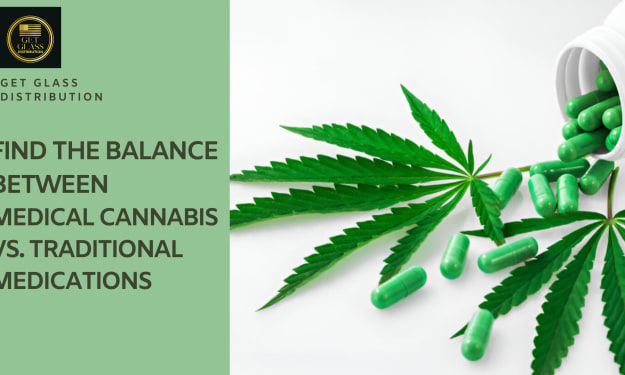
Medical Cannabis vs. Traditional Medications: Pros and Cons
Medical cannabis has become increasingly popular as a potential alternative or complement to traditional medications. Patients dealing with chronic pain, anxiety, or epilepsy often turn to cannabis-based treatments because of their unique benefits and reported effectiveness. However, like any medical approach, it has its advantages and disadvantages. It's important for both patients and healthcare providers to understand the pros and cons of medical cannabis in comparison to conventional pharmaceuticals.
By Get Glass Distribution2 years ago in Humans
Delhi Steps for Emergency as Air Pollution Reaches a Hazard Level
Delhi Air Pollution Worsens: Schools Go Online and Trucks Banned Air quality in Delhi worsened, so the government had to enforce new measures to preserve people's health. The city has hardly ever been alien to air pollution, but this time, it has been so dangerous that needful action was required. Here's everything you need to know about what is happening and how it affects all.
By Abhay kumar chauhan2 years ago in Humans
Empath Sanctuary: Thriving as a Sensitive Soul in a Chaotic World
Being an empath is both a gift and a challenge in a world full of noise, chaos, and conflicting energies. Empaths are extremely sensitive, intuitive people who have a deep sense of their own and other people's emotions. If not properly managed, this ability can result in emotional burnout, exhaustion, and overwhelm, even though it also enables extraordinary compassion and connection.
By aspire ᰔ academy2 years ago in Humans
Unlocking the Mysteries of Astrology: A Comprehensive Guide to the Stars
People have looked to the stars for direction, inspiration, and self-discovery for centuries. Daily horoscopes are only one aspect of astrology, the art of deciphering celestial movements and their impact on human lives. It is a complex, multidimensional system that gives us insights into our personalities, relationships, and destinies while also connecting us to the universe.
By aspire ᰔ academy2 years ago in Humans
Moses West:
In a world where access to clean water remains a critical issue, Moses West is pioneering a groundbreaking solution. Known for his revolutionary atmospheric water generator, West strives to alleviate global water scarcity by transforming the air we breathe into drinkable water.
By Brioné LaThrop2 years ago in Humans
The Future of Bitcoin
Bitcoin, the world’s first and most dominant cryptocurrency, has always been a magnet for bold predictions. Over the years, Bitcoin has gone from a fringe digital asset to a mainstream financial instrument, attracting retail investors, institutions, and even governments. With Bitcoin’s price volatility and the growing adoption of cryptocurrencies, the burning question remains: Could Bitcoin hit $500,000 by 2025? Let’s dive into the key factors that could either propel Bitcoin to unprecedented heights or keep it in check.
By Jacktone Otieno2 years ago in Humans
Intermittent Fasting Uncovered: What the Latest Science Says About Its Health Benefits. Content Warning. AI-Generated.
Intermittent Fasting Unveiled: What New Science Says About Its Health Benefits Intermittent fasting, also known as IF, has surely taken its place among the most renowned health trends of the last few years. It promises an easier, more flexible path to weight loss and general well-being-a promise that intrigued millions of people worldwide. But what does science have to say about the health benefits? The following article closely looks at intermittent fasting, the concept behind it, and the probable advantages which studies may indicate that one can have in life by incorporating it.
By Pritom Mazumder2 years ago in Humans
How to Manage Depression. Content Warning. AI-Generated.
Depression is one of the most common mental health conditions worldwide, affecting millions of people across all age groups and backgrounds. Also Discouragement is one of the most widely recognized psychological well-being problems universally, arriving at a great many individuals at all ages and different backgrounds. It seems like a mountain on occasion, however misery is treatable, and there are various ways of conquering it and reduce its power. At the point when you or a cherished experience the ill effects of despondency, it is enabling to know the choices and procedures to use in managing it. A couple of ways to deal with overseeing sadness are given beneath:
By dmech rkmjts2 years ago in Humans
Science of Love: How Relationships Work. Content Warning. AI-Generated.
Science of Love: How Relationships Flourish Love is full of the meaning that lies in human life. Many pleasures and hardships-these are unpredictable and yet full of depth in our lives, as the very levels of one relationship rise, and another falls. Why? An explanation can be found in the intricate intermeshing of psychology, biology, and emotions dictating how individuals connect. Let's look at the science behind love and discover how we build healthy, thriving relationships. Chemistry of Falling in Love Ever felt the heartbeat while meeting some special for the first time? What's happening there is not mere coincidence; it's chemistry. Once we fall in love, our brain releases that feel-good hormone called dopamine, which gives us this high sense of feeling. Again, it is the same chemical that rushes through the body while we stretch for something wonderful or experience sheer joy. And there's another hormone to account for: oxytocin, also known as the "love hormone." Oxytocin is released through physical contact -- hugs, or deep, meaningful conversations. It's building trust and forming an emotional bond, which is why those early feelings of love can feel so mystical. Your brain and your body are working together to bring you closer to another person. Yet by the end of the first few weeks, fear begins to grip most couples; the "magic" is disappearing. It isn't. The relationship is unfolding. Love evolves from intense passion during the early romance to a steadier, deeper connection. And that's where real love begins. The Power of Communication Indeed, that's what tests the strength of the relationship: unsaid expectations, unspoken feelings, and just plain old misunderstandings can slowly erode even the strongest relationships. But when honesty and vulnerability land right within communication, connection happens. Consider how you communicate with your partner. Open sharing of your fears, dreams, and concerns is a sure way to develop trust in relationships. This openness can only happen if discussions are deliberate and authentic. Active listening-taking a moment just to listen for the sake of hearing the other person as they say something and not preparing at the same time what you will say next-can contribute hugely toward increased understanding. Instead of complaining that "You never help around the house," convey your feelings by saying something like: "I'm feeling overwhelmed and could really use your help." Reformulating complaints into emotional language is a doorway to emotion so that your partner does not become defensive and can listen to your concerns. Attachment Styles: The Blueprint of Love We shape our styles of giving and receiving love in childhood, therefore our adult relationships. According to psychologists, human attachment styles are four and influence how an individual behaves with their mate during romance. These styles include the following. 1. Secure Attachment: Such an individual loves intimacy and emotional closeness. They have healthy relationships and maintain harmony and balance. 2. Anxious Attachment: People having an anxious attachment style fear being left and may be difficult to handle in terms of emotional ups and downs, requiring constant self-reassurance through the partner. 3. Avoidant Attachment: The individual values individuality and often has a resistance to emotional intimacy but will avoid vulnerable conversation or situations. 4. Disorganized Attachment: This attachment style has both elements of fear and longing that creates disorganization and inconsistency in relationships. Attachment styles can be somewhat enlightening regarding your emotional response and behaviors. So, for example, if you discover that your attachment style is anxious, then you can start building up your self-soothing capacities to feel safer with your partner, while when you know your partner's attachment style, you are also better prepared to respond with empathy and patience. Conflict: A Hidden Opportunity Conflicts are common in every relationship, but what matters most is how the couple handles it. While defensiveness and hurt feelings are understandable when disagreements arise, this does not have to mean that conflict will tear partners apart, but rather gives an opportunity to strengthen their relationship through empathy and understanding. Argument goes well when empathy lies at the root. Now, say that your partner forgets an important date. Say something like, "I felt hurt not to have been considered when my partner forgets our anniversary. You made me feel unimportant." Thereby, instead of a quarrel, it is an opportunity for mutual understanding and resolution rather than escalation of the conflict. Conflict is not a game where to win and be right but an understanding of each other in search of solutions. In a scenario where partners go to disagreement with caution, they may come closer to each other and not any further apart. Shared Dreams and Differences Perhaps the most fundamental part of a long-term relationship is the idea of goals. To have something to look forward to-that and to bring children into it, or to travel the world, or build a life together-gives them meaning and way. But perhaps while shared dreams are necessary, love seems also to flourish in the space between differences. When the personalities, interests, or worldviews between the two partners are different, it makes the relationship dynamic and interesting. In fact, very often, such differences are exactly what attracts the partners to each other in the first place. As the relation progresses, nurturing both shared dreams and respect for different identities is important. A good relationship walks hand in hand with mutual support of each other's uniqueness and a common purpose. Love Language: Appreciation Love talks best in small noises: surprise compliment, your coffee now perfectly brewed to suit your taste, or a friendly note left in your bag. All these minor acts of affection may seem rather insignificant individually but pretty strong weapons over time. It makes relationship partners frequent their expressions of gratitude. Small words, like "thank you" or "I love the way you.", do go a long way in helping one feel valued in his or her relationship. Gratitude works on a chain reaction-the more thankful someone is, the more likely the other will return similarly, thereby making the bond between them even more important. Emotional Intimacy: The Heart of Connection Physical attraction alone may make the flame ignite, but it is emotional intimacy that sustains the fire. Emotional intimacy has been described as a great bonding between two who can share their thoughts, their fears, and vulnerabilities with one another in safety. It takes a lot of time, energy, and trust to develop emotional intimacy. Quality time and positive meaningful conversations often mean higher satisfaction in the relationship between a couple. A bond cannot be broken once both the members of a couple feel comfortable showing their real selves. Love is a Journey It's not static; it's growing, changing, and challenging. It's not about perfect; it's about becoming someone. From the excitement of early romance to the deep companionship that surfaces over time, love unfolds in unknown ways, challenging us, pushing us to grow, and bringing us immense fulfillment. Nurture your relationship by becoming vulnerable and open while cherishing the little things. And by the way, love's not just an emotion; it's a process-one definitely to be undertaken with an open heart. Relationships advance in the ties that connect us, so every step of the journey hence is worthwhile. --- - A better understanding of science can best communicate the intricacies of a relationship. That's in this context emotional and psychological appreciation for situations could be nurtured more genuinely for successful relationships. One can build relationships that survive and bloom with the right mix of chemistry, communication, empathy, and respect.
By Javeed Dhuka2 years ago in Humans