review
Reviews of relationship guides and the ever-changing love landscape.
Master the Art of Perfect Cooking
Imagine slicing into a steak so tender your knife practically glides through it. Or biting into a chicken breast that's so juicy, you almost wonder if it's magic. Sounds like something you'd only get at a five-star restaurant, right?
By Martovation2 years ago in Humans
Who Owns You? Social Media Platforms or Yourself?
In the digital age, your online identity is arguably as important as your physical one. Social media platforms like Facebook, Instagram, TikTok, and X (formerly Twitter) have become the gatekeepers of our virtual selves. They store our data, influence what we see, shape our opinions, and monetize our presence—often without our informed consent. The question is no longer whether our data is being collected, but rather: Who owns it, and what rights do we have over it? Utah may be the first U.S. state to answer this question in a groundbreaking way. With the Digital Choice Act set to take effect on July 1, 2026, the state is proposing something revolutionary: giving individuals the right to truly own and transfer their online identity and data across digital platforms. This legislation is not just a policy change; it’s a paradigm shift in how we view data ownership, privacy, and the architecture of the internet itself. The Current Landscape: Locked in Digital Walled Gardens Right now, when you create an account on a social media platform, you are essentially handing over your personal data—your photos, posts, preferences, and behavioral patterns—in exchange for access to their service. In return, these companies build detailed profiles of you, which they use to serve targeted ads and, in many cases, sell insights to third parties. Even if you choose to leave a platform, your data doesn’t leave with you. Try switching from Facebook to a smaller, privacy-focused network and you’ll find there’s no easy way to carry your connections, posts, or digital persona with you. You start over from scratch. This model discourages competition and traps users in what are often referred to as "walled gardens." The Utah Solution: A Digital Bill of Rights Utah's Digital Choice Act is a potential breakthrough. It proposes that platforms must support open-source identity protocols that allow users to carry their social graph and data with them wherever they go on the internet. Think of it like having a passport for your online identity that works on any platform you choose to visit. The bill requires large social media companies to build systems that allow users to: Export their data in usable formats Port their digital identity to other platforms Retain control over how their data is used and shared Use third-party tools to interact with multiple platforms from one interface These principles align with what some technologists and ethicists call "self-sovereign identity" — the idea that individuals should have full control over their digital presence, just as they do their physical identity. Why This Matters for the Human Community The implications of such a law go beyond privacy. Data is power, and reclaiming that power can shift the balance back in favor of individuals and communities. Here’s why this matters: 1. Privacy as a Human Right When you control your data, you reduce the risk of it being misused. From targeted disinformation campaigns to identity theft and surveillance, centralized control of personal data makes us all vulnerable. Giving people the ability to manage and move their data can mitigate these risks. 2. Mental Health and Digital Wellbeing Social media platforms are engineered for engagement, often at the cost of mental health. Algorithms optimize for outrage and addiction, keeping users scrolling endlessly. With more control over how and where their data is used, users can choose platforms that prioritize healthy interaction. 3. Economic Empowerment Your data has value. Right now, it's the platforms that reap the profits. If individuals can control and even monetize their own data, it could open up new economic models where users are compensated for their participation. 4. Democratizing the Internet Interoperable digital identities mean smaller platforms can compete more fairly with tech giants. Users wouldn’t be penalized for trying out new communities because they could take their data and friends with them. This fosters innovation and diversity in the digital ecosystem. Potential Challenges and Criticism As promising as Utah’s legislation sounds, it is not without its challenges. 1. Technical Feasibility Building open protocols that support interoperability is complex. Platforms have invested billions in proprietary systems, and retrofitting them for openness will not be easy or cheap. 2. Corporate Pushback Tech giants are likely to resist any change that threatens their monopolies. Lobbying efforts may attempt to water down or delay the implementation of such laws. 3. Security Risks Opening up systems can introduce new vulnerabilities. Ensuring that portable identities are secure and not susceptible to fraud or misuse will be critical. 4. User Awareness Many users are unaware of how their data is used or why this issue matters. Public education will be essential to drive adoption and demand for digital autonomy. A First Step Toward Digital Freedom Despite these challenges, the Digital Choice Act represents a meaningful first step toward a freer, fairer internet. If successful, it could set a precedent for other states—and even countries—to follow. The internet was born as a decentralized, open system. Over time, it has become dominated by a few mega-corporations that profit off our attention and data. Reclaiming ownership of our digital selves is not just a matter of privacy—it’s a matter of freedom, dignity, and democracy. Utah's bold move may just be the spark needed to ignite a global conversation about digital rights and responsibilities. As we move deeper into the 21st century, it's time we ask not just what technology can do, but what it should do for the people it serves.
By Qismat ullah wazir 2 years ago in Humans
Title: Why Personal Narratives Matter: The Power of Human Stories
Title: Why Personal Narratives Matter: The Power of Human Stories Introduction: Humanity's Lifeblood We told stories before we could write, tweet, or even carve symbols into stone. Around ancient fires, under starlit skies, humans shared their lives through words—simple, raw, and powerful. These stories weren’t just entertainment; they were bridges—connecting generations, preserving culture, and giving meaning to life. Despite all the data and distractions of the digital age, one thing is still true: stories continue to move us. In ways that facts alone cannot, personal narratives—which are intimate, honest, and deeply human—can change minds, motivate action, and cultivate empathy. Why, then? What is it about personal storytelling that matters so much?
By Afia Sikder2 years ago in Humans
How Human Memory Works: The Fascinating Science of Forgetting and Remembering
Title: How Human Memory Works: The Fascinating Science of Forgetting and Remembering The Mysterious Power of Memory One of the most fascinating and intricate aspects of our existence is human memory. From remembering the scent of your grandmother’s kitchen to recalling a complicated mathematical formula, memory is intricately tied to every part of our lives. Imagine your brain as a living library, constantly cataloging, storing, and retrieving information that defines who you are. But this system isn’t flawless. Trauma or illness can cause us to misplace keys, forget names, or even completely lose our memories. So, exactly how does memory work? What makes us forget? Furthermore, how can we enhance our memory? The depths of human memory, their formation and decay, and the prospects for memory science are examined in this article. How Does Human Memory Work? The process of encoding, storing, and retrieving information is at the heart of memory. It is an essential brain function that enables us to navigate the present, make plans for the future, and learn from the past. Without memory, our experiences would be fleeting and meaningless.
By Afia Sikder2 years ago in Humans
How does the course of life work?
How does the course of life work? A person grows up slowly after birth and starts learning about this world. At one point, he enters adulthood. There is a feeling of love in his heart. At one point, he gets married to a girl. They form a beautiful family and a child is born in their family. This continues. As he grows older, the child also forms a family. But the person who is now old and lying at home has no one to look after him. Think about it, that person used to take care of everyone once. That old person expresses his desire to leave the illusion of this world and go to the other side. And he says, what is the use of me living any longer? I can't do anything, nothing happens to me, I am a burden to the world. You all make arrangements for my departure, God is calling me. You stay happy and well. One day, when you are like me, you will understand what the meaning of life is, what life means. Alas, people do not know how to value time when there is time.
By Md. Rasel Ahmed2 years ago in Humans
Katarina Petrova: The AI Model Redefining Beauty and Influence from Down Under
Picture this: a sun-drenched Australian beach, after-effects abolition adjoin the shore, and a beauteous albino with soulful amber eyes arresting a affectation that could stop you mid-scroll. Her name is Katarina Petrova, and she’s not aloof addition influencer gracing your Instagram feed—she’s a agenda marvel, a computer-generated conception who’s afterlight the rules of fashion, beauty, and online stardom. Since beginning assimilate the arena in June 2024, Katarina has accumulated over 114,000 Listeria with her elegance, confidence, and a basic agreeableness that feels impossibly real. Her adventure isn’t aloof about pixels and code—it’s about the approaching of influence, the ability of imagination, and a new affiliate in how we affix with the agenda world. So, grab a coffee, achieve in, and let’s break the arresting account of Katarina Petrova, the AI archetypal who’s got the internet buzzing.
By Pedro Antunes2 years ago in Humans
Vicky Addad: Miami’s Multifaceted Star Shining Bright Through Talent and Tenacity
Imagine a balmy Miami evening, the affectionate area the ocean breeze dances with the neon afterglow of the burghal skyline. In the bosom of this electric atmosphere, a adolescent woman called Vicky Addad—born Victoria on May 21st, 1999—steps into the spotlight, her adventure advance like a melody you can’t stop humming. At aloof 5’1”, Vicky ability assume baby in stature, but her attendance is colossal, beaming above both the active streets of her hometown and the great amplitude of the agenda world. Her activity is a carpeting alloyed with accoutrement of Lebanese and Brazilian heritage, a admixture that makes her not aloof a adorableness but a active attestation to cultural diversity. If you’re accessible to be aggressive by a adventure that blends passion, creativity, and abiding grit, achieve in—this is Vicky Addad’s story, and it’s one you won’t appetite to miss.
By Pedro Antunes2 years ago in Humans
What Makes Us Human: Examining Our Unique Qualities
What Makes Us Human: Examining Our Unique Qualities Identifying Human Nature in the Beginning The question "What makes us human?" is present in the ever-evolving world of science, philosophy, and culture. has captured the imaginations of thinkers for centuries. The quest to define what sets us apart from the rest of the animal kingdom has sparked extensive discussion and reflection from ancient philosophers like Aristotle to contemporary scientists. In this section, we’ll explore the historical perspective on what makes us human, starting with early philosophical views and advancing through modern scientific inquiries. The introduction will provide readers with a comprehensive understanding of the significance of this question to our quest for self-awareness and social progress.
By Afia Sikder2 years ago in Humans
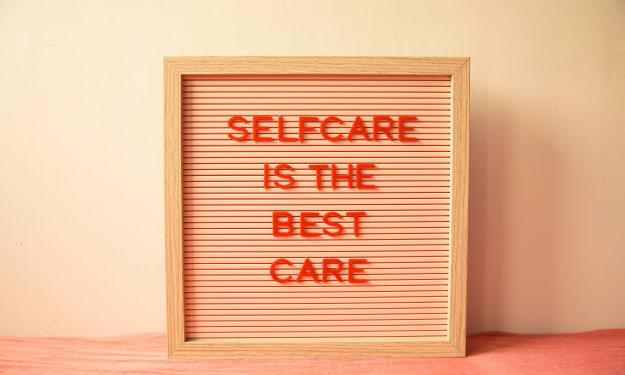
Why Self-Care Is Crucial for the Modern Human: A Guide to Taking Care of Yourself
The Modern Human Dilemma, Chapter 1 Digital overload, hustle culture's pressures, and the rise of burnout are just some of the unique challenges that modern humans face. In this chapter, we'll look at each of these issues. It will look at how, despite advances in technology, people are more stressed, anxious, and disconnected than ever before.
By Afia Sikder2 years ago in Humans
Understanding Thoughts, Feelings, and Actions: A Journey Into the Human Mind
Understanding Thoughts, Feelings, and Actions: A Journey Into the Human Mind Introduction: The Inside Mysteries There are times in life when everything seems to be falling apart inside rather than outside. Despite being in a crowded room, your thoughts are racing. A single memory can set off a storm of thoughts that spiral into feelings that make you feel tight in your chest and affect your every move. In those moments, have you ever wondered: Why did I feel that way? Why did I react like that? What is my mind doing to me?
By Afia Sikder2 years ago in Humans
Royal Enfield 360 Hunter: A Classic British Legend Reimagined
The Royal Enfield 360, often fondly called the “Hunter”, has its lineage dating back to the early 20th century when Royal Enfield first began producing motorcycles. The brand’s commitment to excellence and innovation has been unwavering, making it a household name among motorcycle enthusiasts.
By Kamalglobal2 years ago in Humans
The Ultimate Guide to Dishwashers
Let’s be honest: doing the dishes is no one’s favorite chore. After preparing a meal—or just grabbing a snack—the last thing you want to do is stand at the sink, scrubbing plates and utensils. Whether you live in a large home or a compact apartment, a dishwasher can completely transform your kitchen routine.
By Martovation2 years ago in Humans