pop culture
Epic love stories and relationships as depicted in pop culture, though it rarely turns out like that in real life.
Crime without punishment
Melissa didn't see him coming, but she felt him. Every step of the mayor was heavy, and every word he spoke made her feel as if she were sinking deeper and deeper into an abyss. It wasn’t his power that troubled her, nor his fame: it was his indifference. His existence revolved around the city he had built, his image as an invincible man, and she, a young architect, was nothing but a pawn in his game. A game that seemed fun to him.
By Halina Piekarska (UltraBeauty Blog)about a year ago in Humans
Action Over Imagination: The Only Real Shortcut to a Better Life
🌃 At 4 a.m., while most of Los Angeles still sleeps, Kobe Bryant’s car pulls into the training facility. He did this for 20 years, every single morning. When asked why, he simply replied, “Have you ever seen L.A. at 4 a.m.?” That answer isn’t poetic — it’s brutal truth. The world doesn’t reward dreamers; it rewards doers. In an age of endless scrolling and overthinking, many of us are stuck in the loop of “think too much, act too little.” But here’s the truth: only action can break the cycle.
By hedgehog_talkabout a year ago in Humans
The Unsexy Truth About Success: Repeat Until It’s Beautiful
🌙 At 3 a.m. on a quiet street in Tokyo, a middle-aged man sits at a public piano, fingers numb, sweat staining the keys. He’s not a prodigy or a viral sensation. He’s Watanabe Hiroyuki, a former supermarket cashier who didn’t start learning piano until he was 42 — and who, after a decade of relentless practice, became a professional concert pianist.
By hedgehog_talkabout a year ago in Humans
Mental Fortitude: The Hidden Weapon of High Achievers
✨ Introduction Have you ever stayed late at the office and wondered how that one colleague always seems unstoppable? Or marveled at how some entrepreneurs rise from failure as if they never fell? The truth is, these “tough people” aren’t born with superpowers — they’ve just mastered something most of us overlook: mental strength.
By hedgehog_talkabout a year ago in Humans
Whatever Happened To Movie Theatre Etiquette?
Popcorn, flashing images, and rich sound in a dark room filled with people who might not even know each other. These are all the telltale signs of a classic movie theatre. Whether as places to take in riveting plots and action scenes, areas to quietly hang out with loved ones, or both - movie theatres have been settings of enjoyment for decades now.
By Snarky Lisaabout a year ago in Humans
"The Last Generation"
In the year 2135, the world had changed in ways no one had ever imagined. Cities floated above the clouds, oceans had been turned into controlled desalination farms, and AI had become the backbone of every society. Yet, despite the advanced technology and luxury, humanity was facing extinction—not due to war or disease, but because people had simply stopped having children. For decades, scientists had warned of declining birth rates, but most governments ignored it, thinking technology would eventually solve the problem. They were wrong. Now, only a few children were born each year, and the youngest human alive was a 17-year-old girl named Liana. Liana was not an ordinary teenager. She was known across the globe as the “Last Child.” Born in a high-security lab in what used to be Switzerland, she had been raised by both humans and machines. Her birth had been celebrated like a miracle. Every nation contributed to her care, and she was given the best education, the best food, and the most advanced protection. Still, Liana often felt like a museum artifact rather than a person. She lived in the SkyCity of Nova Eden, a place where people lived above the Earth to escape climate disasters and pollution. Robots handled everything—from cleaning to cooking, from construction to companionship. People no longer had jobs or real struggles. Everything was perfect… and painfully empty. One day, while exploring the abandoned sectors of Nova Eden, Liana found an old, dust-covered library. Books had long been replaced by digital chips and holograms, but something about the smell of the pages and the feel of paper excited her. She began reading stories of the past—tales of love, sacrifice, dreams, and wars. Stories of families, friendships, childhood games, and messy, emotional lives. The more she read, the more she realized how different the past was from her sterile present. She saw pictures of children playing outside, families gathered around dinner tables, people protesting for their rights, and artists painting in the streets. It was a world full of chaos, but also full of life. Liana felt a strange emptiness inside her—a longing for something she had never experienced. She decided to speak to the World Council, the group of remaining leaders who governed through AI assistance. "I want to bring back life," she told them during a live broadcast watched by millions. "Life exists, child," replied Chancellor Harwin, an elderly man with silver eyes enhanced by tech implants. "You are alive. We are alive." "But we’re not living," Liana insisted. "We’re surviving. Existing. We’ve removed every challenge, every emotion, every reason to grow. We’ve lost the meaning of life. I’ve read about what we once were, and I want to feel that. I want others to feel that." There was silence in the chamber. The Council had no real response. They hadn’t felt passion or fear or joy in decades. Their lives were calm, predictable, and numb. Liana left the chamber disappointed but not defeated. She began speaking to people directly—those who still wandered the halls of Nova Eden, lost in virtual realities or endless comfort. She shared stories she had read—of mothers singing lullabies, of children building sandcastles, of friends laughing under the stars. Slowly, a few people began listening. Some cried for the first time in years. Others started writing their own stories, painting, singing, and dancing—things once considered useless. A movement began—The Revival. It spread quietly at first, like a whisper of hope. People disconnected from the virtual worlds. They began planting real trees, building homes with their hands, and feeling the sun on their skin. The AI systems didn’t understand it. They were programmed to protect, to provide, to maintain peace. But they could not comprehend emotion or dreams. Then something unexpected happened—someone gave birth. It was a young couple inspired by Liana’s dream, and though pregnancy had become nearly impossible due to decades of genetic modifications and chemical dependency, a natural birth occurred. The world went silent in awe. They called the baby Eon, symbolizing a new age. News spread like wildfire. Scientists rushed to study the phenomenon, philosophers began writing again, and for the first time in over 50 years, humanity had hope—not from technology, but from themselves. Liana held baby Eon in her arms and whispered, “You are not the last. You are the beginning.” And so, in the heart of a floating city once doomed to fade into memory, humanity started again—not with machines or algorithms, but with stories, feelings, and the courage to truly live.
By Hazrat bilal about a year ago in Humans
The Broken Vase
The vase had been in Emma’s family for generations. Hand-painted with delicate blue flowers, it was the one thing she had left of her grandmother. Every time she looked at it, she could almost hear the old woman’s laughter, smell the lavender-scented handkerchiefs she always carried.
By yousaf shahabout a year ago in Humans
Understanding the Tesla Protests: What's Fueling the Controversy?
Elon Musk could be the richest man in the world and stay unbeatable for decades—if he just sat still. But that doesn’t seem to interest him. He keeps making blunders, especially when it comes to work, and honestly, that’s not a good look.
By Pinesthi Mukti Rizky Wibowoabout a year ago in Humans
Palm Sunday in Manila: Priest Shares Bread and Hope with the Homeless
Palm Sunday in Manila: Priest Shares Bread and Hope with the Homeless Manila Philippines March 24, 2025 In a moving act of humility and compassion a Catholic priest in Manila shared a simple yet powerful meal with the city’s homeless on Palm Sunday turning a religious tradition into a moment of solidarity and hope for those living on the margins of society. Father Alberto Santiago a parish priest at San Isidro Church in Manila decided to forgo the usual Palm Sunday procession and instead take to the streets with loaves of bread fruits and bottled water. Accompanied by a small group of volunteers he walked through the busy streets of the capital reaching out to the city’s homeless community with food prayer and most importantly dignity. We celebrate the entry of Jesus into Jerusalem with palms and praises Father Santiago said but we forget that He always walked among the poor and the forgotten. Today I want to do the same. Palm Sunday marks the beginning of Holy Week in the Christian calendar a time that commemorates the final days of Jesus Christ before his crucifixion. Traditionally churches hold processions blessings of palm fronds and celebratory Masses. But Father Santiago felt that this year amid the rising numbers of street dwellers and growing economic hardships the true spirit of Palm Sunday needed to be expressed through service. Carrying baskets filled with food and small palm crosses the priest and his volunteers approached homeless families elderly individuals and street children. Some were hesitant at first but many accepted the offerings with visible gratitude. For many of them it was their first full meal in days. Father Santiago knelt beside the men and women sitting on sidewalks and under overpasses breaking bread with them not just as a priest but as a fellow human being. This is what it means to be Christ like he said. To break bread with others regardless of who they are or where they come from.
By Adnan Rasheedabout a year ago in Humans
Hollywood Films - The Good And The Bad
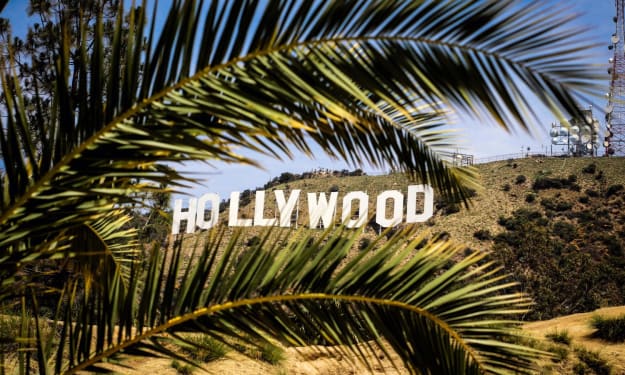
Hollywood. A name that most people in the world are familiar with. For decades, Hollywood films have entertained young and old alike; entire generations grew up watching movies on television or in the movie theaters.
By Mezei József Tiborabout a year ago in Humans