photography
Photography that showcases the best, worst and everyday moments of modern relationships.
Breaking Free from Perfectionism: Embracing the Imperfections of Being Human
Breaking Free from Perfectionism: Embracing the Imperfections of Being Human Introduction From the earliest days of childhood, many of us are taught to strive for perfection. We get high marks, awards, and praise for our flawless appearance. In a world that celebrates idealism and perfection, anything less can feel like failure. But this pursuit of flawlessness often comes at a cost: anxiety, self-doubt, exhaustion, and a disconnect from our authentic selves.
By Afia Sikderabout a year ago in Humans
The Secret 80/20 Rule. AI-Generated.
The Myth of Balance: Achieving balance in life is something that gets emphasized on often, be it in terms of work-life balance, emotional balance, or a balanced diet. What if I were to say that success, in its fullest form, doesn’t stem from balance? What if becoming a leader and a warrior who manages to not just survive the storms of life but thrive in them can be done with an ancient principle that transforms everything around you?
By Olivia Chastityabout a year ago in Humans
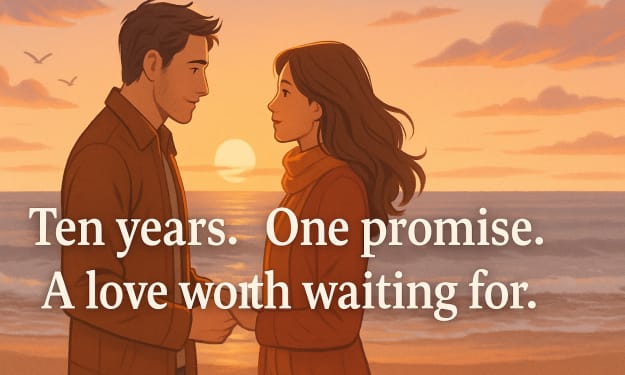
Ten Years. One Promise. A Love Worth Waiting For.
Ten Years. One Promise. A Love Worth Waiting For. The autumn gust sent red leaves swirling through Millbrook Station as Claire Hastings stepped down from the evening train, clutching a well-worn sketchbook to her chest. She stood undecided beneath the ancient iron clock—7:02 p.m., the same moment that she left ten years ago—and drew the cold air over the quiver of hope in her body.
By Md. Rifat Hossainabout a year ago in Humans
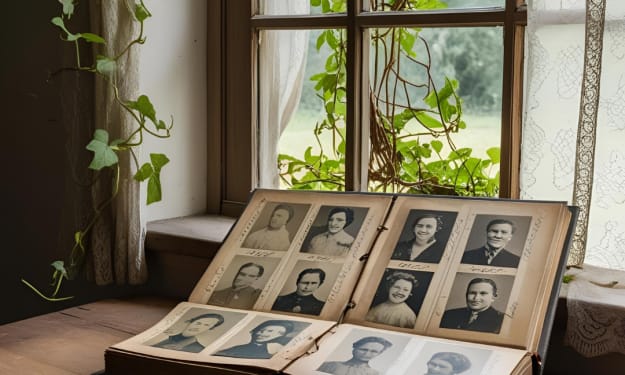
The Forgotten Album
Mira had never been close to her grandmother. Her parents spoke of her rarely, always with a certain reverence, or sometimes, a shadowed unease. When her grandmother passed away, leaving behind a remote stone cottage in the hills of Swat, no one wanted to claim it.
By Muhammad Hamza Safiabout a year ago in Humans
Why Men Are Drawn to Women: The Allure of Feminine Heat
The magnetic pull that draws men to women is a primal, intoxicating force, woven into the very fabric of human instinct, where biology and desire collide in a sultry dance of attraction. It’s no secret that the female form—its curves, its softness, its heat—ignites something deep within a man’s core, a fire that’s both ancient and immediate. The sway of a woman’s hips as she moves, each step a silent promise of sensuality, captures the male gaze like a spell. Those hips, wide and inviting, whisper of fertility and pleasure, a subconscious signal that stirs the primal urge to create life, even if the mind cloaks it in lust. The female body is a masterpiece of evolution, designed to entice—soft skin that begs to be touched, a waist that curves inward like an hourglass, pulling eyes downward to the promise of what lies below. And then there’s the breasts, those twin symbols of nurture and seduction, their fullness a beacon of femininity that men can’t help but worship. Whether spilling over a low neckline or subtly hinted at beneath a tight blouse, they command attention, their weight and warmth an unspoken invitation to explore. The science is clear: men are wired to respond to these cues, their brains flooding with dopamine at the sight of a woman’s cleavage, a reaction as old as humanity itself. But it’s not just the body; it’s the heat she exudes—confidence in her stride, the glint in her eye that says she knows her power. A woman’s hotness isn’t merely skin-deep; it’s the way she owns her sexuality, the way her laugh can make a man’s pulse race, or how her perfume lingers like a tease. The lips, plump and painted, promise kisses that burn, while her voice, low and husky, can unravel a man’s composure in seconds. This attraction isn’t just about the physical—it’s the fantasy, the forbidden. Men are drawn to the mystery of a woman’s body, the hidden places that only intimacy reveals: the smooth expanse of her thighs, the delicate arch of her back, the secret warmth between her legs that drives them wild with anticipation. Evolution plays its part, too—men are programmed to seek partners who signal health and vitality, and nothing screams that louder than a woman’s radiant skin, her glossy hair, or the flush of her cheeks when she’s aroused. The adult truth is that this desire is raw, unfiltered, and unapologetic. A woman’s hotness is her power, and men are helpless against it—not because they’re weak, but because they’re human. The curve of her ass in tight jeans, the way her body moves under silk, the fleeting glimpse of lace beneath a skirt—it’s a language of seduction that speaks directly to a man’s baser instincts. And yet, it’s not just about lust; there’s a deeper reverence, a need to possess and protect, to lose oneself in the softness of her embrace. The adult lens reveals that this attraction is a game of contrasts: the softness of her breasts against the hardness of his chest, the delicate strength of her fingers gripping his skin, the way her body yields and demands in equal measure. Society might dress it up in romance or shame, but the truth is primal: men crave women because their bodies are a map of desire, each curve a destination, each glance a spark. The heat of a woman’s presence—her scent, her touch, her unabashed femininity—sets off a chain reaction in a man’s mind, blurring logic and amplifying want. It’s why a fleeting touch on the arm can feel electric, why the sight of her bending over can stop a man’s breath, why the thought of her naked skin keeps him awake at night. This is the secret: women are the embodiment of life’s most intoxicating pleasures, their bodies a canvas of heat and promise that men are biologically destined to chase. And in that chase, there’s no shame—only the raw, beautiful truth of being alive, of bodies calling to each other in a language older than words, where every glance, every curve, every whispered moan is a reminder of why we burn for one another.
By Lovely Diyaabout a year ago in Humans
The Standing Boy of Nagasaki
In the haunting ruins of post-war Nagasaki, amid twisted steel, crumbled buildings, and scorched earth, a quiet, solemn figure stands out — a boy, perhaps no older than ten, standing still with perfect posture. On his back, tied with a cloth, is the lifeless body of his baby brother. His face is calm, composed, and eerily mature. A U.S. Marine photographer, Joe O’Donnell, captured this moment — a photograph that would come to symbolize the human cost of war in a way no statistic ever could.
By Zakir Ullahabout a year ago in Humans
The Haircut, the Heart, and Holding On
I never thought a haircut would make me cry. Not in the dramatic, just-got-dumped kind of way. Not even because it was botched. But because of who it was for, and what it meant. My brother, Sami, was sitting in the faded leather chair at the back of Malik’s Barbershop. It was a small place—wood-paneled walls, a dusty fan circling overhead, and a scent that was part shaving cream, part nostalgia. The kind of place where boys became men, and men came to find a sliver of peace. Sami had always been particular about his hair. He liked a low fade with a clean part, the kind that made him look sharp, like the hero of some old Bollywood movie. But today, he didn’t care. Because today, he didn’t recognize his reflection. It’s been nearly six months since our lives changed. One misdiagnosis. One delayed scan. One rare autoimmune disorder that began robbing Sami of his speech, coordination, and slowly, the light in his eyes. I’ve become his caregiver. It’s a word people don’t say enough. They say “blessing,” “burden,” “duty,” “love”—but not caregiver. As if acknowledging the labor of it somehow diminishes the love. But let me tell you the truth: Love is heavy. It’s carrying a grown man to the bathroom at 2 a.m. because he can’t walk on his own. It’s spoon-feeding oatmeal while pretending it's the same old breakfast he used to rush through before school. It’s crying in the laundry room because you miss being a sister instead of a nurse. And yet—it’s everything I’d ever do again, without a second thought. I remember our childhood vividly. Sami was always the brave one. He used to jump off rooftops into muddy puddles, convinced he was invincible. I was the careful one, always patching him up afterward. Maybe this was always going to be our fate—me putting him back together, piece by piece. Back at the barbershop, Malik clippers buzzed softly. Sami tilted his head slightly, eyes closed. A tiny twitch of discomfort crossed his face, and I instinctively stepped forward. Old habits. Malik looked at me and smiled softly. “I’ve got him,” he whispered. I nodded and stepped back. Watching the tufts of hair fall was like watching pieces of him scatter. I felt my chest tighten. This was the first time in weeks he agreed to leave the house. The first time he let a stranger touch him without flinching. Maybe this was healing. Or maybe it was surrender. I didn’t know. Outside, the sun was beginning to set—casting golden light through the windows, turning the dust in the air into tiny, dancing stars. And as if drawn by fate, a line from an old poem came to mind: > She is a sun, glowing through the grit, A keeper of warmth in a world unlit. Except this time, it wasn’t she. It was he. It was my brother, glowing quietly in the ruins of what had been. A different kind of strength. One that didn’t roar but whispered. One that held on. After the haircut, I helped him into his coat. His hand trembled as he tried to button it. I reached out, and he looked at me with those storm-colored eyes—full of gratitude, full of loss. We didn’t say much. Words had never been necessary between us. On the way home, he fell asleep in the passenger seat. I took the long route through town, letting the radio play old songs we used to sing loudly to, just to fill the silence. As I drove, I thought about all the ways people misunderstand caregiving. They think it’s about being strong. Being patient. Being angelic. But caregiving isn’t sainthood. It’s sacrifice. It’s giving up your plans, your weekends, your sleep, your career, sometimes even your sense of identity. It’s mourning someone while they’re still alive, and still showing up every day to hold their hand. And yet—it’s holy work. In the quiet moments, in the stolen smiles, in the eye contact that says “I’m still here”—you find pieces of yourself you never knew existed. Compassion that surprises you. Rage that humbles you. And love that doesn’t need conditions. Back home, I tucked Sami into bed. He looked peaceful. Before I left the room, he squeezed my hand. It was weak, but it was his way of saying thank you. Or maybe, just I love you. I sat outside on the porch afterward, staring at the moon. My thoughts spiraled. I thought about burnout. About how I once yelled at a nurse on the phone out of sheer exhaustion. About how I miss just being his sister. About how lonely it is to watch the world move on while you’re stuck in a loop of routines, medications, and memory loss. And yet, I also thought about that haircut. That small act of reclaiming normal. That quiet resistance. Sami isn’t who he used to be. And maybe neither am I. But maybe we are both still becoming. In the distance, I heard laughter from a neighbor’s yard. Life, buzzing as always. Untouched. Unaware. But here, in our small world, a battle is being fought—not with swords, but with spoons, clippers, and bedtime stories. And every little victory matters. Tomorrow, I’ll wake up and do it all again. And maybe, just maybe, one day Sami will smile and say, “It was a good haircut.” --- Author’s Note: To all caregivers out there—you are seen. You are heard. You are not alone.
By Ikram Ullahabout a year ago in Humans
The Love Renaissance: What Gen Z's Relationships Reveal About Modern Connection
Are Gen Zers sabotaging the true essence of romance or redefining it? Or they simply might be building something more intentional, resilient, and emotionally intelligent than any generation before. Once upon a time, romance came with rules. Handwritten letters, carefully curated phone calls, and silent nods of the elderly were the foundational stance of old-school love. But now, emojis, dating apps, and Instagram reels document love stories.
By Hridya Sharmaabout a year ago in Humans