movie review
Relationships-focused film reviews of tearjerkers, rom-coms, love lost and love found.
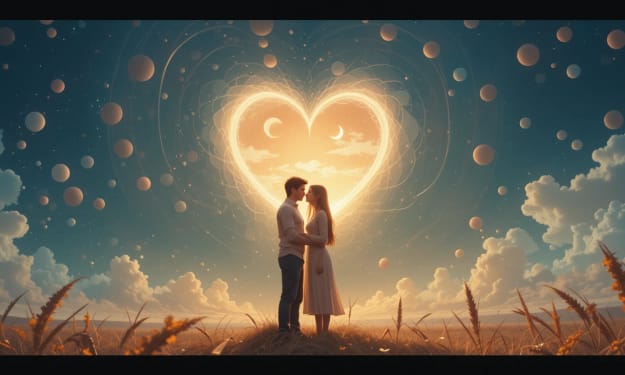
The Hearts Whisper and Shadows Linger. Content Warning.
On a rain-soaked evening in a city that had seen too many heartbreaks and fleeting romances, Lena found herself wandering under the warm glow of streetlights. Each droplet that slipped down the cobblestone resembled tiny memories of a past too painful to bury. Lena had once believed love was the answer to every ache, a promise of tomorrow’s magic. Yet now, haunted by the echo of promises broken, she wondered if trust in love was nothing more than a fairy tale spun to soothe aching hearts.
By Edge Alexanderabout a year ago in Humans
Ghosted, Blocked, and Still Healing: A Modern Love Story
I met Ryan on a Wednesday, which felt strangely poetic. Wednesdays were my least favorite day of the week—too far from the weekend to be exciting, and too close to Monday to be hopeful. But that Wednesday, three months after I’d promised myself I’d never download another dating app, I matched with a man who seemed to understand loneliness like I did. Our first conversation was about music. He loved indie bands I’d never heard of and introduced me to a song called “Ghost of You” by Mimi Bay. I told him the lyrics made me ache, and he said that was the point. We chatted until 2 a.m. about dreams, fears, the city, and how people pretend not to care when they’re actually breaking. It felt real, which was something I hadn’t experienced in a long time. Our first date was at a quiet café with plants hanging from the ceiling and worn leather chairs that smelled like stories. He brought me sunflowers—“Not roses, too cliché,” he said—and asked thoughtful questions that made me feel seen. I remember thinking, Maybe this is what healing looks like. Maybe I’ve finally found something true. For six weeks, we built a rhythm. Late-night phone calls, morning texts that made me smile before coffee, long walks with no destination. He made me playlists, and I wrote him poems. We weren’t official, but there was something sacred in the in-between. I stopped wondering who else he was texting. I stopped checking his Instagram likes. I trusted him, not because he asked me to, but because something in me whispered that I could. Until the whisper turned into silence. It started with delayed replies. Then missed calls. Then one weekend, nothing. I told myself he was just busy. Maybe he was sick. Maybe something came up. I sent a casual “Hey, hope you’re okay” message. No response. A day passed. Then another. I checked my phone obsessively, convincing myself I’d just missed a notification. I hadn’t. When I finally worked up the courage to call him, it went straight to voicemail. I opened Instagram to see if he’d posted anything. I was met with: User not found. I checked again. And again. Then I tried Facebook. Gone. Twitter. Gone. WhatsApp? Blocked. That was how I learned I’d been ghosted. Not just ghosted—erased. Like our connection had never existed. The pain wasn’t cinematic. It was quiet and ugly. It was scrolling through old messages just to see if I’d imagined the tenderness. It was listening to his playlists and wondering which songs were lies. It was crying in the shower so my roommates wouldn’t hear. It was the shame of telling friends, “I don’t know what happened.” People say ghosting is part of modern dating. That we’ve become so desensitized, so afraid of confrontation, we treat hearts like apps—open, swipe, close, delete. But what they don’t talk about is the after. The part where your mind keeps trying to rewrite the ending, hoping for closure that will never come. I tried to move on. I dated other people. I deleted and re-downloaded the same app three times. I laughed at the idea of love over brunch, drank wine like it was medicine, and blocked his number just to feel like I had control. But nothing filled the space he left behind—not because he was irreplaceable, but because he vanished without goodbye. And still, part of me hoped for a message. Even one that said, “Sorry.” Something to explain why someone who held my hand like a promise could disappear like a ghost. But that message never came. Instead, healing came slowly. Not in a dramatic, Instagram-quote kind of way, but in small, everyday choices. Choosing not to check his social media, even from a friend’s account. Choosing to delete the playlist. Choosing to unfollow pain like it was a bad habit. I started therapy. I journaled. I took walks alone. I learned to love the sound of my own silence again. One day, months later, I walked past the café where we first met. The same plants still hung from the ceiling. The same old chairs still told stories. But I didn’t go in. I didn’t need to. Because something in me had shifted—I wasn’t looking for him in places anymore. I won’t lie and say I’m completely over it. Some wounds don’t scar neatly. But I no longer measure my worth by someone else’s ability to stay. I no longer see ghosting as a reflection of me. I see it as a reflection of him—his fear, his cowardice, his unfinished story. Because love, real love, doesn’t vanish when it gets hard. It doesn’t block and disappear. It stays. It talks. It explains. And even if it ends, it ends with dignity. So yes, I was ghosted. I was blocked. And I’m still healing. But I’m also still here. Still loving. Still hoping. Still choosing to believe that next time, I won’t be left behind like a forgotten Wednesday.
By Zeeshan Khanabout a year ago in Humans
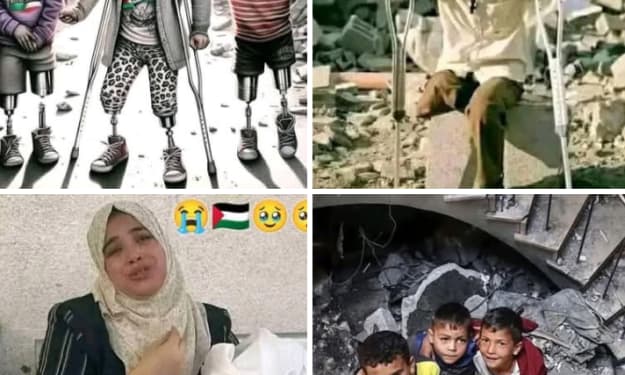
A Cycle of Suffering in Gaza
The Fragile Ceasefire The guns fell silent on November 24, 2023, marking Gaza's first dawn in seven weeks without the mechanical whine of drones. As the pale winter sun rose over shattered neighborhoods, people emerged like ghosts from the rubble. Um Youssef, a 58-year-old grandmother, knelt in what remained of her kitchen, sifting through broken dishes with trembling hands. "This was where I made maqluba every Friday," she told a neighbor, her voice cracking as she held up a single surviving coffee cup.
By Muhammad Israrabout a year ago in Humans
The End is Seen with Reason, Not Emotion | Emotional Logic Article.
The End is Seen with Reason... Not with Tears. Some people don’t need to live every hard moment to know how something will end. They can look ahead and feel what’s coming. These people often get called cold or heartless. But really, they just see things differently. They use both the heart and the mind.
By Sayed Zewayedabout a year ago in Humans
Breaking Free from Perfectionism: Embracing the Imperfections of Being Human
Breaking Free from Perfectionism: Embracing the Imperfections of Being Human Introduction From the earliest days of childhood, many of us are taught to strive for perfection. We get high marks, awards, and praise for our flawless appearance. In a world that celebrates idealism and perfection, anything less can feel like failure. But this pursuit of flawlessness often comes at a cost: anxiety, self-doubt, exhaustion, and a disconnect from our authentic selves.
By Afia Sikderabout a year ago in Humans
The Modern Day Jane Austen
Last September, I (accidentally) got the honour of being at the world premiere of Jane Austen Wrecked My Life (2025) written and directed by Laura Piani. And finally it is coming to theatres in North America on May 23rd! So I am here today to share some of my thoughts on the movie and to encourage any/all Austen fans or lovers of rom-coms to go see Jane Austen Wrecked My Life.
By The Austen Shelfabout a year ago in Humans
Alison Brie and Dave Franco Face Copyright Lawsuit Over Sundance Hit ‘Together’
Actors Alison Brie and Dave Franco, who share creative chemistry on and off screen, have suddenly found themselves the subject of a very hot legal fire. Their latest film, Together, which premiered to fanfare at last year's 2025 Sundance Film Festival as a supernatural body horror film, is the subject of an explosive copyright lawsuit. The plaintiffs argue the movie is a blatant copy of an earlier indie attempt, and controversy ensues regarding originality, impact, and Hollywood's generally obscurantist intellectual property universe.
By MD NAZIM UDDIN about a year ago in Humans
Inside the Mind of Tom Segura: ‘Bad Thoughts’ and the Art of Unfiltered Comedy
There's a particular thrill in watching a comedian tightrope-walk between humor and horror—and Tom Segura has built a career on doing just that. With his newest Netflix special, Bad Thoughts, Segura opens his brain to us, and what we find there is both brutally funny and deeply revelatory.
By MD NAZIM UDDIN about a year ago in Humans
The Haircut, the Heart, and Holding On
I never thought a haircut would make me cry. Not in the dramatic, just-got-dumped kind of way. Not even because it was botched. But because of who it was for, and what it meant. My brother, Sami, was sitting in the faded leather chair at the back of Malik’s Barbershop. It was a small place—wood-paneled walls, a dusty fan circling overhead, and a scent that was part shaving cream, part nostalgia. The kind of place where boys became men, and men came to find a sliver of peace. Sami had always been particular about his hair. He liked a low fade with a clean part, the kind that made him look sharp, like the hero of some old Bollywood movie. But today, he didn’t care. Because today, he didn’t recognize his reflection. It’s been nearly six months since our lives changed. One misdiagnosis. One delayed scan. One rare autoimmune disorder that began robbing Sami of his speech, coordination, and slowly, the light in his eyes. I’ve become his caregiver. It’s a word people don’t say enough. They say “blessing,” “burden,” “duty,” “love”—but not caregiver. As if acknowledging the labor of it somehow diminishes the love. But let me tell you the truth: Love is heavy. It’s carrying a grown man to the bathroom at 2 a.m. because he can’t walk on his own. It’s spoon-feeding oatmeal while pretending it's the same old breakfast he used to rush through before school. It’s crying in the laundry room because you miss being a sister instead of a nurse. And yet—it’s everything I’d ever do again, without a second thought. I remember our childhood vividly. Sami was always the brave one. He used to jump off rooftops into muddy puddles, convinced he was invincible. I was the careful one, always patching him up afterward. Maybe this was always going to be our fate—me putting him back together, piece by piece. Back at the barbershop, Malik clippers buzzed softly. Sami tilted his head slightly, eyes closed. A tiny twitch of discomfort crossed his face, and I instinctively stepped forward. Old habits. Malik looked at me and smiled softly. “I’ve got him,” he whispered. I nodded and stepped back. Watching the tufts of hair fall was like watching pieces of him scatter. I felt my chest tighten. This was the first time in weeks he agreed to leave the house. The first time he let a stranger touch him without flinching. Maybe this was healing. Or maybe it was surrender. I didn’t know. Outside, the sun was beginning to set—casting golden light through the windows, turning the dust in the air into tiny, dancing stars. And as if drawn by fate, a line from an old poem came to mind: > She is a sun, glowing through the grit, A keeper of warmth in a world unlit. Except this time, it wasn’t she. It was he. It was my brother, glowing quietly in the ruins of what had been. A different kind of strength. One that didn’t roar but whispered. One that held on. After the haircut, I helped him into his coat. His hand trembled as he tried to button it. I reached out, and he looked at me with those storm-colored eyes—full of gratitude, full of loss. We didn’t say much. Words had never been necessary between us. On the way home, he fell asleep in the passenger seat. I took the long route through town, letting the radio play old songs we used to sing loudly to, just to fill the silence. As I drove, I thought about all the ways people misunderstand caregiving. They think it’s about being strong. Being patient. Being angelic. But caregiving isn’t sainthood. It’s sacrifice. It’s giving up your plans, your weekends, your sleep, your career, sometimes even your sense of identity. It’s mourning someone while they’re still alive, and still showing up every day to hold their hand. And yet—it’s holy work. In the quiet moments, in the stolen smiles, in the eye contact that says “I’m still here”—you find pieces of yourself you never knew existed. Compassion that surprises you. Rage that humbles you. And love that doesn’t need conditions. Back home, I tucked Sami into bed. He looked peaceful. Before I left the room, he squeezed my hand. It was weak, but it was his way of saying thank you. Or maybe, just I love you. I sat outside on the porch afterward, staring at the moon. My thoughts spiraled. I thought about burnout. About how I once yelled at a nurse on the phone out of sheer exhaustion. About how I miss just being his sister. About how lonely it is to watch the world move on while you’re stuck in a loop of routines, medications, and memory loss. And yet, I also thought about that haircut. That small act of reclaiming normal. That quiet resistance. Sami isn’t who he used to be. And maybe neither am I. But maybe we are both still becoming. In the distance, I heard laughter from a neighbor’s yard. Life, buzzing as always. Untouched. Unaware. But here, in our small world, a battle is being fought—not with swords, but with spoons, clippers, and bedtime stories. And every little victory matters. Tomorrow, I’ll wake up and do it all again. And maybe, just maybe, one day Sami will smile and say, “It was a good haircut.” --- Author’s Note: To all caregivers out there—you are seen. You are heard. You are not alone.
By Ikram Ullahabout a year ago in Humans