literature
Whether written centuries ago or just last year, literary couples show that love is timeless.
I Let Go of Anger and Let in Tranquility
I Let Go of Anger and Let in Tranquility: A Journey to Inner Peace Anger is a powerful emotion that can consume our thoughts, cloud our judgment, and damage our relationships. Holding onto anger can have detrimental effects on our mental and physical well-being. However, by making a conscious choice to let go of anger and embrace tranquility, we can experience a profound transformation in our lives. In this article, we will explore the journey to releasing anger and inviting tranquility into our hearts and minds.
By Motivational Bucks3 years ago in Humans
How To Enjoy Inner Peace in the Busy Daily Life
Finding Inner Peace in the Midst of a Busy Daily Life In today's fast-paced and chaotic world, it's easy to feel overwhelmed and disconnected from our inner selves. We often find ourselves caught up in a never-ending cycle of work, responsibilities, and distractions. However, amidst the chaos, it's crucial to prioritize our mental and emotional well-being. Cultivating inner peace is not only essential for our overall happiness but also for our ability to navigate the challenges of daily life with grace and resilience. Here are some practical strategies to help you find and enjoy inner peace in the midst of a busy daily life.
By News Bucks3 years ago in Humans
Echoes of Connection
In a small town nestled between rolling hills, a unique community thrived—one bound not by physical proximity, but by the power of their voices. They were the members of the Vocal Community, a group of storytellers who wove tales that transcended boundaries and ignited imaginations.
By 34 Rajnish kumar3 years ago in Humans
Unplugged and Reconnected
Once upon a time, in a world not too long ago, people engaged in lively conversations that sparked imagination, fostered deep connections, and created unforgettable memories. But alas, the rise of smartphone addiction has cast a shadow over our social interactions, leaving us detached and our conversational skills lackluster. The era of social media has transformed into a soul-sucking void of meaningless affirmation, leaving us craving authentic connections. However, fear not! In this whimsical tale, we embark on a journey to rescue the lost art of conversation, rediscover our imagination, and harness the power of smartphones and social media for good.
By Nadiia Diia3 years ago in Humans
The Importance of Mental Health Awareness in the Digital Age
In the fast-paced and interconnected world of the digital age, the significance of mental health awareness cannot be overstated. The proliferation of technology, social media, and virtual interactions has revolutionized the way we live, work, and communicate. While these advancements bring undeniable benefits, they also pose significant challenges to our mental well-being. In this article, we will explore the importance of mental health awareness in the digital age and discuss how it can positively impact individuals and society as a whole.
By Abdul Haseeb Rizvi Attari3 years ago in Humans
Scene in the tent
The tent flap opens, and Trevor comes in. Everyone’s here now. Everyone, that is, except Alan the group leader. He’ll be sorting out logistics with the mule team. Eating with them too. I give Trevor a bright smile from beneath my red baseball cap, holding out my plastic plate to Muhammed as he serves from a huge bowl of lamb and vegetable stew. A stack of some kind of flatbread lies on a large tin platter on the grass. Because of dysentery I caught in India, and that’s haunted me for years, I won’t use the metal plates they give us. I have my own utensils which I’ll wash in bottled water. The trek utensils will be washed in the nearest stream.
By Promise Onu3 years ago in Humans
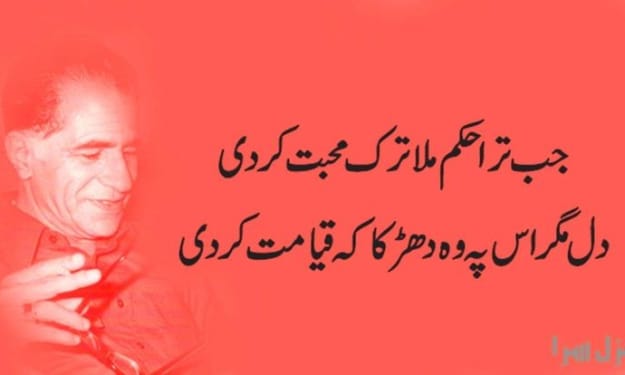
"The Life and Legacy of Ahmed Nadeem Qasmi: A Literary Giant of Urdu Language and a Dedicated Social Critic."
Once upon a time, in the early 20th century, in India, there was a young boy named Ahmed Nadeem Qasmi. He was born on November 20, 1916, in the small town of Anga, near Khushab, in what was then British India. Ahmed Nadeem Qasmi was the second of his parents' seven children. His father, Abdul Majeed Siddique, was a schoolteacher and a poet himself, while his mother, Majeeda Begum, was a homemaker. Growing up, Ahmed Nadeem Qasmi developed a deep love for literature, which was encouraged by his father's influence. At an early age, Ahmed Nadeem Qasmi started composing poetry, which he recited to his father and friends. His poetry was highly praised, which motivated him to continue writing. As he grew older, he began to write short stories, and his talent was recognized by the literary community. Ahmed Nadeem Qasmi moved to Lahore to pursue his education, where he enrolled at the Punjab University. In Lahore, he became involved in the literary scene and began contributing to literary magazines. His work was highly regarded, and he soon became a prominent figure in the literary circles of Lahore. In 1944, Ahmed Nadeem Qasmi started working as an editor at the literary magazine "Savera," which soon became one of the most popular literary magazines in Pakistan. He continued to write for the magazine and became its chief editor in 1953. During his tenure, "Savera" published some of the most notable works of Pakistani literature. Ahmed Nadeem Qasmi's literary works encompassed a variety of genres, including poetry, fiction, and literary criticism. His poetry collection "Shola-i-Gul" was considered a landmark in Urdu poetry, while his short stories, such as "Gadariya," "Safar Dar Safar," and "Chopaal," were highly acclaimed. Despite his success as a writer, Ahmed Nadeem Qasmi was a man of great humility, modesty, and simplicity. He remained approachable and kind, and his generosity towards budding writers was well-known. Many writers, including Ashfaq Ahmed, Faiz Ahmad Faiz, and Intizar Hussain, considered him their mentor and benefactor. Throughout his life, Ahmed Nadeem Qasmi remained dedicated to his craft and continued to write until his death on July 10, 2006, at the age of 89. His contributions to Pakistani literature and his legacy as one of the most eminent writers of the Urdu language are still celebrated today. Ahmed Nadeem Qasmi's life was an inspiration to many writers, and his dedication to literature and his humble attitude towards success made him a beloved figure in Pakistani literature. His legacy lives on through his works and the many writers who continue to be inspired by his life and teachings. Ahmed Nadeem Qasmi was not only a gifted writer but also a journalist. He wrote columns for various Urdu newspapers, including "Imroze" and "Jang". His work as a journalist was instrumental in bringing social and political issues to the forefront of public consciousness. He was vocal about his views on issues such as poverty, exploitation, and corruption. His columns were highly influential, and he was known for his unbiased reporting and critical analysis. Ahmed Nadeem Qasmi was a man of great integrity and courage. He spoke out against injustices and never compromised his principles. He was known to have refused a government award on one occasion because he believed it was not given to him on merit. Despite his success and fame, Ahmed Nadeem Qasmi remained grounded and dedicated to his work. He was always willing to help budding writers and encouraged them to pursue their dreams. His generosity and kindness towards others earned him the respect and admiration of many. Ahmed Nadeem Qasmi was also a family man. He was married to Jamila Nadeem, who was a writer and a translator herself. The couple had six children, and he was a devoted father who was deeply loved and respected by his family. In addition to his literary and journalistic work, Ahmed Nadeem Qasmi was actively involved in promoting Urdu language and literature. He collaborated with other literary figures to establish the Anjuman Taraqqi-e-Urdu, which aimed to promote Urdu literature and to provide a platform for writers to showcase their work. Ahmed Nadeem Qasmi's literary contributions were significant, and his works continue to inspire new generations of writers and poets. His writing was characterized by his lyrical style, clarity of thought, and his ability to capture the essence of everyday life in his stories. One of his most well-known stories, "The Crooked Line," is a poignant and thought-provoking tale about a schoolteacher who lives an unfulfilling life. The story is a commentary on the struggles of the average person and the importance of finding meaning in one's life. Ahmed Nadeem Qasmi received numerous awards and accolades in recognition of his literary contributions. He was awarded the Sitara-e-Imtiaz, the third-highest civilian award in Pakistan, in 1980. In 1995, he was awarded the prestigious Saadat Hasan Manto Award for his contributions to Urdu literature. Ahmed Nadeem Qasmi passed away in Lahore on July 10, 2006, leaving behind a rich legacy that continues to inspire people. His works remain relevant and timeless, and his contributions to Urdu literature and journalism will always be remembered. In conclusion, Ahmed Nadeem Qasmi was a multifaceted personality - a literary giant, journalist, and social critic - who dedicated his life to advancing Urdu literature and promoting social justice. His work touched the hearts of millions of readers, and his legacy as one of the greatest writers of the Urdu language continues to inspire people around the world.
By MUHAMMAD ANAS QURESHI3 years ago in Humans
Affirmations: Words with Power that Can Improve Your Life
Affirmations: Words with Power that Can Improve Your Life Words have immense power. They can shape our thoughts, influence our actions, and ultimately impact the course of our lives. Affirmations, in particular, are positive statements that can transform the way we think and feel about ourselves and the world around us. By incorporating affirmations into our daily lives, we can harness the power of words to cultivate a positive mindset, boost self-confidence, and create a foundation for personal growth and success. In this article, we will explore the concept of affirmations and how they can improve your life.
By Motivational Bucks3 years ago in Humans
Monkey pox
A introduction to Monkey pox: The viral illness monkeypox has received attention recently because it has the potential to spread to people and create epidemics. Monkeypox, while uncommon in comparison to other infectious illnesses, is zoonotic, meaning it may transfer from animals to people, and it resembles smallpox. This page explores the signs, treatments, and fundamental information about monkeypox, offering helpful knowledge to raise awareness and comprehension of this developing health problem.
By Harris Khan3 years ago in Humans