humor
"Humor is what binds humans together and makes difficult times just a little less painful; Sometimes you can't help but laugh. "
How I Simplified My Life and Found Real Peace
Not long ago, I was constantly overwhelmed. My to-do list never ended, my mind felt scattered, and every day felt like I was running but getting nowhere. I kept thinking, “Maybe if I just do more, I’ll finally feel better.” But the more I did, the emptier I felt. One quiet Sunday afternoon, I sat with a cup of tea and asked myself: What if I stopped trying to do it all? That question changed everything. 1. I Let Go of the Pressure to Be Perfect I used to chase productivity as if my worth depended on how much I could get done. But I realized that I was burning out, not blossoming. So I gave myself permission to rest. I stopped apologizing for slow days. I reminded myself that being human means ebb and flow — not hustle every second. It wasn’t easy, but it was necessary. 2. I Created a ‘No Chaos’ Zone at Home One of the best things I ever did: I cleared out one small corner in my house and made it peaceful. Soft lights, calming colors, a few books, a candle. This became my “reset space.” Whenever life feels too much, I sit there — no phone, no noise, just presence. That tiny space reminds me that calm is always accessible, no matter how loud the world gets. 3. I Stopped Saying ‘Yes’ When I Meant ‘No’ I used to agree to everything because I didn’t want to upset anyone. But all that yes-saying left me drained. Now I pause. I ask, “Do I really want to do this?” If not, I say no — kindly and firmly. It’s not rude. It’s respectful — to myself and others. 4. I Started Romanticizing the Little Things Morning sunlight. The sound of rain. A hot cup of chai. Folding laundry with music on. I began treating these everyday moments as mini-rituals. Suddenly, my day wasn’t just something to survive — it became something to enjoy. I didn’t need a vacation to feel happy. I just needed presence. 5. I Reconnected With Myself Through Journaling Every night, I write down one sentence: “Today, I felt…” That simple habit helped me see patterns in my mood, my habits, and my energy. I stopped judging myself and started understanding myself. Journaling gave me a safe space to be honest — not for social media, not for anyone else — just for me. 6. I Chose Quality Over Quantity — In Everything Fewer friends, deeper conversations. Fewer goals, more intention. Fewer distractions, more focus. This shift changed the way I experience life. I no longer feel like I’m missing out — I feel like I’m finally tuned in. 7. I Started Living Days I Don’t Want to Escape From I used to wait for weekends. Now I find joy in Mondays too. The secret? I stopped waiting for a “better” time to live. I made peace with the now. I added softness to my routine, grace to my goals, and space to my schedule. And suddenly, my life didn’t feel like a race anymore. It felt like a gentle walk.
By HerGlowJournal2 years ago in Humans
The Broken Vase
The vase had been in Emma’s family for generations. Hand-painted with delicate blue flowers, it was the one thing she had left of her grandmother. Every time she looked at it, she could almost hear the old woman’s laughter, smell the lavender-scented handkerchiefs she always carried.
By yousaf shah2 years ago in Humans
A Dream of Dignity and Healing
Introduction: A Dream Bigger Than Self It begins not with wealth, not with power, but with a simple, profound thought: “No one should die just because they are poor.” This dream did not come overnight, nor did it appear in luxury. It was born in the heart of rural Pakistan, in villages where hope is a rare guest and hospitals are often miles away — both in distance and affordability. I am not a politician. I am not a billionaire. I am just a man with a burning wish — a sincere prayer that one day, with Allah's help, I will build something that will change lives forever. A VIP hospital and a world-class orphan academy — right in my own village. --- The Painful Reality: When Healthcare Becomes a Privilege In our areas, poverty is not just financial — it’s emotional, social, and generational. People do not have the strength, the access, or the money to fight their illnesses. They die silently, not because their disease was incurable, but because there was no one to cure them. No proper facilities. No specialist doctors. No mental health support. Imagine someone’s father suffering from a heart condition, but there’s no cardiologist within a hundred kilometers. Imagine a child with a broken bone, left untreated for weeks. Or a woman with kidney failure, silently counting her days because dialysis is too expensive. These are not stories from history — this is happening now. Today. In our villages. And I cannot stay silent anymore. --- A Vision of Hope: The Hospital of the People I dream of building a hospital — not just any hospital, but a world-class, VIP-level medical facility. A place where human dignity is prioritized above wealth. A place where no one asks, “How much money do you have?” before saving your life. Here is what this hospital will look like: Cardiology Department: Fully equipped with modern technology, dedicated to treating heart-related diseases with top-level cardiologists. Orthopedics Department: For bone injuries, fractures, and surgeries — a place where even the elderly can walk again with pride. Surgical Department: From general to complex surgeries, handled by expert surgeons from Pakistan and abroad. Nephrology Department: With dialysis units and transplant support for those suffering from kidney issues. Psychiatry & Mental Health Department: Because the mind hurts too, and it deserves care just like the body. --- Free for the Village, Half for the Neighbor The core philosophy is simple: Healthcare is a right, not a luxury. Every person from my village will receive 100% free treatment — no fees, no bills, no burden. People from neighboring villages will receive half-free treatment — 50% of their medical costs covered. But if someone from outside is truly poor, we will cover their entire treatment as well — because compassion has no boundaries. Medicine will be given free of cost to the villagers and at half price to nearby villages. There will be no compromise on quality, dignity, or care. This hospital will not be just a building. It will be a sanctuary. --- Global Doctors, Local Healing This project will not be limited to the local system. I will reach out to top doctors from all over Pakistan and the world. I will offer them not just salary, but the opportunity to change lives. To bring their skills where they are needed the most. These doctors will not just heal the body — they will inspire the next generation of medical professionals in the area. --- VIP Care for the Forgotten Children: The Orphan Academy But healing bodies is not enough. My heart aches for another group — the orphans. The children with no father to hold their hand, no mother to wipe their tears. I will build for them a VIP Academy — the kind of place the rich send their children to, but this one will be for the poor, for the abandoned, for the lost. Beautiful, clean, and safe residential facilities. Top-tier teachers from around the world. Spiritual guidance, moral upbringing, and academic excellence. Female caretakers and mentors to raise them with love and dignity. These children will not grow up with an inferiority complex. They will walk with their heads held high — confident, capable, and connected to both dunya and akhirah. --- A Home for Their Future and Afterlife This orphanage will not be just an institution; it will be a home — a place where these children feel wanted, valued, and protected. It will prepare them not only for exams and degrees but for life. For leadership. For Jannah. I believe orphans are not a burden — they are a sacred trust given to us by Allah. --- Faith as the Foundation Some may say: “It’s a big dream.” Yes — it is. Some may ask: “Do you have the resources?” Not yet. But I have something greater — Yaqeen (faith). The kind of faith that moves mountains. The kind of belief that makes the impossible possible. I believe that when your intention is pure, and your mission is sincere, Allah opens doors you never even imagined existed. He is Al-Fattah — The Opener. He is Al-Razzaq — The Sustainer. I rely not on my strength, but on His mercy. --- Challenges Ahead, But Not Alone I know the path won’t be easy. There will be paperwork, funding issues, resistance, maybe even mockery. But I am not afraid. Why? Because I carry the pain of my people in my heart. And that pain fuels a fire that cannot be put out by bureaucracy or doubt. And I know — I will not be alone. There are countless others like me. People who care. Who want to give. Who want to help. I will knock on every door, call every hand, and reach every heart. And I will build a team, a movement — not just for me, but for every child, every patient, every widow, and every tearful mother who ever thought she was forgotten. --- Conclusion: A Dream Worth Dying For If I die before this dream is fulfilled, let someone else carry the torch. Let these words be written on my grave: “Here lies a man who dreamed not for himself, but for those who had no one to dream for them.” But I believe — deeply, powerfully — that I will see this happen in my lifetime. I will walk through the hospital halls. I will hear the laughter of orphans running through the academy corridors. I will see tears in the eyes of mothers — not from sorrow, but from gratitude. And I will raise my hands to the sky and say: "Ya Allah, You made the impossible possible." --- If you are reading this and feel even a spark in your heart — then maybe, just maybe, you’re meant to be a part of this dream too. Let’s build it. Together. For them. Thank you so much for reading my dreams
By Umair Ali Shah 2 years ago in Humans
Beyond the Hunger
Rahul, a 13-year-old boy, lived in a small, forgotten village between mountains and fields. His family was poor, struggling to get by each day. His mother, a generous individual, did her best to run the household while his father worked in the fields. During monsoons, they lived in a tiny, run-down shack with cracked walls and a thatched roof that let rain in. They were a family that was bound by love despite their difficulties, but love alone could not feed them. Every morning, Rahul experienced a gnawing emptyness in his stomach. His day would not begin with a warm meal or breakfast. He would sometimes go days without eating, and other times, if there was any, he would only eat rice and vegetables. His parents did everything they could to break the cycle of poverty, but they never voiced their displeasure. His circumstances were distinct from those of the other village children. Rahul's world was consumed by the harsh reality of survival while they attended school, played with their friends, and dreamed of becoming doctors, engineers, or teachers. He had no intention of attending school. He couldn't afford the uniform, the books, or the time to go. Instead, he spent his days helping his mother with chores and trying to find odd jobs to earn a little money to contribute to the family.
By Efath Islam2 years ago in Humans
5 Takeaways From New Research About A.D.H.D.
The term "attention deficit hyperactivity disorder" (A.D.H.D.) has long been misunderstood and frequently oversimplified to mean only that it affects children who are hyperactive and unable to focus. However, recent research is shedding new light on the complexity of A.D.H.D., revealing that it’s a far more nuanced neurodevelopmental disorder that can affect people of all ages in varied and sometimes subtle ways.
By Nahian ebne2 years ago in Humans
How to Survive a Quarter-Life, Midlife, and Existential Crisis—All Before Lunch
There I was—10:42 AM, crying into a lukewarm cup of coffee, Googling “how to run away from life without leaving your flat.” By noon, I’d questioned my career, my purpose, my haircut, and whether I should’ve been a forest ranger instead of… whatever this is. If you've ever had a breakdown before breakfast, congratulations—you might be doing life right.
By Angela David2 years ago in Humans
Khopra Ridge Trek: A Symphony of Blisters, Bad Decisions, and Borrowed Hope
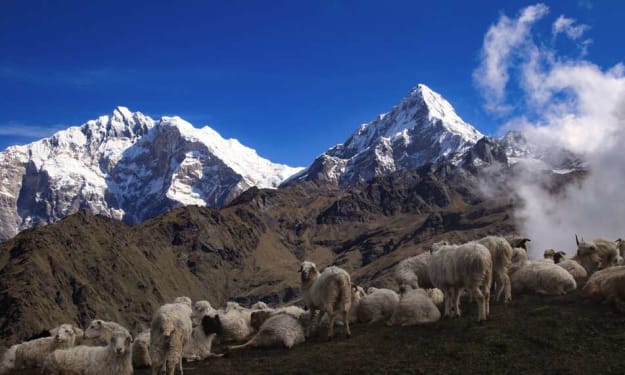
The Himalayas have a way of humbling you. Not with grandeur, but by handing you blisters the size of grapes and then laughing while you limp. When my friend Dave—a man whose life choices include tattooing his WiFi password on his arm—pitched Khopra Ridge as a “quiet, soulful escape,” I should’ve known better. But there we were: Dave, Sarah, Emma, and me, crammed into a jeep bouncing toward Nepal’s Annapurna region. Our gear? A drone Dave swore would “capture the soul of the mountains,” Sarah’s selfie stick (blessedly forgotten in Pokhara), and Emma’s apocalyptic stash of snacks. Our souls? Questionable.
By michal lenden2 years ago in Humans
IShowSpeed's China Tour
Darren Watkins Jr., better known online as IShowSpeed, set off on one of his most daring journeys to date in March 2025: a multi-week live-streaming tour throughout China. With streams that received millions of views, Speed—who is well-known for his exuberant antics, sincere nature, and international fan base—sought to establish a true connection with Chinese fans. His plans to stay in China for "maybe like a week or two" have not been formally confirmed, but his livestreams indicate that he spent at least 7 to 10 days traveling through different Chinese cities, taking in the chaos and culture along the way.
By Mushfiqur Rahman2 years ago in Humans
Why do people have sex?
Sex has become a more discussed topic around the world recently than at any other time. Sex is also called a basic human need. If a person's sex or sex is interrupted, it affects the person's creativity, fluency and even health. Sexual intercourse brings a feeling of happiness in married life The relationship is so sweet that the husband and wife can not leave each other In a word, healthy normal physical relations are the key to the happiness of married life People usually engage in sex for three reasons: to have children, to satisfy sexual appetite, and to maintain good relationships. But there are many other reasons behind sex. For example, overcoming depression, exercise, curiosity, or attraction and love for a partner, increasing social status, selfishness, etc. Another special reason is ancestral sexual culture. Which we have been carrying in our brains since ancient times. Physical needs are the biggest reason. Because secondary sexual characteristics develop in the body during adolescence. At this time, teenagers want to know many things. At this time, they are not only encouraged by the changes in their bodies, but also curious about the changes that are happening in the opposite sex. Which makes them interested in their future sex life and it continues to grow day by day.
By Md. Rasel Ahmed2 years ago in Humans
Embracing Human Illnesses and Breaking Free from Perfectionism Part 2
Embracing Human Illnesses and Breaking Free from Perfectionism Introduction Many of us are instructed to strive for perfection from an early age. We’re praised for getting the highest grades, winning awards, or looking flawless. In a world that celebrates idealism and perfection, anything less can feel like failure. However, the cost of striving for perfection is frequently anxiety, self-doubt, exhaustion, and a separation from our true selves. Reclaiming your humanity is at the heart of this article, not just about the dangers of perfectionism. It’s about freeing yourself from the heavy burden of always needing to be perfect and stepping into the beautiful, messy, and real experience of being human. What perfectionism actually is, how it affects your life, and, most importantly, how to break free and accept your imperfection are all covered in this article. We'll walk through a comprehensive journey—from defining perfectionism and exploring its roots, to applying practical strategies and learning how to heal.
By Afia Sikder2 years ago in Humans
Breaking Free from Perfectionism: Embracing the Imperfections of Being Human
Breaking Free from Perfectionism: Embracing the Imperfections of Being Human Introduction From the earliest days of childhood, many of us are taught to strive for perfection. We get high marks, awards, and praise for our flawless appearance. In a world that celebrates idealism and perfection, anything less can feel like failure. But this pursuit of flawlessness often comes at a cost: anxiety, self-doubt, exhaustion, and a disconnect from our authentic selves.
By Afia Sikder2 years ago in Humans