humor
"Humor is what binds humans together and makes difficult times just a little less painful; Sometimes you can't help but laugh. "
Frozen at the Edge of the Sky
What began as a routine paragliding trip for Chinese pilot Peng Yujiang turned into a chilling brush with death — and a record-breaking ascent that stunned even the most seasoned adventurers. On a clear morning, Peng launched from the scenic slopes of Mount Qilian, nestled in the remote reaches of China’s Qinghai Province. An experienced flyer, he expected a smooth ride, a peaceful glide over the ridgelines, and some breathtaking aerial footage. But within minutes, nature had other plans. Caught in a sudden and violent updraft, Peng's paraglider was yanked skyward with terrifying speed. His planned flight altitude of around 3,000 meters was quickly left behind as the air current thrust him higher and higher — past the cruising altitudes of commercial planes, past the elevation of Everest Base Camp. At a staggering 8,598 meters, Peng found himself in a realm few have ever reached without oxygen support. As he soared into the upper reaches of the atmosphere, Peng's onboard camera continued to record. The footage is both awe-inspiring and horrifying: a lone pilot suspended against a vast blue sky, battered by hurricane-force winds and surrounded by nothing but clouds and silence. But the beauty was deceptive. Up there, the temperature plummeted to -40°C, and Peng's body began to shut down. His fingers and face, exposed to the freezing wind, soon went numb. Frostbite set in rapidly. Breathing became difficult. His vision blurred, and his sense of time and direction began to falter. “I couldn’t feel my face or my hands,” Peng later recounted. “My gloves were thin — not meant for that altitude. I thought, ‘This is it. This is where I’ll die.’” Yet, in that frozen silence thousands of meters above the earth, Peng’s training and instincts took over. Despite the pain and panic, he managed to regain control of his wing. Navigating through turbulence and extreme cold, he guided his paraglider on a descent back toward the earth, eventually landing roughly but safely several kilometers from his launch point. The feat shocked the aviation and adventure sports community. Unwittingly, Peng had set a new altitude record for paragliding — something many only attempt with oxygen tanks and backup crews. But while the achievement was awe-inspiring, it didn’t come without consequences. Local authorities, after reviewing the flight data and investigating weather patterns, decided to suspend Peng’s flying license for six months. The reason: failure to properly evaluate and anticipate dangerous weather conditions. It was a painful but necessary warning — even for seasoned professionals, nature’s fury cannot be underestimated. The aftermath for Peng was physically and emotionally devastating. Severe frostbite left parts of his face and hands permanently damaged. Months of recovery followed, including skin grafts and physical therapy. He suffered nightmares, reliving the moment he lost feeling in his limbs, and the horrifying realization that he might never come down alive. “I survived by luck,” he admitted. “But I also learned. The sky can give you the greatest freedom — and the most brutal lesson.” Experts in the field echoed this sentiment. High-altitude paragliding is notoriously unpredictable, especially when thermals and wind currents shift unexpectedly. What happened to Peng was rare — but not impossible. “He broke a record, yes,” said aviation meteorologist Lin Hao, “but it nearly cost him his life. The atmosphere becomes a different world above 8,000 meters. You are not just flying — you are surviving.” Peng’s story has since gone viral on social media, with millions watching the heart-stopping footage he captured from his glider. While many celebrate his bravery and resilience, others caution against glorifying a flight that nearly turned fatal. “There’s a thin line between courage and recklessness,” one commenter wrote. “Peng walked that line, and the wind nearly pushed him off.” Yet for all the controversy, one truth remains: Peng Yujiang’s unintentional journey into the death zone was more than just a record-setting adventure. It became a sobering reminder of how easily the world above can strip us down to our most fragile selves. In the sky, above the mountains and beyond the clouds, there are no guarantees. There is only the wind, the cold, and the silence. And sometimes, a man in a glider — battling both nature and his own mortality — finds himself flying too close to the edge. And if he survives, he returns with a story that changes how we see both the sky and ourselves.
By DigitalAddiabout a year ago in Humans
The Power of Human Habits Shaping Our Lives One Day at a Time
Human habits are the silent drivers behind most of our behaviors. Whether we’re aware of it or not, much of what we do every day is shaped not by active decision-making, but by deeply ingrained routines. From the moment we wake up to the way we prepare our meals, commute to work, interact with others, or unwind at night, habits govern a significant portion of our lives.
By Numan Afridiabout a year ago in Humans
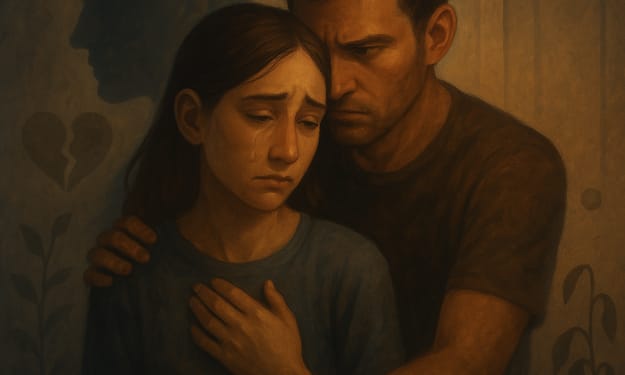
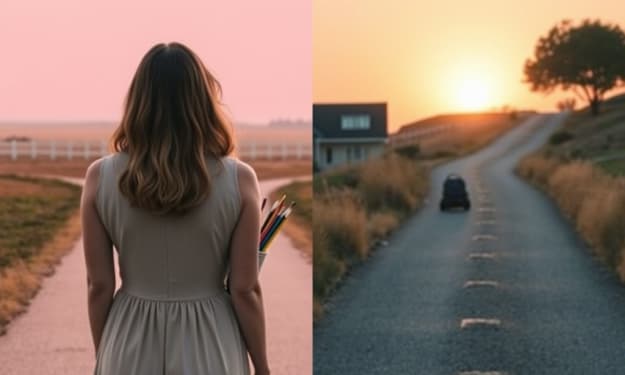
The Checklist Man: Why I Walked Away From Everything I Thought I Wanted
I met Daniel at a mutual friend’s engagement party. He was tall, impeccably dressed, and carried himself with a quiet confidence that made people lean in when he spoke. He wasn’t loud or flashy. He didn’t need to be. He had the kind of presence that filled a room without trying. When he smiled at me across the candlelit table, my stomach fluttered. When he walked over with two glasses of wine and said, “I figured you were a Pinot Noir type,” I nearly convinced myself I was. He checked all the boxes. Handsome. Ambitious. A product manager at a reputable tech firm, with plans to open a boutique consultancy on the side. He drove a clean white Tesla, read nonfiction for fun, and called his mother every Sunday. He knew how to fold a fitted sheet, how to cook a medium-rare steak, and how to listen — really listen — when I talked. So when we started dating, my friends were thrilled. “Finally,” they said. “You deserve someone like this.” And I believed them. I told myself, This is it. This is what love looks like when you grow up. We settled into a rhythm that looked perfect from the outside. Weekend brunches, morning jogs, matching luggage for our trip to Tulum. He was generous, patient, and made space for me in every sense of the word. When he kissed me on the forehead before work, I sometimes thought, I could marry this man. But something inside me stayed quiet. And it wasn’t a peaceful quiet — it was the kind of silence that presses against your ribs at night when you’re alone with your thoughts. A gentle suffocation. At first, I ignored it. I blamed my restlessness on stress. On past baggage. On the absurd idea that maybe I didn’t deserve someone this stable. But over time, that silence grew teeth. It was in the way he talked about five-year plans with a certainty that felt like a cage. In the way he loved routines — the same Tuesday sushi, the same Saturday yoga — while I craved spontaneity like air. It was in his perfectly pressed shirts and meticulously organized bookshelf, which made my scribbled journals and messy art supplies feel like an intrusion. He never made me feel small — not intentionally. But around him, I began shrinking. One night, we were lying in bed, our legs tangled, his breath soft against my neck. He whispered, “I want to grow old with you.” And my chest tightened. Not because I didn’t love him. I did. In a way. But because the life he wanted — the house in the suburbs, the dinner parties, the steady progression of promotions and family holidays — felt like someone else’s dream draped over my shoulders. I didn’t want to grow old like that. I wanted to chase sunsets in countries I couldn't pronounce. I wanted conversations that meandered at 2 a.m., and cities that smelled like possibility. I wanted to feel uncertain, alive, broken, real. The next morning, I sat across from him at the breakfast table. His hair was tousled. He wore that soft navy T-shirt I always borrowed. He looked like home. And I told him I was leaving. He didn’t raise his voice. Didn’t throw his coffee mug. He just stared, like I’d spoken a language he’d never heard. “But why?” he asked. “What did I do wrong?” That was the hardest part. He hadn’t done anything wrong. He was, in many ways, ideal. The man your mother hopes you'll bring home. The kind of love people write wedding toasts about. But he wasn’t mine. And I wasn’t me when I was with him. Some decisions don’t come from logic. They come from the gut. From the ache you feel when you're not living in alignment with your truth. From the quiet knowledge that staying would mean slow erosion, and leaving would mean pain — but also possibility. So I packed my things. I cried. I second-guessed myself more times than I can count. But I left anyway. Because he was perfect on paper. But I’m not made of paper.
By Azmat Roman ✨about a year ago in Humans
“Stones of Tradition
The sun rose over Cedar Hollow like any other spring morning, bathing the village green in gentle light. People emerged from their clapboard houses with polite smiles and quiet anticipation. Today was the Choosing—the day they’d practiced for generations.
By Jack sparrow about a year ago in Humans