humor
"Humor is what binds humans together and makes difficult times just a little less painful; Sometimes you can't help but laugh. "
The False Dilemma
The Mirage of Choice Every day, whether in politics, philosophy, or faith, people are pressured into false choices. You either believe this, or you must believe that. You either accept this statement entirely, or you reject truth altogether. These are not honest discussions. They are traps.
By Peter Thwing - Host of the FST Podcast12 months ago in Humans
Planting Truth In Hostile Soil
The Calling To Plant There has never been an age where truth was loved by the crowd. From the prophets of Israel to the apostles of Christ, those who spoke truth have always done so against the wind. Yet each generation faces its own form of resistance. Ours is not built on swords or prisons, but on sarcasm and pride. It mocks what it cannot refute and ridicules what it cannot understand.
By Peter Thwing - Host of the FST Podcast12 months ago in Humans
AI And Apologetics
The Tools of the Age Every generation faces the same question in a different form: how should faith engage with new tools of power? In one era it was the printing press. In another, the radio or television. Today, it is artificial intelligence.
By Peter Thwing - Host of the FST Podcast12 months ago in Humans
The Mirror Of Mockery
The Nature Of The Mirror Mockery has become the native language of the modern world. It fills screens, floods comment sections, and echoes through every arena where ideas are exchanged. What once required substance now survives through sarcasm. To ridicule is easier than to reason.
By Peter Thwing - Host of the FST Podcast12 months ago in Humans
The Logic of Faith: Why Reason Without God Collapses Under Its Own Weight
The Myth Of Neutral Logic Modern thinkers often claim that logic is neutral, belonging to no belief system and standing above faith. They insist that religion is emotional, while reason is empirical. But logic is not a freestanding structure. It rests on foundations, and those foundations must exist somewhere.
By Peter Thwing - Host of the FST Podcast12 months ago in Humans
The U.S. Cost-of-Living Crisis: A Political Report for Everyday Americans
## The U.S. Cost-of-Living Crisis: A Political Report for Everyday Americans ### What’s Happening For many Americans today, politics isn’t just about party slogans or elections—it's about **whether they can afford to live**. A recent poll found that roughly 40 percent of adults say that cost-of-living is the single most important issue in their decision-making about who to vote for. This concern outweighs other issues like democracy, immigration, and crime. This shows how deeply economic strains are affecting daily life across the country. Affordability is emerging as a key battleground. High costs for health care, food, housing, and energy dominate people’s worries. Among these, health care stands out: about 31 percent of respondents said it should be the top priority for Congress. People worry not only about big numbers in the economy, but about whether they personally have access to affordable care, stable housing and predictable bills. ### Why It Matters to the Average American When everyday costs go up, it hits hard in neighborhoods, kitchens and pay-checks. Families see rent rising, grocery bills mounting, medical bills creeping into their budgets. One survey found that a large majority of U.S. adults say strengthening the economy should be the top priority for the President and Congress. What’s striking is how this concern cuts across politics: both major parties know that voters want relief. Democrats are emphasising policies such as raising the minimum wage, expanding health care subsidies and broader social support. Republicans, meanwhile, highlight economic growth, tax relief and limiting government costs. Yet practical worries remain: having enough money for next month often matters more than which party is in control. ### The Key Questions Americans Are Asking • Why are basic essentials becoming so expensive for so many? • What can government actually do to reduce the cost of living? • Why is health care still so costly if we’re a wealthy nation? • How will housing and energy costs evolve, especially for renters and young families? • Which political leaders or platforms are best positioned to address this crisis? • Will improving economic conditions translate into improved everyday lives for average citizens? • What is the role of inflation, global supply-chains and federal policy in driving the cost issues? ### What We Know: The Answers in Brief Higher costs are the result of many entangled factors: inflation from recent years, supply-chain disruptions, increased global demand for energy and food, and wage growth that hasn’t kept pace with prices. On housing, shortages in many markets have pushed rents and home-prices up. Health care remains costly because of expensive treatments, administrative overhead and gaps in insurance coverage—many Americans say their premium, deductibles or out-of-pocket expenses rose this year. Government action can help, but solutions are complex. Subsidies, regulation of health-care costs, affordable housing incentives and energy-efficiency measures are all on the table. But each has trade-offs: budgets, political feasibility and unintended consequences. Politically, both parties are under pressure: Democrats face the challenge of delivering tangible relief before an upcoming midterm cycle, and Republicans must show that their economic message translates into everyday impact. ### Broader Political and Social Implications This cost-of-living crisis doesn’t just affect budgets—it has deeper implications for trust in institutions and for political engagement. When people feel squeezed and ignored, frustration builds. Recent surveys show that a large share of Americans say the country is on the wrong track and express low confidence in government institutions and officials. When politics fails to address what people feel every day—rising costs, financial insecurity—it risks further alienation of voters. Moreover, the pressure on affordability makes other issues more urgent. For example, if a family is forced to choose between medication and rent, questions about health care become not just theoretical but immediate. If energy bills spike, climate and energy policies become part of the cost conversation. When the economy and cost of living dominate, other issues may take a back-seat—but neglecting them can lead to longer-term problems. ### What Happens Next and Why It Matters for You As voters look ahead to elections, cost-of-living is likely to be a decisive factor. Candidates and parties will be judged less on catchy slogans and more on whether they can show they understand and can address people’s daily financial pressures. Local and federal levels of government will both face pressure to deliver relief measures. For you as a citizen, this means staying alert: watching policy details, seeing how proposals impact your household, and holding leaders accountable for more than just big promises. At the same time, individual households can’t entirely rely on politics—budgeting, financial planning and awareness of market changes will continue to matter. But politics can either make things worse (if ignored) or make things better (if acted upon).
By America today 12 months ago in Humans
Who Hung the Stars?. Top Story - October 2025.
They say, “the whole is greater than the sum of its parts” That statement always stumped me, confused me, and made me question. Maybe because math wasn't my forte? So, I looked at it through the lens of language which translated to "amalgamation." The definitions and examples I found of that term turned out to be so sterile and business-like, even from a cultural standpoint, though. I wasn't satisfied.
By Shirley Belk12 months ago in Humans
GUYS DON'T HAVE TO GO THROUGH THAT
GUYS DON’T HAVE TO GO THROUGH THAT I know why you’re afraid of us. Have you ever noticed that many men, especially those in any sort of power, are intimidated by women? We’re too weak, too emotional, too feminine! How many women have ever really wondered why? I think I may have the answer.
By Margaret Brennan12 months ago in Humans
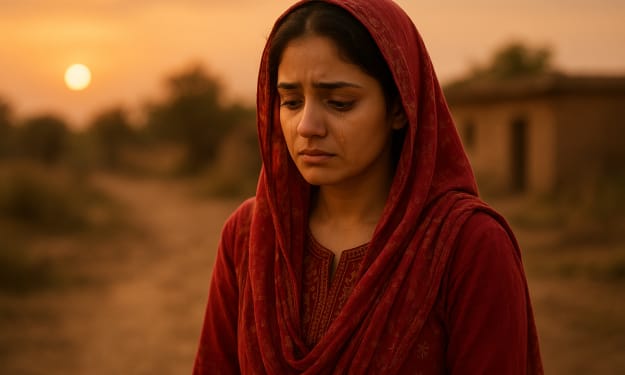
Mina Naz: The Price of Love and Honor
hey say love is the most powerful emotion— It can build empires or destroy families. Mina Naz was once the heart of her home, a girl adored by everyone. But when her love crossed the boundaries of family honor, her world turned upside down.
By shahkar jalal12 months ago in Humans
My 9th Grade Experience
So if you haven’t started high school yet, and your worried about how it’ll be, or if you’ll be lonely or get bullied, your not alone, cause a couple of years ago I was in the exact same place you were, and after I started 9th grade, I quickly hated it, but we’ll get to that later
By Sahil Rawat12 months ago in Humans
Magic and Tagging
Last week I was at the mall trying without success to find a new pair of running shoes I liked for under $100. I got hungry and hit the food court to get some food. As usual, me being me, some of it landed on my necktie so I went to the loo to rinse it off and for some reason noticed the graffiti on a toilet seat. People tag buildings, railways, and billboards with graffiti to mark their territory, express themselves, and boast about achievements, but a toilet? What was this person thinking?
By Samuel Wright12 months ago in Humans
The Death Of Dialogue
The End Of Listening Once upon a time, disagreement was not a threat. It was a bridge. People could sit across from one another, share convictions, challenge ideas, and still part as neighbors. The goal was not domination but discovery. Somewhere along the way, that changed.
By Peter Thwing - Host of the FST Podcast12 months ago in Humans