humor
"Humor is what binds humans together and makes difficult times just a little less painful; Sometimes you can't help but laugh. "
Roughly 75% of your brain is water. AI-Generated.
The Brain's Hidden Hydration: Understanding Why Roughly 75% of Your Brain is Water Imagine your brain as a busy computer. It hums along with circuits firing non-stop. But without the right coolant, it overheats and crashes. That coolant? It's water. Your brain relies on it more than you think.
By Story silver book 11 months ago in Humans
The Map of My Voice On Vocal.Media
The Map of My Voice On Vocal.Media I never expected to find my voice in the places I did. Not on stages, not in crowded rooms, not through conversations where people talk over each other. My voice grew in quieter corners, in the places where I didn’t need to perform, only to feel. If I were to draw a map of how I found it, it wouldn’t look like rivers or roads. It would look like moments that tested me, broke me, and somehow rebuilt me.
By ♿ V+ Marie381Uk 11 months ago in Humans
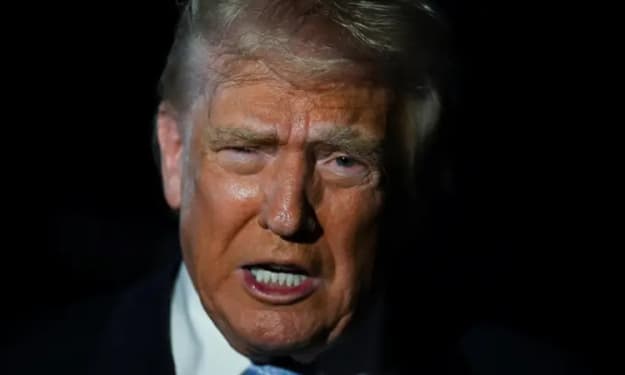
Trump calls on House Republicans to vote to release Epstein files
In a dramatic turn that reignited one of America’s darkest and most controversial chapters, former President Donald Trump publicly called on House Republicans to vote in favor of releasing the long-sealed Jeffrey Epstein files. The demand—made through a late-night social media post and later repeated at a rally—sent shockwaves across Washington, stirring a storm of political debate, renewed public curiosity, and quiet anxiety among those whose names may appear in the documents. The Epstein case, which has haunted the American public for years, has always carried an air of mystery. A wealthy financier with connections to presidents, celebrities, and global elites, Epstein was arrested in 2019 on federal sex-trafficking charges. His death in a Manhattan jail cell, ruled a suicide, only deepened suspicion and fueled conspiracy theories. For many, the truth still feels buried, trapped behind redactions, sealed testimonies, and pages of classified case material. Trump’s latest call added an explosive new chapter to that ongoing saga. A Push That Caught Washington Off Guard According to political insiders, Trump’s statement did not come after negotiations or coordinated planning. Instead, it arrived abruptly—catching some House Republicans off guard and energizing others who have long demanded more transparency surrounding Epstein’s network. “We should release the Epstein files,” Trump said, in a post that quickly went viral. “Let the American people see the full truth. Vote on it. Make it public.” Almost instantly, lawmakers were thrust into the spotlight. Some privately admitted they had been waiting for someone with Trump’s influence to force the issue into national conversation. Others feared the political and social fallout that could follow. The documents reportedly contain names—some already rumored, some never revealed—of individuals who flew on Epstein’s plane, visited his private island, or maintained contact with him. Releasing those files could expose powerful figures across industries, not limited to a single political party. And that, analysts say, is exactly what makes Trump’s demand both potent and risky. A Public Hungry for Answers For millions of Americans, the Epstein story symbolizes unanswered questions, institutional failures, and a justice system too often seen as protecting the powerful. Each whisper or leaked detail only increases the public appetite for clarity. Outside federal courthouses and online forums alike, citizens expressed frustration that the truth has taken this long to come to light. “I don’t care who’s on the list,” one woman at Trump’s rally said. “Democrat, Republican, actor, billionaire—anyone involved should be held accountable.” Her voice echoed a broader national sentiment: transparency over secrecy, justice over protection. The Epstein case is no longer just a legal matter; it has become a cultural wound. Every new revelation, every unredacted name, every legal motion reminds the nation of the fragility of institutional trust. Behind Closed Doors in Congress As Trump amplified the issue, House Republicans met privately to discuss their options. Sources familiar with the conversations said the mood was tense. Some members urged caution, warning that releasing names without full context could lead to misinformation, misidentification, or legal complications. Others insisted that withholding the files would erode public confidence even further. The tension revealed a deeper divide: should Congress protect reputations until guilt is proven, or should it open the archives and let the public decide what the truth means? One senior GOP aide described the atmosphere starkly: “If they vote to release the files, the fallout will be massive. If they vote not to, the backlash will be massive. There’s no safe path.” Still, many recognized the political reality—once Trump had made the demand publicly, ignoring it would come at a cost. Why Trump Spoke Now Political strategists have been speculating about Trump’s motivation. Some say it’s part of his broader transparency push, especially during heated political seasons. Others argue it could put pressure on opponents whose names might appear in the files. Regardless of the motive, the timing has undeniably reshaped the national conversation. By calling for the release, Trump placed both parties in an uncomfortable position. Democrats fear the documents could implicate influential donors or public figures. Republicans worry the fallout could affect their own ranks. Every camp faces potential damage; no one is fully insulated. That bipartisan discomfort may be exactly why the public has renewed hope for disclosure. When everyone has something to lose, transparency suddenly becomes more possible. What Happens Next If the House votes to release the files, the Justice Department and courts would need to coordinate how to handle redactions, privacy concerns, and ongoing investigations. The process could take weeks—or months. If the House rejects the release, pressure from the public is almost guaranteed to escalate. For now, the nation watches and waits. Parents who worry about safety. Survivors who demand justice. Citizens who have lost faith in the institutions sworn to protect them. Millions of people, bound by a single hope—that this time, finally, the truth will not be buried. A Story Still Being Written The Epstein case has always felt like a story with missing pages. Names whispered but never confirmed. Crimes hinted at but never fully exposed. A web of power and influence that seemed to stretch far beyond one man. Trump’s call to release the files may become the moment that forces the final curtain to rise.
By DigitalAddi11 months ago in Humans
I Built an Accountability Group for 30 Days — And It Skyrocketed My Habits
It started with a single tweet on a restless November night in 2025. The clock read 1:14 a.m., and I was staring at my laptop screen, surrounded by the ghosts of unfinished Vocal drafts and crumpled habit trackers. My 30-day experiments—quitting my phone, rising at 5 a.m., ditching sugar, devouring books—had sparked something inside me, sure. But alone in my apartment, the wins felt fragile, like sparks without tinder. I'd read the headlines buzzing everywhere: self-improvement in 2025 wasn't a solo sprint anymore; it was a relay, fueled by accountability pods and online tribes where people locked arms against their excuses. Communities weren't just trendy—they were lifelines, turning "I should" into "We will."
By Aman Saxena11 months ago in Humans
When Is the Best Time to Try Raw Tropical Fruits in Punta Cana. AI-Generated.
The first bite of fresh tropical fruit in Punta Cana feels like a vacation within your vacation. The sweetness hits, the juices run down your hand, and suddenly you know you are somewhere special.
By Amanda Glen12 months ago in Humans