family
Family unites us; but it's also a challenge. All about fighting to stay together, and loving every moment of it.
The Letter That Arrived 20 Years Late
By Kashif Safi --- The morning began like any other. Margaret sat by her window, a cup of tea in hand, watching the soft drizzle fall over her small garden. At seventy-one, her days had grown quiet, filled with slow walks, old photographs, and the soft hum of the radio that never changed stations. The postman arrived right on time, his boots muddy from the rain. He gave her the usual smile and handed her a small stack of envelopes. Electricity bills, a grocery leaflet, and—something else. It was an old, yellowed envelope, edges worn, her name written in neat handwriting she hadn’t seen in two decades. Mr. Thomas Weaver. Her hands trembled. Thomas had been her husband—her first and only love. He had died twenty years ago in a car accident, one month before their fortieth anniversary. She had spent years wishing for one more word, one more letter. And now, here it was. Margaret sat down slowly, heart thudding in her chest. She ran her fingers over the faded ink as if touching his memory through the paper. The stamp was dated May 2005. Somehow, this letter had been lost all those years. She took a deep breath and opened it. --- My dearest Maggie, If you’re reading this, it means life gave me the courage to send it. I don’t know if I’ll ever be brave enough to say these things out loud. You once told me that love is made of small moments, not grand gestures. I didn’t understand that until now. It’s in the way you leave the porch light on when I’m late. It’s in the way you hum when you cook. It’s in the silence we share after an argument. I’ve kept a secret, Maggie. The doctors say I should rest more, but they don’t know how stubborn I am. If anything happens to me, I want you to remember one thing: you gave me a full life. You made every ordinary day feel like a miracle. I’m writing this letter because I want you to promise me something. Don’t stop living after me. Keep planting those roses you love. Keep smiling at strangers. And if someday, you meet someone kind—don’t be afraid to let them love you too. You deserve more life than I could give. Always yours, Thomas --- By the time she reached the end, tears blurred the ink. For a long while, she just sat there, holding the letter against her chest, as if his heartbeat might still echo through the paper. The rain outside had stopped, and sunlight was beginning to peek through the clouds. She looked out at the garden—the roses had bloomed early this year. She smiled softly. Thomas had always said the roses listened to her. That night, Margaret placed the letter on her bedside table. For the first time in years, she didn’t feel alone. It was as if the silence in the house had changed—no longer heavy, just peaceful. Days passed, and something inside her began to shift. She started going on morning walks again, greeting neighbors, even baking cookies for the children next door. One afternoon, she met a man at the park—Mr. Harris, a retired teacher with kind eyes and a gentle laugh. They talked about books, about growing old, about how time never really steals love—it just teaches you how to hold it differently. Margaret never told him about the letter. But she knew, somehow, Thomas would have smiled. He would’ve wanted her to keep walking forward, carrying his love quietly in her heart. --- Months later, she visited the post office to thank the new clerk who had found the lost mail. He smiled and said, “It must’ve been stuck in an old sorting machine. Some letters just take a little longer to find their way home.” Margaret laughed softly. “Yes,” she said. “Some do.” That night, she placed Thomas’s letter inside her journal, under a note she wrote herself: > “Love never ends. It just changes its handwriting.” And for the first time in twenty years, she slept peacefully— not because she missed him less, but because she finally understood that he had never really left.
By Muhammad Kashif 12 months ago in Humans
“The Umbrella in Apartment 17”
The Umbrella in Apartment 17 By [Ali Rehman] The hallway outside Apartment 17 was dimly lit and usually quiet. It was the kind of space most people hurried through without a second glance—just a passage from the door to the world beyond. But for years, there was one small, forgotten object that quietly connected the lives of strangers: an old, battered umbrella.
By Ali Rehman12 months ago in Humans
“My Mother’s Calendar”
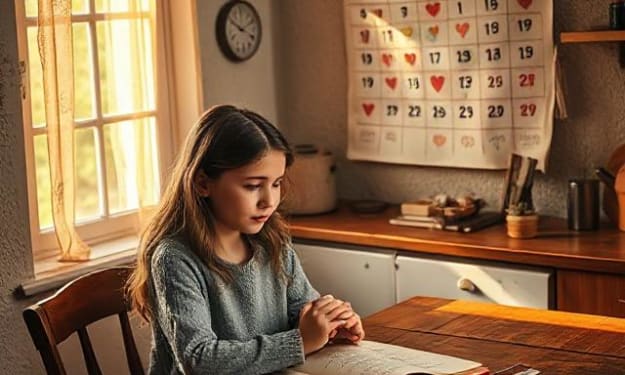
My Mother’s Calendar By [Ali Rehman] In the quiet corner of our modest kitchen hung an old, faded calendar. It was the kind of calendar you never gave much thought to—just another thing on the wall, silently marking the passage of days. But for me, it became something far more profound when I accidentally discovered its secret.
By Ali Rehman12 months ago in Humans
When ‘Almost’ Broke My Heart
There is a special kind of pain in almost. Almost is that space between hope and heartbreak, between possibility and reality, where your heart hangs in the balance and sometimes, just sometimes, it shatters. I know because I have been there. I have loved someone in a way that made me believe in forever, only to realize that forever wasn’t mine to keep. Almost broke my heart, and it took time, tears, and courage to learn how to survive it.
By Kashif Wazir12 months ago in Humans
The Text That Ended Everything
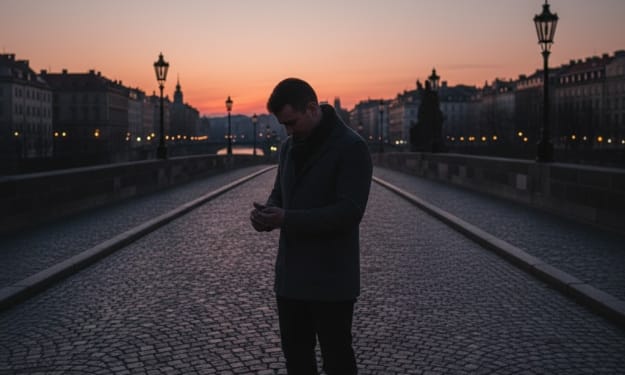
It arrived on a quiet afternoon, a notification that seemed harmless at first. I didn’t know it then, but that single text would change everything. The words were short, precise, and final — the kind that leaves no room for argument, no space for negotiation, no hope for repair. It felt like a punch I couldn’t see coming, a sudden storm that tore through the calm I had built around myself. That message didn’t just break my day — it broke a world I thought was unshakable.
By Kashif Wazir12 months ago in Humans
How It Feels to Love Someone Who’s Already Gone
Loving someone who’s already gone is a strange kind of pain. It’s not sudden or loud, like an argument or a broken promise. It’s quiet, constant, and it settles in your chest like a weight you can’t lift. Their absence is everywhere — in the empty chair at dinner, in the silence of your phone, in the little habits that no longer match with anyone else. Loving someone who’s gone means living with memories that sting and comfort at the same time.
By Kashif Wazir12 months ago in Humans
When Forever Lasted Only a Season
There was a time I believed in forever. The word itself felt like a promise, soft and unbreakable. It rolled off our tongues so easily, like we were spelling out a destiny written just for us. We said “forever” in text messages, whispered it under moonlight, carved it into the backs of our memories like it could hold time still. But forever, I learned, sometimes only lasts a season. And when that season ends, it leaves behind both the warmth of what was and the chill of what will never be again.
By Kashif Wazir12 months ago in Humans
"The Night a Mother Became a Shield."
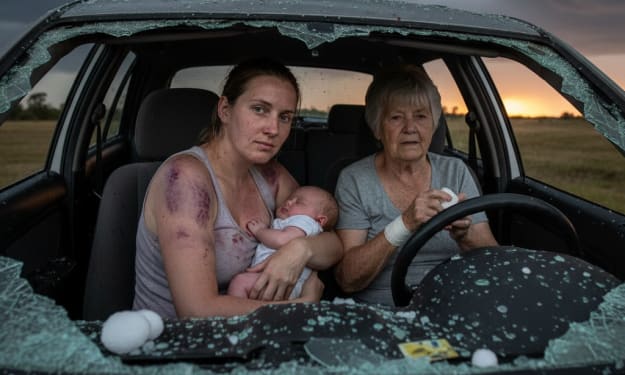
A Mother’s Shield: The Story of Fiona Simpson’s Bravery When the sky turned wild, a mother turned into a shield. It was an ordinary October evening in 2018 — until the heavens above Queensland, Australia, began to roar with fury.
By Idrees khan12 months ago in Humans
Tobacco is projected to kill 1 billion people in the next century.. AI-Generated.
The Staggering Projection: Why Tobacco is Poised to Kill One Billion People This Century Imagine a single habit wiping out one billion lives over the next hundred years. That's the grim forecast for tobacco use. Each year, smoking claims about eight million people worldwide, according to the World Health Organization. If nothing changes, those numbers stack up fast into a century-long nightmare.
By Story silver book 12 months ago in Humans
Signs of a Toxic Relationship: How to Recognize the Danger Before It’s Too Late. AI-Generated.
Physically as well as emotionally and psychologically, a toxic relationship can be quite damaging. Many people wait until it's too late to see the warning signs. Toxic relationships can occasionally turn into severe abuse that can even be lethal. This article explains why toxic relationships are harmful, outlines the warning signs of one, and offers advice on what to do if you or someone you know is in one.
By Diana Crooks12 months ago in Humans
New Horizons in a strange land
The first few nights in New York City were louder than anything I had ever known. Sirens wailed endlessly, car horns screamed, and the hum of a million lives moving together felt suffocating. Back home, my family’s small town had been quiet, predictable, safe. Here, everything was bright, fast, and unfamiliar. I had come to the United States chasing a dream — a chance at a career, at freedom, at building a life that felt like mine. But what I found instead was the weight of solitude pressing down on my chest. I rented a tiny apartment on the fifth floor of a building where the walls were paper-thin, and the neighbors’ arguments traveled directly into my bedroom. My phone buzzed occasionally with messages from family back home — “How’s it going?” — and I would stare at it for minutes before answering, lying that everything was fine. They didn’t know that I often sat for hours staring at the ceiling, listening to the city breathe around me, wondering if I had made the right choice. Work was no easier. My first job was in a crowded office where everyone seemed to know exactly what they were doing except me. Every instruction felt like a test I was destined to fail. I nodded, smiled, and repeated phrases I barely understood, hoping nobody noticed the panic rising in my chest. Lunch breaks were spent alone, eating sandwiches on a park bench while watching strangers laugh together. The irony wasn’t lost on me — I had come here for opportunity, yet every day felt like a reminder of how small I was in this enormous city. One evening, after another long day of trying to blend in, I wandered into a small bookstore tucked between two towering office buildings. The sign read “Whispering Pages”, and inside, the chaos of the city seemed to fade. The scent of old paper and coffee filled the air. I ran my fingers along the spines of the books, and for a moment, the loneliness lifted. It was there that I met Mara, a fellow immigrant who had moved from Brazil years ago. She noticed me hesitating near the poetry section and smiled. “First time in the city alone?” she asked. We began talking, first cautiously, then with the ease of people who understood the unspoken struggles of starting over. Mara introduced me to a small community of immigrants who met weekly at the bookstore for language practice, cultural exchange, and laughter. Slowly, the edges of my isolation softened. I wasn’t invisible anymore. Faces turned familiar, conversations felt real, and the weight of solitude began to lift. Weeks turned into months. I learned the rhythm of the city — the subway stops, the streets that smelled of hot dogs and exhaust, the quiet corners in Central Park where I could breathe. I started saving, sending small amounts home to my family, proud to contribute. I enrolled in evening classes, determined to strengthen my skills and claim a sense of purpose beyond survival. But belonging didn’t come all at once. Some days, the memories of home, of my parents’ voices and my childhood streets, felt heavier than the crowded subway or the endless skyline. I learned to carry them gently, like treasures tucked into my coat pocket, reminding me why I had come. And gradually, I realized that the city, once overwhelming and alien, had begun to feel like a place where I could buildThe title is: *New Horizons in a Strange Land* The subtitle is: *From loneliness to belonging, one step at a time* a life — messy, challenging, and imperfect, but mine. One night, standing on the rooftop of my building, looking at the endless sprawl of lights below, I understood that belonging wasn’t about fitting in perfectly. It was about taking one step at a time, finding connections, and embracing both the discomfort and the beauty of new beginnings. The city that had once swallowed me whole now hummed with possibility, and for the first time, I felt like I could breathe, like I could belong.
By Muhammad Kashif 12 months ago in Humans