family
Family unites us; but it's also a challenge. All about fighting to stay together, and loving every moment of it.
Lemon Balm Recipe For Weight Loss: A Natural Way To Shed Pounds
Lemon balm, a versatile and aromatic herb, has long been celebrated for its medicinal properties. Among its many benefits, lemon balm is particularly effective in promoting weight loss. This article will explore various lemon balm recipes and how they can support your weight loss journey.
By Healthy Pures | Health & Wellness 2 years ago in Humans
Soul Feeling . Content Warning.
I sit down to write and empty all this overwhelming feelings, and I draw a blank. The music is playing and it been a very heavy and hectic two weeks and all I want to do is empty my soul of all these feeling I am taking on. It becomes too much. I don't like these feelings, mine are too much, taking on someone else feeling are extremely overwhelming. Guess that is the downfall of someone who is a Empath and has Boarderline Personality Disorder.
By BubiiBubii2 years ago in Humans
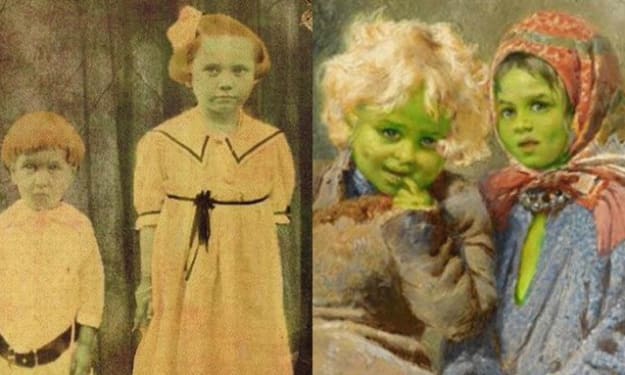
The Green Children of Woolpit: A Medieval Mystery
In the year 1150, the small English village of Woolpit became the setting for one of the most intriguing and enduring legends of the medieval period. Two children, a brother and sister with green-tinged skin, allegedly appeared on the outskirts of the village under mysterious circumstances. Their strange appearance, unusual behavior, and the enigmatic details of their origin have sparked centuries of speculation and fascination. This blog post delves into the story of the Green Children of Woolpit, examining historical accounts, potential explanations, and the lasting impact of this captivating legend. The children were discovered by villagers tending their fields near Woolpit, a village in Suffolk, England, known for its network of wolf pits—deep trenches used to capture wolves. It was from one of these pits that the children, described as having green skin and wearing unfamiliar clothing, were seen emerging. The children were taken to the home of Sir Richard de Calne, where efforts were made to communicate with them. However, the children spoke in an unknown language and initially refused to eat any of the food offered to them, displaying a strong aversion to most types of sustenance. Eventually, they came across some green beans, which they eagerly consumed. Over time, they began to adapt to the local diet and, as their nutritional intake improved, their skin gradually lost its green hue. Once they learned to speak English, the children provided an account of their origin that only deepened the mystery. They claimed to come from a land called St. Martin’s Land, where everything was green and there was no sunlight—only a perpetual twilight. They described their homeland as a place where the light was similar to dusk and where everyone had green skin like theirs. The children recounted how they had been tending their father's livestock when they heard a loud noise and suddenly found themselves by the wolf pit near Woolpit. Despite extensive questioning, they could not explain how they had traveled to Woolpit or locate their homeland on any known map. The story of the Green Children of Woolpit has given rise to numerous theories and explanations, ranging from the scientific to the fantastical. One of the most plausible theories suggests that the children were Flemish immigrants whose parents had been killed, possibly during the Battle of Fornham in 1173. The green hue of their skin could have been due to malnutrition, specifically a condition called chlorosis, which results from a deficiency in iron and can cause a greenish tint to the skin. Another popular theory posits that the children were fairies or other supernatural beings. The idea of an underground or otherworldly origin aligns with various folklore traditions that speak of fairy lands existing parallel to our own. Some suggest that the children might have come from a secluded, subterranean community where conditions led to evolutionary adaptations, such as green skin for better camouflage or photosynthetic capabilities. There are also interpretations that view the story as a metaphor or allegory. The children's journey and transformation could symbolize the integration of outsiders or the process of cultural assimilation. The tale of the Green Children of Woolpit reflects the medieval period's fascination with the unknown and the supernatural. It also highlights the ways in which communities dealt with unexplained phenomena and the integration of strangers. During the medieval era, Europe was rife with stories of mysterious lands and peoples, fueled by limited geographical knowledge and vivid imaginations. The Green Children fit into this context, embodying the fear and curiosity surrounding the unfamiliar. The story has been revisited and reinterpreted over the centuries, appearing in various literary works and scholarly analyses. It remains a subject of interest for historians, folklorists, and enthusiasts of the paranormal. The legend of the Green Children of Woolpit continues to captivate and intrigue. Whether viewed as a historical curiosity, a case of mistaken identity, or a fantastical tale, it serves as a reminder of the rich tapestry of medieval folklore and the human penchant for storytelling. While the true origin of the Green Children may never be known, their story has undoubtedly left a lasting mark on the cultural heritage of Woolpit and beyond. It invites us to ponder the boundaries of reality and imagination, and the ways in which we make sense of the inexplicable. In the end, the Green Children of Woolpit remain an enduring mystery—a testament to the enduring power of legends and the human desire to explore the unknown.
By Deji Akomolafe2 years ago in Humans
Step-by-Step: Setting Up Your First Fish Tank Like a Pro
When deciding on the tank size for your aquarium there are a few key factors to keep in mind. Firstly consider the space in your home. If space is limited a smaller tank might be more suitable. On the hand if you have room a larger tank offers greater opportunities for creativity and a wider selection of fish and plants.
By Aboudraman kanoute2 years ago in Humans
Diets and Weight Loss: Transformative Journeys to a Healthier Life
In the pursuit of a healthier life, countless individuals embark on the journey of diets and weight loss. This path is often filled with challenges, triumphs, and personal growth. Through real-life stories and evidence-based strategies, we explore how diet and weight loss can lead to transformative changes, not just in physical health but in overall well-being.
By Tofik Mohammed2 years ago in Humans
Margot Robbie Expecting First Child with Husband Tom Ackerley
Hollywood's golden couple, Margot Robbie and Tom Ackerley, are about to add a new star to their constellation! The 34-year-old Academy Award nominee and her equally talented husband are expecting their first child, multiple sources confirmed to People.
By Khushboo Malhotra2 years ago in Humans
The Remarkable Story of the Muse Brothers: From Captivity to Freedom
In the American history, the story of George and Willie Muse, known as the Muse Brothers, stands out as a poignant tale of exploitation, resilience, and eventual reunion. These two albino brothers, born in the 1890s in Roanoke, Virginia, were grandsons of former slaves and sons of tobacco sharecroppers. Their lives took a dramatic and tragic turn in 1899 when they were kidnapped by bounty hunters in Truevine, Virginia, and forced into a life of performing as "freak show" exhibits in circuses. This blog post delves into their extraordinary journey, the trials they endured, and their ultimate triumph. Early Life in Truevine, Virginia George and Willie Muse were born to a humble family in Truevine, Virginia, a small rural community. Their albinism, characterized by their white skin and bluish eyes, set them apart in their predominantly African American community. Despite the challenges of their condition, the Muse brothers lived a relatively normal life, helping their parents with tobacco farming. However, their distinct appearance soon caught the attention of bounty hunters and circus recruiters, who saw them as valuable attractions for the burgeoning sideshow industry. In 1899, the brothers' lives were irreversibly altered when they were kidnapped and thrust into a world of exploitation and deceit. Life in the Circus Upon their capture, George and Willie Muse were falsely informed that their mother had died and that they would never return home. Stripped of their identities and freedom, the brothers were thrust into the harsh and often cruel world of circus sideshows. They were forced to grow their hair into massive dreadlocks, which, combined with their albinism, made them unique attractions. They were exhibited under various dehumanizing names such as "Eko and Iko," "The White Ecuadorian Cannibals," and "The Ambassadors from Mars." The Muse brothers were displayed as rarities, their albinism and hair exploited to draw crowds. They traveled across the United States and even internationally, performing in front of fascinated audiences who were unaware of the brothers' tragic backstory. The circus promoters, including the infamous Ringling Brothers, reaped significant financial gains from their exploitation, while George and Willie received nothing. Enduring Exploitation The Muse brothers' lives in the circus were marked by continuous exploitation and abuse. They were denied an education, proper medical care, and the basic freedoms that most people take for granted. Isolated from their family and any semblance of a normal life, they endured years of mistreatment. Despite the grim circumstances, George and Willie developed a remarkable resilience and maintained a strong bond with each other, which helped them survive their ordeal. Their plight drew occasional attention from concerned individuals, but the circus industry was powerful, and efforts to free the brothers were met with resistance. The Muse brothers' situation was a glaring example of the broader exploitation and racism that was rampant in the United States during this period. The Road to Freedom The turning point in the Muse brothers' lives came in 1927, nearly three decades after their abduction. During a circus performance in Roanoke, Virginia, their mother, Harriet Muse, recognized them. Defying the odds, she confronted the circus promoters and demanded her sons' release. Her persistence and unwavering love for her children led to a legal battle that eventually resulted in the brothers' freedom. Harriet Muse's determination to reunite with her sons highlighted the enduring strength of familial bonds and the power of a mother's love. The legal victory was not only a personal triumph for the Muse family but also a significant moment in the fight against the exploitation of vulnerable individuals in the circus industry. Life After the Circus After gaining their freedom, George and Willie Muse returned to a semblance of normal life. They reunited with their family and settled in Roanoke. Despite the years of hardship, they retained a sense of dignity and resilience. The brothers continued to perform in circuses, but this time on their own terms, ensuring they were fairly compensated for their work. Their story eventually gained widespread attention, serving as a powerful reminder of the exploitation faced by many individuals in the circus and sideshow industries. It also highlighted the systemic racism and discrimination that African Americans and people with disabilities endured during this era. Legacy and Reflection The story of the Muse brothers is a testament to the human spirit's capacity to endure and overcome adversity. Their journey from captivity to freedom is a powerful narrative that underscores the importance of perseverance, family, and justice. The brothers' legacy continues to inspire and educate, shedding light on a dark chapter of American history. Their tale has been immortalized in various forms, including the book "Truevine: Two Brothers, a Kidnapping, and a Mother's Quest: A True Story of the Jim Crow South" by Beth Macy. This detailed account provides a comprehensive look at the brothers' lives and the broader social context of their story. In conclusion, George and Willie Muse's story is one of unimaginable hardship and remarkable resilience. Their journey from the fields of Truevine to the sideshow tents of America, and finally back to their family, is a narrative of love, courage, and the unyielding human spirit. The Muse brothers will always be remembered as symbols of the fight against exploitation and the enduring power of familial love.
By Deji Akomolafe2 years ago in Humans
HOW the Brain Works and WHY It’s Important to Keep It Health. AI-Generated.
Did you know that our brain doesn't feel pain? If we were jabbed within the brain, we wouldn't feel anything because the brain doesn't feel pain. This is because the brain itself lacks pain receptors, although the surrounding tissues and structures within the head do have them. That's why we can experience migraines or headaches, but the brain tissue itself remains pain-free.
By Abida Awais2 years ago in Humans
Elevate Your Health: Strategies for a Thriving You
In a world where we are constantly bombarded with information about what constitutes a healthy lifestyle, it can be easy to feel overwhelmed by the myriad of choices available. However, the journey to optimal health doesn’t have to be daunting. With a few strategic changes and a focus on sustainability, anyone can elevate their health and thrive. This article explores actionable strategies to help you enhance your well-being and live a vibrant, fulfilling life.
By Tofik Mohammed2 years ago in Humans