family
Family unites us; but it's also a challenge. All about fighting to stay together, and loving every moment of it.
Together, We Can Heal
In a world often divided by differences—of opinion, race, religion, and culture—there lies a quiet, resilient truth: healing begins when we come together. Pain, whether personal or collective, is a universal language. But so is love. And when love is shared through unity, understanding, and compassion, it holds the extraordinary power to heal wounds that time alone cannot mend.
By Leesh lalaabout a year ago in Humans
Top 20 Strongest Countries in the World
In a continuously changing world, power is evaluated not just by military capabilities but also by economic clout, political security, technological progress, and diplomatic engagement. By 2025, the power dynamics keep changing, as established powers remain strong while developing countries advance rapidly. This article lists the top 20 most powerful countries globally, determined by a mix of military strength, GDP, international influence, innovation, and strategic partnerships.
By Rahat Quorieshi about a year ago in Humans
The Empty Bench: A Heart-Touching Story About Time, Regret, and Redemption.
🌳 "The Empty Bench" — A Story That Will Stay With You Forever Every morning at exactly 7:00 AM, a frail man in his late 50s would walk to a quiet park, sit on an old wooden bench under a neem tree, and simply... sit. He never used his phone, never read a newspaper. He would just watch the world pass by, with a half-smile on his face.
By Hamad Haiderabout a year ago in Humans
Understanding and Supporting People Who Are Mute
Understanding and Supporting People Who Are Mute Have you ever met someone who couldn’t speak? A person who cannot speak is often called "mute." This word can sound a little old-fashioned, and today, many people prefer to say someone is "nonverbal" or "unable to speak." No matter what word you use, it's important to understand what this means and how we can support people who live without the ability to talk.
By Jeno Treshan about a year ago in Humans
Every Healthy Human Is a Millionaire
We often define wealth in terms of bank balances, cars, and real estate—but rarely do we consider the value of what we already possess: a healthy, functioning body. If you were to itemize and price out the parts and abilities of a healthy human, the numbers are staggering. In fact, if you woke up healthy today—able to see, walk, breathe, and think clearly—you are far richer than you might think.
By Rizwan Ullahabout a year ago in Humans
How to Break Up With Someone and Still Sleep at Night
It's never easy to break up with someone. You may feel overwhelmed, and the idea of hurting someone you once loved may keep you awake. However, ending a relationship doesn't have to be a terrifying experience. This complete guide will show you how to break up with someone in a way that shows respect, avoids hurt feelings, and keeps your peace of mind.
By Relationship Guideabout a year ago in Humans
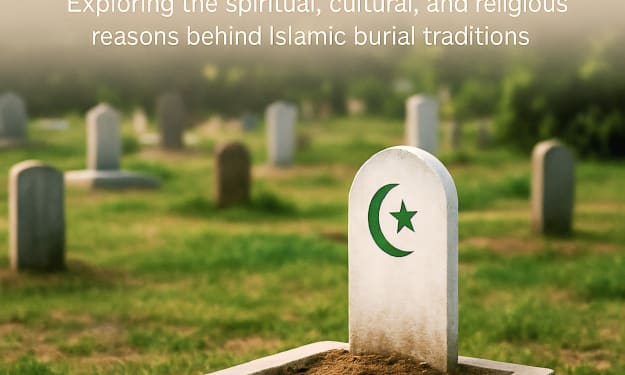
“Resting In Faith: Why Muslims Are Buried In Graveyards”
When someone dies, it is always a moment of sadness. People cry, pray, and remember the life that has ended. In Islam, death is not the end. It is the beginning of another life — the life of the soul. That is why Muslims have certain rules and traditions when a person dies, especially about the graveyard. This article explains why Muslims are buried in graveyards, what Islam teaches about the grave, and how this simple act reflects deep faith. --- The Body Belongs to Allah In Islam, every part of our life belongs to Allah (God), including our body. When a person dies, their soul leaves the body. But Muslims believe the body still deserves respect and care. We are not allowed to burn it or throw it away. Instead, the body is cleaned, wrapped in white cloth (called kafan), and buried in the ground. This is because the Prophet Muhammad (peace be upon him) taught us to return the body to the earth — the same earth from which we were created. “From the earth We created you, and into it We will return you.” (Qur’an, Surah Ta-Ha, 20:55) --- Why a Graveyard? Some people ask: why not keep the body at home or in a special room? Why not build a fancy tomb? Islam teaches us to be simple and humble. The graveyard is a place where many people are buried together. There is no need for big decorations or buildings. Every Muslim, rich or poor, is equal in death. Graveyards also help the living remember death. When Muslims visit the graveyard, they remember their own end and pray for others. It softens the heart and makes us live better lives. The Prophet (peace be upon him) said: “Visit the graves, for they remind you of the Hereafter.” (Sunan Ibn Majah) --- What Happens in the Grave? Muslims believe that after burial, the soul begins a new stage called Barzakh. This is the time between death and the Day of Judgment. The grave becomes a place of peace or a place of hardship, depending on how the person lived. Two angels, Munkar and Nakir, come to ask the person questions: Who is your Lord? What is your religion? Who is your Prophet? If the person answered with faith in life, Allah will help them answer in the grave. Their grave becomes wide and full of light. But if they rejected faith, the grave becomes tight and dark. This shows that the grave is not just a hole in the ground. It is the first stop on the journey after death. --- Simple Burials Are Sunnah In many places, people spend a lot of money on burials — gold coffins, marble graves, flowers, and statues. But in Islam, this is not necessary. The Prophet Muhammad (peace be upon him) was buried in a simple grave with no big signs or stones. Islam teaches us to avoid pride and waste, even in death. The burial is quick, respectful, and peaceful. Family members or community people dig the grave, lay the body on its right side facing the Qiblah (direction of Mecca), and pray Salat al-Janazah (the funeral prayer). The simplicity is beautiful — it reflects that what matters is not what we leave behind, but what we send ahead in good deeds. --- Visiting the Graves Muslims are encouraged to visit graveyards. We greet the dead with peace: “Peace be upon you, O people of the graves. You are the forerunners, and we, if Allah wills, will follow you.” We pray for them and ask Allah to forgive them. This is not only for the dead — it helps the living too. It reminds us that life is short and we must prepare for the Hereafter. But Islam also gives clear rules: we are not allowed to worship at graves, ask help from the dead, or cry loudly and hurt ourselves in grief. Respect, prayer, and silence are part of Islamic manners at the graveyard. --- A Story of Peace Fatima was only 12 years old when she went to a graveyard for the first time. Her grandfather had passed away. She held her father’s hand tightly as they entered the calm, green graveyard. The air was still. There were no loud voices, no music, no decorations. Just rows of simple graves. She asked her father, “Why don’t we build a statue for Grandpa?” Her father smiled gently. “Because in Islam, we remember with prayer, not statues. Grandpa’s soul is with Allah now. We pray for him, and that is better than anything made of stone.” Fatima stood quietly beside the fresh grave. She whispered a short prayer she had learned at school. In that moment, she felt something she couldn’t explain — peace, softness, and faith. She knew the grave was not the end. It was just the next step. --- Moral of the Story In Islam, the graveyard is not a scary place. It is a place of rest, reflection, and remembrance. Muslims bury their dead in graveyards because it follows the teachings of the Prophet, respects the body given by Allah, and prepares us for the next life. Burial is not just about the dead. It is also a lesson for the living — a reminder to live with kindness, prayer, and purpose. For Muslims, death is not the end of the story. It is the doorway to eternal life.
By Inam Zohanabout a year ago in Humans
Still Feeling Fried?. AI-Generated.
Remember the collective sigh of relief as 2023 and 2024 faded into the rearview mirror? Many of us hoped that with the turning of the calendar, the relentless pressure and exhaustion that defined the "burnout epidemic" would also subside. But here we are in May 2025, and for many, that pervasive feeling of being overwhelmed, depleted, and disconnected lingers. The truth is, the systemic issues that fueled burnout haven't magically disappeared, and new challenges continue to emerge.
By David Andrewsabout a year ago in Humans