family
Family unites us; but it's also a challenge. All about fighting to stay together, and loving every moment of it.
Capricorn Man and Leo Woman Compatibility Score. AI-Generated.
When a Capricorn man and a Leo woman come together in a romantic relationship, it can either be a powerhouse of success or a tug-of-war between two very strong personalities. This pairing brings together the grounded, disciplined Earth sign Capricorn and the bold, fiery Leo. At first glance, they may seem worlds apart, but with patience and understanding, they can form a fascinating and fulfilling bond. Let’s explore the dynamics of their compatibility, from emotional connection to sexual chemistry and long-term potential.
By Inspire and Funabout a year ago in Humans
How Are You
In the rush of our everyday lives, caught between calendars and commitments, there’s a small phrase that often slips past unnoticed—a phrase so simple, so familiar, yet deeply powerful. “How are you?” We hear it in the morning over sleepy yawns, on quick phone calls, in passing at work, or through the soft hum of evening conversations. It’s everywhere—whispered, spoken, messaged, asked. And behind those three gentle words lies a world of kindness, humanity, and the heartbeat of family.
By Leesh lalaabout a year ago in Humans
"From surviving to thriving: My journey"
For a long time, I didn’t know I was living in survival mode. I thought exhaustion was normal. I thought waking up every day with dread in my chest was just what adulthood felt like. I didn’t realize that I wasn’t really living—I was just enduring. Smiling through the discomfort, showing up out of obligation, and pushing through each day with the quiet hope that tomorrow might feel a little lighter. But it didn’t. Not for a long time. I kept going, though. That’s what we’re told to do, right? Keep going. Don’t quit. Be strong. So I did. I performed my life like a role I’d memorized: I worked, I replied to texts with “I’m fine,” and I laughed at the right moments. But underneath it all, I was unraveling. Piece by piece, I was losing touch with who I really was, buried under layers of expectations, pain I hadn’t processed, and dreams I no longer dared to think about. The moment everything shifted wasn’t some dramatic collapse. No one around me even noticed. It happened in silence—alone in my car, parked outside my apartment. I had just come home from work, and as I sat there with the keys still in the ignition, I realized I couldn’t recall a single thing about my day. Eight hours had passed, and I had no memory of them. Just a blur of going through the motions. That scared me more than any breakdown could have. That moment became my wake-up call. I didn’t have a clear plan for how to change things. I just knew I couldn’t keep living like that. So I did the scariest thing I could think of: I asked for help. Therapy wasn’t easy at first. In fact, it was terrifying. Being honest about how numb I had become felt like peeling away armor I’d worn for years. But it also felt like breathing again. Slowly, I started untangling the knots inside me. I learned that I wasn’t weak for feeling broken—I was human. And I wasn’t alone, even though my pain had convinced me I was. In the process of healing, I discovered something surprising: I had been grieving. Grieving the version of myself I never got to be. The one who didn’t feel afraid to speak up. The one who dreamed big without apologizing. The one who felt worthy without having to earn it. I had buried that version of me under all the surviving I’d been doing. So I began to rebuild. Not all at once, and not perfectly. Some days I took two steps forward and five steps back. There were times I questioned if I’d ever truly feel better. But I kept showing up. I started doing small things that made me feel alive again—morning walks, journaling, listening to music that stirred something in me. I gave myself permission to rest, to feel, to cry, and most of all, to stop pretending. I also began setting boundaries, something I had never done before. I started saying “no” to things that drained me and “yes” to things that aligned with who I was becoming. I distanced myself from relationships that only knew the version of me who performed. And I drew closer to people who embraced my growth, even when it meant becoming someone new. Little by little, I moved from surviving to something that felt like thriving. Not because everything in my life became perfect, but because I finally began living with intention. I started to trust myself again. I laughed without guilt. I made plans for the future—not because I needed a distraction, but because I was excited about what was possible. Thriving, I’ve learned, isn’t about never feeling pain. It’s not a permanent state of bliss. It’s about knowing that you have the tools to cope when life gets hard. It’s about choosing joy even when you remember what suffering felt like. It’s about being present in your own life and honoring every part of your journey—including the messy, dark chapters. I no longer shame the version of me who was just surviving. That version kept me alive. That version was strong in ways I couldn’t see at the time. But I’m grateful I didn’t stay there. I’m grateful I listened to that small voice inside me that said, “There has to be more than this.” And there was. There is. If you’re reading this and you’re still in the dark, still just trying to make it through the day—please know that it can get better. Maybe not overnight, and maybe not without work, but it can. You are not weak for struggling. You are not broken beyond repair. You are a human being who deserves to thrive. And if no one’s told you yet today: you’re allowed to stop surviving and start living. Even if it’s one deep breath at a time.
By Kaleem Ullahabout a year ago in Humans
The Pain of Regret
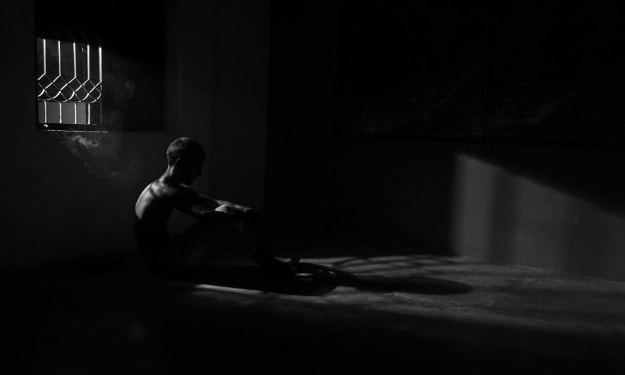
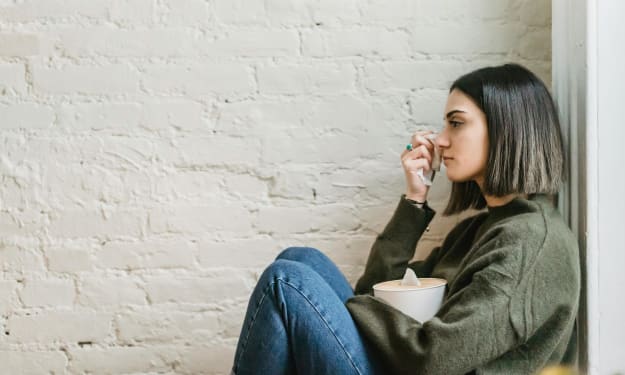
Regret is a quiet monster. It doesn’t scream. It whispers. It waits until midnight when your friends are asleep and the world goes still. That’s when it creeps in, draping its cold weight over your chest. Suddenly, you’re not scrolling your phone for fun anymore. You’re replaying a scene you wish you could undo. You're replaying a text that you should've sent. A call you never made. A risk you were too afraid to take.
By Timeless Truthsabout a year ago in Humans
Juliani: Wife, Biography, Net Worth, Real Name, Age & More
Juliani is a name that resonates with depth, purpose, and transformation in Kenya’s music scene. Known for his thought-provoking lyrics and unwavering social activism, he has grown from a young artist in Dandora to a nationally celebrated figure. But who is Juliani beyond the spotlight? In this article, we uncover key details about his life — from his real name and early beginnings to his wife, net worth, and more.
By Marveline Merababout a year ago in Humans
Capricorn Man and Cancer Woman Compatibility Score. AI-Generated.
When the steady Capricorn man meets the emotionally intuitive Cancer woman, a deep, enduring bond is possible. These two signs are astrologically opposite, which often signals a relationship that balances complementary energies. Capricorn brings structure, security, and ambition, while Cancer offers nurturing, emotional depth, and a strong sense of home. Their differences can be their greatest strength—if they learn to meet in the middle.
By Inspire and Funabout a year ago in Humans
Why You Feel Lost in Life (And What to Do About It)
Introduction: Have you ever woken up one morning and thought, “What am I even doing with my life?”You’re not alone. Feeling lost is something many people experience at least once in their life. Sometimes, we feel stuck, confused, or just empty inside. We may have goals, but they feel too far away. Or worse — we have no goals at all, just an endless routine that feels meaningless.In this article, I’ll explain why you feel this way and give you simple, real-life steps to help you feel more connected to yourself and your purpose again.
By Dadullah Danishabout a year ago in Humans
"Growing Up Between Two Worlds",
I was born in a house filled with tradition and raised in a world that challenged everything that tradition stood for. My parents carried the weight of a homeland they had left behind—its language, its values, its unspoken rules. I, on the other hand, carried a backpack full of schoolbooks, pop culture references, and questions about why I felt like I was constantly walking a tightrope between who I truly was and who I was supposed to be. At home, I was the respectful child, taught to speak softly, to avoid conflict, to prioritize family, and to never question authority. Our meals were rich with spices and stories from "back home," and our living room echoed with a language I didn’t speak fluently but understood in my bones. My identity was shaped in silence—by watching, listening, and absorbing. But the moment I stepped outside, I entered a different world. One that encouraged boldness, individuality, and questioning everything. In school, I learned to raise my hand, voice my opinion, and dream beyond the bounds of tradition. Friends spoke freely about dating, careers in the arts, or choosing not to have kids—things that would be unthinkable to say aloud in my house. I quickly learned to code-switch, not just linguistically, but emotionally. At home, I suppressed my opinions to avoid disappointing my parents. At school or work, I dialed up my confidence to match those around me. I was constantly adjusting the volume of different parts of myself, trying to be loud enough to belong, but quiet enough to not stand out too much. This balancing act took a toll. I spent years feeling like I was performing. I laughed at jokes I didn’t understand and smiled through conversations where I couldn’t relate. Worse, I began to resent parts of myself—my accent, my customs, even my parents. I saw them through the lens of the world outside and feared they made me "too different." The real struggle wasn’t just between two cultures—it was the internal battle of authenticity versus expectation. Who was I when no one was watching? And more importantly, who was I willing to disappoint in order to be that person? There came a moment when the scales tipped. It was during college, a time when many people begin to shed the skin of who they were and step into who they want to become. I met others with similar stories—first-generation kids trying to honor their roots while planting new ones in unfamiliar soil. Their honesty gave me the courage to confront my own fears. I realized that being between two worlds didn’t mean I didn’t belong in either—it meant I belonged to both, in a way that was uniquely mine. So I began the slow, deliberate work of integration. I started having difficult conversations with my parents—explaining why certain traditions didn’t resonate with me or how their expectations sometimes felt like chains rather than guidance. Some talks ended in tears, others in silence. But little by little, they began to see me not as the child they were raising, but as the adult I was becoming. I also gave myself permission to embrace the parts of my heritage I had once hidden. I wore my traditional clothes to events with pride. I cooked my family’s recipes and shared them with friends. I no longer flinched when someone mispronounced my name—I corrected them, kindly but firmly. Balancing who I am with who I’m expected to be is still an ongoing journey. There are days when I revert to old habits, when I bite my tongue to keep the peace, or feel a pang of guilt for choosing a path my parents wouldn’t have picked for me. But there are also days filled with clarity and confidence—when I see how beautifully the two worlds I inhabit can coexist within me. I’ve come to understand that I am not half of anything—I am whole, built from layers of culture, history, and personal choice. And in learning to carry all of it with grace, I’ve found my truest self: not defined by the expectations of either world, but shaped by the strength it took to balance them.
By Kaleem Ullahabout a year ago in Humans