family
Family unites us; but it's also a challenge. All about fighting to stay together, and loving every moment of it.
The Endless Journey of Hopes: Learning to Live in the Present
Hope is the light that keeps us walking through the darkest nights. It is the quiet promise that tomorrow can be brighter, the whisper that tells us to keep moving, even when the road is long. Without hope, life would feel empty, stripped of purpose. And yet, I discovered that hope can also become a chain — beautiful, but heavy — keeping us always chasing, never resting.
By Life Hopesabout a year ago in Humans
The Beautiful Contradiction
M Mehran Humans are strange creatures. We build cities that scrape the sky and yet often forget the value of a single tree. We create art that transcends time and yet argue over trivialities that vanish by tomorrow. We are capable of immense love and, at times, staggering cruelty. And yet, somehow, we endure—messy, fragile, remarkable. --- The Faces Around Us Walking down a crowded street, I see humans everywhere. The man with worn-out shoes rushing to work. The teenager laughing too loudly on the corner. The elderly woman feeding pigeons in the park, her hands trembling but her smile unwavering. Each face tells a story. Each carries hope, sorrow, ambition, or regret. Humans are, in a way, walking novels—complex, layered, unpredictable. Yet we often overlook them, lost in our own routines, our own screens. --- The Capacity for Kindness A few months ago, I witnessed a small miracle. A young boy, maybe eight years old, helped a homeless man gather his scattered belongings in the rain. When he handed over the last item, he smiled, oblivious to the fact that passersby barely noticed. That moment captured what humans are capable of. Beneath the layers of anger, fear, or indifference, there is kindness waiting to be revealed. Humans are capable of acts so simple, yet so profound, that they ripple far beyond what we can see. --- The Struggle Within Yet, humans are also their own enemies. I think of the arguments I’ve had, the mistakes I’ve made, the bridges I’ve burned. I think of greed that leads to suffering, hatred that destroys relationships, apathy that leaves the vulnerable unprotected. We are contradictions, aren’t we? Each person carries a universe within them: light and darkness, courage and cowardice, love and indifference. And understanding that about ourselves is the first step toward understanding the world. --- Stories That Bind Humans connect through stories. Stories of triumph, of heartbreak, of survival, of love. I met Leila, a war refugee, who told me how she walked for days with her little brother, carrying nothing but hope. Her hands shook as she recounted nights of hunger, but her eyes were steady. She survived not because she was the strongest, but because she refused to give up—and in sharing her story, she reminded me of the resilience humans carry. Stories like hers are everywhere. They are ordinary, extraordinary, heartbreaking, and beautiful. Humans may stumble, but we also rise, again and again. --- The Pursuit of Meaning Humans are obsessed with meaning. We seek purpose in work, love, creativity, spirituality, even chaos. Some find it in religion, some in art, some in helping others. I once spoke to a man who built clocks for a living. He said, “Every clock I make is imperfect, but it still measures time. And in that, I see life.” Humans find significance not in perfection, but in effort, in trying to make sense of the incomprehensible, in connecting dots that might never align. --- The Power of Connection Humans are also defined by connection. We form bonds that shape us, challenge us, and sustain us. Family, friends, lovers, strangers—all leave traces on our souls. I think of my grandmother holding my hand as a child, of a friend driving three hours just to bring me soup during a fever, of a stranger who smiled at me on a bad day. Humans need each other, perhaps more than we admit. Even our solitude is often a search for connection in disguise. --- The Beauty in Flaws Humans are imperfect. Our mistakes, our flaws, our contradictions are not weaknesses—they are part of what makes us human. We forgive and we hurt, we dream and we falter, we create and we destroy. And yet, in these cycles, we grow. Humans are learning beings, constantly evolving through failure and triumph. It is in imperfection that we find depth, empathy, and understanding. --- A Moment of Reflection One evening, I sat by a river, watching people pass—laughing children, exhausted workers, lovers holding hands. A mother taught her toddler to skip stones; a man played guitar, letting music fill the empty spaces. In that simple moment, I understood: humans are miraculous not because we are flawless, but because we keep trying. We love when it hurts, create when it’s hard, hope when it’s easier to give up. Humans are fragile and resilient. Small and vast. Ordinary and extraordinary. Contradictory yet united by our desire to live, to connect, to leave marks on the world. --- Final Thought To study humans is to study the paradox of life itself. We are capable of despair, yet we dream. We fail, yet we rise. We hurt, yet we heal. Every human carries a story, a purpose, a spark. And perhaps the greatest thing about humans is that, despite all our flaws, despite our contradictions, we continue—struggling, loving, wandering, learning. Because in the end, being human is not about perfection. It’s about persistence, compassion, and the courage to keep moving forward. Humans are complicated. Messy. Beautiful. And that is enough.
By Muhammad Mehranabout a year ago in Humans
Charlie Kirk Shooting: What We Know About the Tragic Event
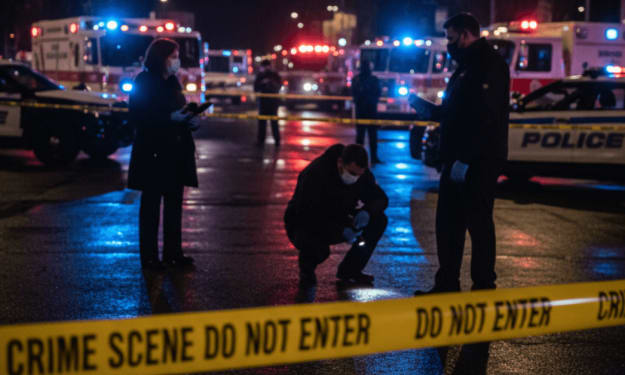
On September 10, 2025, Charlie Kirk, a well-known conservative activist and founder of Turning Point USA, was fatally shot during a speaking event at Utah Valley University in Orem, Utah. The incident, described by Utah Governor Spencer Cox as a “political assassination,” has shocked the nation and sparked debates about political violence and gun laws in the USA. This article covers the details of the shooting, the suspect, the weapon used, and the broader context of the event.
By Manoj Makwanaabout a year ago in Humans
After the Storm . Content Warning.
The house feels different now. Rooms that were once locked have creaked open, and I find myself walking through hallways I didn't know existed. Each doorway holds a different kind of light—some warm and golden, others cool and silver, a few flickering like candles in the wind. The architecture has expanded, as if the foundation finally has permission to hold all that it was meant to contain.
By Parsley Rose about a year ago in Humans
Echoes of the Past: Life 5000 Years Ago
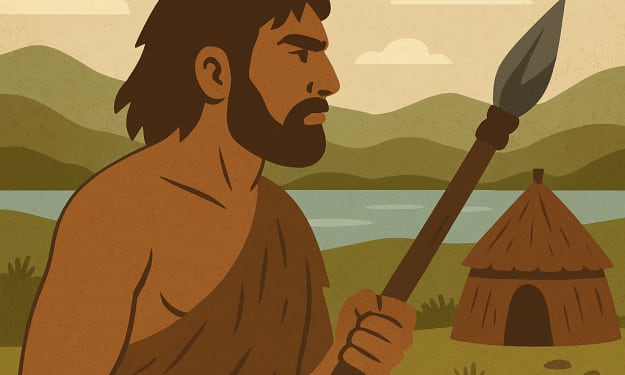
The image before us transports us back 5000 years—a time when the world was younger, wilder, and unshaped by the machinery and technology that dominate our lives today. It is a vision of a man clad in animal skins, holding a spear, standing tall before a landscape that is both simple and majestic. A hut sits behind him, mountains rise in the distance, and rivers carve their path through green valleys. It is a picture not only of survival, but of beginnings—the roots of humanity itself. When we look into this ancient scene, we are not merely staring at a man from long ago; we are staring at ourselves. This is the story of us before cities, before nations, before history was written. It is the untold narrative of resilience, love, and the primal spirit that has carried humanity from stone tools to space travel. Survival as a Way of Life Five millennia ago, survival was not taken for granted. Every sunrise meant another test. The man in the picture holds a spear, not as a symbol of aggression, but as a symbol of necessity. With it, he hunted for food, defended his family, and carved his way through an unforgiving world. His day began at dawn with the rising sun, when the community stirred from their huts. There was no clock to dictate life—only nature. The sounds of birds, the rushing of water, and the movements of animals served as timekeepers. Each action—whether gathering berries, fishing in streams, or sharpening stone blades—was done with intention. Food was scarce, predators were real, and the land itself was both friend and enemy. Yet, despite these challenges, early humans thrived. They learned to harness fire, craft tools, and build shelters. Each discovery, though small in today’s eyes, was monumental for them. A sharpened spear meant security. A woven basket meant the possibility of saving food for the next day. A simple hut meant a place of warmth and safety. These were the building blocks of civilization. Communities Bound by Love and Trust Though the picture shows a lone man, we know he was never truly alone. Humanity has always been a collective species. Five thousand years ago, families and tribes were everything. Bonds were not defined by contracts or laws, but by shared struggle and shared survival. Every hunt was a communal effort. Every meal was shared. Every fire was circled by stories—stories of bravery, of spirits, of ancestors. Around those fires, language was born and passed down, weaving together the human experience. Love, too, was present. It was different from what we know today, perhaps, but no less real. Mothers cared for their children with the same tenderness we recognize now. Fathers taught sons and daughters the skills they needed to endure. Couples found comfort in one another’s presence, their unions ensuring the continuation of their people. Even then, in the most primitive conditions, the human heart longed for connection. Nature as Teacher and Adversary The landscape surrounding the figure is more than a backdrop—it was life itself. Rivers offered water and fish, forests offered shelter and resources, mountains provided guidance for navigation, and animals represented both danger and sustenance. Nature was not something to be conquered; it was something to be respected. Early humans lived with an understanding that their survival was directly tied to the cycles of the earth. Rainfall determined crops. Migration patterns determined hunting seasons. The stars themselves told stories of when to plant and when to move. This respect often gave rise to spirituality. The sun was a god, the moon a protector, and animals sacred messengers. Every part of the natural world was alive with meaning. And though their explanations of the universe were different from ours, they spoke to a profound truth: that humanity is deeply connected to the earth. Innovation in Simplicity It is easy to assume life 5000 years ago was static, but it was not. The man holding his spear is more than just a survivor; he is an innovator. Every day demanded creativity. A broken tool required problem-solving. A shortage of food required new hunting strategies. Illness required remedies from herbs and plants. It was during this period that humans began to transition from pure hunter-gatherers to early farmers. Seeds were planted deliberately. Animals were domesticated. Simple pottery was shaped and baked to store grain and water. These small advancements laid the groundwork for everything that came later—villages, cities, empires, and modern society. The spear in his hand, sharpened from stone and bound with sinew, is not just a weapon; it is the embodiment of human ingenuity. It is proof that even in hardship, creativity flourished. Lessons for the Modern World What can a picture of life 5000 years ago teach us today? In truth, it reveals a mirror. While our world is filled with technology, skyscrapers, and instant communication, our needs are not so different from those of our ancestors. We still seek safety, food, love, and meaning. The man in the image fought for survival; we fight for purpose. His spear was his tool; ours might be education, innovation, or creativity. His community gathered around fire; ours gathers around screens. The forms may differ, but the essence is the same. The simplicity of his world also serves as a reminder of balance. In chasing progress, we often forget the importance of living in harmony with nature. Our ancestors could not afford to destroy the land that sustained them—yet we do so recklessly. Perhaps looking back 5000 years can teach us humility. It can remind us that we are not separate from the earth, but part of it. The Eternal Human Spirit At its core, this picture is not about the past—it is about continuity. The man with his spear may seem distant, but his spirit lives on within us. His determination, resilience, and creativity are the same traits that drive us forward today. When we marvel at his simplicity, we must also admire his strength. He represents the raw essence of humanity: adaptable, resourceful, and deeply connected to one another and the world around them. Without him, and millions like him, we would not exist. The story of 5000 years ago is not just history—it is our inheritance. Every heartbeat we feel, every dream we chase, carries echoes of his footsteps. Conclusion: Looking Back to Move Forward The picture of a man standing with a spear in a world unshaped by modern hands is not just a glimpse of the past. It is a reminder of where we came from and what we carry within us. Life 5000 years ago was hard, but it was also pure. It was defined by survival, community, love, and respect for nature. It was a time when every day was a triumph and every small discovery was monumental. As we stand in our modern world, surrounded by comfort and complexity, we must not forget the lessons of that ancient life. We must remember resilience. We must honor community. We must live with respect for the earth. And above all, we must recognize that the same human spirit that carried our ancestors forward continues to burn brightly in us today.
By Fazal wahid about a year ago in Humans
💔 The Call That Never Came
Sara sat by the window, holding her phone like it was the last thread connecting her to hope. The night was heavy. Outside, the sky was dark, the silence broken only by the slow ticking of the clock. Her phone screen stayed black… stayed still… stayed silent. She was waiting for one call. Just one. A call from her father. The man she hadn’t spoken to in more than three years. Their last meeting lived inside her like a wound that never healed. It wasn’t an ordinary argument. It was fire, sharp and cruel. She had shouted words she never truly meant. “I don’t need you in my life.” The moment she said it, her heart had trembled. But her pride was stronger than her love that night. Her father didn’t answer. He only looked at her with eyes full of pain—eyes that carried more sorrow than anger. Then he walked away. No sound. No words. Just silence. And that silence became the last thing between them. Days turned into weeks. Weeks became months. Months… into years. Every time she picked up her phone, she dialed his number. Every time her finger hovered over “call.” And every time, she stopped. Her heart whispered: Call him. Her pride whispered louder: Let him call first. So she waited. She waited on birthdays… On quiet nights… On days when her soul felt empty. But the call never came. That night, the silence in her room felt unbearable. Sara stared at her phone until her eyes blurred. And then—suddenly—it buzzed. Her heart leapt. Her chest filled with hope. Finally… it’s him. Her hands shook as she grabbed the phone, desperate to hear her father’s voice. But the name on the screen was not his. It was a message. From her cousin. Just two lines. "Sara, I’m so sorry. Your father passed away tonight." Her world shattered. The phone slipped from her hand. It hit the floor with a dull sound, but she didn’t even hear it. Tears blurred everything. Her chest ached with a pain she had never known. Every memory came crashing back—his smile, his quiet care, his voice she thought she would hear again. But she would never hear it. Not ever. She pressed her face into her hands and whispered through broken sobs: “Dad… just once… I wanted to say I’m sorry.” That night she learned a truth that was sharper than any argument. Silence is not peace. It is a weight. It grows heavier every day, until it crushes you. And pride… Pride is not strength. It is a thief. It steals time. It steals love. It steals the moments we thought would always be there. But time is not endless. And love left unspoken dies in silence. So here is the lesson Sara never wanted to learn but now carries forever: If there is someone you love, don’t wait for them to call first. Don’t let days turn into years. Don’t let pride keep you silent. Pick up the phone. Send the message. Knock on their door. Say the words now. “I’m sorry.” “I forgive you.” “I love you.” Because one day the silence will break— Not with their voice… But with news that you are too late. And by then, the words inside you will become nothing but echoes in an empty room. Sara never got the call she waited for. But her story carries a reminder for us all: 🌹 If someone you love is waiting for your voice, don’t wait for tomorrow. Tomorrow may never come. “Dear readers 🌹, thank you so much for reading/listening to my story. Your support and love mean the world to me. If you want to enjoy more stories, please subscribe and continue supporting me. Your encouragement keeps me going and inspires every new tale. 💖📱”
By ✦•············• Freelancer •············✦about a year ago in Humans
Cancer Woman and Pisces Man Compatibility Score. AI-Generated.
When a Cancer woman and a Pisces man come together, it often feels like destiny. Both belong to the water element, which means they understand each other’s emotions, intuitions, and unspoken needs on a profound level. This pairing is considered one of the most harmonious in the zodiac because it combines Cancer’s nurturing and protective nature with Pisces’ compassionate and dreamy soul. Their love story often feels like a fairytale—gentle, deeply romantic, and spiritually uplifting.
By Inspire and Funabout a year ago in Humans
Leaving community
In the last 3 years, I have built, entirely by accident, a nearly perfect life. A wonderful home by the sea, a full and active community, friendships that make me feel seen and genuinely loved, work that I didn’t know could exist but that I have created just to suit me.
By Kirstyn Brookabout a year ago in Humans
7 Mysterious Ways the Universe Tests You Before True Love Arrives
You’ll get a clear roadmap of seven early signals that predict long-term connection. A veteran couple’s therapist tracked patterns across decades and found that surprise, intrigue, timelessness, and a quiet certainty often show up before commitment.
By Wilson Igbasiabout a year ago in Humans
Signs You’re the Black Sheep: How to Cope with Being Different
Introduction Have you ever felt like the person at a family dinner whose opinions get brushed off or the one relatives roll their eyes at when you choose a different path? Maybe your career, values, or lifestyle don’t fit the family mold, and you’re labeled the “odd one out.” That persistent sense of not belonging can be exhausting—and it’s a common experience for people who feel like the black sheep.
By Wilson Igbasiabout a year ago in Humans