fact or fiction
Is it a fact or is it merely fiction? Fact or Fiction explores relationship myths and truths to get your head out of the clouds and back into romantic reality.
Whispers in the Sand
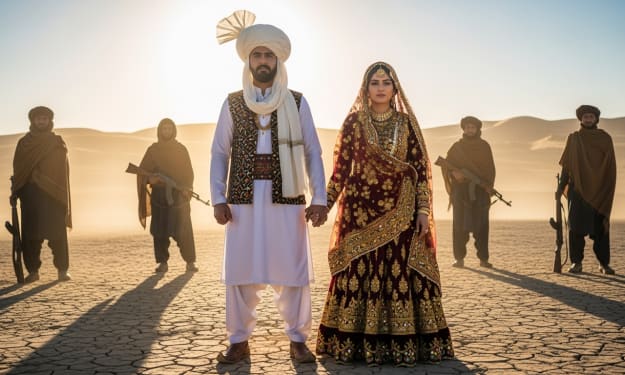
In the shadows of the mountains of Balochistan, where silence weighs more than rock and the desert wind whisks away secrets, two young hearts had chosen love. It was not rebellion. It was not adultery. It was the pure, holy choice of a man and a woman to marry each other by the law of Islam.
By Shehzad Anjumabout a year ago in Humans
The Day I Stopped Waiting for Tomorrow
We all say it.“I’ll start tomorrow.”“I’ll do it later.”“I’ll change when the time is right.” I used to live my life in that cycle—constantly pushing my dreams, my goals, and even my happiness into the distant place called tomorrow. What I didn’t realize was that “tomorrow” is the most dangerous word we tell ourselves. Because often, tomorrow never comes.
By ✦•············• Freelancer •············✦about a year ago in Humans
"My failure to freedom :my journey'. AI-Generated.
Freedom. It’s a word we all dream about, fight for, and chase. For me, freedom was the sweetest taste of life — the moment when I felt I was finally in charge of my own destiny. I was young, ambitious, and filled with fire. I no longer wanted to be tied down by rules, expectations, or the voices of others telling me what I should or should not do. When I stepped out into the world with nothing but my dreams, it felt like stepping into endless skies. I believed freedom meant I could do whatever I wanted, live however I pleased, and ignore the consequences. After all, wasn’t that the meaning of being truly free? But as I would later learn, freedom is not just about breaking chains; it is also about carrying the weight of responsibility. --- The First Steps into Independence The first days of independence were magical. I could wake up when I wanted, go where I pleased, and make choices that belonged only to me. For the first time in my life, I felt like the author of my story. I chased opportunities with a burning passion. I took jobs without hesitation, started projects I barely understood, and surrounded myself with people who promised me easy success. Every day felt like an adventure, every mistake felt like a lesson, and every risk felt like proof that I was alive. But the problem was that I was living without balance. I mistook recklessness for courage, and carelessness for confidence. I thought freedom gave me wings, but I forgot that even wings need direction — otherwise you just fly in circles until you fall. --- The Subtle Descent into Failure Failure does not announce itself with loud drums. It creeps in slowly, like shadows at sunset. At first, it was small mistakes: missed deadlines, careless spending, broken promises to myself. I ignored them, telling myself, “This is part of the journey. Everyone makes mistakes.” But soon, the mistakes became heavier. My savings began to vanish faster than I earned. Opportunities slipped through my fingers because I lacked discipline. I started surrounding myself with the wrong people — those who drained my energy instead of lifting me higher. One by one, the walls of my “freedom” began to collapse. What once felt like a wide-open sky slowly turned into a cage of my own making. --- The Rock Bottom Moment Every story of failure has a breaking point — mine came one night when I found myself sitting alone in an empty room. The room was quiet, but inside me there was a storm. I looked around: no friends, no opportunities, no direction. The fire I once carried had turned into ashes. That was when the truth hit me harder than ever: I had mistaken freedom for carelessness, and the result was failure. I had thought freedom meant having no rules. But real freedom, I realized, is about having the wisdom to govern yourself. Without discipline, freedom is not a gift — it’s a trap that leads you straight to downfall. --- The Lessons Failure Taught Me It took losing everything to understand what I had been blind to. Failure became my greatest teacher, teaching me lessons no success could have ever shown. 1. Freedom without responsibility is destruction. You can only enjoy independence if you are wise enough to handle its weight. 2. Dreams need discipline. Wishing for success is easy, but building it requires structure, effort, and patience. 3. Not every friend is a true companion. Some people are there to enjoy your rise, but they vanish in your fall. Choose wisely. 4. Failure is not the end. It is a mirror that shows you your flaws and pushes you to grow stronger. These lessons were bitter at first, but in time, they became the foundation of a new version of myself. --- The Rebuilding Phase After failure, rebuilding felt like climbing a mountain barefoot. Every step was painful, but I knew the only way out was forward. I started with small actions. I woke up early, even when I had nowhere to go. I saved little amounts of money, even when it seemed pointless. I surrounded myself with people who inspired me instead of those who drained me. I learned to be patient, to plan, and to forgive myself for my past. Slowly, I began to realize that the real strength of freedom lies not in living without rules, but in creating rules for yourself that guide you to growth. --- The Moral of the Journey Now, when I look back on my journey from freedom to failure, I do not see it as a tragedy. I see it as a necessary chapter of my life. Because failure taught me what freedom really means. It showed me that: Freedom is not the absence of responsibility; it is the mastery of it. Failure is not your enemy; it is your greatest teacher. The strongest people are not those who never fall, but those who rise after falling. --- A New Dawn Today, I stand not as someone broken by failure, but as someone shaped by it. My freedom now is different from before — it is not wild, reckless, or careless. It is grounded, steady, and purposeful. I live with discipline, I make choices with wisdom, and I carry responsibility with pride. My journey from freedom to failure has transformed me into someone stronger, someone wiser, and someone more prepared for the future. --- Final Thought If you are on your journey, chasing freedom, remember this: do not run from failure. Welcome it, learn from it, and rise because of it. True freedom is not in doing whatever you want. True freedom is in shaping your life with courage, wisdom, and responsibility. And sometimes, you must pass through failure to truly understand what freedom really is.
By Ihtisham Ulhaqabout a year ago in Humans
Zulekha’s Choice: When Healing Becomes a Transaction
Zulekha had always been a woman of quiet dignity. At 56, she carried herself with grace — a widow living alone in a two-room home in Lahore, supported only by a small government pension and the occasional kindness of neighbors. Her husband had passed away a decade earlier, and her two sons had moved abroad, caught up in their own lives.
By Shehzad Anjumabout a year ago in Humans
"Shadows on Nicholson Road. AI-Generated.
At a bend in the road, several stray dogs appeared suddenly, barking loudly. Durrani’s heart sank as he looked ahead. A shadow moved in the bright light of his car’s headlights. From the darkness, a human figure emerged, hunched and in pain. The car jerked violently, colliding with an electric pole. Durrani sat frozen at the wheel for a few seconds, trying to comprehend what had just happened. Slowly, he stepped out, trembling, and saw the man—Wazir—lying on the road, groaning. Blood had seeped into the cracks of the asphalt. Fear gripped him, but he had to act. In the dim starlight, he saw the large man lying face down. The road stretched empty for miles, swallowed by deep darkness. Durrani dragged him to the roadside, attempting to protect the evidence that linked him to the accident. The car refused to start no matter how hard he tried, and panic clawed at him again. Moments later, the light of a motorbike appeared in the distance, soon followed by a truck screeching toward him. Durrani flagged them frantically and begged, “There’s been an accident. Take me to the police station immediately!” Inside the truck, two men stared at the sight—a man in a black suit lay bleeding on the street, a motorbike destroyed nearby. Without hesitation, they agreed and sped toward the police station. Upon reaching, the night-duty inspector, along with two constables, accompanied Durrani back to the accident site. The man, Abdullah, was still alive but gravely wounded. They placed him in the station wagon and rushed him to the hospital. When Durrani returned home late that evening, he was exhausted. The hospital report confirmed that Abdullah had survived but had lost a leg. Durrani, thinking only of minor damages and insurance compensation, left the matter at that. --- Abdullah’s Transformation Abdullah, a rickshaw puller by profession, was now confined to a bed. Thin as a reed, bent like an insect, coughing endlessly, his once lively eyes now reflected only terror. His wife cared for him, but his misery made him bitter, and even neighbors began avoiding him. He lived in Jamsahla, a poor neighborhood dotted with half-built homes and thatched roofs. At its center lay an old British cemetery, surrounded by a solid wall. The legend of the cemetery was terrifying: the ghost of a British colonel who had committed suicide haunted the streets at night. Whenever anyone saw him, they would hear a single terrifying word: “Buttermilk.” One night, when Abdullah’s wife fell ill and he had no food, he wandered into the cemetery lane. Through the mist, he saw a lone figure. Overcome with fear and hunger, he hissed in a ghostly voice, “Drink buttermilk…” The man, terrified, dropped a bundle he was carrying and ran. Abdullah seized the bundle—it contained food. That night, hunger had forced him to step into the role of a ghost. From that day onward, Abdullah embraced his terrifying new persona. Wrapped in blankets, his crutches clattering on the streets, he became Banash—the living ghost of Nicholson Road. People believed the colonel’s ghost had returned. Initially, he stole food, but over time, he became bolder, even taking money from frightened passersby. --- The Power of Fear Night after night, the neighborhood lived in terror. Streets emptied as soon as darkness fell. Abdullah’s face, twisted by pain and fear, and his hollow, echoing voice terrified even the bravest. The legend of Banash grew. Eventually, his overconfidence led him to knock on a door one night, trying a new scare tactic. “Drink buttermilk…” he whispered, his voice harsher than ever. The man inside screamed, waking the entire neighborhood. Soon, villagers poured into the streets with stones, intent on killing the ghost. Abdullah tried to flee, but stones rained down upon him. One struck his head. He cried, “I am dying! Help me!” but no one listened. The villagers, believing in the ghost story, continued their assault. By dawn, he lay in the street, bloodied and battered, his crutches beside him. Banash had fallen—not a ghost, but a broken, desperate man. --- Epilogue Abdullah’s story became a dark legend in Jamsahla. People still whispered about Banash, the ghost of Nicholson Road. But those who knew the truth understood: he had become a monster only because society had abandoned him. Hunger, disability, and neglect had shaped his terror. Even in death, the tale reminded the neighborhood of the fine line between fear and compassion. --- 🌟 MORAL When society neglects the weak and vulnerable, it forces them into the very roles that others fear. Compassion and empathy can prevent monsters from being created.
By Ihtisham Ulhaqabout a year ago in Humans
Layla and Majnun: A Love That Burned Through the Desert
Prologue: The Desert Holds Their Names The desert has no memory, and yet, it remembers everything. It remembers the footprints of caravans that vanished centuries ago. It remembers the songs of poets carried away by the wind. It remembers the cries of lovers who dared to whisper their secrets into the stars.
By noor ul aminabout a year ago in Humans
Is Civil War Coming to Europe?
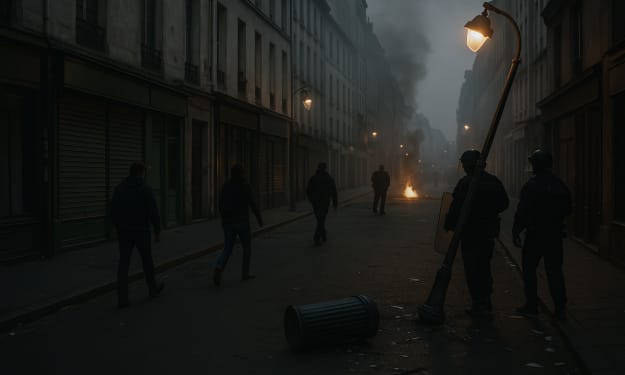
For decades, the idea of civil war in Western Europe seemed unthinkable. That was the kind of tragedy reserved for failed states, distant lands, or history books. But today, a growing number of experts are warning: the threat may no longer be theoretical. And two countries stand out as particularly vulnerable—France and the United Kingdom.
By Bubble Chill Media about a year ago in Humans
The Scent of Rain and Distant Melodies
Ancient-looking stone structures and vibrant foliage line the path. The man is wearing a deep red sweater and jeans, while the woman has a flowing blue skirt and a dark top. Their backs are to the viewer, emphasizing their shared journey into the heart of a place that feels both timeless and full of untold stories. Mist hangs in the air, hinting at a recent rain.
By noor ul aminabout a year ago in Humans
The Judge Who Became the Grandfather of the Internet
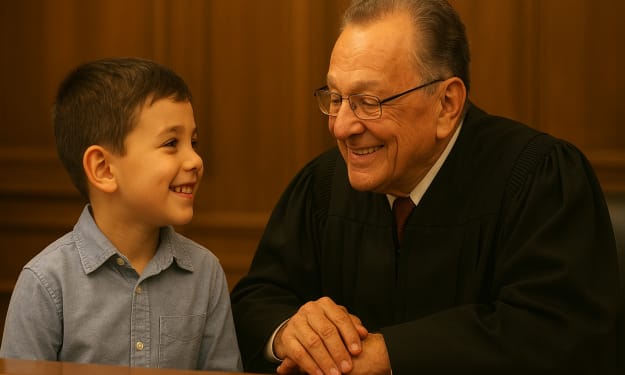
What image comes to mind when you think of a courtroom? For many, it’s a stern judge, cold legalese, and people anxiously awaiting their fate. But in Providence, Rhode Island, one judge changed that perception forever. Judge Frank Caprio, affectionately known as the “Grandfather of the Internet,” transformed his courtroom into a place where the law meets compassion, and where kindness becomes as important as justice.
By Echoes of Lifeabout a year ago in Humans