fact or fiction
Is it a fact or is it merely fiction? Fact or Fiction explores relationship myths and truths to get your head out of the clouds and back into romantic reality.
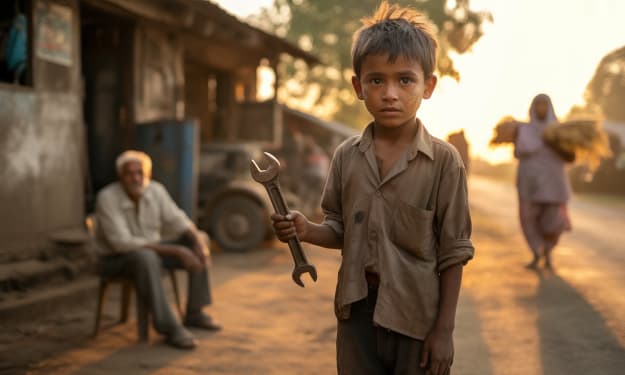
He Carried a Wrench, Not a Childhood
Part 1: The Weight of a Silent Dream In a forgotten Pakistani village between dry farmland and interior Pakistan's feudal territories, a boy named Ikram lived with hopes bigger than his shoulders. He was not quite 12, but his face was already skilled at holding down hurt. He had worn through his slippers, his father's extra-large shirt over his own size, and eyes that would beg anybody to show clemency without words.
By Shehzad Anjumabout a year ago in Humans
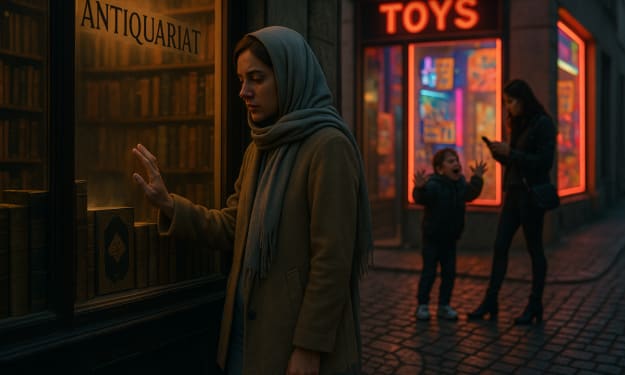
Big Toys, Small Joys: A Walk Through the Past
It was a regular Tuesday morning when Claire wrapped her scarf, slipped on her coat, and stepped into the crisp hush of early autumn. The city hummed its usual tune — cyclists rattling past, café spoons clinking against cups, children skipping with juice boxes in hand.
By Shehzad Anjumabout a year ago in Humans
I’m Not a Gift, but I Want a Gift
The screen washed her face in blue light. Marta scrolled through profiles like trading cards: the awkward ones—swipe left; the loudmouths with barroom grins—swipe left; the “I like sunsets and the sea” types—swipe left.
By Halina Piekarska (UltraBeauty Blog)about a year ago in Humans
Chains of the Brothel: Part 1 Anita’s Silent Fall
In 1969, in a small, quiet village in Bengal, a child named Anita Das was born. The village was a place of stillness—narrow dusty lanes where children’s laughter echoed, fields that stretched endlessly in a green embrace, and evenings where the horizon glowed golden as the sun slipped away. Anita grew up with the innocence of the village stitched into her soul.
By Shehzad Anjumabout a year ago in Humans
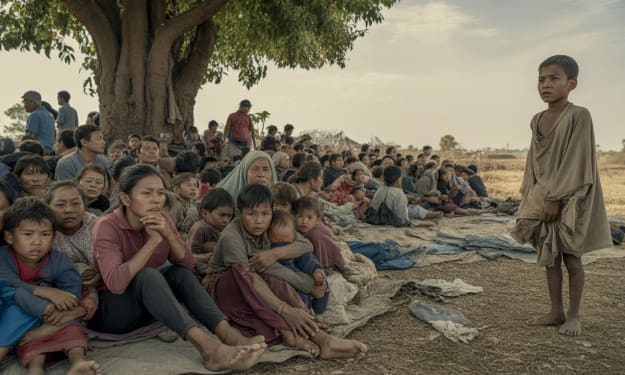
Chains of the Brothel: Part 2 — The Price of 2200 Rupees
The year was 1990. Anita had been married only two years when her world began to collapse. She had once believed marriage was a doorway into love and safety. Amit Mishra had wooed her with promises — sweet words whispered in the quiet of evening, vows of forever, dreams of building a family together. Anita believed him. She gave him her trust, her loyalty, her heart.
By Shehzad Anjumabout a year ago in Humans
“The Night That Turned Into a New Beginning”
The night was supposed to be ordinary. Nothing more than the usual routine of walking home after a long, exhausting day. The streets were quiet, the kind of silence that feels heavier than noise. I remember feeling trapped inside my own head, weighed down by regrets and unfulfilled dreams. My life had fallen into a cycle: work, eat, sleep, repeat. It wasn’t living—it was just surviving. That night, however, something shifted. I had taken the long way home, hoping to clear my mind. Streetlights flickered like half-forgotten promises, and the distant hum of cars faded into the background. I was thinking about how small my life felt, how far away my dreams seemed. Somewhere between those thoughts, I realized I had been living as if I had endless time—but in reality, I had been wasting it. Halfway down the street, I saw an old café still open. The glow from its window spilled onto the pavement, warm and inviting. I don’t know why I stepped inside, but something in me whispered, go in. The café smelled of fresh coffee and old wood. There were only two people inside: the tired-looking barista cleaning the counter and a man sitting alone with a notebook. I ordered a coffee and sat in the corner, lost in thought. That’s when the man with the notebook looked at me and smiled. “You look like you’ve got a storm inside your head,” he said. I laughed nervously, unsure how to respond. But somehow, we started talking. He was a traveler, a writer who had been wandering city to city for years. He told me about the places he’d been, the risks he had taken, and the lessons he had learned. Every word he spoke felt like a reminder of everything I had once wanted for myself but had abandoned along the way. At one point, he said something that struck me deep: “Life doesn’t wait for us to be ready. If you’re waiting for the perfect moment, you’ll be waiting forever. You have to create the moment.” That single line pierced through my thoughts like lightning. For so long, I had been waiting—for opportunities, for courage, for someone to believe in me. But I realized the truth: nothing would ever change unless I changed first. When I left the café that night, the streets felt different. The silence was no longer heavy—it was peaceful. The same streetlights that once felt dull now looked like guiding stars. I walked home with a strange energy inside me, a spark I hadn’t felt in years. That night turned into the beginning of something new. The very next morning, I made a list of the things I had been putting off: starting a side project I had dreamed of, applying for opportunities I had been too afraid to chase, and reaching out to people who could inspire me. Slowly, I began ticking them off one by one. Was it easy? No. Some days I wanted to give up, to crawl back into the comfort of my old routines. But every time I thought of quitting, I remembered that conversation in the café. I remembered how one stranger’s words had reminded me that my life was still mine to rewrite. Weeks turned into months, and changes started to unfold. I wasn’t just surviving anymore—I was living. Opportunities I once thought were impossible started showing up, not because they magically appeared, but because I finally had the courage to chase them. Looking back now, it amazes me how one night—one ordinary evening that could have easily been forgotten—became the spark that reshaped my entire path. It taught me that life doesn’t always change in dramatic, cinematic moments. Sometimes, it changes in small, quiet ways: a random decision to walk a different street, a choice to step into a café, a conversation with a stranger. That night will always remind me of this truth: Every ending hides a new beginning, and sometimes, you just have to be awake enough to see it.
By Umar Farooqabout a year ago in Humans
New to Islam, New to Ramadan
If you had asked me two years ago where I’d be today, I probably would’ve laughed. Back then, I was the girl with tattoos climbing up my arms, a tiny crescent inked under my eye, and a spirit that wore rebellion like armor. Religion? That was for other people. Not for someone like me—too messy, too scarred, too far gone.
By Shehzad Anjumabout a year ago in Humans
The Last Library of Humanity
M Mehran Eli walked slowly through the ruins of the city, the wind carrying with it the faint smell of dust and forgotten fire. His boots crunched against shards of glass that had once been windows to tall buildings. The world, he thought, had grown quieter than it ever should have been. He wasn’t alone. Humanity had not completely disappeared—though sometimes, it felt like it had. Small clusters of people still survived, scattered like seeds across barren soil. But survival had become a task of instinct: eat, drink, shelter, repeat. Few remembered what it meant to live beyond survival. Eli carried a canvas bag across his shoulder, heavy with items most people wouldn’t have bothered with. Where others hunted for canned food or spare tools, he searched for books. Pages torn, spines cracked, some nearly dissolved by rain—but to him, they were treasures. Words, he believed, were the last evidence of what humans once were. That morning, he stumbled upon something extraordinary. Behind the skeletal remains of a school, he found a basement door wedged half-open by rubble. It took him nearly an hour to pry it wider, squeezing himself through the narrow gap. Inside was darkness. He lit a match. The flame revealed rows upon rows of shelves, damp but intact. His breath caught in his throat. It was a library. The books were swollen with moisture, but thousands of them remained. Stories. Histories. Ideas. Dreams. It was as if he had stepped into the mind of humanity itself. He set the match in a metal tin and fed it bits of paper until a small flame danced. Light flickered across spines with faded titles: The Odyssey, A Brief History of Time, Collected Poems of Rumi, Medical Guides, Atlases. His fingers trembled as he touched them. For hours, Eli read. He turned brittle pages carefully, whispering words aloud just to hear them exist again. Each book was a voice of someone long gone, yet still speaking. Here was joy, here was sorrow, here was questioning. When night fell, he built a fire in a corner of the basement. He ate a small ration of dried beans and bread, then sat cross-legged with a book of poetry. He read verses about love and loss, and for the first time in months, he felt less alone. But the world outside was never patient. The next morning, as sunlight filtered through cracks in the ceiling, Eli heard footsteps above. Heavy, deliberate. He froze. Voices followed. A group—scavengers, most likely. They were dangerous not because they were evil, but because hunger made people cruel. Books meant nothing to them. If they found the library, they would burn it for warmth. Eli quickly stuffed three books into his bag: one on medicine, one on farming, and one filled with poems. Knowledge for the body, knowledge for survival, knowledge for the soul. Then he smothered the fire and pressed himself into the shadows. The footsteps grew louder. Dust fell as the intruders pried open the basement door. Torchlight cut through the darkness. “Look at this,” one of them muttered. “More junk.” Another kicked a book, laughing. “Paper doesn’t feed you.” They didn’t notice Eli, pressed silently against the far wall. For a moment, he feared they would start tearing the shelves down for firewood. But luck—or perhaps mercy—intervened. “There’s nothing here worth taking,” the leader growled. “Move on.” One by one, the scavengers left. Their footsteps faded until the silence returned. Eli didn’t move for nearly an hour, waiting, listening. Only when he was sure they were gone did he rise, his muscles aching. He looked around at the rows of books, untouched, waiting. “I’ll come back,” he whispered, as if promising the library itself. For the next several months, Eli did return. He made careful trips, each time taking a few books with him and hiding them in safer places. Sometimes he traded knowledge for food: how to treat wounds, how to plant seeds, how to build shelters. People thought he was strange, but they listened. Slowly, in small ways, communities began to grow again. What mattered most, however, were the poems. At night, when people gathered around small fires, Eli would read verses aloud. Stories of love, of courage, of mistakes, of dreams. Faces softened in the glow, eyes widened, hearts remembered. The words reminded them that being human was more than surviving—it was feeling, imagining, connecting. Years passed. The city continued to crumble, but around it, villages rose. Children grew up hearing not only instructions on how to live, but songs, myths, and poems. Eli grew older, his beard turning white, but his voice stayed steady. One evening, as the sun dipped behind the hills, a child asked him, “Why do you care so much about old books?” Eli smiled. He placed a hand on the boy’s shoulder. “Because books are people,” he said. “Every page is someone reaching out across time, saying I was here, and I felt what you feel now. Without them, we forget who we are.” The boy thought about that for a long moment, then nodded. And in that moment, Eli knew humanity still had a chance. Not because of the tools they built, or the shelters they raised, but because they remembered the voices of those who came before. The library remained hidden in its basement, untouched by fire or greed. It was no longer just a collection of books—it was a seed. And in that seed, humanity began again.
By Muhammad Mehranabout a year ago in Humans