fact or fiction
Is it a fact or is it merely fiction? Fact or Fiction explores relationship myths and truths to get your head out of the clouds and back into romantic reality.
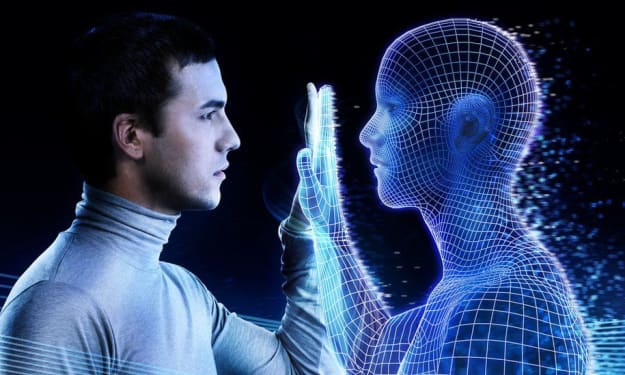
"Unleashing the Power of Digital Twin: Transforming Physical Assets into Virtual Replicas"
OVERVIEW FOR DIGITAL TWINS; Digital Twin is a virtual representation of a physical asset that allows real-time monitoring and analysis. It offers numerous benefits such as improved performance, enhanced customer experience, predictive maintenance, and increased safety and security. Despite some challenges in implementation, such as the need for high-quality data and robust analytics, digital twin technology has already made significant impact in industries such as manufacturing, healthcare, construction, and energy. The future of digital twin holds continued growth and emerging uses, making it an important consideration for organizations and individuals alike.
By Mongiya Jk4 years ago in Humans
Amazing Facts About BRAIN
Scientists have proven beyond any reasonable doubt using fMRI’s, that reframing negative situations literally rewires your brain by creating new neural pathways and can make you a happier, more easygoing person. Very briefly and in case you are unaware, a reframe is where you decide to look at a negative situation in a more empowering light. Your brain is approximately Speaking of large numbers, there are approximately 1.1 trillion cells and 100 billion neurons in the average human brain 75% water, but you should never drink it, even if you’re really thirsty, and anyway it probably wouldn’t taste very nice. Your brain only weighs about 3lbs, yet the greedy bastard uses between 20% and 25% of your energy supplies each day, so make sure you stay hydrated and eat high quality food. There are approximately 10 to the power of 60 atoms in the universe. Your brain laughs in the face of that figure however, as it has 10 to the power of 1,000,000 different ways it can wire itself up. A piece of brain tissue the size of a grain of sand contains approximately 100,000 neurons and 1 billion synapses. The slowest speed information passes around your brain is approximately 260 mph. You are completely unaware of about 95% of the activity that is going on inside your brain. If you weren’t, your brain would freeze up quicker than a Windows PC running ME. If you don’t take care of your brain, you can lose up to 85,000 brain cells a day and that’s a large part of what causes aging. With appropriate forethought however, you can reverse that trend and slow the aging process. You’re 40 - 60% more likely to buy food you can reach out and touch than food somebody describes to you or places behind a counter. The old fashioned sweet trolleys really do generate more sales and top restaurants know this. Your brain is so soft that you could probably spread it on toast if you were completely insane and liked eating human brains and dying all at the same time. After about the age of 25 and just as we reach peak development, the brain starts slowly shrinking. Some research has suggested that the male brain shrinks faster than the female one (not a surprise to the female population). If you don’t take care of your brain, you can lose up to 85,000 brain cells a day and that’s a large part of what causes aging. With appropriate forethought however, you can reverse that trend and slow the aging process.Vitamin B1 can help improve short- and long-term memory Vitamin B1 is essential to producing the brain chemical acetylcholine, which is needed for concentrating and storing memories. An Australian study revealed that those who consumed B1 supplements and folic acid for two years improved long and short-term memoryMemories start forming in the womb, as this is a critical time for brain development. Memory recall can occur as early as four months into pregnancy. The brain uses 20 percent of the body's total oxygen and energy, which travels to the brain through blood tubes (in the body). Nerve cells in the brain need a lot of energy; without (good) enough oxygen and energy to the central nervous system tissue, one can suffer damaged/weakened brain functions and nerve-based sicknesses/problems.Nerve cells travel 150 mph in the brain. Different types of nerve cells move at different speeds - for example, pain signals move much slower than other ones.Although pain is processed in the brain, the organ itself cannot feel pain. This is why brain surgeries can happen while a patient is awake, without discomfort. [Time] The list goes on and on. As more research is managed and did/done, and we learn more about the human brain's abilities, we also learn how to keep our minds sharp. Find out how we recall memories and how the brain changes when you learn. As good as the brain is at turning (for only a short time) memories into long-term ones, it's still important to keep those memories preserved for (people who will live in the future). That's why Legacybox helps you to (put into a computer) your memories - whether you have tapes, film, photos, or sound recordings, we're here to help.The average brain has between 50,000 and 70,000 thoughts a day. Upsettingly, the majority (a guessed (number) 60-70 percent) of the thoughts are negative.Being able to quickly access information--i.e. via our (right on the edge; maybe or maybe not) unbeatable Internet--actually makes it harder to remember. The harder we work to access data, the more likely we are to remember.Albert Einstein’s brain weighed 2.71 pounds (1,230 grams) — 10% smaller than the average of 3 pounds (1,360 grams).Technology has forced most of us to be prodigious multitaskers. But the brain can’t learn or concentrate on two things at once. What it can do is quickly toggle back and forth between tasks. Until recently, it was a “fact” that you were born with a set level of intelligence and a number of brain cells that could never be changed. But it has since been discovered that our brains have the capacity to change throughout our lifetimes due to a property known as brain plasticity.Memories are shockingly unreliable and change over time. Emotions, motivation, cues, context, and frequency of use can all affect how accurately we remember something. This includes “flashbulb memories” which occur during traumatic events. Most savants are born that way, but a brain trauma or disease can cause sudden savant syndrome, in which otherwise ordinary people suddenly develop genius-level abilities that they didn’t have before. While zombies do not exist, some scientists believe they could. They think it’s possible that a mutated virus or parasites could attack the brain and rapidly spread throughout large populations, essentially causing a “zombie apocalypse.”Few facts about the brain are as strange as the posthumous story of Albert Einstein’s brain. The pathologist who performed Einstein’s autopsy kept the brain in a jar in his basement for 40 years. Eventually, he made a cross-country trip with the brain in a Tupperware container to deliver it to Einstein’s granddaughter.
By santhoshkumar4 years ago in Humans
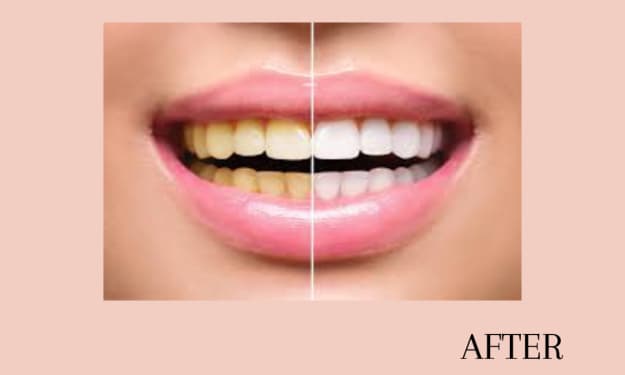
Fathima’s Journey to a Brighter Smile:
Once upon a time, there was a 16-year-old girl named Fathima who was unhappy with the yellow color of her teeth. She had always been self-conscious about her smile and felt that it was holding her back in social situations. She tried various teeth whitening products, but none of them seemed to make a significant difference.
By smiley cleaner4 years ago in Humans
The Power of a Brighter Smile:
CLICK HERE Once upon a time, there was a young woman named Sarah who was unhappy with the yellow color of her teeth. She felt that her smile was holding her back in both her personal and professional life. She tried various teeth whitening products, but none of them seemed to work for her.
By smiley cleaner4 years ago in Humans
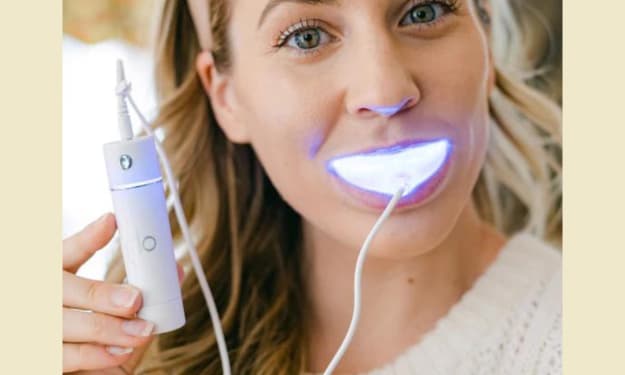
The Power of a Brighter Smile: A Story of LED Teeth Whitening Success
Once upon a time, there was a woman named Amy who was constantly self-conscious about the yellow color of her teeth. She felt that it made her look older and less attractive. She tried various teeth whitening products, but none of them seemed to work for her. She felt that her smile was holding her back in both her personal and professional life.
By smiley cleaner4 years ago in Humans
The Transformation of Khadija's Smile:
CLICK HERE Once upon a time, there was a woman named Khadija who was 69 years old. Khadija had always been proud of her beautiful smile, but as she aged, she noticed that her teeth had yellowed and lost their brightness. She felt self-conscious about her smile and felt that it made her look older.
By smiley cleaner4 years ago in Humans
The Science of Giveaways: Boosting Audience Engagement
Giveaways can be a highly effective way to engage your audience, build brand awareness, and drive conversions. However, not all giveaways are created equal. To make your giveaways truly effective, it's important to understand the psychology behind what makes them successful.
By The FitForge4 years ago in Humans
Win Big with Our Exciting Giveaway Campaign
The use of giveaways by businesses and individuals to engage with their audience and win new followers or customers has risen in popularity. Giveaways, whether they be for products, services, or social media contests, can increase brand recognition, draw users to your website or social media pages, and generate leads.
By The FitForge4 years ago in Humans
The Imagination of The Creative Wizard: A Story of Magic and Wonder
Once upon a time, in a world beyond our own, there lived a young boy who was brimming with creativity and imagination. He lived in a small village at the foot of a grand mountain, surrounded by rolling hills and lush forests. His mind was a never-ending fountain of ideas, a kaleidoscope of colors, shapes, and sounds that overflowed with possibility. This boy was unlike any other, for he had the power to bring his wildest dreams to life and create a world filled with magic and wonder. And so, without further ado, let us step into the imaginative world of the young boy who exceeded all expectations and lived a life beyond compare.
By Abanoup Nabil4 years ago in Humans