fact or fiction
Is it a fact or is it merely fiction? Fact or Fiction explores relationship myths and truths to get your head out of the clouds and back into romantic reality.
Exploring the Great Unknown: What Happens After Death?
Death is a subject that has captivated human curiosity for millennia. What happens after we die? Is there an afterlife, or does our existence simply cease to be? While we may never have definitive answers to these questions, various beliefs, philosophical theories, and scientific perspectives shed light on the mystery of what might occur after death. In this article, we'll explore some of the most prominent ideas and theories surrounding the postmortem experience.
By MysterioVerse3 years ago in Humans
Narcissism
The story of Narcissus from Greek mythology has become a metaphor for self-love and self-obsession. The tale has been passed down through generations and has inspired various forms of art, literature, and psychological theories. Narcissism, is not just a concept from mythology; it is also a term used in psychology to describe a personality trait and a mental disorder. Psychological narcissism, as defined by psychologists, refers to a pattern of traits and behaviours characterized by an excessive sense of self-importance, a constant need for admiration and validation, and a lack of empathy for others. Narcissistic individuals often have a grandiose view of their own abilities and achievements, and may exploit others to achieve their own goals. They have difficulty maintaining healthy relationships because of their inability to consider the needs and feelings of others. Psychologists often categorize narcissism into different types, such as grandiose narcissism and vulnerable narcissism. Grandiose narcissists display an overt sense of superiority and entitlement, while vulnerable narcissists tend to be more sensitive and defensive, often experiencing feelings of insecurity and self-doubt despite their outward bravado. It's true that narcissism exists on a spectrum, with some individuals displaying narcissistic traits without necessarily meeting the criteria for a clinical diagnosis of NPD. Understanding these distinctions is crucial when discussing narcissism in the context of psychology. Grandiose narcissism, characterized by extroversion, dominance, and a strong desire for attention and power, can lead individuals to pursue positions of influence and authority for self-serving reasons. Vulnerable narcissism, on the other hand, involves a sense of entitlement and a tendency to feel slighted easily, often leading to resentment and aggression when their self-image is challenged. Both forms can have negative consequences in interpersonal relationships and professional settings. Narcissistic Personality Disorder, as described, involves a pervasive pattern of grandiosity, a need for admiration, and a lack of empathy, among other traits. Importantly, these traits cause significant distress and impairment in various areas of life, making it a diagnosable mental health condition. Genetics plays a role in predisposing individuals to narcissism, as evidenced by twin studies. Additionally, early experiences and parenting styles can significantly impact the development of narcissistic traits. Children who are excessively praised and placed on a pedestal by their parents might develop grandiose narcissism, while those who experience cold and controlling parenting may develop vulnerable narcissism. Cultural factors, such as societies that emphasize individuality and self-promotion, can also contribute to the prevalence of narcissistic traits. The shift in societal values, as seen in the United States from the communal focus of the 1960s to the self-esteem movement and materialism of the 1970s onwards, has been linked to the rise in narcissism as a personality trait. When it comes to addressing narcissistic traits, psychotherapy and cultivating compassion toward others can be helpful. Therapy can provide a safe space for individuals to reflect on their behaviour, understand the underlying causes of their narcissistic tendencies, and develop healthier coping mechanisms. Practising compassion and empathy can also help narcissists develop a more balanced perspective and improve their relationships with others. However, self-reflection can be challenging for individuals with narcissistic personality disorder, especially when it involves confronting unflattering aspects of themselves. Overcoming these challenges often requires sustained effort, willingness to change, and support from mental health professionals, friends, and family members.
By Juma Dhieu Thep3 years ago in Humans
Humor on the High Seas
On the vast, unpredictable expanse of the open ocean, where salty air and rolling waves rule the day, there exists a unique phenomenon - the infusion of humor into high-sea adventures. "Humor on the High Seas" is a delightful collection of tales that unravel the rollicking, rib-tickling side of maritime life.
By Rajesh kumar 3 years ago in Humans
Aging and End-of-Life
It was early morning, and the sun's golden rays gently kissed the face of an old man named Samuel. He lay in his comfortable, worn armchair by the window, staring out at the world with eyes that had seen a century's worth of history. His room was filled with mementos, faded photographs, and the soft hum of his favorite jazz tunes playing on the record player.
By Solomon Aldorph3 years ago in Humans
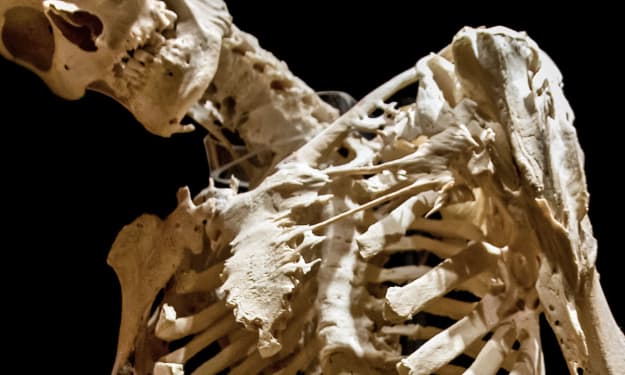
Is Prolonged Cell Phone Usage Affecting the Structure of Our Bones?
The idea that cellphones and tablets might have the power to reshape our bones is an intriguing topic that has recently gained attention in the media. It all began with a scientific report suggesting that the use of mobile devices could lead to significant and long-lasting changes in our bodies. However, it's important to examine this claim critically and understand the context.
By Keshia Robinson3 years ago in Humans
Virtual Encounter
In a world where technology reigned supreme, human relationships had taken on a new form. It was the year 2025, and people primarily connected through electronic devices. Spending an entire day without face-to-face interactions was not uncommon.
By Amilton Francisco Hondio3 years ago in Humans
Online Dating & Job Hunting Are The Same Exact Thing
In a world where swiping right or left has become the ultimate factor of your romantic future, there is a disturbing realization that not a lot of people realize and that is job hunting and online dating are the same exact thing. The process of finding a job and the ‘one’ is so intertwined that its practically comical, yet slightly bewildering. Don’t believe it? Well, let’s dive headfirst into the similarities of job hunting and online dating!
By Jay Kobayashi3 years ago in Humans
Psychology behind Dreams !!!
Dreams are experiences that occur within the mind during sleep, and they are not considered "real" in the same way that waking experiences are. Dreams are typically a product of the imagination, and they often involve a combination of elements from your memories, emotions, thoughts, and sensory perceptions. In that sense, dreams can be thought of as mental events or simulations rather than actual, physical occurrences in the external world.
By NAZARUDHEEN S M3 years ago in Humans
Unlocking the Enigma of Time Travel
Introduction Have you ever pondered the idea of traversing through the mysterious dimension of time? It's a notion that has captivated the human imagination for centuries, one that has been fervently explored in the realms of science fiction. The allure of time travel lies in the endless possibilities it offers - to witness history unfold, change pivotal events, or leap forward into a future unknown. But amidst the cinematic thrillers and literary masterpieces, we are left with a burning question: Is time travel merely a product of creative storytelling, or is it a concept grounded in the profound depths of scientific theory?
By Mahmudul Hasan Jahid3 years ago in Humans