fact or fiction
Is it a fact or is it merely fiction? Fact or Fiction explores relationship myths and truths to get your head out of the clouds and back into romantic reality.
A marriage of Kisses and Punches
A marriage of Kisses and Punches Falling in love at fifteen felt like stepping into a beautiful dream. I was captivated by a charming Bangladeshi boy whose smile made my heart race, filling my mind with thoughts of a bright future. By the time I turned sixteen, I discovered I was pregnant. Instead of fear, I felt excitement, eager to embark on what I thought would be a wonderful journey together.
By ♿ V+ Marie381Uk 2 years ago in Humans
The Power of Community and Social Connections . AI-Generated.
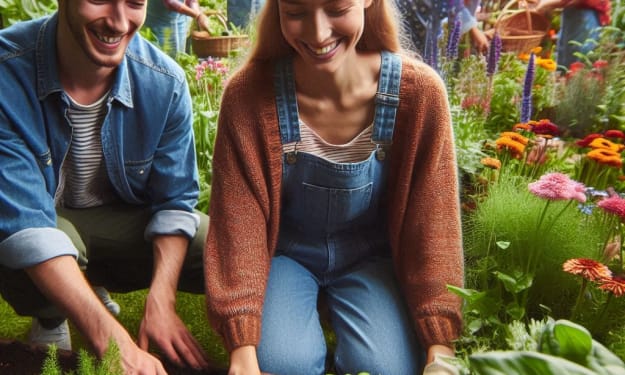
In a world where technology dominates our lives, it's easy to forget the importance of human connection. We spend hours staring at screens, interacting with people through likes and comments, but often neglecting the profound impact of face-to-face interactions. Meet Emma, a young professional who had just moved to a new city for work. She was excited for the new opportunity, but quickly found herself feeling lonely and disconnected from the world around her. That was until she stumbled upon a local community garden, tucked away in a quiet corner of the city. The garden was a vibrant oasis, filled with people of all ages and backgrounds, working together to grow fresh produce and build a sense of community. Emma was immediately drawn to the garden's warm and welcoming atmosphere. She began volunteering regularly, and soon found herself forming deep connections with the other gardeners. There was Jack, a retired teacher who had a wealth of knowledge about gardening and a quick wit that always left Emma laughing. There was Maria, a young mother who had recently immigrated to the country and was eager to learn new skills and make friends. As Emma worked alongside her new friends, she began to realize the profound impact that community and social connections can have on our lives. *The Science of Connection* Research has shown that social connections are essential to our physical and mental health. Studies have found that people with strong social connections tend to have lower blood pressure, healthier body mass indexes, and a reduced risk of depression and anxiety. In fact, a study by the Harvard Business Review found that people with strong social connections are 50% more likely to report being happy, and have a 40% higher chance of living to the age of 65. But social connections are not just important for our individual well-being; they also play a critical role in building stronger, more resilient communities. *The Power of Community* When people come together to form strong social connections, amazing things can happen. Communities can come together to support one another, share resources, and work towards common goals. In the community garden, Emma saw this firsthand. The gardeners worked together to grow fresh produce, which they would then share with one another and with those in need. They also came together to support each other, whether it was helping a new gardener learn the ropes or providing a listening ear during a difficult time. As Emma looked around at the vibrant garden and the people who had become like a second family to her, she realized that this was what community was all about. *Building Stronger Communities* So, how can we build stronger communities and foster deeper social connections in our own lives? One way is to get involved in local community initiatives, such as volunteering at a soup kitchen or participating in a neighborhood clean-up event. Another way is to join a club or group that aligns with our interests, whether it's a book club, a sports team, or a hiking group. We can also make a conscious effort to connect with the people around us, whether it's striking up a conversation with a stranger or simply being more present in our interactions with others. *Conclusion* As Emma looked out at the community garden, she knew that she had found something special. She had found a sense of belonging, a sense of purpose, and a sense of connection with the people around her. In a world that can often feel isolating and disconnected, the power of community and social connections is more important than ever. By building stronger communities and fostering deeper social connections, we can create a more compassionate, more resilient, and more vibrant world. *The Statistics* - *60%*: The percentage of people who report feeling lonely or isolated, according to a survey by the Pew Research Center. - *50%*: The percentage of people who report having strong social connections, according to a study by the Harvard Business Review. - *40%*: The percentage of people who report feeling more connected to their community after participating in a local volunteer program, according to a study by the Corporation for National and Community Service. *Community-Building Terms* - *Social capital*: The networks and relationships that exist within a community, which can be leveraged to achieve common goals. - *Community engagement*: The process of building relationships and partnerships between community members, organizations, and institutions. - *Collective impact*: The idea that collective action and collaboration can lead to greater social change than individual efforts alone.
By Henry Lucy2 years ago in Humans
Breaking Down Stigmas Around Men's Mental Health*. AI-Generated.
The struggle is real, but the silence is deafening. Men's mental health is often stigmatized, leaving many to suffer alone. But it's time to break the silence. By sharing stories, raising awareness, and encouraging open conversations, we can create a supportive community that allows men to speak freely about their struggles. Together, we can shatter the stigma and promote mental wellness for all. Let's start the conversation and create a safer space for men to open up.
By Henry Lucy2 years ago in Humans
Mosquitoes bite people with Type O blood nearly twice as often as those with Type A. AI-Generated.
Mosquito Magnet: Why Type O Blood Gets Bitten More Ever wonder why mosquitoes seem to buzz around some folks more than others at a backyard barbecue? It might not just be bad luck. A big factor could be your blood type. Mosquitoes have a real preference, and studies show they're way more attracted to Type O blood. This article will explore the science behind this mosquito attraction, the reasons Type O blood is so appealing, and other sneaky factors that make you a target. Plus, you'll discover effective strategies to protect yourself from these annoying pests, no matter your blood type. Ready to take back your summer nights? Let's dive in. The Science Behind Mosquito Attraction to Blood Types Research backs up the claim that mosquitoes prefer Type O blood. A study published in the Journal of Medical Entomology found that mosquitoes landed on people with Type O blood nearly twice as often as those with Type A. Type B landed somewhere in the middle. This preference isn't just a myth; it's rooted in science. Blood Type Antigens and Secretors Your blood type is decided by antigens. These sugars or proteins are found on red blood cells. About 85% of people are "secretors," meaning they show these antigens in their bodily fluids, like saliva and sweat. Mosquitoes can detect these antigens, using them to identify your blood type before they even bite. CO2 Production and Other Attractants While blood type is crucial, it isn't the only thing. Mosquitoes are drawn to carbon dioxide (CO2), body odor, and even the amount of heat you radiate. People who breathe out more CO2 (often larger people) are also more prone to bites. Blood type is just one piece of the puzzle. Why Type O? Unpacking the Mosquito Preference Why do mosquitoes favor Type O blood so much? Researchers have explored a few theories, but the exact reason isn't 100% clear. It's likely a mix of factors that make Type O blood especially attractive to these buzzing pests. Higher Concentration of Attractants One theory suggests Type O blood might have a higher concentration of certain compounds that mosquitoes love. These compounds, detectable on the skin of "secretors," could act as a signal, drawing mosquitoes in from a greater distance. The higher the concentration, the stronger the signal. Ease of Digestion or Nutritional Value Another idea is that Type O blood is just easier for mosquitoes to digest. It could also provide more essential nutrients that mosquitoes require to reproduce. A blood meal is a big deal for a mosquito, especially females that need it to lay eggs. If Type O blood offers an advantage, it makes sense mosquitoes would go for it. Beyond Blood Type: Factors Influencing Mosquito Bites Blood type matters, but many factors can influence mosquito bites. Understanding these can help you reduce your chances of getting bitten. Everything from your breathing to your scent plays a role. Carbon Dioxide Exhalation Mosquitoes are great at detecting carbon dioxide. They use it to find potential hosts from quite far away. If you exhale a lot of CO2, you're more likely to get noticed. Exercise and certain metabolic processes boost CO2 production, making you a more obvious target. Body Odor and Sweat Your unique body odor also draws in mosquitoes. Sweat contains lactic acid, ammonia, and uric acid. These are all known to attract mosquitoes. Some people naturally produce more of these chemicals, or their skin bacteria create more appealing scents for mosquitoes. Heat and Moisture Mosquitoes are also attracted to heat and moisture. A warm, humid body is like a beacon to them. This is why you might notice more mosquito activity on hot, sticky evenings or after a workout. Protecting Yourself: Mosquito Bite Prevention Strategies No matter your blood type, you can take action to avoid mosquito bites. Some strategies will work better than others. It's about finding what works best for you and your environment. Insect Repellents: DEET and Alternatives Insect repellents are your first line of defense. DEET is very effective, but some people avoid it due to concerns about chemical exposure. Alternatives include picaridin and oil of lemon eucalyptus. These can provide good protection, though they might need more frequent application. Protective Clothing and Gear Wearing long sleeves and pants can create a barrier between you and the mosquitoes. Light-colored clothing is often recommended because mosquitoes are drawn to dark colors. For areas with high mosquito populations, consider using mosquito nets, especially while sleeping. Eliminating Breeding Grounds Mosquitoes breed in standing water. Emptying flower pots, bird baths, and gutters can reduce mosquito populations around your home. Even small amounts of water, like those in a bottle cap, can become breeding sites. Busting Mosquito Myths and Misconceptions Many myths surround mosquito attraction. Sorting fact from fiction will help you make smarter choices about mosquito protection. You may be surprised by what doesn't really work. Sweet Blood and Other Myths The idea of "sweet blood" is a common myth. There's no scientific proof that eating sugary foods makes you more attractive to mosquitoes. Genetics, CO2 production, and body odor are what really count. Citronella Candles: Do They Really Work? Citronella candles are a popular choice, but their effectiveness is limited. They may provide some short-term relief in a small area, but they don't offer the same level of protection as repellents or protective clothing. Place them strategically for the best chance. Conclusion Mosquitoes bite people with Type O blood nearly twice as often as those with Type A. This preference is scientifically supported, but it’s just one piece of the puzzle. CO2 exhalation, body odor, and other factors play significant roles in mosquito attraction. To protect yourself, use insect repellents, wear protective clothing, and eliminate mosquito breeding grounds. Don't fall for common myths about "sweet blood" or rely solely on citronella candles. Take these steps to protect yourself from those pesky bites, and you can enjoy your time outside more this year.
By Story silver book 2 years ago in Humans
Unthinkable and unimaginable
Unthinkable and Unimaginable In the heart of a remote mountain range, shrouded by dense forests and treacherous terrain, lay the headquarters of the most clandestine defence organization on the planet. Known only by the codename "Specter," this organization operated in the shadows, far from the prying eyes of the world. Its mission: to develop and harness technologies that would render their assets unthinkable and unimaginable to any adversary.
By Saroj Kumar Senapati2 years ago in Humans
Job Scams Are Smarter Than You Think. Content Warning. AI-Generated.
Introduction: The Job Offer That Looked Too Normal Alex stared at the email. “Dear Applicant, we are pleased to offer you a position as a Customer Relations Associate. Your starting salary will be KES 20,000, and you will undergo a short orientation program. Welcome to the team!”
By Brian Amol2 years ago in Humans
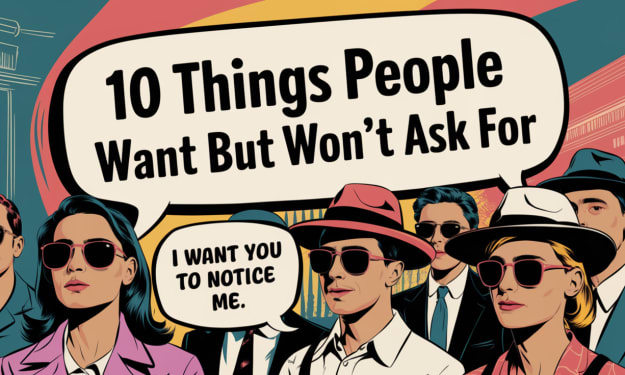
10 Things People Want but Won’t Ask For
We all have desires—big and small—that we sometimes struggle to voice. Whether out of fear, pride, or the assumption that others should just “know,” there are things we secretly long for but hesitate to ask for. Some of these are emotional needs, while others are simple yet meaningful gestures. Here are ten things people often want but won’t ask for.
By Author kelechi2 years ago in Humans
Experience the Future with Smart Home Living
Imagine a world where your home knows what you need, changing to fit your likes with just a command or a tap on your phone. Welcome to Smart Home Living, where tech meets everyday life, changing how we live at home. Smart devices bring better security and save energy, making life more comfortable and efficient.
By Yourd3glamour2 years ago in Humans
Friends with Benefits: The Good, The Bad, and The Unspoken Rules
More Than Just a Late-Night Text We live in a time when relationships aren't as dark and white as they used to be. Some people need romance, others need something casual, and after that, there is the scandalous "friends with benefits" (FWB) arrangement—a setup that guarantees delight without weight. Sounds idealize, right? Well, not so quick.
By Milan Milic2 years ago in Humans
How Long Is Too Long?
Ever wondered if there’s a “right” amount of time you should be getting down and dirty? Let’s break it down with a splash of science, a dash of history, and a whole lot of fun. We’re diving into the intriguing world of Intravaginal Ejaculatory Latency Time (IELT)—a fancy term for the duration it takes for heterosexual couples to finish their intimate dance. But here’s the kicker: what’s “normal” isn’t set in stone. It’s as much a product of evolving societal expectations as it is of biology.
By Eyo Otoabasi2 years ago in Humans
The Narcissist Within
Long before the era of selfies and Instagram filters, ancient myths already warned us about the perils of an inflated ego. In one unforgettable tale from Greek lore, a striking young man named Narcissus set off on a quest for love, only to find himself ensnared by his own reflection. After dismissing the gentle affection of a nymph named Echo, Narcissus happened upon a still, clear pool. There, he encountered an image so captivating that he fell head over heels—right into the water, unable to tear his eyes away from the enchanting visage staring back at him. His tragic fixation led him to drown, and from that very spot, a delicate flower sprang to life—the narcissus—forever memorializing the dangers of self-obsession.
By Eyo Otoabasi2 years ago in Humans